
Table of Contents
- Why Roasting Seeds Is So Important in Oil Production
- Types of Seed Roasting – Temperature Matters
- Choosing the Right Roaster – Key to Success
- Roasting Technology – How Professional Roasters Work
- Roasting Process Step-by-Step
- Different Types of Seeds and Their Roasting Specifics
- Advantages of Using Professional Roasters
- Practical Tips for Beginner Oil Producers
- FAQ - Frequently Asked Questions
- Summary
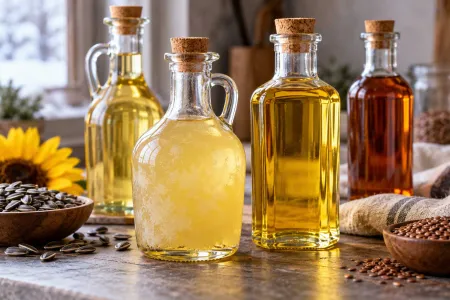
Why do some oils have such an intense flavor and aroma? The secret lies, among other factors, in the process of roasting the seeds before pressing. This stage of raw material preparation has a significant impact on the quality and aroma of the final product.
Why Roasting Seeds Is So Important in Oil Production
Roasting seeds is not just a method of preparing raw materials—it’s a process that significantly affects the flavor, aroma, and oil yield. During roasting, seeds are heated to high temperatures without water, leading to a series of chemical and physical transformations. This process develops intense flavor and aromatic notes, such as caramel or nutty tones, which are especially valued in nut oils and certain seed oils.
Increasing Oil Yield
The primary and most significant benefit of roasting is a substantial increase in oil yield. During thermal treatment, the cellular structure of seeds breaks down, with heat causing cell walls to rupture, making it much easier to release oil from plant tissues. At the same time, the viscosity of the oil within the heated seeds decreases, allowing it to be pressed more efficiently in mechanical presses.
Roasting also denatures proteins present in the seeds, reducing their ability to bind oil molecules. Additionally, the evaporation of excess moisture ensures that dry seeds yield oil far more efficiently than seeds with higher water content. Experience shows that properly conducted roasting can increase oil yield by 20–30% compared to unroasted seeds, which has significant economic implications for any oil mill.
Enhancing Aroma and Flavor
Roasting is key to achieving the characteristic, rich flavor of oils, highly appreciated by consumers seeking premium products. During this process, Maillard reactions occur—the same reactions responsible for the aroma of roasted coffee or freshly baked bread. These reactions produce aromatic compounds that give oils their unique character.
Sunflower oils from roasted seeds develop an intense sunflower note, while sesame oils acquire a distinct nutty aroma. Roasted walnuts and hazelnuts produce oils with deep, refined flavors, and rapeseed loses its natural bitterness while gaining a mild, pleasant aroma. These organoleptic properties greatly enhance market value, allowing producers to sell products at a higher margin.
Health and Safety Benefits
Roasting seeds also brings tangible benefits for food safety and the health properties of the final product. High temperatures during roasting effectively eliminate bacteria, fungi, molds, and other potentially harmful microorganisms on the seed surface. This is particularly important for raw materials stored in environments with higher humidity.
Thermal processing also reduces the content of anti-nutritional compounds, such as trypsin inhibitors in legumes, phytic acid that binds minerals, or cyanogenic glycosides in certain seeds. As a result, roasted seeds and the oil pressed from them are easier to digest and better absorbed by the body. Controlled roasting can also enhance the bioavailability of some naturally occurring antioxidants in seeds.
Roasting vs. Cold Pressing
It is important to note that not all cold-pressed oils are made from roasted seeds. For many cold-pressed oils, where preserving the natural, delicate flavor and high nutritional value is the priority, roasting is skipped. However, roasting is often applied when a more intense aroma and flavor are desired in the final oil.
Types of Seed Roasting – Temperature Matters
Not all seeds require the same roasting temperature. Choosing the right thermal parameters is an art that requires experience and knowledge of the characteristics of each raw material. Every type of seed has its optimal roasting temperature, which allows achieving the best results while minimizing the loss of valuable nutrients.
Low-Temperature Roasting (up to 140°C / 284°F)
This is the gentlest form of roasting, used for seeds particularly sensitive to high temperatures. Seeds such as flax, evening primrose, black cumin, or chia require temperatures not exceeding 160°C (320°F) and roasting times of 15–25 minutes. This method allows delicate aroma release while limiting the loss of valuable nutrients, particularly polyunsaturated omega-3 and omega-6 fatty acids, although some degradation may occur even at low temperatures.
Low-temperature roasting is especially recommended for producing oils with health-promoting properties, where preserving the maximum content of natural antioxidants and vitamins is essential. This process requires patience, but the final product—oil with exceptional health benefits—justifies the extended roasting time.
Medium-Temperature Roasting (140–200°C / 284–392°F)
The most versatile roasting method, used for the majority of popular oilseeds such as sunflower, rapeseed, sesame, and pumpkin seeds. Temperatures in the range of 140–200°C (284–392°F) for 20–35 minutes produce a pronounced aroma while retaining a significant portion of the nutritional value, though some vitamins and antioxidants may partially degrade. This method works excellently for producing table oils with intense flavor, widely used in culinary applications.
Medium-temperature roasting strikes the perfect balance between preserving nutritional properties and achieving a characteristic taste and aroma. Most professional oil mills use this method as their standard, adjusting detailed parameters only for specific types of seeds.
High-Temperature Roasting (200–300°C / 392–572°F)
Intensive roasting at 220–250°C (428–482°F) for 10–20 minutes is applied to seeds with a hard structure, such as walnuts, almonds, or poppy seeds. This method achieves a very intense aroma and distinctive color but requires careful monitoring to avoid over-roasting the raw material. Temperatures above 250°C (482°F) are rarely used in the food industry due to the risk of product degradation and the formation of undesirable compounds.
Oils made from high-temperature roasted seeds are premium products with exceptional flavor, valued by connoisseurs, and used in exclusive gastronomy. Although this process may reduce the content of some heat-sensitive compounds, the intense aroma and unique taste allow these products to achieve the highest market prices.
Choosing the Right Roaster – Key to Success
Several types of roasters are available on the market, differing in technology and application. Traditional gas roasters, although cheaper to operate, require a special gas installation and do not offer the precise temperature control that modern solutions provide. Wood- or coal-fired roasters, popular in the past, are now mainly used in very small, artisanal oil mills due to the difficulties in controlling the process and environmental requirements.
Undoubtedly, the best choice for modern oil mills is electric roasters, which combine precision, safety, and ease of use. Electric roasters offer unparalleled temperature control with an accuracy of up to 1°C (1.8°F), impossible to achieve with other heat sources. Digital thermostats with displays allow precise monitoring of the process, and programmable roasting cycles ensure consistent results.
Modern electric roasters are equipped with advanced safety systems protecting both the operator and the device. Automatic shutdown in case of exceeding the maximum temperature prevents overheating and device damage, while also eliminating fire hazards. Temperature sensors on the outer casing ensure that the exterior remains safe to touch even at high temperatures. Overload protection systems safeguard the electrical installation, and automatic locks prevent accidental operation when covers or hoppers are open.
Additionally, electric roasters are much safer to operate than alternative solutions, requiring no special gas installations or exhaust systems, and their operation is intuitive even for novice oil producers. Advanced heating systems ensure uniform heat distribution, guaranteeing even roasting of the entire batch of seeds, directly influencing the quality of the final oil.
Roasting Technology – How Professional Roasters Work
Modern roasters are technologically advanced devices that provide precise control over the thermal treatment of seeds. Let’s explore in detail how professional roasters available on the Polish market operate, revolutionizing the production of high-quality natural oils.
Construction and Operating Principle
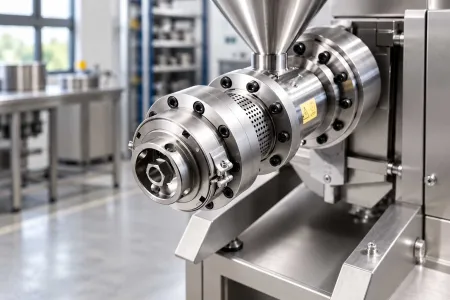
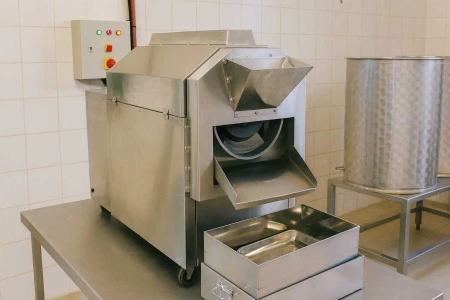
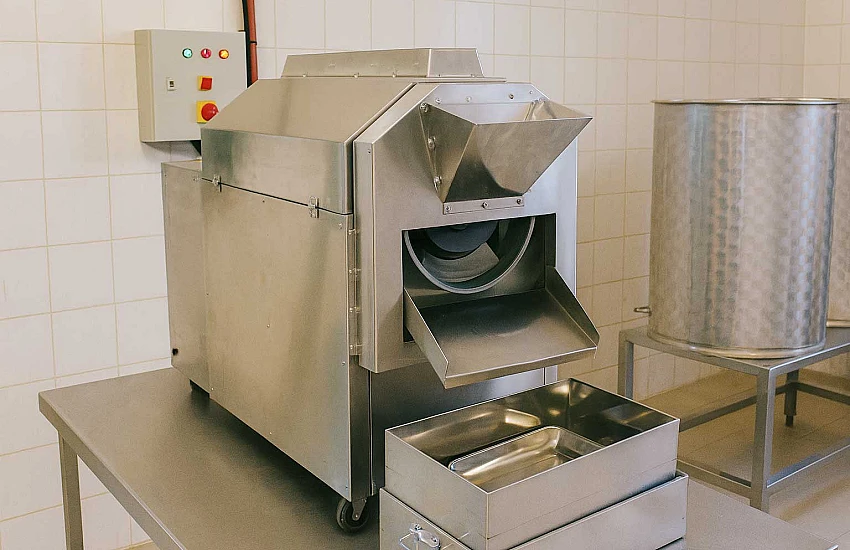
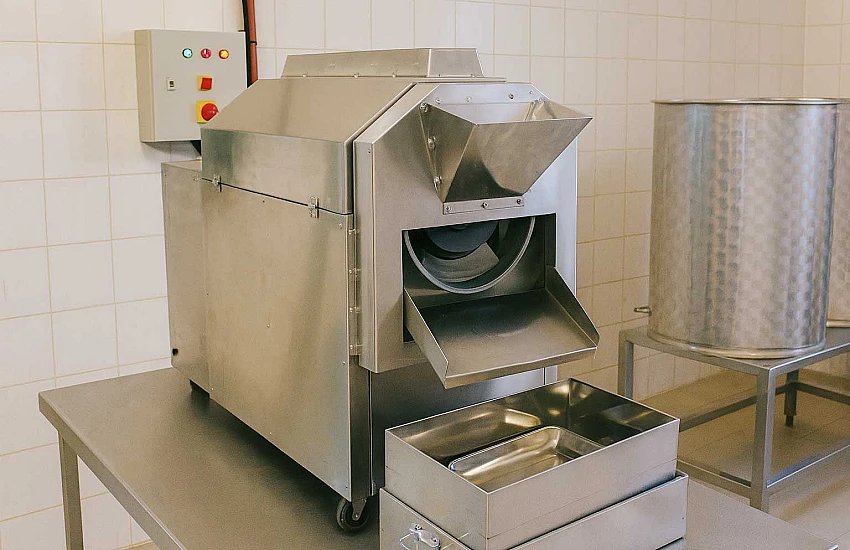
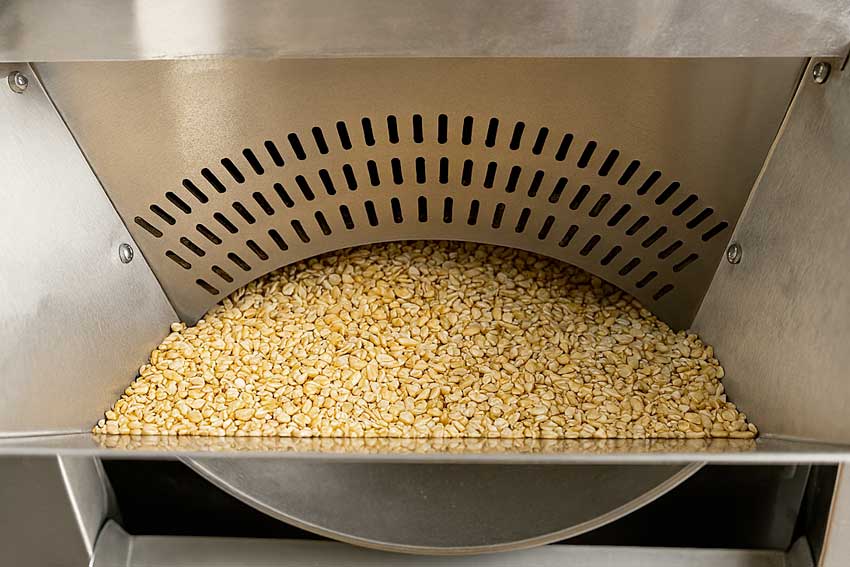
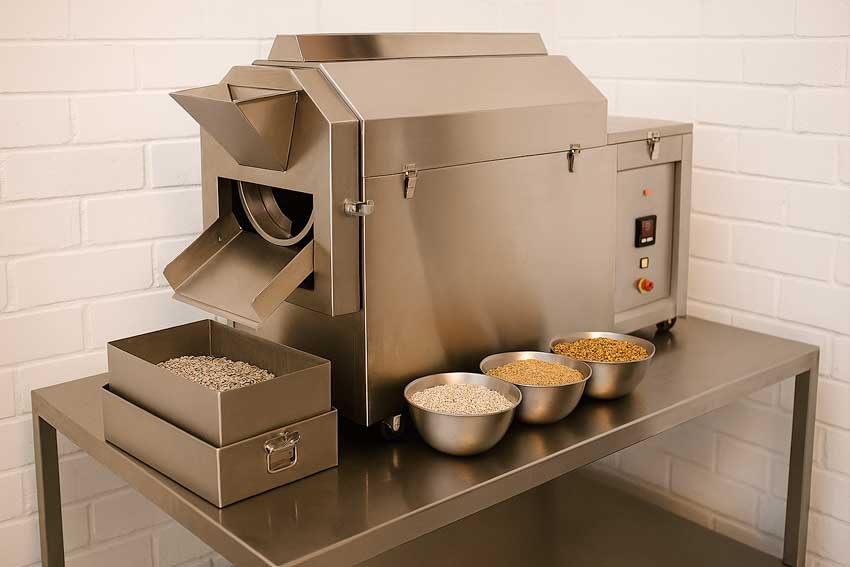
Professional electric roasters consist of several key components working together to provide optimal roasting conditions. The core of the device is a rotating roasting cylinder made of stainless steel 304, meeting the highest sanitary and food safety standards. The cylinder rotates at a constant, adjustable speed, ensuring uniform roasting of all seeds without risk of burning or uneven heating.
The heating system consists of an advanced set of electric heaters evenly distributed around the cylinder, guaranteeing uniform heat distribution throughout the roaster’s volume. A precise thermostat with a digital display allows temperature control with an accuracy of 1°C (1.8°F), crucial for process repeatability and product quality.
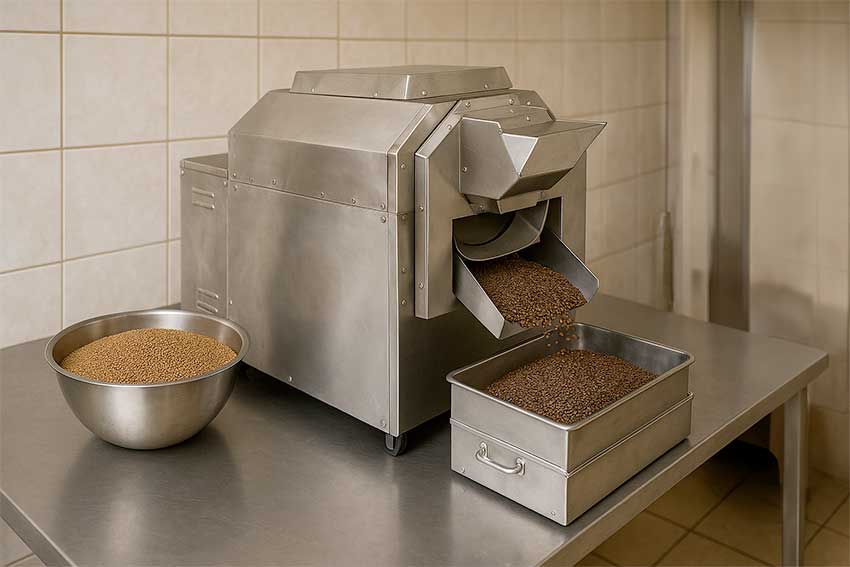
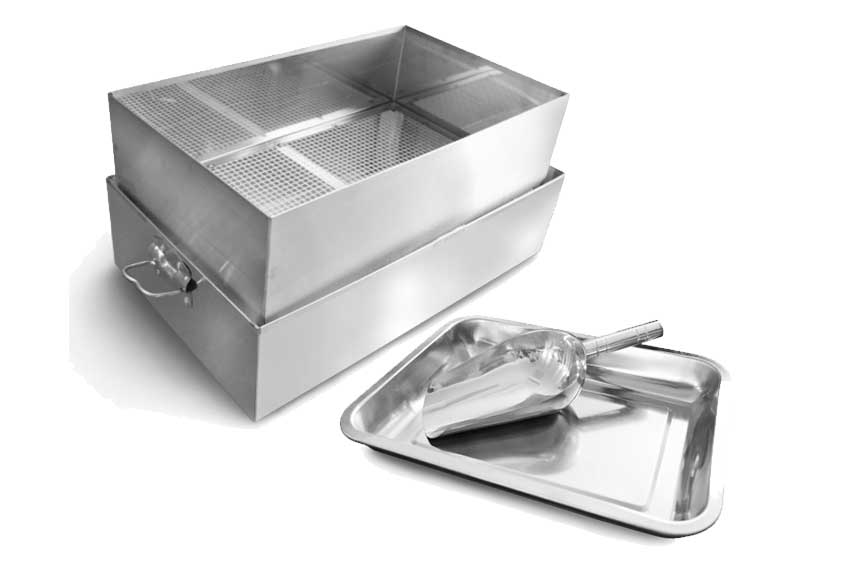
The loading and unloading system is designed with operator ergonomics in mind. The hopper allows easy introduction of seeds into the roaster, while the closable chute enables controlled unloading of the finished product. The set includes a special container for hot seeds, along with a tray and scoop to facilitate handling.
Model HDF-25 – Roaster for Medium-Scale Production
This compact roaster is an ideal solution for small oil mills, agritourism farms, and beginners in high-quality natural oil production. The HDF-25 model has a capacity of 10–12 kg of seeds per hour with a single batch of 5–6 kg, enabling efficient work even in small production spaces.
The 5 kW device can reach a maximum temperature of 300°C (572°F), sufficient for roasting all popular oilseed types. Weighing 80 kg and measuring 105/115 × 46 × 95 cm, the roaster fits in most small production rooms without requiring special infrastructure. Three-phase 400V power ensures stable operation and energy efficiency.
Despite its compact size, the device maintains high build quality. The stainless steel 304 construction guarantees longevity and ease of cleaning, crucial in food production. An intuitive control panel makes operation simple even for beginners, and the device’s versatility allows roasting all types of oilseeds used in small oil mills.
Model HDF-50 – Roaster for Larger Volumes
For producers requiring higher capacity, the HDF-50 model represents a professional approach to commercial-scale seed roasting. This advanced roaster offers a capacity of 20–24 kg per hour with a single batch of 10–12 kg, allowing up to 200 kg of seeds to be processed daily under intensive operation.
Increased 6.5 kW power combined with a larger roasting cylinder ensures uniform roasting even for larger batches. The maximum temperature remains 300°C (572°F), but the greater thermal mass provides better temperature stability during prolonged operation. Weighing 105 kg and measuring 125/142 × 58 × 107 cm, it is intended for stationary installation in professional oil mills.
This model’s construction is optimized for intensive, long-term operation typical of commercial oil production. Durable components and thoughtful design ensure reliability even under daily, extended use. The precise thermostat with a digital display allows exact temperature control, essential for maintaining process repeatability and the quality of produced oils.
Roasting Process Step-by-Step
To achieve the best results, the roasting process should be conducted according to a specific procedure that ensures optimal thermal treatment of the seeds. Each stage is important and requires the operator’s attention.
Seed Preparation
The quality of the final oil largely depends on proper preparation of the raw material before roasting. The first step should be seed selection – only the highest-quality, fresh seeds free from mold, mechanical damage, or pests should be chosen. Each seed should be mature and full, as immature or damaged seeds can negatively affect the flavor of the entire batch of oil.
Cleaning the seeds is another crucial stage, during which all impurities, stones, plant debris, and other foreign substances are removed. This can be done manually using sieves of various mesh sizes or specialized seed cleaners. Monitoring seed moisture before roasting is equally important – the optimal moisture content is 8–12%. Seeds that are too moist should be pre-dried in a dry, ventilated place, as excess water can lead to uneven roasting and steam formation inside the roaster.
Setting Roaster Parameters
Selecting the correct temperature is an art that requires knowledge of each seed type. Delicate seeds, such as flax or evening primrose, require temperatures not exceeding 140–160°C (284–320°F) to preserve their valuable health-promoting properties. Universal seeds like sunflower or rapeseed roast best at 180–220°C (356–428°F), which develops optimal aroma without excessive loss of nutrients.
Hard seeds, such as various nuts, may require temperatures as high as 240–280°C (464–536°F) to fully develop their characteristic flavor. Roasting time should be adjusted not only to the seed type but also to the desired final effect – some customers prefer a mild aroma, while others seek intense, pronounced flavors.
Roasting Procedure
Before starting, preheat the roaster to the set temperature, which may take 15–20 minutes for larger models. During this time, prepare the seeds for loading and check all device settings. Once the roaster reaches the correct temperature, pour the seeds through the hopper, ensuring even distribution inside the cylinder.
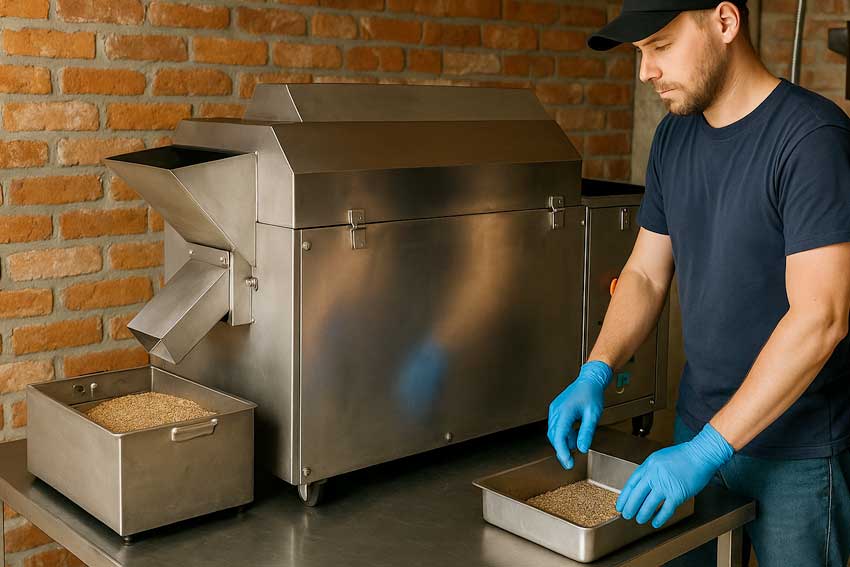
Monitoring the process is key to successful roasting. An experienced operator evaluates the seeds not only by thermostat readings but also by observing color, listening to characteristic sounds, and smelling emerging aromas. Readiness can be tested by removing a few seeds and checking their color and ease of shelling. Once the seeds reach the desired stage, they should be quickly discharged into a designated container.
Cooling and Storage
Roasted seeds must be cooled quickly to stop the roasting process and prevent over-roasting. This can be done by spreading them in a thin layer on trays or using specialized coolers. Rapid cooling also preserves maximum aroma and prevents condensation of steam on the seed surface.
Storage of roasted seeds should be in a dry, cool place in airtight containers that protect against light, oxygen, and moisture.
Different Types of Seeds and Their Roasting Specifics
Each type of seed has unique properties that require an individual approach to roasting. Understanding the characteristics of each raw material is the foundation for success in producing high-quality natural oils.
Sunflower – The King of Polish Oil Mills
Sunflower seeds are the most popular raw material in Polish oil mills, valued for their availability, high oil content, and relative ease of processing. Roasting sunflower seeds requires a temperature of 140–160°C (284–320°F) for 25–30 minutes, with a batch load not exceeding 80% of the roaster's capacity, ensuring proper seed circulation and even heating.
The effects of roasting sunflower seeds are spectacular – oil yield increases by 25–30%, which is economically significant for any oil mill. The intense, characteristic sunflower aroma gives the oil from roasted seeds a much higher market value than oil from raw seeds. The beautiful golden color of the oil further enhances its appeal to consumers seeking premium products.
During roasting, it is important to regularly monitor the process, as sunflower seeds can burn relatively easily. Readiness can be tested by checking whether the seed cracks easily between the fingers and has the characteristic golden color. Over-roasted seeds give the oil a bitter taste and dark color, so it is better to stop the process slightly earlier than too late.
Rapeseed – A Source of Versatile Oil
Rapeseed requires special attention due to its glucosinolate content – natural compounds that can impart a bitter taste to the oil. Roasting at 140–160°C (284–320°F) for 20–25 minutes not only increases oil yield but also significantly reduces these undesirable substances. The moisture content of rapeseed before roasting should not exceed 10%, as excess water can lead to uneven roasting.
The effects of roasting rapeseed include not only a reduction of bitter glucosinolates but also improved oil digestibility and development of a characteristic mild aroma. Oil from roasted rapeseed has a yellowish color and a pleasant, neutral taste, making it suitable for versatile culinary use. Roasting also facilitates better separation of oil from the press cake during extraction.
Sesame – Delicate Nutty Flavor
Sesame seeds are a true gem among oilseeds, requiring particularly gentle handling due to their high oil content and tendency to burn quickly. Optimal roasting of sesame occurs at 140–160°C (284–320°F) for 15–20 minutes, with close monitoring of the process because the seeds’ color changes rapidly.
The effects of roasting sesame are exceptional – an intense nutty aroma develops, and the seeds take on a characteristic color from light brown to dark brown, depending on the degree of roasting. Oil from roasted sesame seeds has a delicate, refined flavor and is highly prized in Asian cuisine. Due to its high natural antioxidant content, this oil also has good shelf life.
Flax – A Source of Omega-3
Flax seeds require the gentlest treatment among all popular oilseeds because of their high content of polyunsaturated omega-3 fatty acids, which are sensitive to high temperatures. Roasting flax is performed at temperatures not exceeding 110°C (230°F) for 15–20 minutes, with special attention to preserving its health-promoting properties.
The effects of gentle flax roasting include development of a mild nutty aroma and improved digestibility of the oil while retaining most of its beneficial properties. Oil from roasted flax seeds has a more pleasant taste than oil from raw seeds, which can sometimes be perceived as too strong or “fishy.” Roasting also facilitates better oil release from the hard flaxseed hulls.
Advantages of Using Professional Roasters
Investing in a professional roaster is a step that revolutionizes the quality of produced oils and opens new business opportunities. Professional equipment offers a range of benefits that are unattainable with traditional roasting methods.
Quality Control
Precise temperature control with digital thermostats ensures accuracy to 1°C (1.8°F), which is impossible with traditional methods such as pan or oven roasting. This precision directly affects the final product quality and allows for reproducible results. The rotating cylinder ensures that every seed is evenly heated, eliminating the risk of over-roasting some seeds while under-roasting others.
The ability to save and reproduce ideal parameters for each type of seed means that once-developed recipes can be used repeatedly, ensuring consistent product quality. This is especially important for oil mills aiming to build a recognizable brand and customer loyalty. Customers appreciate products that always have the same high-quality taste and aroma.
Economic Efficiency
Automating the roasting process allows the operator to focus on other tasks during roasting, significantly increasing productivity in the oil mill. Time previously spent constantly stirring seeds and monitoring temperature can now be used for other production or marketing activities.
Properly roasted seeds yield up to 30% more oil compared to raw seeds, which has a significant economic impact. At a sunflower seed price of approximately 3 PLN per kilogram and oil price of 25–30 PLN per liter, an additional 300 ml of oil per kilogram of seeds represents a substantial increase in profitability. Higher product quality also allows oils to be sold at premium prices.
Safety and Hygiene
Professional roasters are made from food-grade materials, particularly stainless steel 304, meeting the highest sanitary and food safety standards. Smooth steel surfaces do not absorb odors and are resistant to acids and bases used for cleaning. This ensures that flavors of different seeds do not mix, and each batch of oil has a clean, characteristic taste.
Advanced safety systems protect operators from burns and other injuries associated with high-temperature work. Automatic shutdown in case of malfunction and ergonomic design features make working with a professional roaster safe even during intensive use.
Economic Aspects of Seed Roasting
Roasting seeds is not only about quality but also about the profitability of the oil business. A cost-benefit analysis shows that investing in a professional roaster can significantly improve the profitability of an oil mill.
Cost and Benefit Analysis
Initial costs for purchasing a professional roaster include the device price, ranging from 15,000 to 25,000 PLN depending on the model, electrical installation costs of 1,000–2,000 PLN, and optional staff training costing 500–1,000 PLN. These one-time expenses may seem high but are quickly amortized due to increased efficiency and better product quality.
Operational costs mainly include electricity, approximately 2–3 PLN per kilogram of roasted seeds, and maintenance at 500–1,000 PLN per year. Depreciation over a 10-year lifespan is around 2,000–3,000 PLN annually. These costs are fully offset by financial benefits from increased efficiency and better product quality.
Financial benefits include a 20–30% increase in oil yield, which for 1,000 kg of seeds processed monthly means an additional 60–90 liters of oil. At an average oil price of 25 PLN per liter, this translates to an additional 1,500–2,250 PLN in monthly revenue. Higher selling prices for roasted oil, which may be 15–25% more than oil from raw seeds, further increase profitability. Time savings of 2–3 hours per day can be allocated to other revenue-generating activities.
Return on Investment
For an average production of 500 kg of oil per month, the investment in a roaster pays off within 12–18 months. For larger productions utilizing the device’s full capacity, the payback period can shorten to 8–12 months. These calculations do not include additional benefits such as introducing new premium products, brand building, or increased customer satisfaction.
Long-term benefits also include the possibility of expanding the product range to new types of seeds that were previously difficult to process without professional equipment. For example, roasting nuts or exotic seeds can open new, lucrative market segments. Consistent product quality allows for building long-term customer relationships and developing wholesale sales to restaurants or specialty stores.
Trends and the Future of Seed Roasting
The oil industry continues to evolve, introducing new technologies and methods aimed at improving product quality while increasing economic and ecological production efficiency.
Process Automation
Modern roasters are increasingly equipped with automatic control systems using advanced sensors to monitor seed moisture in real-time. Automatic dosing ensures precise control of the amount of seeds entering the roaster, providing optimal roasting conditions. Programmable roasting cycles allow saving different programs for various seed types and automatically switching between them.
Remote monitoring via mobile apps or online systems allows operators to control the roasting process from anywhere. This is particularly useful for continuously operating oil mills, where one operator can oversee several devices simultaneously. These systems can also send automatic notifications when a roasting cycle is complete or if anomalies occur.
Ecology and Sustainability
There is increasing emphasis on the ecological aspects of natural oil production. Modern roasters are significantly more energy-efficient than older models, reducing both operational costs and environmental impact. The use of renewable energy sources, such as solar panels or wind turbines, is becoming more popular in environmentally conscious oil mills.
Minimizing waste through better raw material utilization and recycling packaging are other areas where oil mills can improve ecological responsibility. Many modern oil mills also implement energy management systems that optimize electricity consumption through intelligent production planning.
Technological Innovations
The future will bring new technological solutions that will further streamline seed roasting. Roasting in an inert atmosphere using noble gases instead of air may allow better preservation of seed nutrients while achieving intense aroma. Vacuum technologies will enable roasting at lower temperatures, particularly beneficial for seeds rich in delicate nutrients.
Artificial intelligence systems will be able to analyze large amounts of roasting process data and automatically optimize parameters for the best results. Blockchain could be used to trace the origin of seeds and every stage of production, increasing transparency and consumer trust in premium products.
Practical Tips for Beginner Oil Producers
If you are just starting your journey in natural oil production, here are some valuable tips to help you avoid initial mistakes and quickly achieve satisfying results.
Choosing Your First Roaster
For small productions not exceeding 50 kg of seeds per day, the HDF-25 model is the ideal choice. Its compact size allows placement in a small room, and the relatively low price will not overly burden the budget of a starting oil mill. This model works perfectly in agritourism farms, small health food stores, or home-based oil mills.
For medium-sized productions of 50–150 kg of seeds per day, it is worth considering the HDF-50 model, which offers much higher performance with a relatively small difference in price. It is also important to plan for growth — it is better to invest in a slightly larger model with future needs in mind than to have to replace the device with a bigger one after a year. Replacement costs are much higher than the price difference between models.
Learning to Roast
Beginner oil producers should start by learning to roast simple seeds such as sunflower and rapeseed, which are the easiest to handle and forgive small mistakes. These seeds have a wide temperature and time window to achieve good results, giving beginners time to learn to observe the process and recognize signals indicating proper roasting.
Keeping a detailed roasting journal is a key practice that allows systematic skill improvement. It is worth recording not only technical parameters, such as temperature and time, but also observations regarding seed color, aroma intensity, and subsequent pressing efficiency. These notes become an invaluable knowledge base, allowing for repeating successful roasts and avoiding mistakes.
Careful experimentation with roasting parameters allows you to gradually learn how different seeds react to changing conditions. It is best to change only one parameter at a time — for example, temperature by 10°C or time by 5 minutes — to accurately assess the effect of that change on the final result. Do not hesitate to seek help from experienced oil producers or device manufacturers’ consultants.
Quality Control
Regular testing of the quality of produced oils is the foundation of success in this industry. Checking the aroma, taste, and appearance of each batch allows for quick identification of issues and process adjustments. It is also worth conducting comparative tests by storing samples from different batches and comparing them after a few weeks to assess product stability.
Collecting customer feedback and implementing improvements based on it is an invaluable source of information on product quality. Customers often detect subtle differences in taste or aroma that may escape the producer’s attention. Regular conversations with customers also help identify new trends and market preferences.
Maintaining detailed documentation of the entire production process — from seed source through roasting parameters to pressing and storage conditions — allows for tracking product quality and quickly identifying the causes of any issues. This documentation can also be useful for obtaining quality certifications or expanding the business.
FAQ - Frequently Asked Questions
Does roasting seeds affect the nutritional value of the oil?
Roasting under controlled conditions can even improve certain aspects of the oil’s nutritional value. Although high temperatures may slightly reduce the content of some vitamins, particularly vitamin E, the process simultaneously increases the bioavailability of certain antioxidants naturally present in seeds. Roasting also eliminates anti-nutritional substances, such as trypsin inhibitors and phytic acid, which can limit nutrient absorption. Oil digestibility improves, and inactivation of potentially harmful microorganisms increases food safety. The key is to choose the right temperature and roasting time for each type of seed to maximize benefits while minimizing losses.
Which seeds are best suited for HDF-25 and HDF-50 roasters?
Both roaster models are versatile and suitable for all popular oil seeds available on the Polish market. Sunflower seeds produce excellent results in both models, providing even roasting and a noticeable enhancement of aroma. Rapeseed also performs very well, especially for reducing bitter glucosinolates and improving oil taste. Sesame seeds require gentle roasting, which both models achieve thanks to precise temperature control. Flax can be safely roasted at low temperatures, preserving its valuable health-promoting properties. Pumpkin seeds develop an intense, characteristic flavor, and all types of nuts can be roasted with excellent results. The HDF-50 model, with its larger capacity, is better suited for roasting bigger batches, but the roasting quality is comparable in both models.
How often should the roaster be cleaned, and what are the maintenance costs?
Daily cleaning after each use includes removing remaining seeds, wiping stainless steel surfaces with a damp cloth, and checking the discharge chute. This process takes about 10-15 minutes and is crucial for maintaining production hygiene. Once a week, a more thorough cleaning is recommended, including washing all accessible parts, checking electrical connections, and inspecting thermostat operation. This procedure takes 30-45 minutes and allows early detection of potential issues. Once a year, professional servicing is recommended, which includes checking heating elements and rotating parts. The cost of such service usually ranges from 300–500 PLN but significantly extends the device's lifespan.
Can different types of seeds be roasted consecutively without a break?
Professional roasters allow consecutive roasting of different seeds, but several rules must be followed to ensure high quality of all products. The roasting sequence should start with seeds of the most delicate aroma, such as flax or evening primrose, and end with those with the most intense aroma, like sesame or nuts. This prevents strong flavors from transferring to delicate oils.
What is the realistic return on investment for a professional roaster?
The return on investment depends mainly on production scale and sales strategy. For a small oil mill using the HDF-25 model and producing 200–300 liters of oil per month, a 20–25% increase in extraction efficiency translates to an additional 40–75 liters of oil monthly. A premium for roasted oil of 3–5 PLN per liter generates an extra 120–375 PLN per month. Time savings of 15–20 hours per month can be used for marketing activities or product development. Under these conditions, ROI occurs within 14–18 months.
For a medium-sized oil mill using the HDF-50 model and producing 500–800 liters of oil per month, the benefits are even greater. A 25–30% increase in yield adds 125–240 liters of oil monthly, and a premium for roasted oil of 4–6 PLN per liter generates an extra 500–1440 PLN per month. Introducing new premium products and building a high-quality brand further increases profitability. In this case, ROI occurs within 10–14 months.
Additional benefits, difficult to quantify but equally important, include higher customer satisfaction due to stable product quality, the possibility of expanding the product range with new oils, building a premium brand, and increasing market competitiveness.
Summary
Seed roasting is a key process in producing high-quality natural oils, affecting every aspect of the final product. Properly conducted roasting increases extraction yield by 20–30%, enhances the aroma and flavor of oils, and eliminates potentially harmful microorganisms. Different seeds require an individual approach to temperature and roasting time, from gentle roasting of flax at 120–140°C to intense roasting of nuts at temperatures up to 280°C.
Professional electric roasters, such as the HDF-25 and HDF-50 models, revolutionize the capabilities of small and medium oil mills. The HDF-25 model, with a capacity of 10–12 kg/h, is ideal for home oil mills and small farms, while the HDF-50, with a capacity of 20–24 kg/h, meets commercial production needs. Both devices, made of stainless steel 304, provide precise temperature control up to 300°C and even roasting thanks to the rotating cylinder.
Investment in a professional roaster pays off within 12–18 months for small-scale production and 8–12 months for larger operations. Benefits go far beyond financial aspects — consistent product quality, the possibility of introducing premium oils, and building a recognizable brand contribute to the long-term success of an oil mill.
Roasting seeds is an art that requires practice, but with professional roasters, you can quickly master this skill. Investing in the right equipment is a step toward producing the highest quality oils, which will undoubtedly be appreciated by demanding customers. In the world of natural oils, quality always wins over quantity, and seed roasting is the key to achieving it.