
Table of Contents
- From "what am I buying?" to "who stands behind this?" - a quiet revolution in consumers' minds
- The anatomy of distrust - where the need to know the producer came from
- The era of anonymous mass production
- Crises of trust that taught us to ask
- The digital consumer who can check
- Transparency as the new language of a brand
- Origin of the raw material - the first level of transparency
- Process - the second level that builds credibility
- The face of the producer - the third level that builds a bond
- Oil as a model example - why this category in particular
- The producer's brand versus the product's brand - what the customer really buys
- A story that sells itself
- Locality as a value
- How an oil press becomes the heart of a transparent brand
- Control over the entire chain
- Pressing on one's own terms
- Storytelling based on truth - how to talk about your oil
- A label that tells the truth - transparency in practice
- A community around the producer - from customer to ambassador
- The future - where the transparency trend is heading
- Frequently Asked Questions
- Why do consumers increasingly ask about the producer rather than about the product itself?
- Can a small oil producer effectively compete with large brands thanks to transparency?
- What does building a brand around the producer mean?
- How does an own oil press support a brand's transparency?
- Which press parameters are important for a producer building a brand?
- Can the press cake arising during pressing strengthen the image of a transparent brand?
- How should you talk about your oil so that the message is credible?
A decade ago, a consumer standing in front of a store shelf asked themselves a single question: what is this and will it be useful to me. Today, a question of an entirely different kind appears more and more often - one that concerns not the product itself, but the person or company behind its creation. Instead of "what am I buying?" comes "who made this?". This seemingly small shift in thinking is one of the most important changes in buying behavior of recent years. For oil producers, for owners of small pressing facilities and farms developing their own brand, this shift opens up entirely new possibilities - provided they understand its sources and learn how to respond to it.
In this article we look at why transparency of origin has become a currency of trust, how the consumer themselves has changed, and in what way a producer can build a brand not around a product, but around themselves - their story, their process, and their values. We also show how concrete technological decisions, such as moving to in-house pressing, become the foundation of a story that customers genuinely want to hear.
Understanding this change matters not only for marketing. It is a question of how one thinks about one's own business at all. A producer who grasps that the consumer today buys a relationship and trust, and not merely litres of oil, begins to make different decisions - about how to communicate with the world, how much to reveal, how to organize production, and where to seek an advantage. The transparency trend is therefore not an add-on to a strategy, but its very axis.
From "what am I buying?" to "who stands behind this?" - a quiet revolution in consumers' minds
The question "what am I buying?" is as old as commerce itself. It is answered by composition, net weight, use-by date, list of ingredients. It is a question about the properties of a thing. Meanwhile, the question "who made this?" is a question about a relationship. We are no longer interested solely in what the product is, but in what decision we are making by reaching for it - who we are supporting, whose work we are rewarding, what kind of world we are buying into.
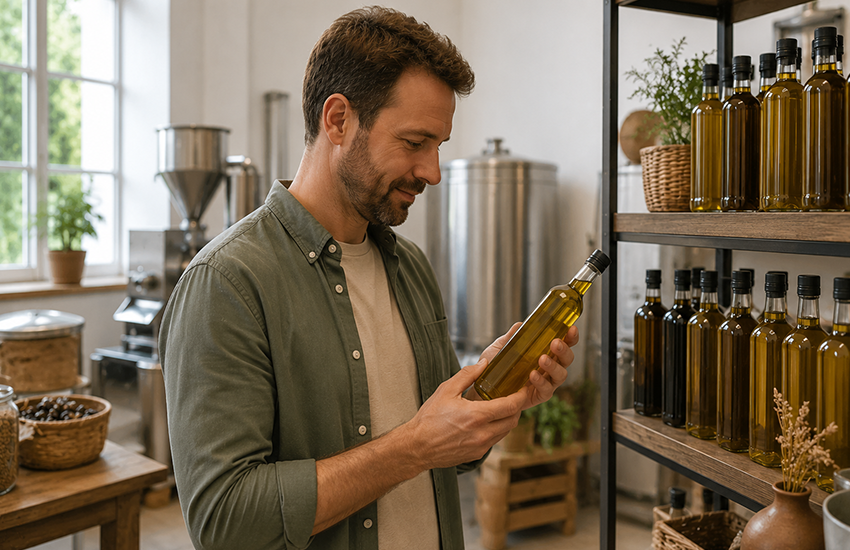
This change did not happen overnight, nor was it the effect of a single campaign or a single event. It built up slowly, as the consumer gained access to information, experienced one disappointment after another, and learned that behind attractive packaging does not always stand what they expected. In the category of food products, and especially those positioned as natural and premium, the question about the producer has grown into a decisive criterion. A customer buying cold-pressed oil is ever less satisfied with the information that it is simply "rapeseed oil". They want to know whose field the raw material comes from, who pressed it and how, and whether a specific face stands behind the brand, or an anonymous production hall somewhere on the other side of the continent.
For many producers this is initially uncomfortable. We have grown used to thinking of a product as something to be refined, packaged, and sold. Meanwhile, the new consumer expects us to unveil the process, tell our story, and allow ourselves to be verified. Transparency has ceased to be an extra - it has become a condition of entry into the game.
The anatomy of distrust - where the need to know the producer came from
To understand why the question about the producer gained such force, it is worth tracing it back to its roots. This is not about a fashion or a passing whim of the market. The need to know the person behind a product grows out of the concrete experiences of entire generations of consumers.
The era of anonymous mass production
The second half of the twentieth century was a triumph of mass production. The greater the scale, the lower the unit cost, the wider the distribution, and the more recognizable the brand. In this model the producer deliberately stepped into the background. What counted was the brand as a promise of repeatability - the same taste, the same quality, regardless of where and when we bought the product. The consumer did not ask about a person, because the person had been deliberately removed from this equation. Oil was oil, and its origin came down to the name of a corporation on the bottle.
This model brought enormous benefits - availability, low prices, sanitary safety on a scale never seen before. But it also created distance. Between the hand that sowed the seed and the hand that unscrews the bottle, so many links appeared that the relationship between them dissolved completely. Over time, this distance began to weigh. The consumer felt they were eating something they did not really know.
Crises of trust that taught us to ask
The anonymity of the mass production system had its price, which we paid through a series of food scandals and affairs. Falsifying composition, substituting raw materials with cheaper equivalents, misleading origin labelling - each such case, given media coverage, undermined trust in what was written on the label. The consumer learned that the declaration on the packaging and reality are not always the same thing.
In this context the question "who made this?" became a form of self-defence. If I know the producer, if I know where their pressing facility is and I can ask them about the details of the process, the risk that I will fall victim to deception decreases. The face of the producer became a guarantee - something the anonymous supply chain could not offer. The more complex and opaque the industry became, the greater the value gained by the simplicity of the relationship "I made it, you buy it, this is how I do it".
The digital consumer who can check
The third pillar of this transformation is technology. The contemporary consumer has in their pocket a tool that previous generations did not have - the ability to instantly check almost anything. The name of a company is enough to reach, within a few seconds, a website, a social media profile, the opinions of other customers, and often also photographs of the pressing facility and the face of the owner.
This ability to verify has changed the balance of power. The producer can no longer count on their declarations remaining unchecked. The consumer can at any moment confront a promise with reality. Paradoxically, this works in favour of honest producers - those who have nothing to hide gain an advantage over those who hide behind generalities. Transparency has ceased to be an ideological choice and has become a rational strategy. In a world in which anyone can check, it pays to be the one who is not afraid of scrutiny.
Transparency as the new language of a brand
Since the consumer asks about the producer, the producer must learn how to answer. But transparency is not a uniform concept - it is rather several layers that together build the image of a credible brand. It is worth distinguishing these levels, because each of them answers a different kind of question the buyer asks themselves.
Origin of the raw material - the first level of transparency
The most basic question concerns what the product is made from. In the case of oil, this is a question about the seeds - where they come from, how they were grown, whether they are local varieties or imported raw material of unknown history. The consumer increasingly wants to know that the rapeseed, sunflower, or flax from which the oil was pressed grew in a specific field, and was not bought on an anonymous commodity exchange.
A producer who is able to tell the story of their raw material - point to the region, describe the method of cultivation, show that they know their suppliers or are a farmer themselves - builds a foundation of trust. This is the first moment in which anonymous "rapeseed oil" turns into "oil from rapeseed from our farm, pressed on site". The difference in perception is enormous, even though the product may physically be almost identical.
Process - the second level that builds credibility
The second question concerns how the product comes into being. Here a space opens up for a story about technology, method, and the decisions a producer makes deliberately. Is the oil pressed cold or hot? Is the process carried out using solvents, or exclusively mechanically? Is the raw material filtered, at what temperature, how quickly does it reach the bottle after pressing?
These questions, not long ago, interested only specialists. Today they are asked by the average aware consumer, because they have learned that the method of production determines nutritional value and taste. A producer who openly shows their process - for example by publishing photographs of pressing, describing that they use exclusively mechanical pressing without additives and solvents - transforms a technical detail into a sales argument. The process ceases to be a factory secret and becomes proof of reliability.
The face of the producer - the third level that builds a bond
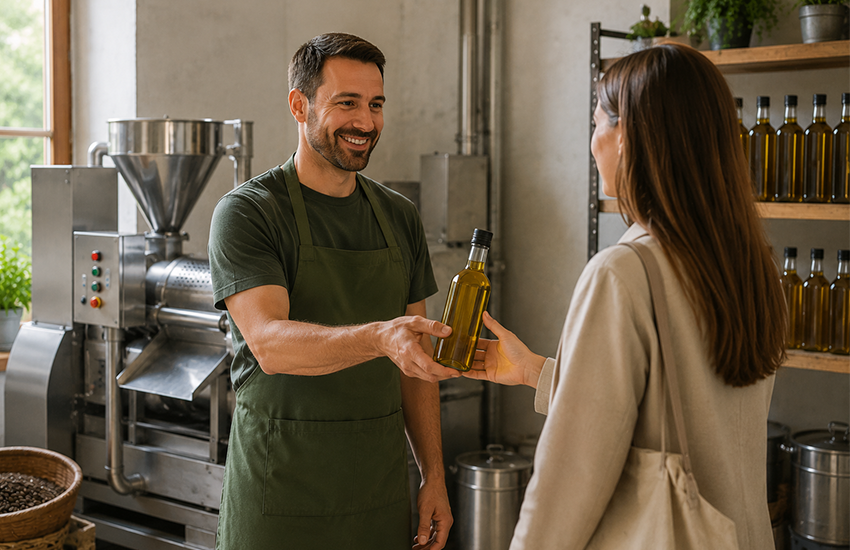
The deepest level of transparency concerns no longer the raw material nor the process, but the human being. This is the moment in which the consumer meets a person - sees the face of the owner of the pressing facility, hears their story, learns why they took up oil pressing in particular and what is important to them. This level builds no longer trust based on facts, but an emotional bond.
When the customer knows who stands behind a brand, their relationship with the product changes character. Oil ceases to be a commodity and becomes the expression of someone's work and passion. The purchase takes on personal meaning - I buy from a particular person, I know their story, I support their farm. It is precisely this level of transparency that is the hardest for big players to copy. A corporation can lower the price and increase the scale, but it cannot offer an authentic, specific face in the way a small producer does.
Oil as a model example - why this category in particular
One may ask why the transparency trend marked itself so clearly in the oil category in particular. The answer lies in the specificity of this product, which is almost ideally suited to building a brand around the producer.
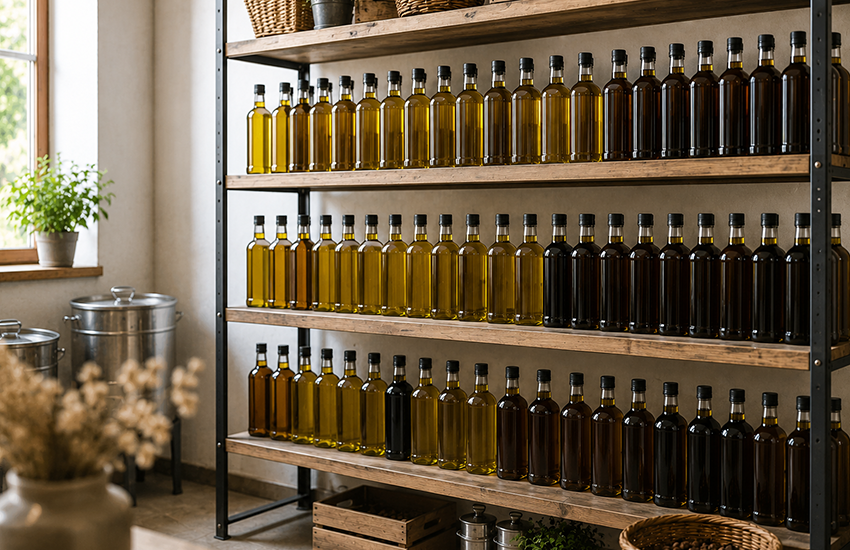
Oil is a product with a high symbolic charge. It is associated with health, naturalness, the Mediterranean diet, and conscious nutrition. At the same time it is a product whose quality is difficult for the average consumer to assess at first glance. Two bottles of rapeseed oil may look almost identical, yet differ fundamentally - in pressing method, freshness, origin of the raw material, manner of storage. In this situation, when the product itself does not reveal its quality on the shelf, the consumer looks for other signals. And that signal becomes the producer.
Additionally, cold-pressed oil has a short shelf life and is sensitive to the conditions of production and storage. This means that proximity to the producer - freshness, locality, the possibility of buying oil shortly after pressing - translates into a real, perceptible difference in quality. A consumer who once tastes fresh oil straight from a local pressing facility often no longer wants to return to a mass product. And since the difference is perceptible, the question about the producer ceases to be philosophical and becomes practical.
It is also not without significance that oil accompanies a person in the kitchen every day and plays a role in almost every meal. It is a product to which the consumer has an almost intimate relationship - they choose it with the health of themselves and their family in mind. This closeness means that the question of origin and producer takes on particular weight. No one wants to feed their loved ones a product of unknown origin if they have an alternative whose source they know and trust. In this category, trust in the producer therefore translates directly into a sense of security and care for those closest.
Finally, oil is a category in which the story about the process is naturally attractive. Pressing, the smell of freshly pressed oil, the golden colour trickling from the press - these are images that in themselves stir emotions and lend themselves perfectly to storytelling. Few food products have such a photogenic and engaging process of creation. An oil producer who knows how to use this has narrative material that producers in many other categories can only dream of.
The producer's brand versus the product's brand - what the customer really buys
Classic marketing taught that one builds the brand of a product - a recognizable name, a logo, a promise of quality attached to a specific good. The transparency trend, however, shifts the centre of gravity. Increasingly it is not the product that is the brand, but its creator. The customer does not buy "oil of brand X", but "oil from this producer, whom I know and whom I trust".
This change has profound consequences. It means that the producer's brand can encompass an entire portfolio of products - rapeseed oil, sunflower oil, linseed oil, press cake, flours from the cake - and all of them draw credibility from the same source, namely the person and the story of the maker. The producer ceases to be a supplier of a single article and becomes the host of a small world of values, to which the customer wants to belong.
A story that sells itself
Every producer has a story, though not everyone knows how to tell it. It may be a story about a farm passed down from generation to generation, about the decision to start pressing one's own oil instead of selling raw material, about the first press and the first litres that found their way among the neighbours. These stories have power, because they are true and concrete. In a world flooded with polished advertising messaging, an authentic, slightly imperfect story of a single person resonates far more strongly than a buffed-up slogan.
What is important, such a story does not require an advertising budget comparable to a corporate one. It requires rather sincerity and consistency - regularly showing who one is, how one works, and what one does. A consumer who follows such a story, over time, ceases to be a customer and becomes a supporter. And a supporter buys not because they need to, but because they want to support.
Locality as a value
In this narrative locality plays a special role. In response to globalization and the anonymity of large supply chains, consumers have rediscovered the value of what is close, known, and rooted in a specific place. A local oil producer is not only a source of a fresh product, but also an element of local identity - someone who can be visited, with whom one can talk, whose farm is part of the surrounding landscape.
Locality also gives a sense of agency. By buying from a neighbour, the consumer has the impression that their decision has a real impact - they support a specific place, a specific family, specific work. This is a sense of meaning that an anonymous purchase in a supermarket cannot provide. For the producer this is an enormous opportunity: instead of competing on price with giants, they can compete on closeness and meaning.
How an oil press becomes the heart of a transparent brand
All these reflections lead to a very practical conclusion. To build a brand around the producer and answer the question "who made this?", one must first be an actual producer - have control over the process and be able to show it authentically. It is precisely here that the decision to move to in-house pressing becomes the foundation of the whole strategy.
As long as a farm sells raw material, it is an anonymous link in a chain, whose name no one asks. The moment it begins to press its own oil, it takes over control of the last and most important stage - the one that determines the quality of the product reaching the consumer. The machine that makes this change possible is a professional oil press with a capacity matched to the scale of the operation.
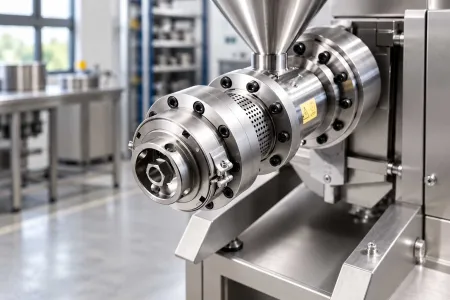
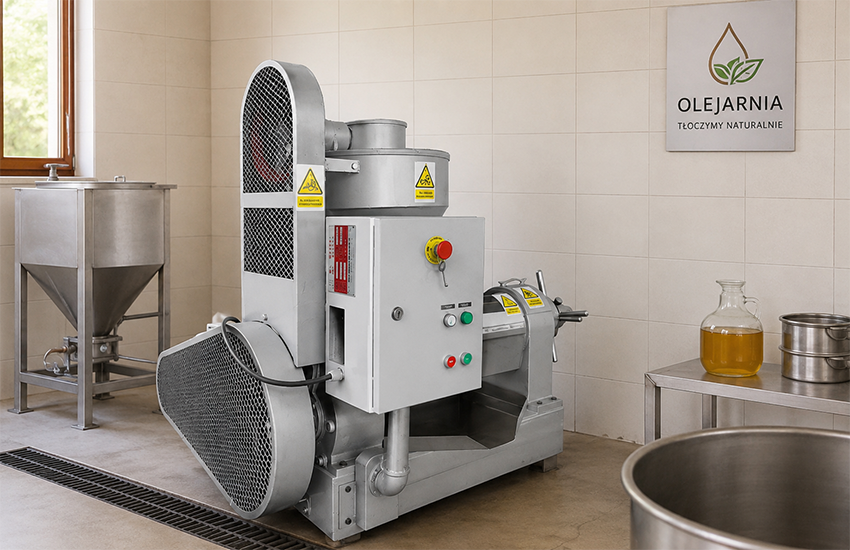
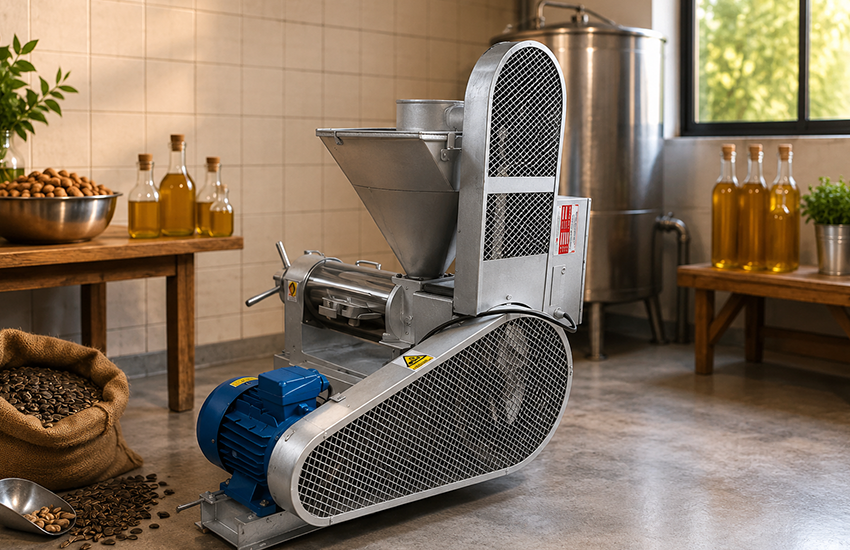
An example of a device designed with producers ready to take this step in mind is the screw oil press 3 t/24h model YZYX90-2. The extraction of oil in it takes place exclusively through the mechanical crushing of the raw material in the screw system, without the use of chemical agents and solvents. This is exactly the kind of process that can be shown openly to the consumer - because there is nothing in it to hide. The oil arises through pressure, retains its natural aroma and colour, and the producer retains full control over the origin of the raw material.
Control over the entire chain
An own press means that the producer commands every stage - from the field, through the preparation of the seeds, to pressing and bottling. This full control is exactly what the aware consumer expects when they ask about the producer. One can honestly answer every question, because one knows the answer first-hand. There are no intermediaries who would need to be accounted for, nor stages whose course one does not know.
The YZYX90-2 model was designed for continuous work, with a motor of 5.5 kW power adapted to operation in 24/7 mode and a capacity at the level of 2.6 to 3 tonnes per day. Three-stage pressing allows the oil residue in the press cake to be reduced to around 8 percent, which means efficient use of the raw material. The elements in contact with the product, such as the drip tray and the chamber cover, are made of stainless steel, and the whole complies with European standards confirmed by a CE certificate. These are parameters that allow entry to a level of production extending beyond the hobby scale, without the need to build extensive industrial infrastructure.
Pressing on one's own terms
The most important thing, however, is not the specification itself, but what it makes possible in the dimension of building a brand. In-house pressing allows the producer to speak of themselves in the first person. Instead of "we sell oil", they can say "we press our oil at our place, from our raw material, with our press". This changes the entire narrative - from supplier of a product to host of a process.
What is more, the pressing process gives not one, but two products. Alongside the oil arises press cake, that is the pomace - a full-value raw material that can be used as protein-rich feed, processed into pellets or feed mixes, and in selected cases applied in the food industry as high-protein flours and additions to baked goods. For a transparent brand this is additional material for a story - proof that nothing is wasted, that production is thoughtful and fits into the zero-waste idea that the aware consumer seeks.
In-house pressing also gives flexibility that is unavailable to those who outsource production. The producer can experiment with various raw materials, create small, limited seasonal batches, respond to the needs of customers, and build an offer that distinguishes them against mass products. This creative freedom in itself becomes an element of the brand - the consumer sees a producer who not only manufactures, but also constantly searches, refines, and surprises. In a category in which the big players offer unchanging repeatability, such a living, developing offer is an attractive change.
Storytelling based on truth - how to talk about your oil
Owning your own press and control over the process is only half the road. The other half is the ability to tell about it in a way that reaches the consumer. A producer's storytelling does not consist of inventing spectacular stories, but of attentively showing what is really happening.
The starting point is showing the process. The consumer wants to see the pressing facility, the press in action, the golden oil trickling into a vessel. These images build credibility faster than any description, because they act on the level of the senses. The second element is showing people - faces, hands at work, the everyday life of the farm. They are what turn a company into someone one can identify with. The third is honesty about difficulties and decisions - a story about why cold pressing was chosen, why production batches are limited, what tends to be a challenge. Such honesty paradoxically increases trust, because it sounds like truth and not like advertising.
It is also worth remembering that a producer's storytelling is not a one-off effort, but a process spread over time. The consumer builds trust gradually, observing the brand over weeks and months. A single spectacular post is not enough - what counts is the rhythm of regular presence, in which the producer one time shows the preparation of seeds, another time a batch of freshly pressed oil, and yet another answers a customer's question. From these small, authentic elements a complete, credible picture emerges over time. It is a little like getting to know a person - we do not fall in love with someone on the basis of one conversation, but build a relationship over many meetings.
It is important that the narrative be consistent and coherent across all channels - on the label, on the website, on social media, in direct conversation with the customer. The consumer quickly senses falseness and inconsistency. The producer's brand is credible only when the same story resonates everywhere in the same way, because it stems from reality and not from a marketing department.
A label that tells the truth - transparency in practice
The label is the place where the philosophy of transparency meets daily practice. It is on it that the consumer, standing in front of the product, looks for the answer to the question about the producer. A well-designed label of a transparent brand does far more than fulfil legal requirements.
It should clearly indicate who made the oil - not only the name of the company, but ideally also the place, and in many cases also the surname or the name of the farm. It should inform about the pressing method, about the fact that the oil arose mechanically, cold, without additives. Increasingly, producers place on labels the date of pressing, and not only the use-by date - because freshness is an argument, and the date of pressing is proof that there is nothing to be ashamed of. Some go further and provide a batch number allowing the origin of a specific bottle to be traced.
The label therefore becomes not so much an ornament as a document of trust. In a world in which the consumer asks "who made this?", the label is the first and often the only chance to answer this question before the customer puts the product back on the shelf. A brand that treats the label as a place of honest conversation with the consumer, and not as a field for advertising messaging, gains an advantage that is hard to counterfeit.
A community around the producer - from customer to ambassador
The strongest effect of building a brand around the producer is the emergence of a community. When the consumer stops buying an anonymous good and starts supporting a specific person and their work, their relationship with the brand changes character. From transactional it becomes personal. And from personal - mission-driven.
A customer who feels a bond with the producer themselves becomes their ambassador. They recommend the oil to friends, tell the story of the farm, defend the brand in conversations. They do this not because someone paid them for it, but because they identify with the producer's values and want them to succeed. This is the most valuable kind of marketing that exists - a recommendation flowing from sincere conviction, not for sale at any price.
Building such a community requires openness and reciprocity. A producer who answers questions, invites people to the pressing facility, shares the behind-the-scenes of their work, and treats customers as partners rather than as a source of revenue, creates a bond that will survive market fluctuations and price competition. Transparency here is not only a sales strategy, but a way of building lasting relationships, which are the foundation of a stable, resilient brand.
The future - where the transparency trend is heading
Everything indicates that the question "who made this?" will gain in significance rather than lose it. New generations of consumers grow up convinced that the choice of a product is a choice of values. Ecological awareness, care for health, the need for authenticity, and an aversion to anonymous mass production - all these tendencies strengthen the expectation of transparency.
Technology will additionally fuel this trend. Codes allowing the path of a product to be traced from field to bottle, rich content showing the process, easy access to information about the producer - all this will make hiding behind anonymity ever more difficult, and openness ever more profitable. Producers who already today build a brand on transparency will gain an advantage when these expectations become common and obvious.
For small and medium oil producers this is good news. In a world that values the face, the story, and closeness, their natural strengths - authenticity, locality, direct contact - become a competitive advantage. It is enough to have control over the process and the courage to show it. The rest is the consistent telling of truth. And the question "who made this?" then turns from a threat into the best opportunity the market can offer to the one who has nothing to hide.
Frequently Asked Questions
Why do consumers increasingly ask about the producer rather than about the product itself?
This results from the combination of several phenomena. Years of anonymous mass production created distance between the consumer and the source of food, successive food scandals undermined trust in declarations on packaging, and technology gave buyers the ability to instantly check the producer. As a result, getting to know the person behind a product became a form of self-defence and a way to make a conscious choice - the consumer wants to know whom they are supporting and whose work they are rewarding with their purchase.
Can a small oil producer effectively compete with large brands thanks to transparency?
Yes, and often it is precisely transparency that is their greatest asset. A small producer possesses something a corporation cannot easily offer - an authentic, specific face, locality, and a direct relationship with the customer. Instead of competing on scale, they can compete on closeness and meaning. A consumer who knows the producer and trusts them often consciously chooses their product, because the purchase takes on personal meaning for them.
What does building a brand around the producer mean?
It is a strategy in which the centre of communication is not the product, but the person or farm that stands behind it. Instead of promoting solely the features of the oil, the producer tells about themselves, their story, process, and values. Thanks to this, credibility extends across the entire portfolio - rapeseed, sunflower, or linseed oil, or press cake, draw trust from the same source, which is the person of the maker. The customer then buys not so much a product as a relationship with a specific person.
How does an own oil press support a brand's transparency?
An own press gives the producer control over the last and most important stage of production, namely pressing. As long as a farm sells only raw material, it remains an anonymous link in the chain. When it begins to press its own oil, it can honestly answer every question about the process, because it knows it first-hand. Mechanical pressing without additives and solvents is a process that can be shown openly, and the press itself becomes the heart of the story about the brand.
Which press parameters are important for a producer building a brand?
The most important are adaptation to continuous work, a capacity matched to the scale of the operation, and the quality of workmanship of the elements in contact with the product. For example, the YZYX90-2 model offers a capacity of 2.6 to 3 tonnes per day, a motor of 5.5 kW power for operation in 24/7 mode, three-stage pressing reducing the oil residue in the press cake to around 8 percent, as well as stainless steel elements and a CE certificate. Such parameters allow stable production to be conducted at a level extending beyond the hobby scale.
Can the press cake arising during pressing strengthen the image of a transparent brand?
Decidedly yes. Press cake, that is the pomace remaining after pressing, is a full-value raw material rich in protein. It can be used as feed for animals, processed into pellets or feed mixes, and in selected cases applied in the food industry as high-protein flours. For a brand based on transparency this is proof of thoughtful production fitting into the zero-waste idea - nothing is wasted, which constitutes an argument valued by aware consumers.
How should you talk about your oil so that the message is credible?
The key is grounding the narrative in truth and consistency across all channels. It is worth showing the pressing process, people at work, and the everyday life of the farm, as well as being honest about the decisions made and the challenges. The same story should resonate in the same way on the label, on the website, on social media, and in direct conversation. The consumer quickly senses falseness, which is why credibility is built not through spectacular slogans, but through coherent and sincere showing of what is really happening.