
Table of Contents
- The Single-Raw-Material Philosophy - Why Think in Product Lines
- Rapeseed - the Classic and Its Full Potential
- Sunflower - an Aromatic Alternative with Broad Uses
- Flax - a Seed with Exceptional Properties
- Pressing Technology - the Foundation of the Whole Line's Quality
- Building a Premium Brand Around a Product Line
- Practical Steps - from Field to Premium Product Line
- Frequently Asked Questions
Picture a field of rapeseed stretching to the horizon. For one farmer it is simply a crop that will go to the buyer and vanish into a vast supply chain. For another it is the beginning of an entire family of products - oil with a golden hue, press cake full of protein, aromatic flour, natural cosmetics and valuable animal feed. The difference does not lie in the raw material itself, but in the way of thinking about it. Building a line of premium products around a single oilseed plant is a strategy that draws out everything best in the raw material and turns a simple seed into a coherent, recognisable brand.
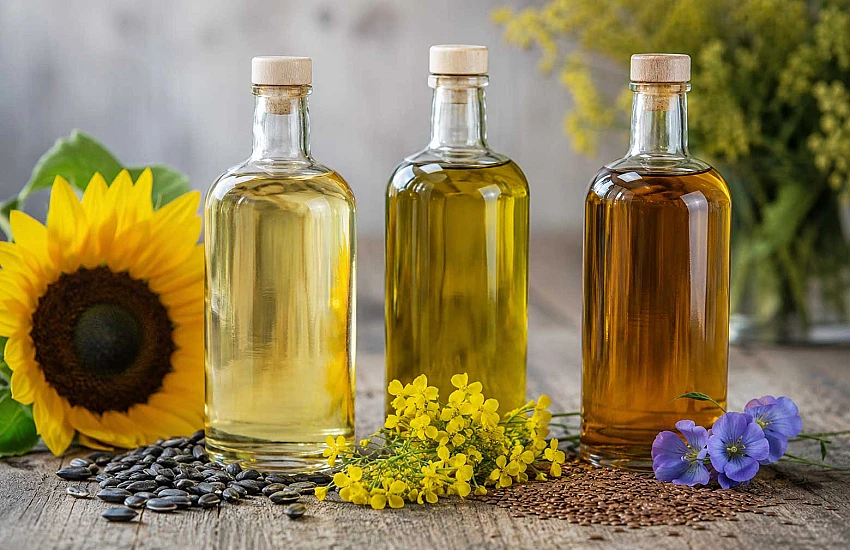
In this article we look at how a single raw material - rapeseed, sunflower or flax - can become a full range of products that complement one another and form a closed, waste-free production cycle. We show why the most popular oilseed plants have far greater potential than oil pressing alone, and how pressing technology determines the quality of the entire line. This approach combines the zero-waste philosophy with premium-product thinking - a product bought not for its price, but for its quality, origin and story.
The Single-Raw-Material Philosophy - Why Think in Product Lines
Traditional farming is built on selling raw material. The grain goes to the buyer, while all the added value - processing, bottling, marketing, the brand - is created elsewhere, often hundreds of kilometres from the field where the crop grew. The single-raw-material philosophy reverses this logic. Instead of handing over the grain, you keep it and decide for yourself how it will be processed, packaged and presented to the consumer.
The key observation is simple: every oilseed contains several products at once. Oil is only one of them, though the most visible. After the oil is pressed out, press cake remains - the compressed mass of seeds that still holds protein, fibre and some of the fat. Press cake can be milled into flour, processed into feed or used as a cosmetic base. The oil, in turn, becomes an ingredient in soaps, balms and skincare preparations. From a single field grows not one product, but a whole network of interconnected ones.
Thinking in product lines has another advantage - it builds a coherent story. A consumer who buys cold-pressed rapeseed oil is more likely to reach for flour made from the press cake of the same brand, or soap based on the same oil. All these products share one source, one farm, one story. This is what creates a premium brand - not a single product, but a coherent world of values in which each element confirms the quality of the others.
It is also worth remembering the environmental aspect. A product line based on the full use of the raw material is a practical embodiment of the zero-waste idea. Nothing is wasted - what mass production tends to treat as a by-product becomes here a fully fledged commodity. For a growing group of conscious consumers, this way of managing resources is an argument no less important than the taste or aroma of the oil itself.
Importantly, thinking in product lines also changes the producer's relationship with their own work. Instead of handing over the result of many months of effort as anonymous grain, the producer accompanies the raw material right up to the moment it reaches the consumer as a finished, named product. This is not only a matter of greater involvement - it is also a source of satisfaction and a sense of agency. The farm ceases to be merely a link in the supply chain and becomes an independent creator of value, in control of the whole process from field to shelf.
Rapeseed - the Classic and Its Full Potential
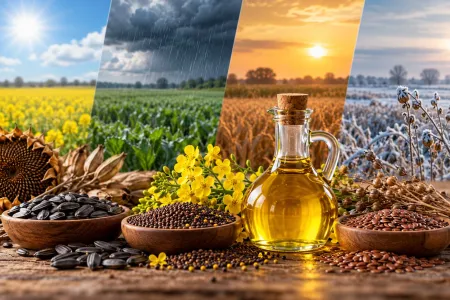
Rapeseed is without doubt one of the most important oilseed plants in European farming. Its characteristic yellow fields are part of the landscape across much of the continent, and rapeseed oil has long been a staple of many kitchens. Yet the true potential of rapeseed only reveals itself when we look at it as the source of an entire product line rather than a single oil.
Rapeseed has the advantage of being a well-understood and predictable raw material. Its cultivation is widespread, seed availability is high, and pressing parameters are stable. For a producer building a product line, this means a predictable process - you know what to expect from the raw material, what yield the press will achieve and what quality of oil will result. That predictability is valuable, because it lets you focus on developing further products in the line rather than wrestling with a temperamental raw material. This makes rapeseed a natural starting point for anyone beginning to think about building a brand around a single raw material.
Rapeseed Oil - the Heart of the Whole Line
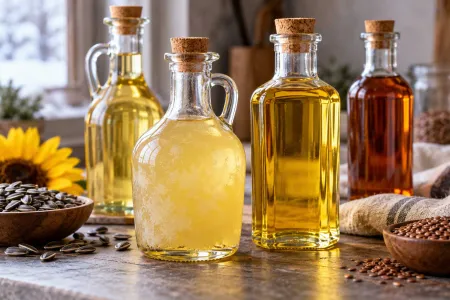
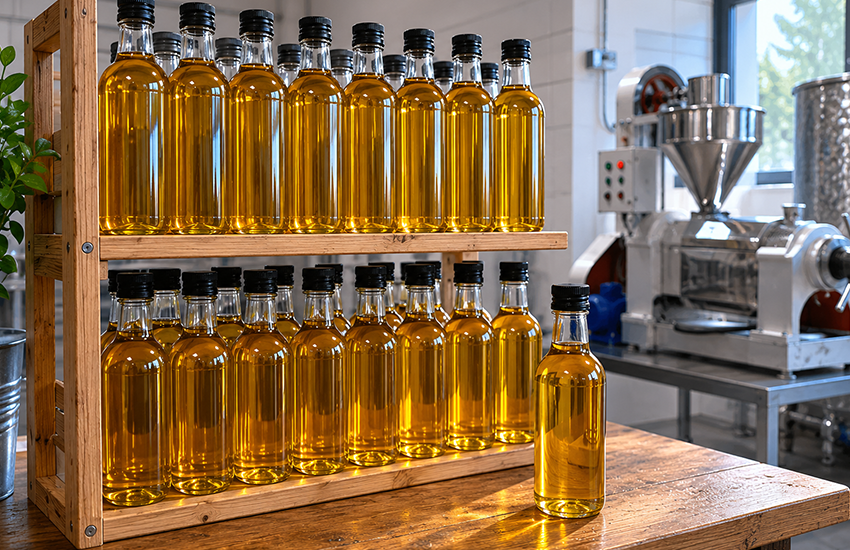
Cold-pressed rapeseed oil has a delicate, slightly nutty flavour and a beautiful golden colour. Unlike refined oil, it retains the full range of nutritional values - omega-3 and omega-6 fatty acids in a favourable proportion, vitamin E and natural antioxidants. It is a product easy to position as premium, because its quality depends directly on the pressing method and the origin of the raw material.
Rapeseed oil from your own field, cold-pressed, bottled in small batches and labelled with information about its origin, is an entirely different product from the anonymous oil on a supermarket shelf. Its strength lies in transparency - the consumer knows where the raw material comes from, how it was processed and who stands behind it. This is the foundation on which the rest of the line is built.
Rapeseed Press Cake - a Treasure Full of Protein
After the oil is pressed from rapeseed, press cake remains - a compressed mass of seeds that still contains significant amounts of protein, fibre and residual oil. In mechanical pressing the residual oil in the press cake usually amounts to a few percent, which makes it a valuable feed and food raw material. Rapeseed press cake is above all an excellent protein feed for cattle, pigs, poultry and even fish in farming operations.
For a farm running livestock, press cake means a natural, high-value supplement to the animals' diet, sourced from its own production. For those who do not keep livestock, it becomes a separate commercial product, sought after by neighbouring farms and feed producers. It is another element of the line that requires practically no additional input - it arises automatically with every oil pressing.
Flour from Press Cake - an Answer to the High-Protein Trend
Rapeseed press cake can be milled into a fine flour high in protein. It is a product that fits perfectly into current dietary trends - the growing interest in high-protein food, functional baked goods and alternative plant protein sources. Flour made from press cake can be added to bread, cakes, protein bars or pasta, enriching them with protein and fibre.
From the perspective of building a premium brand, press-cake flour is an interesting product because it combines several desirable qualities at once - it is local, natural, high in protein and consistent with the zero-waste philosophy. For artisan bakeries, health-food producers and conscious consumers, this is an argument that cannot be overstated. It is also a way to tell the story of the full use of the raw material - from the same rapeseed that produced the oil comes the flour as well.
Cosmetics Based on Rapeseed Oil
Rapeseed oil also finds use in natural cosmetics. Rich in vitamin E and fatty acids, it is well suited as a base for cold-process soaps, body balms, creams and skincare preparations. Natural soap with the addition of rapeseed oil from your own farm is a product that complements the food line beautifully and helps reach an entirely new group of customers - people looking for artisan, ecological and local cosmetics.
Cosmetics are also products with high image-building potential. A nicely packaged soap or balm becomes a gift, a regional keepsake or part of an agritourism offer. In this way rapeseed oil ceases to be solely a food product and becomes a raw material for an entire skincare segment.
Animal Feed - Closing the Loop on the Farm
Press cake as feed, mentioned above, deserves separate treatment in the context of the whole strategy. Using press cake to feed animals closes the loop of the raw material on the farm - the field feeds the animals, and the animals enrich the soil. Press cake can be served in its natural form or processed further, for example by granulating it into feed pellets, which makes storage, dosing and standardisation easier. Creating your own feed-mix recipes based on press cake allows you to tailor the feed to specific livestock needs and increase its value.
Sunflower - an Aromatic Alternative with Broad Uses
Sunflower is the second oilseed plant, alongside rapeseed, that works wonderfully as the foundation of a premium product line. Its seeds are larger and easy to handle, and sunflower oil has a characteristic, slightly seedy flavour that many consumers value for its boldness. In recent years sunflower has been gaining popularity among farms that recognise its versatility.
Sunflower also carries strong visual and emotional associations. A field of sunflowers evokes the sun, summer and naturalness - ready-made image capital that can be used in brand building. Sunflower products are easy to present in a warm, friendly way, which favours the creation of a premium line with a distinct character. The raw material itself is also rewarding to process - the large seeds press well, and the resulting oil and press cake have broad applications.
Cold-Pressed Sunflower Oil
Cold-pressed sunflower oil differs significantly from the refined equivalent available in shops. It has a more intense aroma, a deeper colour and retains its natural nutritional values, including a high content of vitamin E. Raw sunflower oil works excellently cold - as an addition to salads, spreads and dips, where its bold character fully comes into its own. It is a product easy to distinguish from mass production precisely thanks to the natural pressing method.
It is worth emphasising that cold-pressed sunflower oil fits the premium segment well because of its authenticity. Consumers increasingly look for oils with a clear, unmasked flavour that serve as a culinary addition rather than merely a fat for frying. This opens space for small, artisan producers who can offer something the large processing plants are unable to reproduce.
Sunflower Press Cake and Its Uses
Sunflower press cake, like rapeseed press cake, is a valuable product created during pressing. It is prized as feed, especially in the diets of ruminants and poultry, thanks to its high protein content and good digestibility. Sunflower press cake is also used in the production of feed mixes and as a supplement enriching the diet of farm animals.
In food processing, sunflower press cake is gaining importance as a source of plant protein. Milled into flour, it can enrich bread, crackers and vegan products. Because of its milder taste compared with rapeseed press cake, it is often preferred in products aimed at a wide audience. It is another example of how a single raw material branches into several different products.
Sunflower in Cosmetics and Functional Products
Sunflower oil is one of the most widely used oils in natural cosmetics. Its light texture and high vitamin E content make it ideal for producing creams, balms, massage oils and soaps. Sunflower husks and press cake, in turn, find use in functional products and as a natural ingredient in scrubs. In this way sunflower, much like rapeseed, makes it possible to build a product line covering both food and skincare.
Flax - a Seed with Exceptional Properties
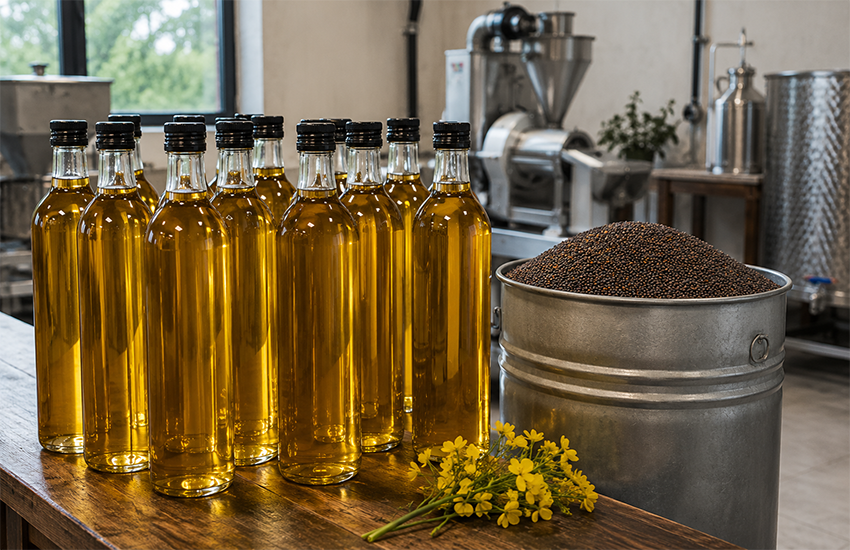
Flax is an oilseed plant with a special status. Its seeds have been prized for centuries for their health-promoting properties, and flaxseed oil is regarded as one of the most valuable plant oils owing to its exceptionally high content of omega-3 fatty acids. Flax, however, requires a slightly different approach from rapeseed or sunflower, which makes it an interesting challenge for producers building a premium line.
Flaxseed Oil - Delicate and Demanding
Cold-pressed flaxseed oil is a product with a bold, slightly bitter flavour and an intense colour. Its greatest asset is its composition - it is one of the richest plant sources of omega-3 fatty acids. At the same time, flaxseed oil is a demanding product, because it oxidises quickly and loses freshness. Paradoxically, this strengthens its position as a premium product - fresh flaxseed oil pressed in small batches at a local farm is something entirely different from a product that has sat on a shop shelf for weeks.
The short shelf life of flaxseed oil means its freshness and proximity to the source are especially valued. This opens space for producers offering oil pressed to order, in response to current demand. Such a sales model - fresh oil straight from the maker - fits perfectly into a premium philosophy based on quality and authenticity.
Flax Seeds and Flax Press Cake
Flax seeds, or linseed, are a valuable product in their own right, independent of oil pressing. Rich in fibre and omega-3 fatty acids, they are a popular addition to bread, muesli, smoothies and baked goods. A producer building a line around flax can therefore offer both the whole seeds and the products made from processing them.
Flax press cake, left after the oil is pressed, is a prized feed raw material and food additive. In animal nutrition, flax press cake has a beneficial effect on condition and coat appearance, which makes it especially sought after in horse and cattle breeding. Milled, it can also go into food products as a source of fibre and protein. Flax, despite its particularities, therefore fits the logic of full raw-material use very well.
Flax in Skincare and Natural Products
Flaxseed oil finds use beyond the kitchen as well. It is used in natural skin and hair care, and as an ingredient in traditional wood-preservation preparations and oil paints. The mucilage obtained from linseed is used in home cosmetics for hair care. This shows that even a plant with a seemingly narrow application can become the basis of a diverse product line - from food, through feed, to skincare.
Flax also has exceptional narrative value. It is a plant with a long tradition in European culture, associated with naturalness, simplicity and health. A producer building a line around flax can draw on this tradition, combining a modern approach to quality with the historical, almost nostalgic character of the raw material. In the premium segment, where the story behind the product matters, such tradition becomes a real marketing asset that cannot be bought or imitated.
Pressing Technology - the Foundation of the Whole Line's Quality
Everything discussed above - the quality of the oil, the value of the press cake, the usefulness of the flour or the cosmetic base - ultimately depends on one element: pressing technology. It is the oil press that determines whether the oil retains the full range of nutritional values, how clean and efficient the process is, and how valuable the resulting press cake turns out to be. Without the right equipment, even the best raw material will not reveal its potential.
Mechanical Pressing versus Refining
The fundamental difference between a premium product and a mass-produced one lies in the method of obtaining the oil. Mechanical pressing, also called natural pressing, involves extracting oil from the seeds without solvents, high temperatures or chemicals. The oil is produced solely through pressure in the press's screw system. As a result, it retains its natural aroma, colour and nutritional values - exactly the qualities a consumer expects from a premium product.
Refining, used in mass production, yields an oil with a neutral taste and a long shelf life, but at the cost of part of its nutritional value and character. For a producer building a premium line, the choice is obvious - mechanical pressing is not only a production method but an element of brand identity and a promise of quality made to the consumer.
Mechanical pressing also has an advantage in the context of the whole product line, not just the oil itself. Because the process runs without chemicals or high temperatures, the press cake left over retains its nutritional values and is suitable both for feed and for food processing. In solvent-based production the press cake would be chemically contaminated and its uses severely limited. Natural pressing therefore makes it possible to fully realise the single-raw-material philosophy, in which every product - from oil to flour - is clean, natural and fit for further use.
The Role of the Screw Press in Building a Product Line
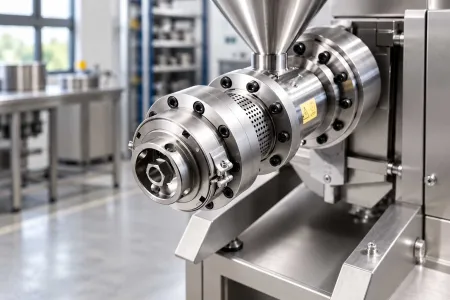
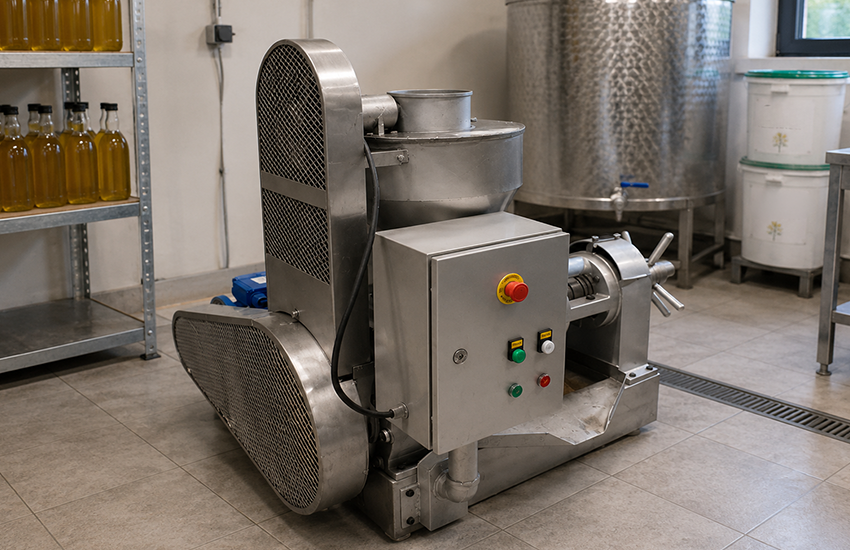
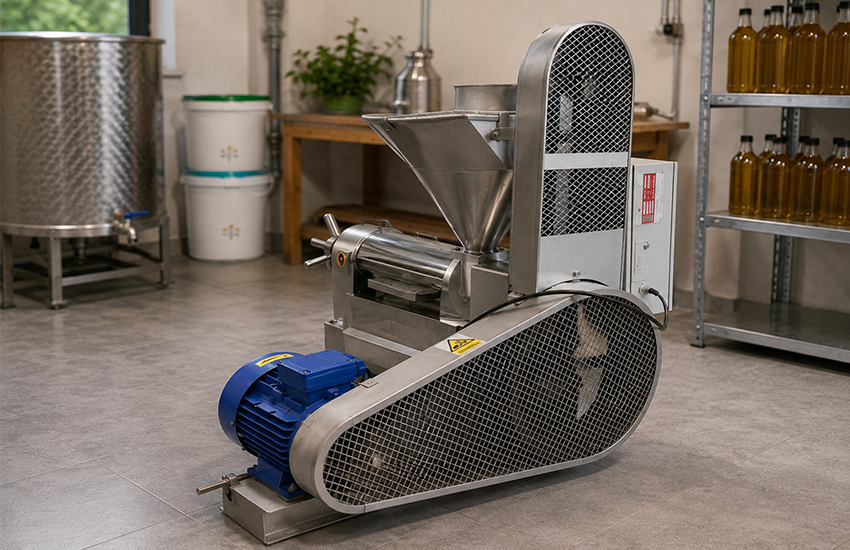
At the heart of every pressing operation is the oil press. It is what translates the single-raw-material philosophy into a real, everyday production process. For farms and small oil mills that want to move beyond the hobby level and begin production on a larger scale, a good solution is an efficient screw press, for example the Industrial Cold Oil Press – 15–30 kg/h. This machine is designed for continuous, intensive work and a stable pressing process without the use of chemical agents.
This industrial press works using the cold-pressing method and reaches a capacity of 15 to 30 kilograms of raw material per hour. All parts in contact with the seeds are made of high-quality stainless steel, which ensures hygiene and durability. A 3 kW electric motor, supplied with 380 V and fitted with a frequency converter, provides smooth, energy-efficient operation, and the machine is designed for reliable 24/7 work even under heavy-duty conditions. The press comes with five interchangeable nozzles, allowing it to be adapted to different types of seeds and nuts, and has been tested on over 78 varieties of seeds and nuts.
A press of this kind suits farms, small and medium oil mills, natural-food producers and businesses offering pressing services. Its compact design takes up minimal space, while a durable, versatile gearbox guarantees a long service life and reliable operation under any conditions. The press cake produced fits the zero-waste principle perfectly - it can serve as a baking ingredient, a healthy flour substitute or a crunchy snack, and combined with a grinder it allows full use of every by-product.
Raw Material and Pressing Parameters
For pressing to run smoothly, the raw material must meet certain conditions. Screw presses cope best with seeds that have a fat content of at least fifteen percent and a moisture level below ten percent. Rapeseed, sunflower and flax fit these parameters perfectly, which is why they are such rewarding raw materials for building a product line. The best results are obtained with raw material that is well dried and cleaned.
Proper preparation of the raw material - cleaning, drying and moisture control - translates directly into the quality of the oil and the value of the press cake. This is an often underestimated stage, and yet it is precisely what decides whether the whole product line reaches premium level. Good pressing equipment is a necessary condition, but only the combination of efficient technology with care for the raw material gives a result you can proudly sell under your own brand.
Building a Premium Brand Around a Product Line
With oil, press cake, flour, cosmetics and feed already in hand, the most important task remains - combining them into a coherent brand that convinces the consumer they are paying for quality, not just for a product. A premium brand does not arise by chance. It is the result of deliberate decisions about positioning, story and presentation.
A Coherent Story and Origin
The strongest asset of a small producer is authenticity. Large processing plants cannot tell the story of a specific field, a specific farm and the specific people behind the product. A small oil mill can. A coherent story about the origin of the raw material, the pressing method and the values guiding the producer is the foundation of a premium brand. A consumer buying rapeseed oil from a particular farm buys that story as well - and will gladly reach for other products of the same brand.
It is worth ensuring that all the products in the line - from oil, through flour, to soap - share a common visual identity and narrative. This way the consumer intuitively recognises that they come from one source and transfers the trust built with one product onto the others. It is a synergy effect that cannot be achieved by selling anonymous raw material to a buyer.
Presentation and Packaging
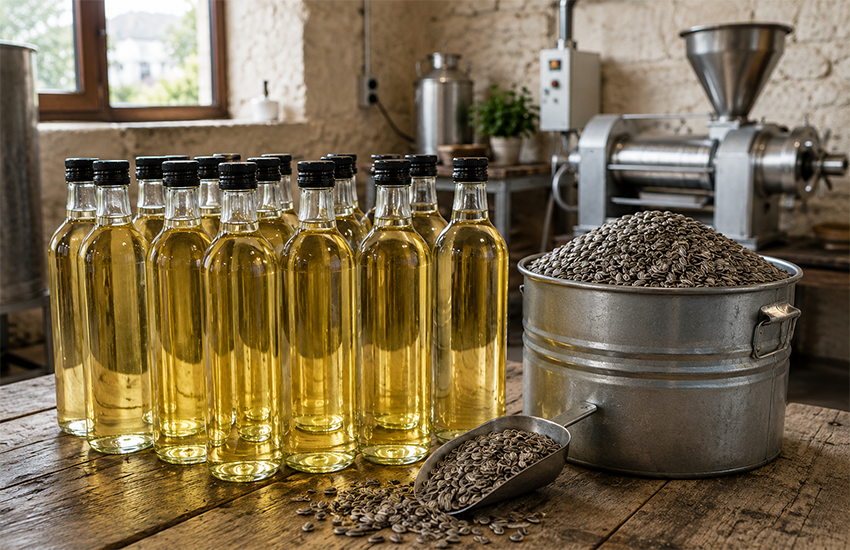
A premium product is also recognised by its packaging. An elegant oil bottle, a clear label with information about origin and pressing date, attractive packaging for flour or soap - all of this builds an impression of quality before the consumer even tastes the product. Consistent packaging across the whole line strengthens brand recognition and underlines that the individual products are part of a larger, well-considered whole.
Well-designed packaging also serves an informational function - it is where the consumer finds the product's story, storage guidance and suggestions for use. In the case of products such as fresh flaxseed oil, information about the pressing date and short shelf life becomes a selling point in itself, emphasising freshness and naturalness.
Diversification and Production Resilience
Building a product line around a single raw material has one more, strategic advantage - diversification. A producer who offers only oil is dependent on demand for a single product. A producer offering oil, press cake, flour, cosmetics and feed spreads that risk across several different market segments. A drop in interest in one product can be offset by another. This makes the whole operation more stable and resilient.
What is more, different products reach different customers. Premium oil is bought by the conscious consumer, press cake by a neighbouring farm, flour by an artisan bakery, and soap by a natural-cosmetics shop. A single raw material therefore opens doors to several entirely different markets at once - something that would be impossible with the simple sale of grain.
Practical Steps - from Field to Premium Product Line
The move from selling raw material to building your own product line is a process worth breaking into stages. The first step is usually to begin pressing oil - the product easiest to bring to market and at the same time the source of press cake, which opens up further possibilities. Investing in a suitable screw press makes it possible to move from the hobby level to a production level and to begin regular pressing.
The second stage is putting the press cake to use - whether as feed on your own farm, as a commercial product, or finally as a raw material for flour production. At this stage the producer begins to think in lines rather than individual products. The third step tends to be entering more specialised segments - cosmetics, functional products, feed mixes - which require a little more knowledge and preparation but open access to new groups of customers.
Throughout this whole process it is worth remembering to proceed gradually. There is no need to build the entire line at once. It is better to start from solid foundations - good oil and sensible use of press cake - and add further products as the business grows and you get to know the market. Such gradual expansion lets you learn as you go, adjust your offer to real demand and build the brand step by step, without the risk of over-investing in products for which there are not yet any customers.
Regardless of the pace of growth, the foundation remains the same - the quality of the raw material and the quality of the pressing. They decide whether a single field of rapeseed, sunflower or flax produces ordinary oil, or a whole family of premium products that together form a recognisable, valuable brand. The single-raw-material philosophy is not only a way to increase the use of the harvest, but above all a new way of thinking about what a farm can be in a modern, conscious economy.
Rapeseed, sunflower and flax are, in this view, not so much the goal as the starting point. Each of these plants carries potential that reveals itself only when we look at it as a whole - as a source of oil, press cake, flour, cosmetics and feed all at once. A producer who learns to think this way about one raw material will easily apply the same logic to further plants, expanding the offer and strengthening the brand. It is an approach that, once internalised, becomes a lasting foundation for growth - whether we are talking about a small family oil mill or an ambitious, developing enterprise.
Frequently Asked Questions
What is a premium product line based on a single raw material?
It is a strategy that involves the full use of a single oilseed plant - for example rapeseed, sunflower or flax - to create several interconnected products. From one raw material come oil, press cake, flour, cosmetics and feed. All these products share a common origin and a coherent brand, which builds an impression of quality and authenticity and makes it possible to reach different groups of customers at the same time.
Which oilseed plants are best suited to building such a line?
The most popular and versatile are rapeseed, sunflower and flax. Rapeseed is a classic with universal applications, sunflower yields an aromatic oil and valuable press cake, and flax stands out for its exceptionally valuable oil rich in omega-3 fatty acids. All three plants have a fat content and moisture level suitable for mechanical pressing, which is why they work so well as the foundation of a product line.
What is press cake and why is it so valuable?
Press cake is the compressed mass of seeds that remains after the oil has been pressed out. It still contains significant amounts of protein, fibre and residual oil, which makes it a valuable feed and food raw material. It can be used as animal feed, milled into high-protein flour or processed into feed pellets. Press cake arises automatically with every pressing, so it constitutes a fully fledged second product alongside the oil.
Why does cold pressing produce a premium product?
Cold pressing, or mechanical pressing, involves extracting oil from the seeds without solvents and high temperatures. As a result, the oil retains its natural aroma, colour and the full range of nutritional values, such as vitamin E and fatty acids. It is precisely these qualities that distinguish premium oil from a refined mass-produced product and form the promise of quality made to the consumer.
Which press is suitable for larger-scale production?
For production going beyond the hobby level, an efficient screw press works well, such as the Industrial Cold Oil Press – 15–30 kg/h. It works using the cold-pressing method, reaches a capacity of 15 to 30 kilograms per hour and is designed for continuous 24/7 operation. Stainless-steel components in contact with the seeds, five interchangeable nozzles and testing on over 78 varieties of seeds make it a suitable choice for farms, small oil mills and natural-food producers.
What cosmetic products can be made from vegetable oils?
Rapeseed, sunflower and flaxseed oils are excellent as a base for natural cosmetics. They can be used to make cold-process soaps, body balms, creams, massage oils and skin and hair care preparations. Artisan cosmetics based on your own oil help reach a new group of customers and strengthen the image of a premium brand built on local, natural raw material.
Does building a product line require a large farm?
No. The single-raw-material philosophy works just as well on small farms and in small oil mills. The key is to develop the offer gradually - starting from oil and sensible use of the press cake, and then adding further products as you get to know the market. A suitably chosen press makes it possible to begin regular production without the need to invest in extensive infrastructure, and a premium brand is built above all on quality and authenticity rather than scale.