
Table of Contents
- Seasonality as the Natural Rhythm of an Oil Mill
- What Single-Harvest Oil Is and Why It Stirs Emotion
- Limited Editions of Oil - From Idea to Shelf
- Building Exclusivity Around Limited Availability
- The Seasonal Calendar as the Brand's Narrative Axis
- The Role of Equipment - Why Repeatability Makes Limitation Possible
- Label, Packaging, and the Presentation of a Limited Edition
- Sales Channels for Single-Harvest Oils
- From Craft to Brand - How Seasonality Changes Positioning
- Customer Education as the Foundation of Exclusivity
- The Most Common Mistakes When Building Limited Editions
- Community Around the Season - From Customer to Regular
- The Season in the Kitchen - How to Pair Oils With the Time of Year
- Frequently Asked Questions
There is something irreplaceable about an oil that can only be pressed for a few weeks each year. Seeds ripen to their own rhythm, and every harvest carries a different scent, a different colour, and a different story of the field it came from. In a world where most food products are available year-round and always look the same, an oil tied to a specific season becomes something special. Seasonality, once treated as a limitation, can today be an oil brand's greatest asset.
This article is not about how much money seasonality can earn you. It is about something far more interesting - how the natural rhythm of ripening seeds can be turned into limited editions of oil that customers collect, wait for, and tell others about. It is a story about exclusivity born not from a marketing trick, but from the truth of how good cold-pressed oil is made.
Seasonality as the Natural Rhythm of an Oil Mill
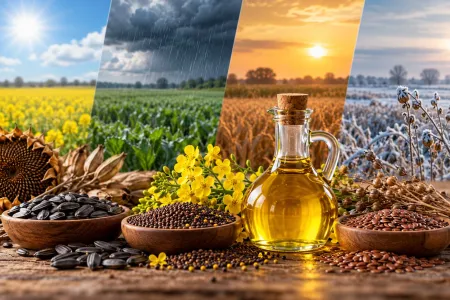
The oil industry has always followed nature's calendar. Rapeseed is usually harvested in July, sunflower in late summer, flax and hemp in their own time windows, and nuts and pumpkin seeds in autumn. Each of these raw materials has its moment, when oil content, ripeness, and quality are at their peak. An oil mill that works in harmony with this rhythm does not fight nature - it makes use of it.
For decades, producers tried to smooth this seasonality out. Seeds were stored, batches were standardised, and the goal was for the oil on the shelf in January to differ in nothing from the oil pressed in June. The aim was simple: predictability and continuity of supply. The problem is that, along the way, what was most valuable got erased - the character of a specific harvest. The oil became an anonymous commodity, stripped of its story.
The modern consumer, however, is looking for the opposite. They want to know where their food comes from. They care about the field, the year, the seed variety, the pressing method. In this sense, seasonality has stopped being a logistical problem and become a language in which a brand can speak about itself. An oil mill that openly says - this oil was pressed from a September sunflower harvest from a specific farm - offers something big industry cannot copy.
What Single-Harvest Oil Is and Why It Stirs Emotion
Single-harvest oil is a product pressed from seeds coming from one specific harvest campaign, often from a particular field or group of fields with similar growing conditions. It is not a blend of batches from different years, nor an averaging meant to erase differences. On the contrary - it deliberately highlights what is characteristic of a given season. This approach is borrowed directly from the world of wine, where the vintage is key information, not an accident.
Why does such an oil stir emotion? Because it tells a specific story. A customer who buys rapeseed oil from last year's exceptionally sunny summer receives not only a vegetable fat, but a fragment of the story of that year, its weather, its soil. The difference in taste, though sometimes subtle, becomes noticeable once the customer knows what to look for. And the awareness that this particular batch will never be repeated gives it a value that cannot be expressed in a description alone.
Terroir in a Bottle - the Taste of a Specific Field and Year
The concept of terroir, well known to lovers of wine and olive oil, perfectly describes what happens in single-harvest oil. Soil composition, rainfall, sunlight, sowing and harvest dates - all of it leaves its mark on the oil's sensory profile. Rapeseed from light, sandy soils will taste different from rapeseed grown on heavy, moist ground. Sunflower from a long, hot summer will be fuller in aroma than sunflower from a cool, rainy season.
For an oil mill, this means an enormous narrative opportunity. Instead of selling rapeseed oil as one unchanging product, you can tell the story of each harvest separately. The label can reveal the name of the field, the municipality, even the name of the farmer who supplied the raw material. The customer stops buying oil - they begin buying a specific place and a specific moment in time. It is precisely this tangibility of origin that builds attachment to the brand.
A Batch Number Instead of an Anonymous Commodity
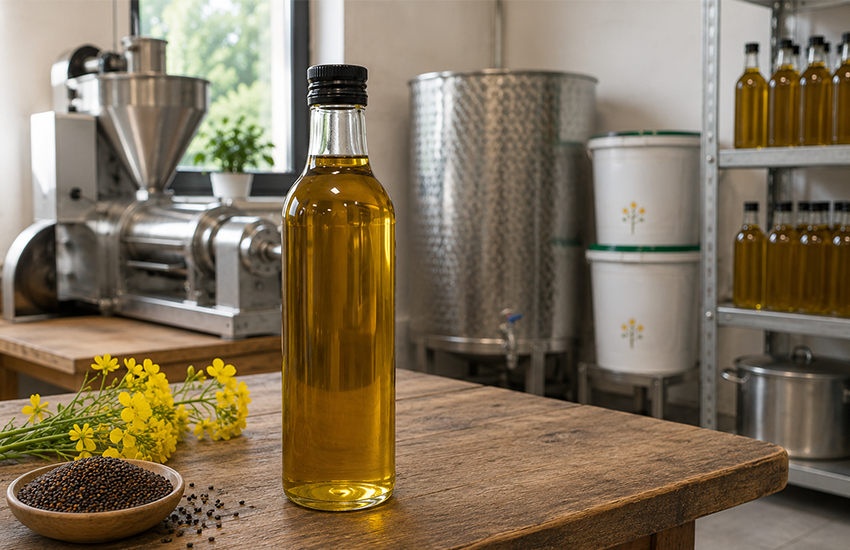
In industry, a batch number is a dry record kept for quality control. For a limited-edition oil, it can become part of the story. Imagine a label that, alongside the name, carries the information - batch 04, September harvest, 380 bottles. Such a note immediately communicates exclusivity. The customer sees that they are holding one of the very few bottles ever produced.
Numbering bottles or batches is a simple step that changes the perception of the whole product. An anonymous oil from the shelf becomes an object with a defined identity. Some oil mills go further and hand-sign each bottle, or include a short card describing the given harvest. The cost of doing so is small, and the effect - significant. The product gains the standing of a small work, rather than a mass-produced commodity.
Limited Editions of Oil - From Idea to Shelf
Creating a limited edition begins long before pressing. It is a strategic decision that requires planning the whole cycle - from the choice of raw material, through the production window, to the way the product is presented and sold. The key is deliberate limitation. A limited edition makes sense only when it is genuinely limited, rather than pretending to a rarity it does not in fact possess.
Choosing Raw Material From a Specific Harvest
The starting point is the raw material. An oil mill that wants to build limited editions must have access to seeds of known origin and uniform quality. Cooperation with specific farms, knowledge of growing conditions, and the ability to separate batches form the foundation of the whole undertaking. The more is known about a given harvest, the richer the story that can be built around the finished oil.
It is worth remembering that not every harvest lends itself to a limited edition in the same way. Sometimes the season is exceptional - a year of unusual weather that produced seeds with a distinctive profile. Sometimes the variety is exceptional - old, local, rarely grown anymore. At other times, the value lies in the place itself - a field with a special history, or a farm run by organic methods. The oil mill's task is to recognise this value and forge it into a product.
Pressing Within the Seasonal Window
Once the raw material is ready, time matters. Oilseeds are best pressed when they are fresh and properly prepared - at the right moisture and structure. The window in which the highest-quality oil can be obtained is often narrow. That is why an oil mill producing limited editions must have equipment ready to work precisely when the right moment arrives, and efficient enough to process a batch of raw material before it loses its qualities.
For larger-scale editions, when a substantial quantity of seeds from a single harvest must be processed within a short window, an industrial-class machine such as the Screw Oil Press 3.5-5 t/24h proves its worth. This oil press, with a capacity of 3.5 to 5 tonnes per day, is designed for continuous operation, which makes it possible to press an entire seasonal batch without downtime and without losing repeatable quality. An 11 kW motor and heavy-duty construction mean that even an intensive harvest campaign poses no strain for it.
The repeatability of pressing parameters is especially important here. A limited edition is meant to be exceptional because of its raw material, not because of random fluctuations in the process. A customer buying a numbered bottle expects every one of them to be of the same high quality. A stable pressing process is therefore a necessary condition for building trust in a premium brand.
Building Exclusivity Around Limited Availability
Exclusivity is not price. It is the feeling of having access to something not everyone has. In the case of seasonal oil, limited availability is not a marketing device but a natural consequence of the production method. Since the seeds from a given harvest are finite, the oil pressed from them will be finite too. This truth, well told, becomes a powerful lever of value.
The Psychology of Scarcity
People value what is scarce. This is a long-known regularity, confirmed in many studies of consumer behaviour. A product available always and everywhere arouses no urgency or desire. A product that exists in limited numbers and will disappear once sold out triggers an entirely different mechanism. The customer does not postpone the decision, because they know a second chance may not come.
In the oil industry, this scarcity has an additional, authentic dimension. Oil from a specific harvest will never return - the next year will bring different raw material, a different taste, a different story. This is not an artificially manufactured shortage, but the truth about the product. A brand that can communicate this clearly does not need to resort to pressure. It is enough to tell honestly how the oil is made, and the sense of exclusivity will appear on its own.
Storytelling Built on Date and Place
The best limited editions have their own story. This is not about invented legends, but about real details that give the product depth. The harvest date, the name of the field, a description of the weather in a given season, a photo of the crop just before harvest - all of it makes up the narrative that accompanies the bottle. A customer buying such an oil pays not only for the contents, but for a share in a specific story.
Storytelling works best when it is consistent at every stage of contact with the customer. The description on the website, the text on the label, the social media post, and the card enclosed with the bottle should all tell the same, true story. When the customer sees the same date and the same place on the website, on the packaging, and in conversation with the seller, the story becomes credible. And credibility is the foundation of a premium brand.
The Seasonal Calendar as the Brand's Narrative Axis
An oil brand that consciously works with seasonality gains something most producers lack - a natural rhythm of communication. Instead of inventing artificial occasions to talk to the customer, it can rely on nature's real calendar. Spring is a time of preparation and announcements, summer and early autumn the period of harvest and pressing, and the late months of the year the moment when successive editions reach the shelves.
Such a calendar gives the brand year-round presence without monotony. You can talk about the anticipation of the harvest, report on the course of the harvest campaign, show the pressing process, and then celebrate the premiere of each new edition. Customers who begin to follow this rhythm treat the brand not as a supplier, but as a kind of guide through the seasons. The premiere of a new batch becomes an event they wait for.
A seasonal calendar also makes it possible to plan a portfolio. Rapeseed opens or closes the year, sunflower brings a summer accent, oils from pumpkin seeds or nuts build the autumn offer, and flax or hemp add a niche character. Each of these oils has its moment, and combined they form a year-round story in which something is always happening. This is far more interesting for the customer than a static, unchanging shelf.
The Role of Equipment - Why Repeatability Makes Limitation Possible
It is easy to forget that the whole philosophy of limited editions rests on the technical ability to deliver them. Exclusivity based on the season requires equipment that can process a specific batch of raw material within the right time window, while maintaining consistent quality. Without that, the whole narrative collapses, because the customer will quickly sense a difference in a product that was meant to be repeatable within a single edition.
The capacity of the equipment determines the scale on which limited editions can be considered. A small home press will yield a few, perhaps a dozen, litres of oil from a given harvest - enough for a very intimate edition or for personal use. But when a brand wants to offer several hundred bottles from a single field, it needs equipment of much greater throughput, able to process tonnes of seeds before their quality begins to drop.
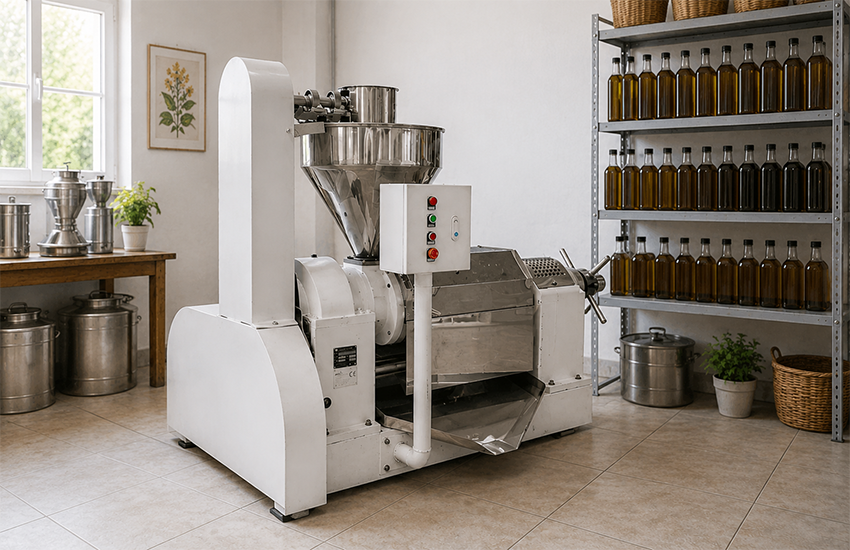
This is precisely why choosing a press is a strategic decision, not merely a technical one. The Screw Oil Press 3.5-5 t/24h is an example of a machine built for repeatable production on a scale that allows for serious limited editions. Oil residue in the press cake of up to 8 percent means efficient use of the raw material, while the natural pressing method, free of solvents and chemical additives, fits perfectly into the narrative of a craft, premium product.
The construction of such a machine also matters for the product story itself. Stainless steel components, such as the hopper, drip tray, and chamber cover, together with compliance with European standards and a CE certificate, are not only technical matters. They are also arguments that build the trust of a customer looking for oil of high quality and clean origin. Professional equipment becomes part of the brand's credibility.
The repeatability that good equipment provides, paradoxically, is what makes limitation possible. Only when the process is stable and controlled can a product be deliberately differentiated at the level of raw material. A brand can say - this is oil from the September harvest, and that one from October, and these differences are intentional, because the pressing process was the same and only the seed differs. Without stable equipment, such a distinction would be impossible to prove.
Label, Packaging, and the Presentation of a Limited Edition
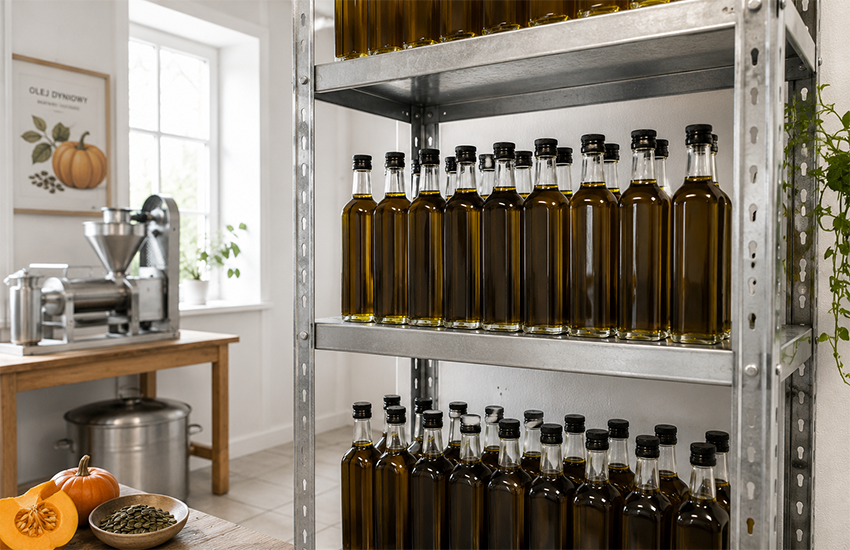
A limited-edition oil deserves a presentation that matches its character. The packaging is the first thing the customer sees, and it largely decides whether the product will be perceived as exceptional. For limited editions, it is worth choosing solutions that emphasise uniqueness - dark glass protecting the oil from light, legible typography, and space for the batch number and harvest date.
A limited-edition label differs from a standard one. Instead of merely informing, it tells a story. It will carry not only the oil's name and basic parameters, but also the pressing date, the batch designation, and often a short description of the given harvest. Some brands add information about the number of bottles produced, or hand-write the number of each copy. Such a detail immediately communicates that this is something rare.
The presentation does not end with the bottle. A card enclosed with the packaging, telling the story of the harvest, the farm, and the pressing method, significantly increases the product's perceived value. A consistent colour scheme across successive editions, allowing them to be recognised and collected, builds attachment. A customer who has already gathered several editions feels part of something bigger - and will more readily reach for the next premiere.
Sales Channels for Single-Harvest Oils
A limited-edition oil follows different rules from a mass product, so its sales channels are worth choosing with care. Direct sales - through your own online shop, at food fairs, or on the farm - allow the brand to fully control the story and to be in direct contact with the customer. It is here that the narrative of harvest and origin resonates most strongly.
Pre-sale is a tool especially well suited to seasonal editions. Since the brand knows when the harvest will come and how many bottles will be produced, it can offer customers a reservation even before pressing. This model not only organises production but also builds engagement - a customer who has reserved their bottle from this year's harvest waits for it with anticipation and feels like a co-participant in the whole process.
It is also worth considering cooperation with delicatessens, restaurants, and specialist shops that value products with a story. A chef who introduces a single-harvest oil into the menu and can tell guests about it becomes an ambassador for the brand. Such partnerships, built on a shared respect for quality and origin, often bring more than broad, anonymous distribution. Here, less often means more.
Whatever channel is chosen, consistency remains key. A limited-edition oil sold like an ordinary commodity, without a story and without presentation, loses its greatest value. The same product, presented with respect for its origin and with a clear statement of its limited availability, can build around the brand a community of loyal customers who return season after season.
From Craft to Brand - How Seasonality Changes Positioning
Many oil mills start with a simple model - they press oil and sell it as a utility product, described only by the name of the raw material and the bottle volume. This approach is entirely valid, but it leaves enormous potential untapped. The moment an oil mill begins to speak about its harvests, seasons, and specific batches is a turning point. From a raw-material supplier it becomes a brand with its own voice and identity.
Seasonality offers this change almost for free, because it rests on something that already exists. An oil mill does not need to invent artificial differentiators or attach to its product stories with no basis in reality. It is enough to name and highlight what is happening anyway - that every harvest is different, that the raw material has its origin, that the process has its rhythm. This authenticity is today a currency that cannot be counterfeited.
Positioning based on seasonality also changes the relationship with price. An anonymous oil competes primarily on price, because the customer has no other point of reference. An oil with a story, a specific origin, and limited availability shifts the conversation with the customer to an entirely different level. What matters then is value, quality, and uniqueness, not just the figure on the label. It is precisely this shift that lets a brand escape the trap of constant price-cutting.
Customer Education as the Foundation of Exclusivity
Exclusivity does not exist without an informed audience. A customer who does not understand why single-harvest oil is something special will treat it like any other. That is why education is an inseparable part of building limited editions. A brand that takes the time to explain what terroir is, how cold-pressed oil is made, and why the season matters, raises a body of customers able to appreciate its work.
Tastings and Sensory Cards
One of the most effective tools of education is the tasting. Just as in the world of wine or olive oil, tasting an oil lets the customer pick out for themselves the differences between harvests and varieties. An oil mill can organise tastings at fairs, on the farm, or online, guiding participants through the sensory profile of successive editions. A sensory card enclosed with the bottle, describing the aroma, taste, and suggested culinary uses, plays a similar role day to day.
Such activities build the customer's competence, and with it their loyalty. A person who has learned to recognise the nutty note in oil from an autumn harvest begins to treat the purchase as a conscious choice, not an accident. They return to compare the next edition with the previous one, and gladly share their observations with others. In this way, education turns customers into brand ambassadors who carry its story onward.
Transparency of the Supply Chain
The modern consumer increasingly asks not only what they are buying, but where it comes from. In the case of single-harvest oil, transparency of the supply chain is not only an asset but an outright expectation. Showing the field the raw material comes from, introducing the farmer, and describing the growing methods turns an abstract product into something tangible and trustworthy.
Transparency also strengthens the credibility of the narrative of limited availability. When the customer sees a specific field and knows roughly how much raw material it yields, the information about a limited number of bottles stops sounding like a marketing ploy and becomes an obvious consequence. Openness in communicating the origin of the raw material is therefore not only ethical, but also strategically profitable for building a premium brand.
The Most Common Mistakes When Building Limited Editions
The biggest mistake is pretending to a limitation that does not exist. Customers quickly sense it when an edition described as limited appears endlessly, or when the same bottles are available all year under a different name. Such inconsistency destroys trust and strips the brand of what is most valuable - its credibility. A limited edition must be genuinely limited, and its finiteness should result from real constraints on the raw material.
A second common slip is neglecting repeatability within a single edition. If bottles from the same batch differ in quality, the customer feels disappointed, because they paid for a premium product. Here the key lies in a stable process and appropriate equipment, which guarantee that every bottle from a given harvest will be of the same high quality. Uniqueness should come from the raw material and the story, never from random fluctuations in the process.
A third mistake is telling a story that has no basis in reality. Customers value authenticity, and invented legends are sooner or later verified. The best narrative is one built on real facts - an actual field, a real date, an authentic process. Seasonality has the advantage of supplying genuine material for a story, so there is no need to invent anything. It is enough to show honestly what really happens in the oil mill.
Community Around the Season - From Customer to Regular
The most valuable result of working with seasonality is not a single successful premiere, but a community that grows around the brand season after season. A customer who once bought oil from a specific harvest and learned its story begins to wait for the next edition. In time, they cease to be a chance buyer and become a regular who knows the oil mill's rhythm and plans their purchases around its calendar. This is a relationship far deeper than an ordinary transaction.
Building such a community requires regular contact. A newsletter announcing the next harvest, reports from the harvest and pressing on social media, the option to reserve bottles in advance - all of it sustains engagement between premieres. The customer feels part of something that is developing, not merely the recipient of yet another offer. This kind of attachment is resistant to price competition, because it rests on emotion and a shared story.
A community also gives the brand priceless feedback. Regular customers gladly share their impressions, compare successive editions, and suggest new directions. An oil mill that listens to these voices can plan future harvests and editions better, and customers feel like co-creators of the offer. In this way the circle closes - seasonality gives rise to a story, the story builds a community, and the community strengthens the seasons that follow.
The Season in the Kitchen - How to Pair Oils With the Time of Year
Single-harvest oil gains an extra dimension when it is linked to seasonal cooking. Fresh rapeseed oil from a summer pressing pairs beautifully with light salads and early-season vegetables, while oil from pumpkin seeds or nuts brings out the depth of autumn and winter dishes. Showing the customer these pairings means the product stops being an abstract bottle and becomes an ingredient in specific, seasonal meals.
A brand can support this narrative with recipes, culinary suggestions, and cooperation with chefs. A card enclosed with the bottle, hinting at what a given oil pairs with best, increases its value and encourages experimentation. When a customer discovers that oil from an autumn harvest is perfect with roasted pumpkin, they connect the taste with the season and with a specific edition. This linking of the product to the rhythm of the kitchen rounds off the whole story of seasonality and brings the customer back for the next edition when the season turns.
Frequently Asked Questions
How does single-harvest oil differ from ordinary cold-pressed oil?
Ordinary cold-pressed oil is often made from a blend of seeds from different batches, and even different years, in order to ensure constant availability and a repeatable taste throughout the year. Single-harvest oil comes from one specific harvest campaign, often from a particular field, and deliberately preserves the character of a given season. The differences in taste and aroma are intentional here and form part of the product's value, rather than a flaw to be hidden.
Does a limited edition of oil mean the product is harder to get?
The limited availability of a limited edition stems from the natural fact that the seeds from a given harvest are finite. This is not an artificially manufactured shortage, but a consequence of the production method. For the customer, it means they should make a decision while the product is available, because the next batch from the same harvest will not be produced. A brand can communicate this fact honestly, without applying artificial pressure.
What equipment is needed to produce oil in limited editions?
It all depends on the planned scale. Very intimate editions can be made with a small press, but for editions running into hundreds of bottles from a single harvest, an industrial machine is needed, able to process the whole batch within a narrow time window. A good example is the Screw Oil Press 3.5-5 t/24h, which, with a capacity of 3.5 to 5 tonnes per day and continuous operation, lets you press a large seasonal batch while maintaining the repeatable quality of every bottle.
How do you build a story around oil from a specific harvest?
The most effective storytelling rests on real details - the harvest date, the name of the field or farm, a description of the weather in a given season, and the pressing method. These elements should be consistent at every stage of contact with the customer, from the website, through the label, to the card enclosed with the bottle. A credible, true story builds trust and attachment far more effectively than invented marketing slogans.
Is it worth numbering bottles in a limited edition?
Numbering bottles or batches is a simple step of great significance. The information that, for example, 380 bottles were produced, and the customer is holding one of them, immediately communicates the product's exclusivity and rarity. The cost of doing so is small, and the effect - significant. An anonymous oil turns into an object with a defined identity, which customers gladly collect edition after edition.
Which oils are best suited to seasonal editions?
Practically any oil tied to a specific harvest can become a seasonal edition, but rapeseed, sunflower, flax, hemp, pumpkin seeds, and nuts are especially rewarding raw materials. Each has its own harvest and pressing window, which makes it possible to build a year-round calendar of premieres. Oils from old, local varieties or from organically grown crops, which themselves carry an interesting story, are particularly valuable.
How do you sell limited-edition oil while preserving its premium character?
The channels that work best are those that allow the product's story to be told in full - direct sales, your own online shop, food fairs, and pre-sale before pressing. It is also worth cooperating with delicatessens and restaurants that value origin and quality. Consistency is key - a limited-edition oil sold like an ordinary commodity loses its greatest value, so presentation and narrative should accompany it at every stage of the sale.