
Table of Contents
In today’s food, cosmetics, and chemical industries, the accuracy and efficiency of production processes are key to achieving success. One of the most important elements of these processes is the dosing of liquids and thick substances. Whether we are talking about juices, water, beverages, oils, or substances such as pastes, creams, lotions, or liquid soaps, the use of appropriate dosing equipment is essential. Semi-automatic dosing machines offer an excellent compromise between fully automated production lines and manual dosing. In this article, we will discuss how they work, their advantages, and why they are worth considering as a solution for various industries.
What Are Semi-Automatic Filling Machines?
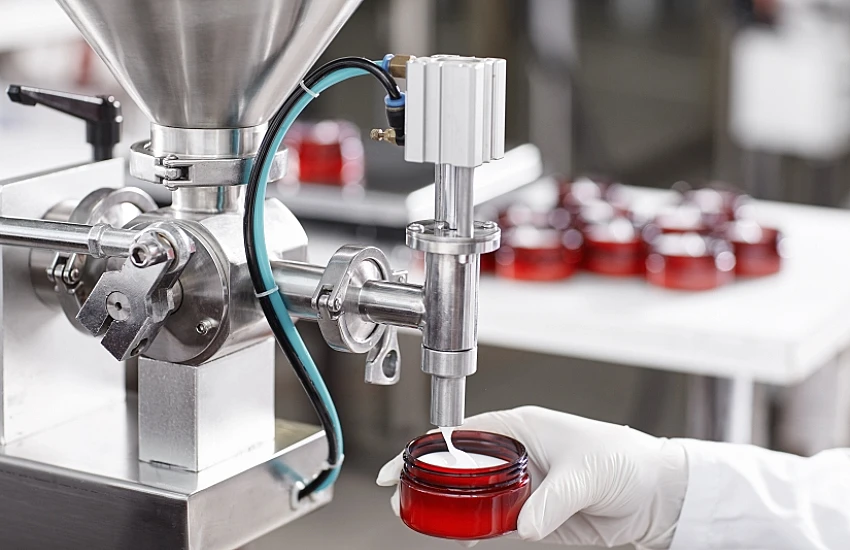
Semi-automatic filling machines are devices designed to precisely and efficiently dispense liquids and viscous substances into containers such as bottles, jars, tubes, or canisters. Unlike fully automated systems, semi-automatic machines require some level of operator interaction—typically to initiate the filling process—while still ensuring high accuracy and consistency through built-in control mechanisms.
These machines are widely used across multiple industries, including:
- Food industry: juices, beverages, oils, sauces, dairy products
- Cosmetics industry: creams, lotions, liquid soaps, shampoos
- Chemical industry: detergents, industrial oils, chemical solutions
Types of Semi-Automatic Filling Machines
1. Liquid Filling Machines
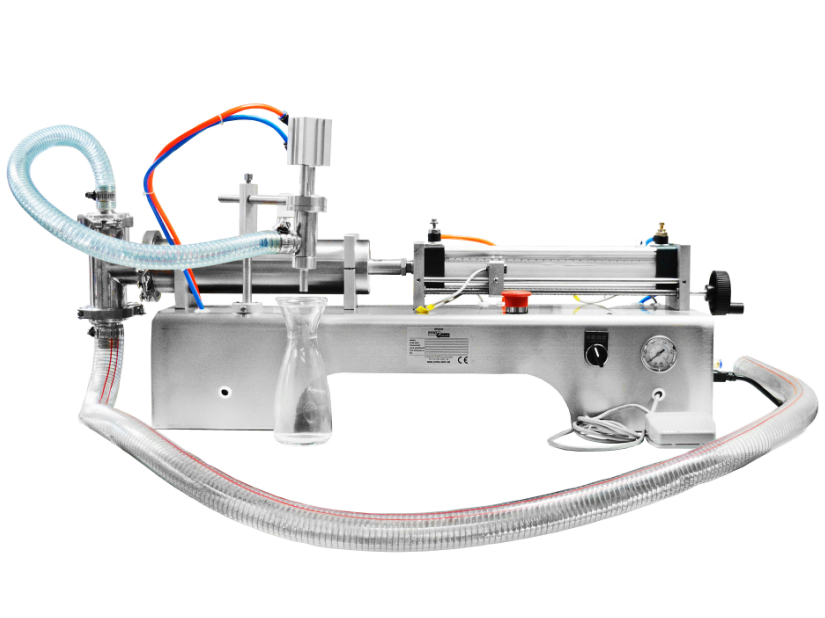
These machines are designed for dispensing liquids of varying viscosities — from water to oils. Several technologies are used in this type of dosing system, including:
- Piston fillers:
These use a piston movement to accurately measure and dispense a specific volume of liquid. They are ideal for thicker liquids such as oils, syrups, and sauces. - Peristaltic fillers:
The liquid is pumped through flexible tubing using rotating rollers that gently squeeze the tube. This technology is perfect for sensitive or sterile liquids that must not come into contact with metal parts, such as water, pharmaceuticals, or cosmetic serums. - Gravity fillers:
Designed for low-viscosity liquids like juices or water, these machines use gravity to allow the liquid to flow into the container, while valves regulate the fill volume.
2. Thick Substance Filling Machines
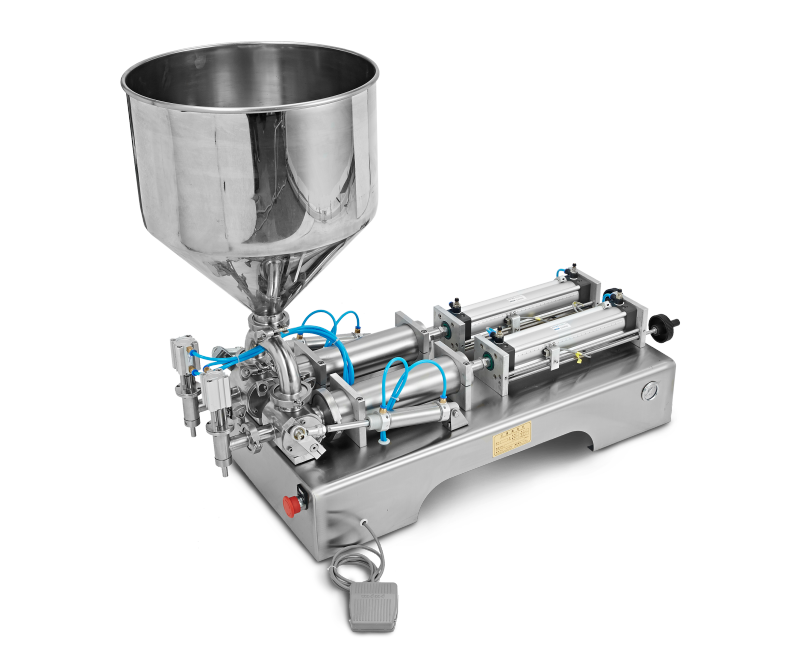
These machines are designed for dispensing creams, pastes, gels, and other high-viscosity materials. They are often equipped with piston or pressure-based systems that ensure accurate and consistent filling. Common technologies include:
- Piston fillers:
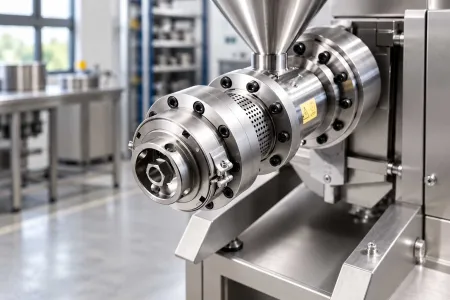
Ideal for products such as creams, pastes, or nut butters. The piston movement allows for precise dosing, even of very thick materials. - Screw (auger) fillers:
Used for extremely viscous substances. The screw mechanism draws the material in and accurately measures it into the container, ensuring smooth and controlled filling.
3. Thick Substance Fillers with Heater and Mixer
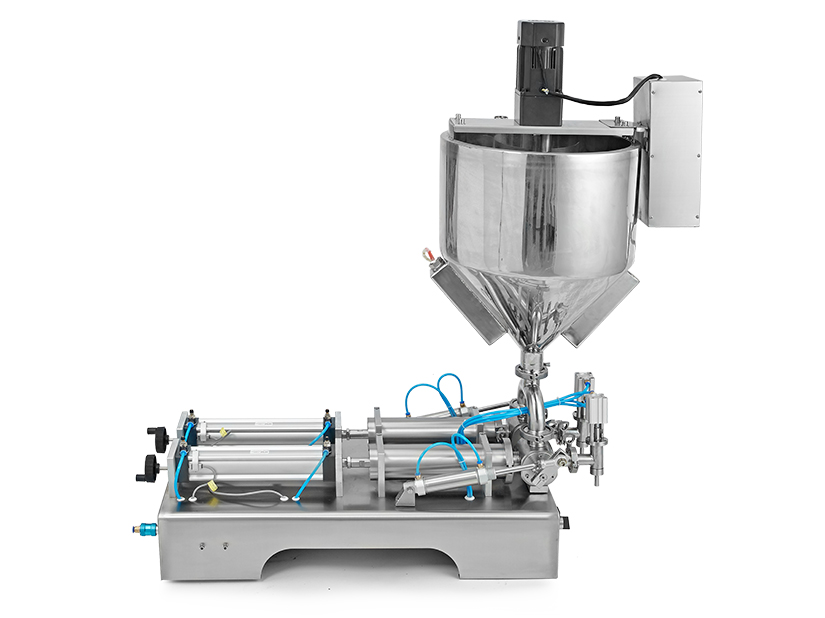
Heated fillers are designed to handle products with high viscosity and irregular consistency. In such cases, dispensers equipped with a mixing bowl and a water jacket provide an exceptionally effective solution. These machines create optimal conditions for working with dense materials, ensuring uniform filling, stable texture, and preventing sedimentation or changes in product consistency.
How Semi-Automatic Filling Machines Work
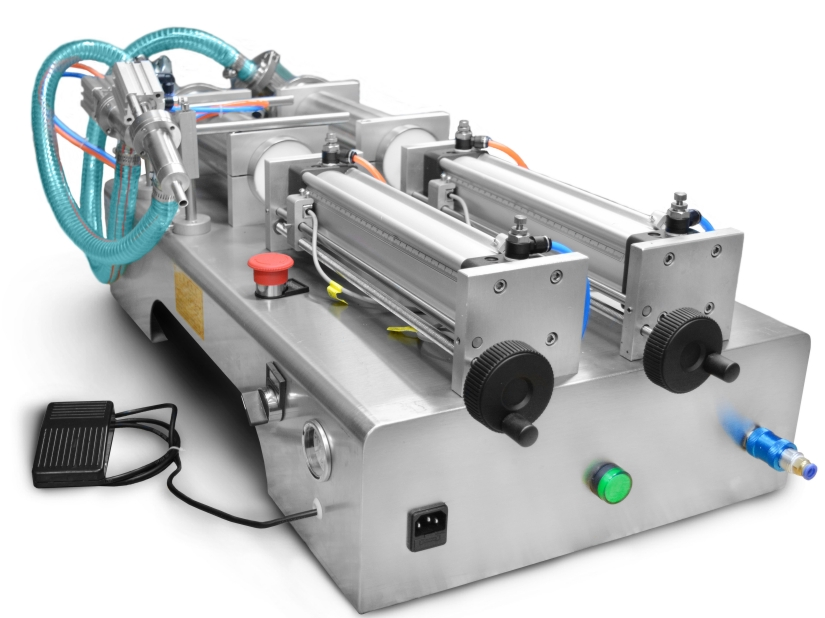
The operation of semi-automatic fillers combines manual handling with automation of key processes. The operator manually positions the container under the filling nozzle and activates the filling process — usually by pressing a button or foot pedal. This setup allows for precise dosing without the need for continuous monitoring of the fill level.
The process typically follows these steps:
Machine setup: The operator sets the filling parameters such as volume and filling speed.
Container placement: The container is positioned under the dispensing nozzle.
Activation: The operator starts the process, and the machine accurately dispenses the pre-set amount of product.
Completion: Once filled, the operator removes the container and replaces it with the next one.
Advantages of Semi-Automatic Filling Machines
Precision
Semi-automatic fillers provide a high degree of dosing accuracy — a crucial factor in industries where even slight overfilling or underfilling can affect product quality and production costs. Adjustable parameters ensure that the exact required amount of liquid or viscous substance is dispensed every time.
Versatility
These machines can handle a wide range of products. Their ability to accommodate various viscosities makes them ideal for manufacturers who need to fill both liquids and thicker substances. A simple change of filling nozzles and settings allows for quick product adaptation.
Ease of Use
Semi-automatic machines are user-friendly, allowing operators to learn quickly. Their simple construction reduces the need for advanced technical knowledge, while intuitive interfaces make daily operation straightforward.
Cost-Effectiveness
While fully automated production lines can offer higher throughput, semi-automatic machines are significantly more affordable — making them perfect for small and medium-sized producers. They also require less maintenance and lower operational costs.
Production Flexibility
Because semi-automatic fillers rely on operator interaction, they are easy to adapt for small production batches. This makes them ideal for custom manufacturing, pilot runs, or testing new products before full-scale production.
Applications of Semi-Automatic Fillers
Semi-automatic filling machines are used in a wide variety of industries:
- Food Industry: For filling liquid and semi-liquid products such as beverages, juices, syrups, edible oils, as well as viscous products like jams, chocolate spreads, and pastes.
- Cosmetic Industry: For filling creams, lotions, liquid soaps, shampoos, and cosmetic masks.
- Pharmaceutical Industry: For precise filling of medicinal liquids, syrups, ointments, and creams.
- Chemical Industry: For dispensing chemical liquids such as detergents, cleaning agents, laundry liquids, and other chemicals.
Agitator Fillers — The Ideal Solution for Challenging Substances
Characteristics of Fillers with Agitator and Heating
1. Dosing Bowl
The bowl serves as a container where the viscous product is held before filling. Its design ensures the proper consistency of the material and enables smooth flow to the filling mechanism.
2. Agitator
The internal agitator plays a crucial role in maintaining uniformity. It keeps the dense material evenly mixed — essential for products prone to ingredient separation, such as creams, balms, or pastes.
Benefits of the agitator include:
- Consistent texture: Prevents settling or layer separation in viscous substances, keeping them ready for filling.
- Uniform dosing: Guarantees that each portion dispensed has identical density and composition — critical in cosmetics and pharmaceuticals.
- Clog prevention: Reduces the risk of blockages when working with very thick materials.
3. Water Jacket
The water jacket is another essential element. It consists of pipes surrounding the bowl through which temperature-controlled water circulates. This system maintains the ideal temperature of the product inside the bowl, directly affecting its dosing properties.
Functions of the water jacket:
- Heating or cooling: Heats dense materials to improve flow (e.g., fatty creams or nut butters) or cools temperature-sensitive substances that must remain stable.
- Temperature stabilization: Maintains a consistent temperature for sensitive cosmetic or pharmaceutical materials, preventing changes in texture or chemical composition.
- Prevention of sedimentation and crystallization: Heating reduces the risk of fat crystallization or sediment formation in certain products.
Advantages of Fillers with Agitator and Water Jacket
Precise dosing of highly viscous materials: The combined action of the agitator and heating jacket ensures accuracy and homogeneity — essential for cosmetics and pharmaceuticals.
Stable temperature control: Maintains optimal working conditions for heat-sensitive or temperature-dependent products.
Versatility: Suitable for a broad range of materials — from thick creams and pastes to sauces and high-viscosity food products.
Prevention of separation: Keeps multi-component substances uniform throughout production.
Easy maintenance and cleaning: Modern designs allow for easy disassembly and cleaning of all product-contact parts, ensuring compliance with strict hygiene standards.
Examples of Use
1. Cosmetic Industry
Ideal for filling jars and tubes with face creams, body lotions, and cosmetic masks — maintaining the correct temperature and consistency.
2. Food Industry
Perfect for sauces, pastes, mustards, mayonnaise, and other thick foods requiring accurate dosing and temperature control to prevent crystallization or texture changes.
3. Chemical and Pharmaceutical Industries
Used for medicinal creams, ointments, and gels, where precise dosing and chemical stability are essential for product quality and compliance.
Conclusion
Semi-automatic filling machines are an ideal solution for businesses seeking precise, efficient, and versatile dosing of liquids and viscous substances. They are especially well-suited for small and medium-sized manufacturers who don’t require full automation but want to optimize their production process.
With their combination of accuracy, flexibility, and user-friendliness, these machines represent an excellent choice for a wide range of industries.
By investing in semi-automatic fillers, companies can expect increased productivity, reduced production costs, and improved product quality — making them a key component of modern, efficient manufacturing.