
Table of Contents
Oil pressing is a process where every detail matters. Temperature, screw rotation speed, and pressure regulation are parameters that directly determine whether you obtain oil full of aroma and nutritional value, or rather a product devoid of its most valuable components. The difference between oil pressed under controlled conditions and one produced without attention to technical parameters can be spectacular - affecting taste, smell, color, and health properties.
Many home oil producers focus solely on selecting the right seeds, forgetting that the quality of raw material itself is only half the battle. Even the finest sunflower seeds, flax, or walnuts will lose their value if the extraction process takes place under improper conditions. Conversely - skillful control of pressing parameters allows you to extract maximum aroma from the seeds, preserve natural pigments, and the unsaturated fatty acids prized by nutrition specialists.
Pressing Temperature - Foundation of Oil Quality
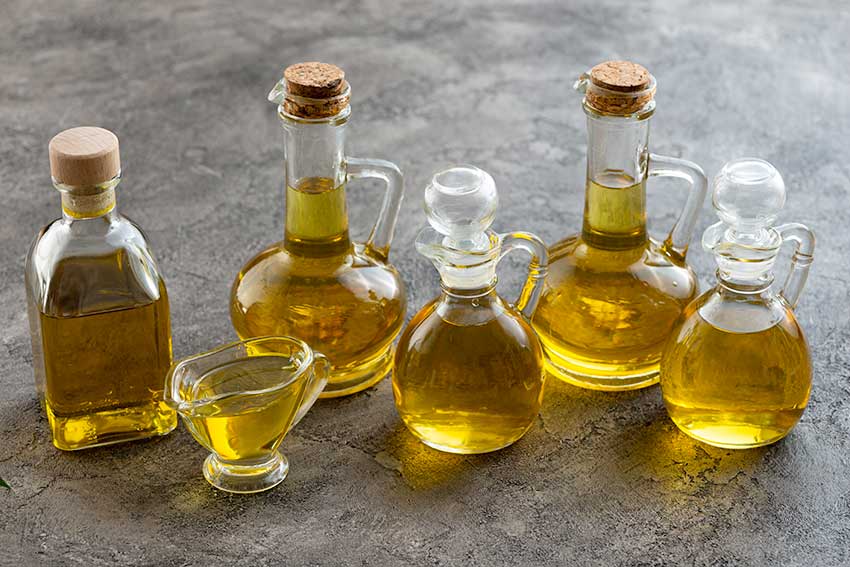
Temperature is the simplest yet most critical parameter in the oil extraction process. Even a slight exceedance of the thermal threshold can cause irreversible changes in the chemical structure of fats, leading to loss of vitamins, degradation of omega fatty acids, and the appearance of undesirable flavors. Oil pressed at too high a temperature acquires a bitter aftertaste, loses the natural aroma of seeds, and darkens - a sign that its nutritional properties have significantly decreased.
Why Temperatures Exceeding 40°C Destroy Oil Value
The 40°C limit is not accidental - it is the threshold above which the process of thermal degradation of the most sensitive oil components begins. Omega-3 fatty acids, particularly abundant in flaxseed oil, are among the most susceptible to oxidation under temperature influence. Already at 50°C, oxidation reactions accelerate exponentially, leading to the formation of free radicals and compounds with health properties far inferior to those in raw oil.
Vitamin E, natural to many oil seeds, acts as an antioxidant protecting oil from rancidity. Unfortunately, it is itself sensitive to temperature - its content decreases proportionally to the time of heat exposure. The same happens with carotenoids, responsible for the yellow-orange coloration of pumpkin or carrot oils, and with polyphenols, which give oil characteristic astringency and act as anti-inflammatory agents. Pressing at temperatures below 40°C allows these substances to be preserved in virtually unchanged form.
In addition to nutritional component degradation, high temperature also affects the flavor-aromatic profile of oil. Volatile aromatic compounds that give oil its characteristic smell of fresh seeds evaporate or transform into other substances with less pleasant aroma. Cold-pressed oil typically has an intense, clean taste corresponding to the raw material, while that from high-temperature processes can be flat, sometimes even bland or bitter.
Digital Temperature Control in Practice
Traditional oil presses offered no tools for monitoring temperature during pressing - the operator could at best assess it organoleptically, by touching the head or evaluating the smell of the emerging oil. Such a method was imprecise and did not protect against accidentally overheating a batch of seeds, especially during longer pressing sessions. Currently available solutions are equipped with digital temperature displays that allow real-time monitoring of conditions in the pressing chamber.
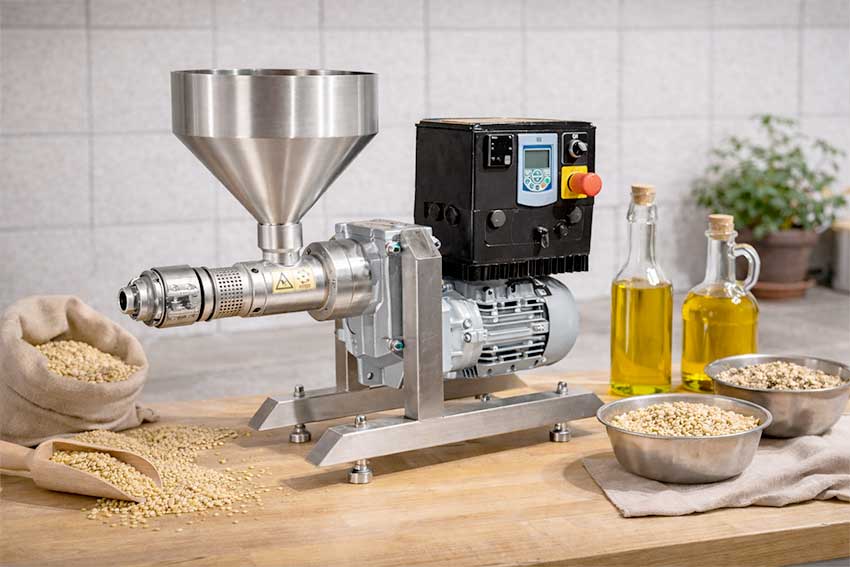
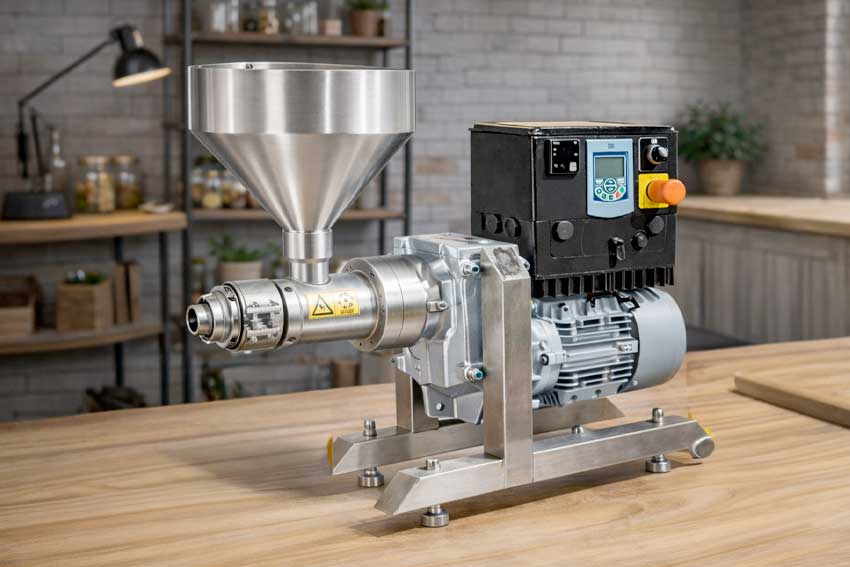
An example of such equipment is the press with digital temperature control and speed regulation, which is equipped with an integrated head heating system and a sensor monitoring conditions in real time. Thanks to this, the operator knows exactly when temperature approaches the upper limit of safe cold pressing. The ability to maintain a constant value throughout the process is a guarantee of quality repeatability, which is crucial especially in small commercial oil mills or on agritourism farms offering their own products.
It is worth emphasizing that temperature control works both ways. In cooler rooms, especially in winter, oil may be extracted at too low a temperature, which reduces its fluidity and hinders separation from sediment. Thanks to built-in heating, the user can increase the temperature to the optimal level, for example 30-35°C, while maintaining all the characteristics of cold pressing. This is particularly important in the case of hard seeds, such as grape or pumpkin seeds, where lower temperature can extend extraction time and reduce efficiency.
Temperature Impact on Different Types of Seeds
Not all seeds react to temperature in an identical way. Flaxseed, known for its high omega-3 fatty acid content, requires particular caution - even a slight temperature increase above 35°C significantly accelerates oxidation and shortens oil shelf life. For this reason, many flaxseed producers maintain temperature in the range of 25-30°C, accepting somewhat lower efficiency in exchange for maximum nutritional value of the product.
Sunflower and rapeseed seeds have somewhat greater thermal tolerance - oils from these raw materials maintain good quality even at 38-40°C. Higher temperatures increase oil fluidity in the pressing cell and facilitate its outflow, which can be beneficial from an efficiency standpoint. However, it should be remembered that already at 45-50°C there is a noticeable loss of the natural floral aroma characteristic of fresh sunflower oil.
Walnuts and hazelnuts are raw materials in which aroma is as important as nutritional value. Pressing at low temperature, in the range of 28-32°C, allows preservation of delicate, buttery notes and subtle sweetness, which disappear during high-temperature process. At the same time, the nutty character of oil gains in distinctiveness if the seeds are lightly roasted at 110-120°C before pressing - however, this is a separate operation, unrelated to the extraction itself. After roasting, the raw material should cool to room temperature before introducing it to the press, so that the pressing temperature remains within safe limits.
Rotation Speed - Balance Between Efficiency and Quality
The second key parameter of the pressing process is the screw rotation speed. It determines the intensity of mechanical action on the seeds, the time the material spends in the pressing chamber, and the amount of heat generated by friction. Too fast pressing can lead to system overheating, while excessively slow extends the process and reduces production efficiency. Finding the golden mean is essential to obtain high-quality oil with reasonable time investment.
Slower Pressing - Intensity of Aroma
Lower screw rotations mean that seeds are more gently crushed and move more slowly through the extraction chamber. Prolonged contact with the pressing surface allows more thorough squeezing of oil from the seed tissue, while limiting system heating. In practice, this means that temperature rises gradually and rarely exceeds the safe threshold, even during intensive pressing in a longer production cycle.
Slower pressing also has a beneficial effect on aroma. Volatile substances have more time to release from the seed tissue in a controlled manner, which translates to a deeper, more complex aromatic profile of oil. Many tasters confirm that oils pressed at low rotations are characterized by greater roundness of taste and more clearly reflect the character of the raw material. This is particularly visible with seeds with a rich aromatic profile, such as sesame or black cumin.
From a technical perspective, lower rotations also allow better oil clarity. In fast pressing, more fine solid particles enter the oil, which require long settling or filtration. A slower process results in a cleaner product that naturally clarifies after just a few days of decantation. This is particularly important for producers who value oil transparency as an indicator of artisanal product quality.
Faster Pressing - Efficiency Optimization
Increasing rotation speed results in greater equipment throughput - more seeds are processed per unit time, which translates to higher hourly efficiency. For commercial producers, especially those servicing seasonal orders, the ability to quickly press a large batch of raw material has not only convenience but also economic profitability significance. Higher rotations can also slightly increase oil percentage yield, because more intensive pressing results in more efficient fat outflow from the cake.
However, it should be remembered that faster pressing generates more friction heat. A screw rotating with greater power produces higher temperatures in the contact zone with seeds, which requires special attention not to exceed the safe thermal threshold. Therefore, at higher rotations, real-time temperature monitoring is necessary and possibly using shorter work cycles with breaks for system cooling.
It is also worth noting that fast pressing favors the appearance of more suspension in the oil. Fine fragments of hull, seed membranes, or oil cells pass through the pressing sieve and suspend in the liquid. Such oil requires more careful filtration or longer settling before it reaches the desired transparency. For some applications - for example in cosmetics or pharmaceuticals production - clarity is a critical parameter, which makes slower pressing a more attractive solution despite lower efficiency.
How to Match Speed to Seed Type
Each seed type has an optimal speed setting that allows balancing quality and efficiency. Hard-hulled seeds, such as pumpkin or grape seeds, tolerate higher rotations well - their structure requires greater pressing force to effectively release oil. Practice shows that for this type of raw material, speed at the level of 18-22 rotations per minute gives satisfactory results without excessive overheating.
Soft seeds, such as hulled sunflower or flaxseed, are better pressed at lower rotations, in the range of 12-16 rotations per minute. Such speed ensures gentle crushing of seed tissue, which minimizes the risk of fine particles entering the oil and protects against sudden temperature increase. For flaxseed, this is particularly important due to the sensitivity of omega-3 fatty acids to oxidation.
Peanuts, walnuts, or hazelnuts require an individual approach. Roasted nuts, characterized by lower moisture, press more easily and at slightly higher rotations (about 16-18 rpm) give satisfactory yields. Raw nuts require a slower process, especially if we care about preserving natural aroma - then 10-14 rpm is a reasonable range. Speed regulation in equipment equipped with stepless rotation change allows precise adjustment of parameters to the currently processed raw material.
Pressure and Outlet Gap - Precision of Extraction
Besides temperature and rotation speed, pressure exerted on seeds and outlet gap width play a key role in the pressing process. These parameters determine how intensively the screw compresses the material and how easily oil can flow outward. Too narrow a gap causes excessive crushing and overheating, while too wide lowers extraction efficiency and leaves a significant amount of oil in the cake.
Role of Pressing Nozzles in the Process
A pressing nozzle is an element mounted at the pressing chamber outlet that regulates the width of the gap through which the cake emerges. The smaller the opening, the greater the resistance encountered by the outgoing material, and consequently - the higher the pressure inside the chamber. For different seeds, different nozzle sizes are used, adapted to hull hardness, oil content, and desired final product quality.
In practice, the user receives a set of several nozzles with graduated diameters - typically from 6 to 12 mm. For high-oil seeds, such as hulled sunflower, smaller diameter nozzles are used, which increase pressure and force more thorough fat pressing. On the other hand, for hard grains, such as rapeseed or soy, wider nozzles allow smoother material flow and prevent chamber blocking.
The ability to exchange nozzles is a functionality particularly valued by operators working with various raw materials. There is no need to manually adjust pressing screws or use complicated mechanisms - just unscrew the current nozzle and mount another one with the appropriate diameter. This is simplicity of operation that significantly shortens the time of press reconfiguration between different seed batches.
Pressure Regulation for Different Raw Materials
Appropriate pressure selection has a direct impact on oil taste and purity. Too high pressure can lead to squeezing not only oil but also bitter substances contained in the hull or seed membranes. This is particularly important when pressing unhulled seeds, where hull fragments can enter the final product and give it an undesirable, astringent taste.
For flaxseed, it is recommended to use nozzles with a diameter of 8-10 mm, which ensures moderate pressure and allows gentle extraction. Flaxseed oil pressed under such conditions has a light, golden color and clean, nutty aroma. For hulled sunflower, narrower nozzles are used, 6-8 mm, which increases efficiency and allows obtaining more oil from a unit mass of seeds.
Rapeseed, known for its fairly hard shell, requires diameters in the range of 9-11 mm. With such configuration, the process runs smoothly, and the cake comes out in the form of dry, compact pellets, which facilitates its later use as animal feed or composting additive. Too narrow a gap in the case of rapeseed can lead to chamber blockages and the need for frequent press cleaning.
Moisture and Raw Material Preparation
Oil quality depends not only on pressing parameters but also on the condition of the raw material itself. Residual seed moisture, their purity, and storage method have a fundamental impact on how effectively the extraction process will proceed and what the final character of the product will be. Seeds that are too moist can cause press blockages, while over-dried ones easily crumble and generate excessive friction heat.
Residual Moisture and Pressing Efficiency
Optimal residual moisture for most oil seeds is in the range of 6-8 percent. At such values, seeds maintain appropriate plasticity - they crush in the pressing chamber without excessive crumbling, and oil easily separates from sediment. Too moist grains, with water content above 10 percent, require longer pressing time, and the resulting oil has a tendency to spoil quickly because moisture favors microorganism development.
On the other hand, seeds with moisture below 5 percent become brittle and breakable. When pressed in the pressing chamber, they break into fine fragments that can block the sieve and reduce oil quality by increasing suspension content. Moreover, very dry seeds generate greater friction heat, which raises process temperature and increases the risk of nutritional component degradation.
Before pressing, it is worth measuring seed moisture using a simple grain moisture meter. If it turns out that the raw material is too moist, it can be spread in a thin layer in a well-ventilated room or gently heated in a roaster set to low temperature. Seeds that are too dry can be lightly moistened with water from an atomizer and left for several hours in a closed container so the moisture distributes evenly.
Seed Roasting - Changing the Aromatic Profile
Seed roasting is a treatment that goes beyond the pressing process itself but has a huge impact on oil character. Seeds roasted at 100-140°C for 10-20 minutes acquire deeper, more pronounced aroma and darker color. Oil pressed from such seeds has a distinctly nutty, sometimes slightly caramel taste, which is highly valued in many culinary cultures.
Roasting causes chemical transformations in seeds - simple sugars caramelize, proteins undergo partial denaturation, and volatile aromatic compounds form new, more complex connections. This gives oil taste depth unavailable when pressing raw seeds. At the same time, roasting slightly lowers the content of certain vitamins, especially vitamin E, therefore it should be treated as an optional treatment, selected depending on product purpose.
After roasting, seeds must cool to room temperature before introducing them to the press. Pressing hot seeds immediately after roasting will cause exceeding the safe temperature threshold and degradation of nutritional components. It is best to roast seeds in the evening, leave them overnight to cool, and press in the morning under standard conditions. Thanks to this, oil retains the full taste given by roasting, without losing nutritional value characteristic of cold pressing.
Practical Examples of Pressing at Different Settings
Theory only gains concrete shape when confronted with practice. Below we present detailed examples of pressing selected seed types at specific parameters. Each case illustrates how changing settings affects the final product - its taste, aroma, color, and transparency. This is a compendium of knowledge that can serve both beginners and experienced cold-pressed oil producers.
Flaxseed Oil - Cold Pressing for Omega-3
Flaxseed is a raw material requiring particular delicacy due to high omega-3 fatty acid content. Optimal pressing conditions include temperature in the range of 25-30°C, screw rotation speed at the level of 12-14 rpm, and a pressing nozzle with a diameter of 9-10 mm. With such settings, oil is extracted at a calm pace, maintaining golden color and fresh, slightly nutty aroma.
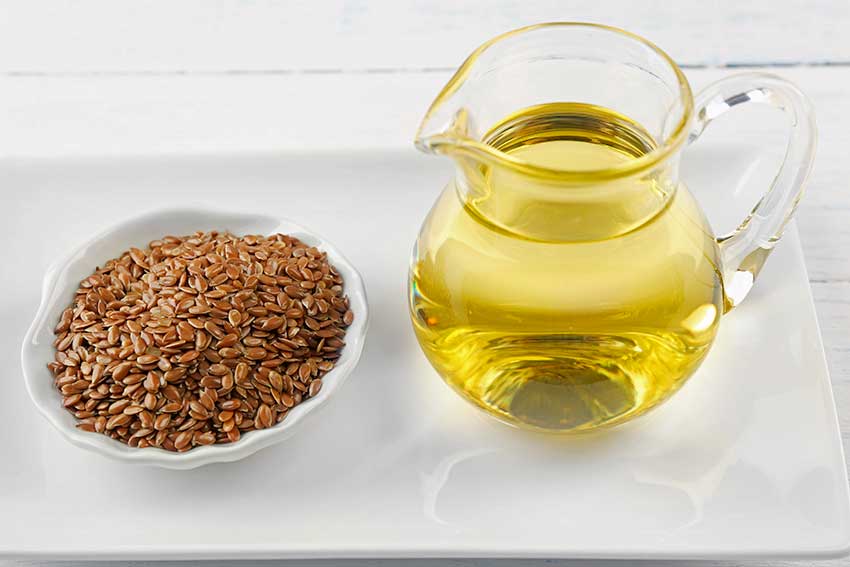
It is crucial to maintain low temperature throughout the process. If temperature approaches 35°C, it is worth slowing down rotations or introducing a short break in pressing so the system cools down slightly. Freshly pressed flaxseed oil has a slightly greenish tinge and characteristic seed smell - these are signs of high quality. After a few days of settling, it clarifies to a light yellow color, and any fine particles settle to the bottom of the vessel. Percentage yield with such parameters is usually 32-38 percent relative to seed mass.
An attempt to increase rotations to 18-20 to improve efficiency usually brings the opposite effect. Temperature quickly exceeds 40°C, oil darkens and begins to smell less fresh. Taste loses delicacy, bitter notes appear. While omega-3 fatty acid content does not drop dramatically, the oil becomes more susceptible to oxidation and its shelf life is shorter.
Sunflower Oil - Optimal Universal Conditions
Hulled sunflower seeds are among the easiest to press and most tolerant in terms of parameters. For this raw material, temperature of 32-38°C, speed of 16-18 rpm, and a nozzle with a diameter of 7-8 mm are recommended. Sunflower oil pressed under such conditions has a light, slightly golden color, delicately nutty taste, and pleasant, floral aroma.
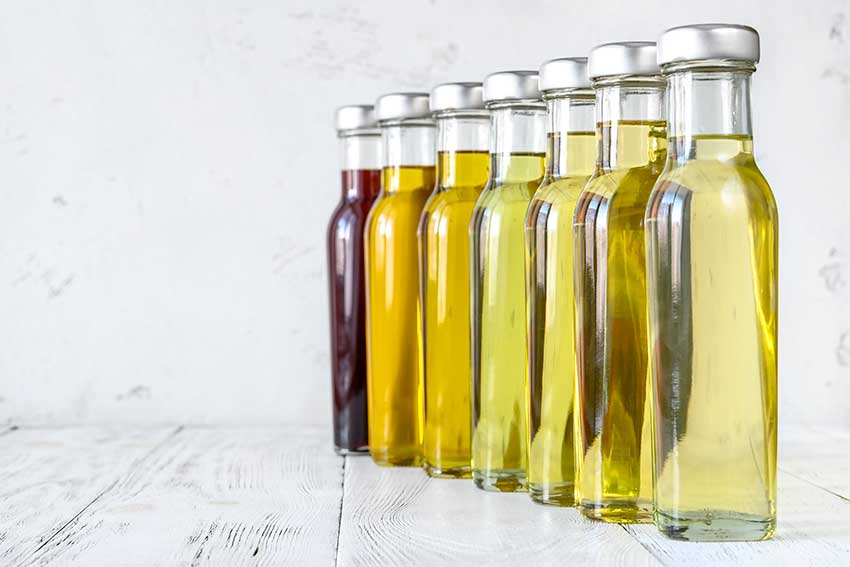
With settings close to the upper temperature limit, i.e., about 38-40°C, efficiency increases by a few percentage points. Oil is more fluid, separates faster from sediment, and achieves greater transparency after short decantation. Taste remains clean, although it loses somewhat in intensity. For most culinary applications, such oil is completely satisfactory and maintains full nutritional value.
Experimenting with very slow rotations - for example 10-12 rpm - leads to oil with deeper aroma, which is particularly appreciated by lovers of intense flavors. Temperature in such case remains in the range of 28-32°C, which protects all sensitive components. The disadvantage is prolonging pressing time and slightly lower efficiency, which, however, in home or artisanal production does not constitute a major problem.
Walnut Oil - Demanding Extraction
Walnut is a raw material with exceptional taste values but at the same time requiring precise parameter adjustment. Nuts before pressing should be lightly dried or optionally gently roasted at 110-120°C for several minutes, which brings out their buttery aroma. After cooling to room temperature, they are introduced to the press, set to 28-32°C, with a speed of 10-14 rpm and a nozzle of 9-10 mm.
Walnut oil pressed at low temperature has amber color, intense fresh nut smell, and smooth, slightly sweet note in taste. This is a premium product that pairs excellently with salads, desserts, and grilled dishes. Efficiency usually amounts to about 45-55 percent, making it one of the most profitable raw materials in terms of oil yield.
Raising temperature above 35°C causes oil to darken, its taste becomes more pronounced but simultaneously loses subtlety. Burnt notes appear, which for some consumers may be attractive but do not correspond to the canons of classic cold-pressed walnut oil. On the other hand, too fast pressing causes fine nut fragments to pass into oil, which requires its more thorough filtration. For optimal quality, it is therefore recommended to stick to lower speeds and temperature not exceeding 32°C.
Frequently Asked Questions
Can I press different seeds without changing press settings
Theoretically, pressing different seeds at the same settings is possible, however quality and efficiency will be suboptimal. Each raw material type has its optimal combination of temperature, rotation speed, and nozzle width. Universal setting may work for seeds with similar properties, for example sunflower and rapeseed, but for flaxseed or nuts it will be far from appropriate. It is best to spend a few minutes reconfiguring the press to obtain maximum oil quality.
How often should I clean the press to maintain consistent oil quality
Cleaning frequency depends on work intensity and type of pressed seeds. For high-oil seeds, such as sunflower or rapeseed, cleaning is recommended after each longer pressing session, i.e., every few hours of continuous work. When pressing different raw materials in short time intervals, especially if they have distinctly different flavors - for example sesame and walnut - cleaning should take place between seed changes to avoid mixing aromas. Regular cleaning also prevents accumulation of residues that can become rancid and negatively affect the freshness of subsequent oil batches.
Does a press with digital temperature control really matter for oil quality
Yes, digital temperature control is crucial for quality repeatability and process safety. Thanks to the display, the operator immediately knows when temperature approaches the upper limit of safe cold pressing. This allows quick reaction - slowing rotations, introducing a break, or adjusting another parameter. Presses without temperature control require great user experience and intuition, yet still do not guarantee that each oil batch will come out under identical conditions. Digital control removes this element of uncertainty, which is particularly important for small commercial oil mills striving for consistent product quality.
How long does cold-pressed oil maintain freshness
Cold-pressed oil durability depends mainly on seed type and storage method. Oils rich in omega-3 fatty acids, such as flaxseed, maintain freshness for 2-4 months, provided they are stored in a cool, dark place, preferably in tightly sealed dark glass bottles. More stable oils, such as sunflower or rapeseed, can last 6-12 months. After opening the bottle, oil should be consumed within several weeks because contact with air accelerates oxidation. It is also crucial to press oil at low temperature - the lower, the longer product durability.
Is it worth investing in rotation speed control function
Rotation speed control is a function that significantly expands press capabilities and allows process adjustment to different raw materials. For users working with one seed type, it may seem optional, but for those who want to experiment with various oils, it is almost essential. Thanks to it, one can easily switch between slow, aromatic nut pressing and fast, efficient rapeseed or sunflower processing. Investment in a press with speed regulation quickly pays off in the form of higher oil quality and production flexibility.
How does pressing nozzle exchange affect final oil taste
Pressing nozzle exchange has a direct impact on extraction intensity and thus on oil taste. A narrower nozzle causes higher pressure, which can lead to squeezing not only oil but also substances contained in hulls or seed membranes. As a result, oil may have a more pronounced, sometimes astringent taste. A wider nozzle gives gentler pressing, which results in a cleaner, more delicate flavor-aromatic profile. For most culinary applications, it is recommended to use nozzles recommended by the manufacturer for a given seed type, which ensures optimal balance between efficiency and organoleptic quality.
Does seed storage before pressing affect oil quality
Seed storage method has enormous significance for final oil quality. Seeds stored in moist or warm conditions can mold, ferment, or lose their freshness. It is best to store them in sealed containers, in a dry and cool place, away from direct sunlight. Seeds that have absorbed moisture or were stored for a long time can give oil with less intense aroma and increased tendency to rancidity. Before pressing, it is worth checking seed smell - it should be fresh, without foreign notes. If seeds smell musty or have a foreign odor, it is better not to press them, because these characteristics will transfer to the oil.