
Table of Contents
- Why assessing seeds after winter is so important
- Moisture content - the most important parameter to check after winter
- Smell - the sensory detective of seed problems
- Flowability - a simple test that tells you a lot
- Visual assessment - what else is worth checking with the eye
- Storage conditions and the state of seeds in spring
- How to prepare seeds for pressing after detecting minor deviations
- Roasting as a preparation step - when it is worthwhile and when it is not
- Documenting inspection results - a habit that pays off
- Summary - a spring seed assessment checklist
- Frequently asked questions
Winter in the pantry is not a time of inactivity - it is months of quiet, invisible struggle. A struggle between dry, carefully prepared autumn seeds and the moisture, temperature, and microorganisms that exploit every storage mistake. When the first thaws begin outside the window and the air carries that characteristic scent of wet earth, the time has come to check your supplies and ask one fundamental question: are these seeds still fit for pressing?
The answer is not obvious at all. Seeds can look perfect yet be too moist to yield good oil. They can smell neutral even though oxidation processes have already begun inside. They can pour like sand yet reveal the first traces of mould under a magnifying glass. Assessing raw material after overwintering is a skill worth developing year after year, because it determines not only the quality of the pressed oil but also the lifespan of the press itself and the safety of the final product.
Why assessing seeds after winter is so important
The oil pressing season in home and semi-industrial settings often follows a clear rhythm - in autumn we buy or harvest the raw material, in winter we store it, and in spring, when last year's oil supplies start running low, we fire up the press again. The problem is that several months pass between the autumn preparation of the seeds and the spring pressing, and a great deal can happen during that time.
First and foremost, seeds breathe. They are living biological material that carries on metabolic processes even in a dormant state. Each breath means gas exchange and the release of small amounts of heat and moisture. In a well-ventilated, dry room these processes proceed slowly enough to pose no threat. However, slightly elevated air humidity, insufficient circulation, or excessive temperature fluctuations are all it takes for the seeds to start sweating - and that opens the door for moulds, fungi, and fat oxidation.
Consequences of pressing from unsuitable raw material
Pressing oil from seeds that have undergone uncontrolled moisture changes carries risks on multiple levels. First, the yield drops dramatically - overly moist seeds do not press properly, and the oil flows out cloudy, with a lot of sediment. Second, the oil from such material has a considerably shorter shelf life because oxidation processes were already initiated within the seed itself. Third, in extreme cases, excessively moist seeds can block the press mechanism, leading to damage and costly repairs.
Food safety concerns should not be underestimated either. Moulds growing on oilseeds can produce mycotoxins - toxic substances that are not eliminated during cold pressing. Aflatoxins, ochratoxin A, and zearalenone are real hazards that can appear in oil pressed from mouldy seeds, even if the mould was not visible to the naked eye.
Moisture content - the most important parameter to check after winter
If one had to choose a single parameter on which the success of pressing depends, it would be seed moisture content. It is moisture that determines whether the press will work smoothly, the oil will flow in a clean stream, and the press cake will come out dry and crumbly. Moisture is also the best indicator of how well the seeds survived the winter - if it is too high, something went wrong during storage.
Optimal moisture content for different seed types
Every species of oilseed has its own optimal moisture range for pressing. For sunflower seeds, the typical range is 6-8%, although hulled seeds can be slightly more demanding. Rapeseed presses best at 6-7% moisture, flaxseed at 7-8%, and black cumin at 5-7%. Pumpkin seeds, due to their specific structure, tolerate a somewhat wider range, but optimally their moisture should be at 6-8%. Sesame presses best at 4-6%, while nuts - both hazelnuts and walnuts - require particular attention, as their optimal moisture is only 3-6%.
Exceeding the upper limit of these ranges by even 1-2 percentage points can dramatically change the pressing process. The seeds start sticking together, the oil flows out with a lot of water, and the press cake has the consistency of modelling clay rather than dry flakes. Conversely, seeds that are too dry - although this is a less common problem after winter storage - can lead to the loss of some valuable nutrients and a decline in oil flavour.
Methods of measuring seed moisture
There are several ways to check seed moisture, from the simplest home methods to precise electronic measurements. The traditional oven-drying method, which involves weighing a sample before and after drying in a laboratory oven, is considered the reference standard, but in a home oil mill it is impractical - it requires specialised equipment and several hours of patience.
A much more convenient solution is an electronic capacitive moisture meter. Devices of this type measure the water content in seeds based on changes in the dielectric properties of the sample. The measurement takes just a few dozen seconds and delivers a result accurate enough to make a pressing decision. It is well worth investing in such an instrument, because regular moisture monitoring is the foundation of responsible oil pressing.
Draminski GMM mini II moisture meter - a tool designed for oilseeds
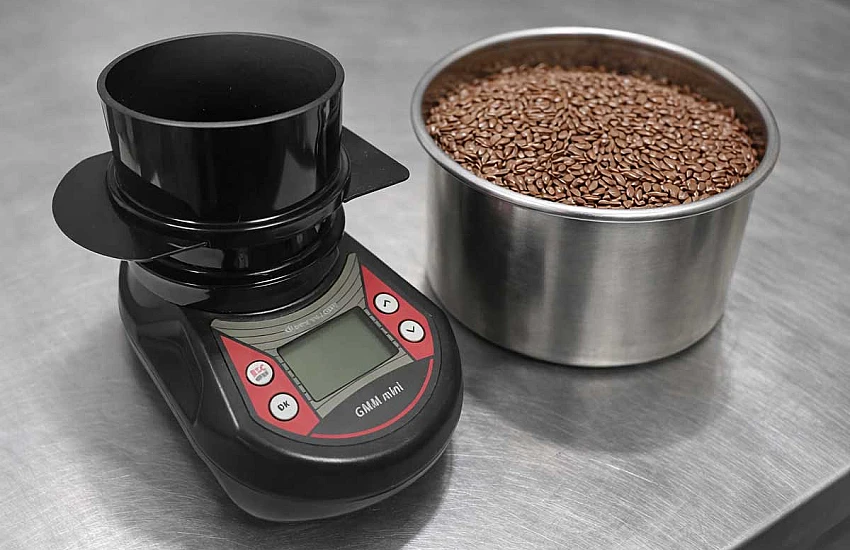
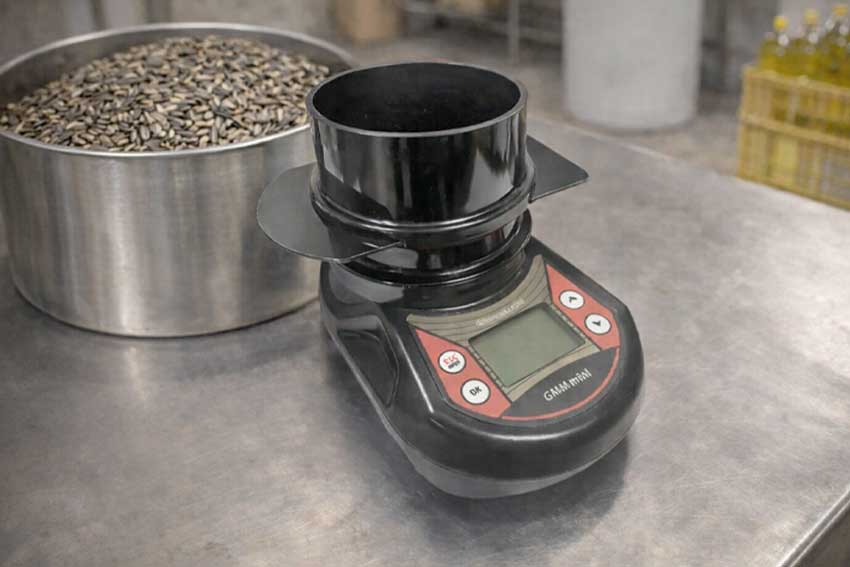
Among the moisture meters available on the market, the Draminski GMM mini II model calibrated specifically for oilseeds deserves particular attention. It is available at the pureoilpress.com store for EUR 289. This compact Polish-made device was designed with daily use on a farm or in a small oil mill in mind. It weighs just 700 grams with batteries and fits in the palm of your hand, enabling convenient measurements directly in the warehouse, silo, or even in the field.
What sets this model apart from the competition is its dedicated calibration for 14 species of oilseeds, including sunflower (hulled and unhulled), rapeseed, flax, black cumin, sesame, pumpkin (hulled and in shell), milk thistle, hemp, soybean, as well as hazelnuts, walnuts, and almonds. This means there is no need to rely on approximate readings from a device calibrated for cereals - the measurement is precise and tailored to the specifics of oilseeds.
The Draminski GMM mini II operates using the capacitive method. A seed sample is measured out using the included dosing cup with a slide gate, poured into the measurement chamber, and the result appears on a large, backlit 2-inch graphical LCD display. The device shows the full species name, moisture expressed as a percentage, the measurement average, and the seed temperature, which is automatically factored into the result compensation. Measurement accuracy is plus or minus 1% in the range up to 10% moisture and plus or minus 1.5% above that threshold.
A very practical feature is the built-in USB port, which allows calibration data and firmware to be updated without sending the device to a service centre. This means that even after many years of use, the meter remains current and precise. The device is powered by two standard AA batteries, and the approximate continuous operating time on a single set ranges from 70 to 151 hours, depending on the backlight settings.
You can find more information about the Draminski GMM mini II moisture meter at: https://www.pureoilpress.com/en/product/moisture-meter-for-oilseeds
How to interpret moisture measurement results
The reading from the moisture meter is only the beginning. The key is to interpret the result skilfully in the context of the specific seed species and the intended pressing method. If moisture falls within the optimal range, you can proceed to pressing with confidence. If it is slightly elevated - say 1-2 percentage points above the norm - it is worth considering gentle drying before pressing, for example by spreading the seeds in a thin layer in a dry, well-ventilated room for a few days.
When moisture exceeds the norm by 3 or more percentage points, the situation becomes more serious. Such seeds probably require not only drying but also a thorough inspection for mould and scent changes. Sometimes a better decision is to forgo pressing a given batch rather than risk producing low-quality oil that may not be fit for consumption.
Remember also that moisture should be measured at several points within a batch - the seeds in the middle of a bag may have a different moisture level than those at the top or the bottom of the container. A good practice is to take at least three samples from different locations and calculate the average.
Smell - the sensory detective of seed problems
Our nose is a surprisingly effective diagnostic tool when it comes to assessing oilseed quality. The sense of smell can detect the early stages of fat decomposition, mould development, or the presence of foreign substances long before these changes become visible. That is why olfactory assessment should be a permanent part of your spring stock check.
How to properly assess the smell of seeds
Olfactory assessment requires a certain methodical approach. It is not enough to briefly sniff an open bag - that is too little to catch subtle changes. A proper assessment involves taking a handful of seeds, closing your hand around them for about fifteen seconds, then bringing your hand to your nose and inhaling slowly and deeply. The warmth of your hand releases volatile substances that might escape during a cursory check.
An even more sensitive test is to crush a few seeds between your fingers and smell the resulting mass. Breaking the seed structure releases aromas that are locked inside - both desirable ones and those indicating adverse changes. For larger seeds such as pumpkin seeds or nuts, it is also worth cutting them with a knife and assessing the smell of the interior.
Types of undesirable smells and what they mean
Healthy, well-stored oilseeds have a delicate, pleasant aroma characteristic of their species. Flaxseed smells slightly nutty, sunflower has a mildly grassy note, rapeseed is fairly neutral, and sesame is subtly spicy. Knowing these natural scent profiles is important because it allows you to catch deviations more quickly.
A musty smell, reminiscent of a damp cellar or wet rags, unambiguously points to a moisture problem and probable fungal growth. Such seeds should not be pressed without first thoroughly checking the moisture and visually inspecting for mould. Even if no visible deposits can be seen with the naked eye, a musty smell suggests that the fungal microflora is active.
A rancid, bitter smell, reminiscent of old fat or oil paint, signals advanced oxidation of the fats contained in the seed. Oxidative processes lead to the formation of aldehydes and ketones that have a characteristic, unpleasant aroma. Oil pressed from such seeds will have a bitter aftertaste and reduced nutritional value - vitamin E levels and polyunsaturated fatty acid content will be significantly lower.
A sour, fermentative smell can appear when seeds were stored in an overly airtight container without air access while also having elevated moisture. Under such conditions, bacteria carrying out anaerobic fermentation can develop. Seeds with a pronounced sour smell should be rejected outright.
It also happens that seeds absorb foreign odours from the surroundings - chemicals, fertilisers, fuels, or even strongly scented food products stored in the same room. Although the seeds themselves may be technically fit for pressing, the absorbed aromatic substances will transfer to the oil, rendering it unfit for consumption.
Flowability - a simple test that tells you a lot
Flowability is one of those parameters that experienced oil millers check almost reflexively when reaching into a bag of seeds. It is a physical characteristic that can be assessed without any instruments - just hands and a bit of practice. At the same time, flowability is extremely informative because it correlates with both moisture content and the overall health of the seeds.
What exactly does seed flowability tell us
Healthy, properly stored oilseeds should pour freely between your fingers without forming clumps or clusters. After scooping up a handful and slowly tilting your hand, the seeds should slide off in a steady stream without leaving wet marks on the skin. If you pour seeds from one container to another, they should form a distinct, conical mound - not flatten out or stick together.
Reduced flowability is an almost certain signal of elevated moisture. As the water content in seeds rises, a thin film of moisture appears on the seed surface, causing individual seeds to cling to each other. With small seeds such as flax or sesame, the effect is especially pronounced - instead of a free-flowing stream, you observe clumps that need to be broken apart with your fingers.
It is also worth noticing whether the seeds leave a greasy film on your hands. Oilseeds naturally contain fats on their surface, but in healthy seeds this layer is minimal. If, after pouring seeds through your hands, they are noticeably greasy, it may mean that the seed coat is damaged - due to mechanical injury, pest activity, or decomposition processes - and oil is leaking from inside the seed.
Testing flowability in practice - several proven methods
Besides simple hand-pouring, there are several more systematic methods of assessing flowability. One involves pouring a set volume of seeds onto a flat, smooth surface - such as a cutting board or baking sheet - from a height of about 20 centimetres. Loose, dry seeds will spread widely and evenly, forming a low, broad mound. Moist or clumped seeds will form a taller, more concentrated mound, and individual seeds will not roll.
Another method is the tilt test. Fill a glass halfway with seeds, then slowly tilt it. The angle at which the seeds begin to shift says a lot about their flowability. Dry, healthy seeds will start moving at a relatively gentle tilt angle. Moist seeds will resist tilting for much longer, and when they finally shift, they may do so in an avalanche - all at once.
Experienced pressers also use a simple squeeze test - they scoop a full handful of seeds, squeeze it firmly for a few seconds, then open their hand. Dry seeds immediately scatter without retaining the shape of the closed hand. Seeds with elevated moisture briefly hold the block shape before falling apart, while decidedly over-moist seeds retain a clear imprint and break up reluctantly.
Visual assessment - what else is worth checking with the eye
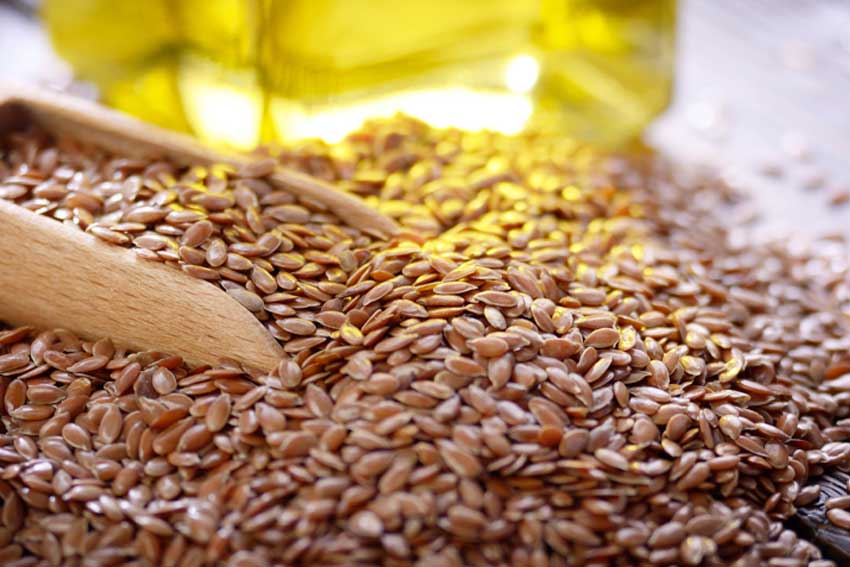
Although moisture, smell, and flowability are the three pillars of post-winter seed assessment, a simple visual inspection should not be overlooked. The human eye, especially aided by good lighting and possibly a magnifying glass, can detect many problems that might escape other senses.
Looking for traces of mould and fungal growth
Moulds on oilseeds can take various forms - from a whitish, powdery coating through greenish or bluish films to black, spot-like colonies. Seeds that are mechanically damaged, cracked, or stripped of their hull are especially vulnerable to fungal attack because the exposed interior provides an ideal nutrient source for fungi. Visual inspection is best carried out in good daylight, with seeds spread in a thin layer on a light-coloured surface.
Not every colour change indicates mould. Some seeds may darken as a result of natural oxidation processes - this is especially true of flax and hemp. However, any irregular discolourations, spot-like deposits, or web-like strands connecting individual seeds should raise concern and prompt a more detailed analysis of the batch.
Presence of storage pests
The winter months do not mean that pests become inactive. Grain weevils, flour moths, lesser grain borers, and other storage insects can survive winter in heated rooms, and even in unheated ones if the temperature does not drop below minus ten degrees. Signs of their presence include tiny holes in seeds, web-like threads connecting seeds, the presence of larvae or adult insects, and a characteristic, sweetish smell of decay.
Seeds attacked by storage pests are not suitable for pressing food-grade oil. Even if the number of damaged seeds is small, insect droppings and secretions can contaminate the entire batch. If pest presence is suspected, the best course of action is to isolate the infested batch, thoroughly clean the storage area, and deploy pheromone traps before loading new raw material.
Storage conditions and the state of seeds in spring
The state of the seeds you find in spring is a direct consequence of the conditions in which they spent the winter. Understanding these connections helps not only in assessing the current raw material but also in drawing conclusions for the future and improving the storage system.
Temperature and its effect on processes in seeds
Storage temperature is one of the key factors. The optimal temperature for long-term storage of oilseeds is a range of 5 to 15 degrees Celsius. In this range, metabolic processes in the seed are slowed to a minimum, and the growth of most storage fungi is effectively inhibited. Problems begin when the temperature exceeds 20 degrees or when large daily fluctuations occur.
Temperature fluctuations are especially treacherous because they lead to a phenomenon known as moisture migration. When the air in the warehouse warms during the day and cools at night, water vapour condenses on cooler surfaces - including on seeds. This cyclical process can raise seed moisture by several percentage points over the course of a few weeks, even if the initial moisture was optimal.
Air humidity and ventilation
Relative air humidity in the storage room should not exceed 65-70 percent. Above this level, seeds begin actively absorbing moisture from their surroundings because they seek hygroscopic equilibrium with the environment. In the climate conditions of Central and Northern Europe, maintaining low humidity in an unheated warehouse during winter can be challenging, especially during thaw and melt periods.
Proper ventilation is not just about air exchange but also about preventing localised zones of elevated humidity. Seeds stored in bags placed directly on a concrete floor are exposed to moisture absorption from the ground. Therefore, pallets or supports should always be used to separate the bags from the floor, and at least a few centimetres of clearance should be maintained between bags and walls.
How to prepare seeds for pressing after detecting minor deviations
Not every deviation from the ideal means the seeds have to be discarded. In many cases, minor problems identified during the spring check can be corrected, restoring the raw material to a state suitable for pressing.
Drying seeds in home conditions
If the moisture meter showed that the seeds are slightly too moist - say 1-3 percentage points above the optimal range - the most effective correction method is natural drying. This involves spreading the seeds in a thin layer no thicker than 2-3 centimetres on clean, dry surfaces in a well-ventilated room with low air humidity. The seeds should be stirred regularly, ideally every few hours, to ensure even drying.
The drying process usually takes two to five days, depending on the degree of over-moistening and room conditions. Monitoring progress with a moisture meter is essential - without it, it is easy to over-dry the seeds or end the process too early. The Draminski GMM mini II moisture meter excels here because it allows a quick sample measurement at any point without interrupting the drying process.
An important caveat: drying should not be accelerated using an oven, a mushroom dehydrator, or any other heat source that could raise the seed temperature above 40 degrees Celsius. Excessive heat denatures proteins and destroys heat-sensitive nutrients, and it also leads to uncontrolled fat oxidation. Remember that the goal is cold-pressed oil - and that means the raw material preparation should also take place at low temperatures.
Sieving and cleaning the batch
The spring check is also a good time to sieve the seeds. Even the best-stored batches may contain a certain percentage of damaged or crushed seeds, dried shell fragments, small stones, or other contaminants that accumulate at the bottom of the container. Simple sieving through an appropriately sized mesh removes most of these impurities.
In cases where individual mouldy seeds have been found, hand-sorting is worth considering - especially for larger seeds such as pumpkin seeds or nuts. It is time-consuming but allows most of the batch to be saved by removing only those seeds that are actually infected. After sorting, it is worth checking the moisture and smell of the remaining seeds once more to confirm that the problem did not affect the entire batch.
Roasting as a preparation step - when it is worthwhile and when it is not
Some oil producers apply gentle roasting to seeds before pressing. This is a topic that sparks debate in the community, and early spring - when we assess our stocks and plan the new pressing season - is a good time to consider it.
Roasting, understood as controlled heating of seeds to a temperature of 80-120 degrees Celsius for a specified time, serves several purposes. First, it reduces seed moisture, which is especially relevant when the raw material is slightly too moist after winter and there is no time for several days of natural drying. Second, roasting develops characteristic aromas - nutty, caramel, smoky - that give the oil a deeper, more complex flavour. Third, it somewhat improves pressing yield because heat makes the cellular structure of the seeds more pliable.
However, it must be remembered that oil from roasted seeds is no longer cold-pressed oil in the strict sense. If preserving the full profile of vitamins, enzymes, and polyunsaturated fatty acids is important, roasting is not advisable. This is especially true for linseed oil, which is valued precisely for its high content of alpha-linolenic acid - a heat-sensitive substance. On the other hand, oils from roasted sesame, sunflower, or pumpkin seeds have their devoted fans and constitute a separate category of culinary products with a rich aroma.
Documenting inspection results - a habit that pays off
The spring seed assessment is also an excellent opportunity to build a knowledge base about your own pantry and oil mill. Keeping a simple journal in which you record moisture measurements, olfactory observations, and other notes about seed condition allows you to refine the entire process year after year - from purchasing raw material through storage to pressing.
The journal does not need to be complicated. A notebook in which you record the purchase or harvest date, species and variety, initial moisture at purchase, storage conditions, date of the spring check, moisture measurement result, notes on smell and flowability, and information about any corrective actions such as drying or sieving will suffice. Over time, this becomes an invaluable resource that helps identify recurring problems and eliminate their causes.
If you use the Draminski GMM mini II moisture meter, you have an additional advantage - the device has internal memory in which measurement results are saved. Thanks to the USB port, you can transfer data to a computer, making it easier to archive and analyse historical readings.
Summary - a spring seed assessment checklist
Before you start up the press after the winter break, take a moment to thoroughly assess your stocks. Check the moisture of every seed batch using an electronic moisture meter - this is the most important and most objective parameter. Assess the smell, looking for notes of mustiness, rancidity, or fermentation. Test the flowability, making sure the seeds pour freely without forming clumps. Carry out a visual inspection for mould, pests, and mechanical damage. If you find minor deviations, dry the seeds naturally and sieve them to remove contaminants.
Such a comprehensive check takes only fifteen to thirty minutes, yet it can protect you from raw material losses, press damage, and the production of oil you would not want to serve to your family. An investment in a good moisture meter such as the Draminski GMM mini II from pureoilpress.com pays for itself many times over - not only in the form of better oil but also in the peace of mind that your mill operates on the basis of reliable data, not guesswork.
Frequently asked questions
Can I assess seed moisture without a moisture meter?
Without an electronic moisture meter, you can only approximate the moisture level using flowability tests and organoleptic methods such as squeezing a handful of seeds in your palm or observing how quickly they scatter. These methods can indicate that something is wrong with the seeds, but they do not allow you to precisely determine a percentage value, and it is that specific number that determines the success of pressing. The difference between 7% and 10% moisture is hard to detect by hand, yet it can mean the difference between excellent oil and a jammed press. That is why, if you press oil regularly, a moisture meter is an investment that quickly pays for itself - it eliminates guesswork and lets you make decisions based on hard data.
How often should I check the condition of seeds during winter storage?
The optimal inspection frequency depends on storage conditions. If you store seeds in a dry, temperature-stable room with air humidity below 65%, checks every 4-6 weeks are sufficient. However, if you store the raw material in a space where temperature and humidity fluctuate - for example, an unheated cellar or garage - checks should take place every 2-3 weeks. The transitional periods are especially critical: the onset of winter, when rooms begin to cool, and early spring, when the first thaws arrive and air humidity rises. Every check should include at least a moisture measurement and a quick olfactory assessment.
Does a change in seed colour after winter always indicate a problem?
Not always. Certain colour changes are natural and do not affect oil quality. For example, flaxseeds may darken slightly over time, which is the effect of natural oxidation of pigments in the hull - the oil inside remains unchanged. Similarly, pumpkin seeds may take on a darker shade of green. What is concerning, however, are point changes - white, green, or black spots on the surface of individual seeds, which may indicate fungal growth. Equally concerning is uneven discolouration across the batch, when some seeds are distinctly darker than the rest, which may point to localised moisture exposure.
What should I do with seeds that are too moist but show no signs of mould?
Such seeds can most likely be saved through natural drying. Spread them in a thin layer on clean, dry surfaces in a room with good air circulation and low humidity. Stir every few hours and monitor moisture daily with a moisture meter. With a moisture surplus of 1-3 percentage points, drying usually takes two to five days. If the moisture is more than 3-4 percentage points over the optimum, the process will take longer and it is worth paying particular attention to mould development during drying - elevated moisture means fungi can appear at any moment.
Is oil from seeds that have gone slightly rancid harmful to health?
Rancidity is a fat oxidation process that produces free radicals, lipid peroxides, aldehydes, and ketones. Consuming oxidised fats in large quantities is associated with inflammation in the body and a long-term risk of cardiovascular disease. Oil from slightly rancid seeds will not cause immediate poisoning, but its nutritional value is significantly reduced - it loses vitamin E, valued polyunsaturated fatty acids degrade, and the taste and smell of the oil are unpleasant. For these reasons, pressing oil from seeds with clear signs of rancidity is not recommended, even if the oil is intended solely for cosmetic or technical use.
How long can oilseeds be stored before pressing?
Storage duration depends on the seed species and storage conditions. Under optimal conditions - a temperature of 5-15 degrees Celsius and air humidity below 65% - most oilseeds retain good quality for 6 to 12 months. Rapeseed and sunflower can be stored somewhat longer, up to 18 months, provided low moisture is maintained. Flax and hemp, on the other hand, due to their high polyunsaturated fatty acid content, are more susceptible to oxidation and are best pressed within 6-9 months of harvest. Nuts - both hazelnuts and walnuts - have the shortest safe storage period and are best pressed within 3-6 months.
Is it worth buying a moisture meter if I only press oil a few times a year?
Yes, and for several reasons. Even if you press infrequently, each pressing session depends on raw material quality, and moisture is the most important parameter of that quality. Without a meter, you are working in the dark - you may lose a batch of seeds, produce low-quality oil, or in the worst case damage the press. The Draminski GMM mini II moisture meter is an investment of around EUR 289 that lasts for years and is useful not only for oilseeds - with an extended calibration it can measure the moisture of cereals and many other seeds. It is a device that quickly becomes as obvious a piece of oil mill equipment as the press itself.