
Table of Contents
- How Oil from Roasted Seeds Differs from Cold-Pressed Oil
- Which Seeds and Grains Are Best Suited to Roasting before Pressing
- How Roasting Affects Oil Pressing Efficiency
- Roasting Temperature - How to Choose It
- Electric Grain Roaster - A Professional Tool for Seed Preparation
- Flavoured Oils - Applications in the Kitchen and the Restaurant Trade
- Storing Oil from Roasted Seeds
- FAQ - Frequently Asked Questions
- Summary
Roasting seeds before pressing oil is one of the oldest culinary techniques applied in fat processing. In an era when traditional food production methods are making a strong comeback, this technique is experiencing a genuine renaissance - in small home oil presses and artisan production facilities alike. Oil obtained from seeds that have undergone thermal treatment is fundamentally different from its cold-pressed counterpart - darker, more intense in flavour, more aromatic, and often more efficient in the pressing process.
This article explores seed roasting from both a physicochemical and a practical perspective - from the effect of temperature on the oil's flavour profile, through the selection of raw materials for a specific end result, to equipment considerations and the storage of the finished product.
How Oil from Roasted Seeds Differs from Cold-Pressed Oil
Before going into the technical details of the roasting process, it is worth understanding the fundamental difference between cold-pressed oil and oil from roasted seeds. Both products are obtained by mechanical pressing, without the use of chemical solvents - but that is largely where the similarity ends.
Cold-pressed oil retains the maximum amount of bioactive substances: vitamins, polyphenols, phytosterols, and natural antioxidants. Its flavour is delicate, close to the raw material, with which it maintains a strong aromatic kinship. Oil from roasted seeds, on the other hand, undergoes a profound sensory transformation - temperature triggers a cascade of chemical reactions that give it an entirely new character.
Flavour and Aroma Profile
During roasting, the Maillard reaction takes place - the same process responsible for the browning of bread crusts and the aroma of roasted meat. In the case of seeds, it leads to the formation of hundreds of new aromatic compounds: furfurals, pyrazines, oxazoles, and thiazoles. These are precisely the substances that give oils from roasted seeds their characteristic nutty, smoky-caramel profile, which is why sunflower oil from roasted kernels tastes entirely different from oil pressed from unprepared raw material.
Aroma intensity increases with roasting temperature - up to a point. Exceeding the optimal temperature range leads to the formation of bitter compounds and unwanted burnt notes that can disqualify an entire batch. Precise temperature control is therefore essential.
Colour and Appearance of the Oil
Oils from roasted seeds have a characteristically deeper colour than their cold-pressed counterparts. Sunflower oil from roasted seeds takes on an intense golden-amber hue. Oil from roasted sesame turns almost brown. Rapeseed oil darkens noticeably after intensive roasting and acquires a characteristic nutty tint. This colour change is a natural result of thermal reactions and does not indicate reduced quality - quite the contrary, it is a visual indicator of flavour depth.
Nutritional Value - What Is Gained, What Is Lost
Roasting affects the composition of oil in a complex way. Some bioactive substances, including heat-sensitive vitamins and unstable polyphenols, degrade under the influence of heat. On the other hand, certain antioxidants - such as tocopherols - show relatively high thermal stability. Fatty acids, which are the main component of oil, retain their structure at the temperature ranges used for gentle and moderate roasting.
It is also worth noting that roasting eliminates potential pathogens and microorganisms present on the surface of seeds. This is particularly significant for raw material stored for longer periods or sourced under field conditions, where exposure to moisture and microbiological contamination is inevitable.
Which Seeds and Grains Are Best Suited to Roasting before Pressing
Not every seed responds to heat in the same way. Chemical composition, moisture content, and cellular structure all determine how a given seed will withstand thermal treatment and what end result can be achieved in the oil.
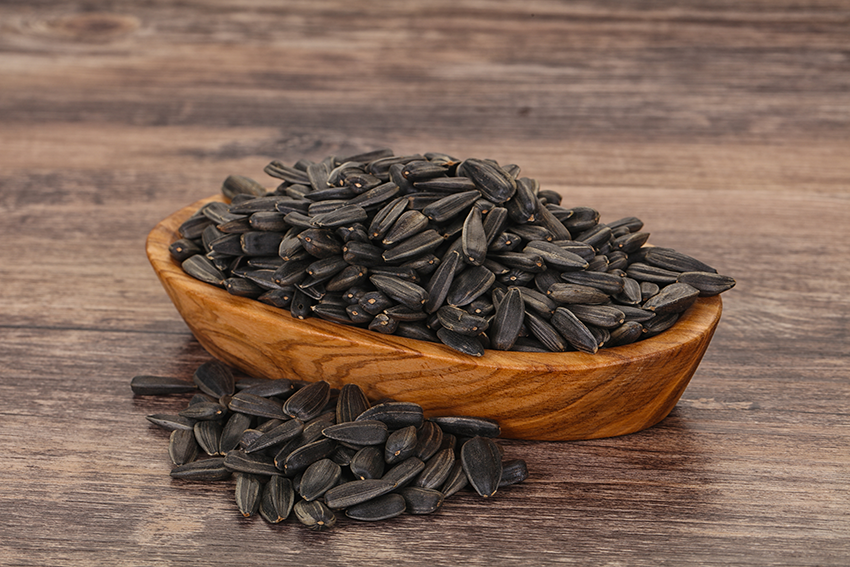
Sunflower - A Classic with Rich Aroma
Sunflower kernels are one of the most rewarding raw materials for roasting before pressing. They contain large amounts of unsaturated fatty acids and natural vitamin E, which means oil from roasted sunflower is characterised by both rich flavour and good shelf life. The optimal roasting temperature falls in the range of 120-150°C - at this level, the full nutty aroma is released without the risk of overheating. Oil obtained from seeds prepared in this way works excellently as a dressing for salads, a component of sauces, and a finishing touch for vegetable dishes.
Flax Seeds and Their Thermal Specifics
Flax seeds require particular attention during roasting due to their exceptionally high content of omega-3 fatty acids, which are sensitive to high temperatures. Roasting flax should be very gentle - ideally carried out at the lower end of the temperature range, up to around 120°C, and for a short time. With this approach, a lightly nutty, warm aroma is achieved that gives the oil a pleasant character without degrading its valuable components. Flax flavoured oil, obtained after gentle roasting, works well drizzled over cottage cheese, groats, and cooked vegetables.
Rapeseed - A Grain That Roasting Changes Beyond Recognition
Cold-pressed rapeseed oil has a characteristic, slightly bitter flavour that not everyone appreciates. Roasting rapeseed kernels changes this profile radically - nutty and gently sweet notes come to the fore, while the bitterness almost completely disappears. For this reason, rapeseed roasted before pressing is gaining increasing popularity in small oil presses focused on producing culinary-grade oils. The roasting temperature should oscillate around 140-160°C, and the process requires regular stirring to ensure even heating throughout the batch.
Pumpkin and Poppy Seeds - Options for the Discerning Producer
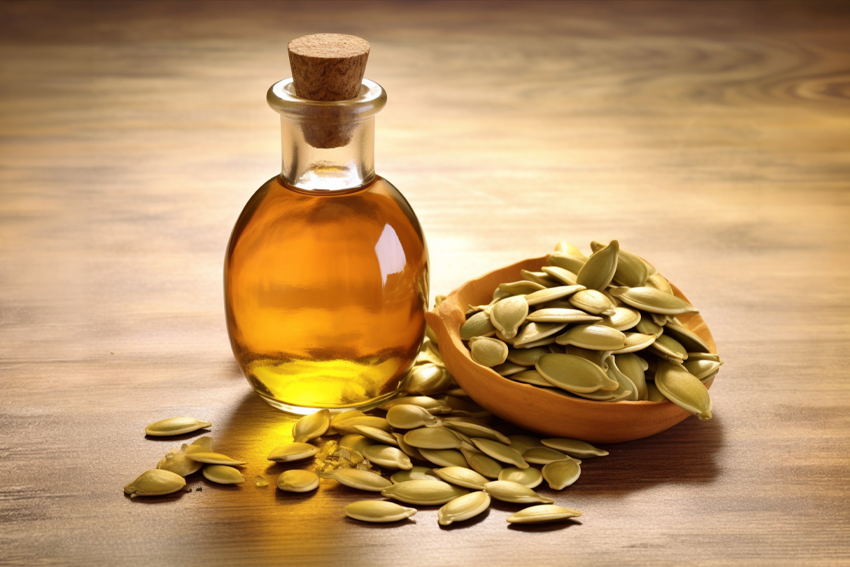
Pumpkin seeds are a raw material that responds to roasting extremely well. Oil from roasted pumpkin seeds - particularly well known in Styrian and Carinthian cuisine - has a dark green colour and an intense, nutty-earthy flavour. It is treated as a condiment rather than a cooking oil, typically used in quantities of a few tablespoons as a sauce component or a dish garnish. Roasting pumpkin seeds requires temperatures in the range of 120-140°C and a shorter processing time than cereal seeds.
Poppy seeds, though less commonly associated with oil production, yield a product of exceptional character after roasting - lightly floral, with a pronounced nutty note. Poppy seed oil is a delicacy that is relatively difficult to find on the mass market, which makes it an attractive niche for artisan producers.
Nuts, Almonds, and Exotic Options in the Home Press
Walnuts, hazelnuts, peanuts, and even almonds - all of these raw materials yield oils of exceptional sensory value after roasting and pressing. Hazelnut oil from roasted nuts is one of the most valued culinary oils on the European market. Nut roasting is carried out at low temperatures - most commonly 100-130°C - due to their natural tendency to burn quickly. Gentle golden browning of the surface is the sign that the seed is ready for pressing. All nut products are particularly rewarding when roasting is carried out in a device that provides even heat from all sides, which is difficult to achieve at home without dedicated equipment.
How Roasting Affects Oil Pressing Efficiency
Beyond the flavour aspect, roasting also serves an equally important technological function - it increases pressing efficiency, meaning the amount of oil that can be obtained from a given mass of raw material. This is particularly significant from an economic and process standpoint.
The Mechanism of Thermal Oil Release
Oil in seeds and grains is enclosed in cells surrounded by membranes built from proteins and carbohydrates. Heating causes protein denaturation and changes to the structure of these membranes - they become more permeable to fat. At the same time, the temperature of the oil itself rises, which reduces its viscosity and facilitates flow through the cellular structures and through the press head. The result is a noticeably higher oil yield compared to pressing raw grain.
Temperature and Grain Moisture Content
The moisture content of grain before pressing has a significant impact on process efficiency. Overly moist grain causes oil foaming, hinders the operation of the press, and reduces the quality of the finished product. Roasting effectively reduces moisture levels, preparing the raw material for optimal performance in a screw or hydraulic press. The combined effect of heat on proteins and the reduction of moisture is a double technological benefit - the grain is ready for pressing as soon as it has cooled.
It is important to allow the grain to reach a temperature close to ambient after roasting before loading it into the press. Pressing excessively hot material can lead to undesirable oxidation of the oil directly inside the pressing chamber.
Roasting and Press Cake Quality
Press cake - the residue remaining after pressing - is a valuable by-product, rich in protein, fibre, and residual fat. Press cake from roasted grain differs from that obtained from raw material - it is drier, better broken down, and may show a slightly higher degree of fat extraction. Roasted press cake is widely used as a feed component, and in the case of premium nuts and seeds, as an ingredient in desserts and confectionery.
Roasting Temperature - How to Choose It
Temperature selection is the most important decision in the grain preparation process. There is no single universal value - every raw material and every intended flavour profile requires an individual approach. Artisan producers often develop their own thermal profiles through trial and tasting, treating them as proprietary knowledge of their pressing operation.
Gentle Roasting up to 140°C
At this temperature range, grain heats up relatively slowly and aromas develop gently. It is particularly suitable for raw materials rich in polyunsaturated fatty acids - flax seeds, hemp seeds, grape seeds - where the goal is simply to evaporate moisture and lightly draw out aroma without compromising valuable components. Oils obtained after gentle roasting retain a lighter colour and a subtler character than those from intensive roasting.
Intensive Roasting from 150 to 200°C
This is the range most commonly used in the production of flavoured culinary oils. At temperatures of 150-180°C, the Maillard reaction proceeds intensively, giving the oil a pronounced, nutty profile. Rapeseed, sunflower, sesame, and pumpkin seeds all perform excellently in this range. Above 180°C, caution is required - exposure time must be short and grain should be stirred continuously to avoid localised scorching.
High-Temperature Roasting above 200°C
Temperatures above 200°C are used rarely and only for specific raw materials with a hard shell and a low content of heat-sensitive fatty acids - such as cacao or coffee, which are occasionally processed in artisan pressing facilities. For typical oilseed crops, roasting above 200°C risks quality degradation and the formation of undesirable thermal decomposition products. The maximum range of professional devices - reaching up to 300°C - is intended for very specific applications and requires expert knowledge of the raw material.
How to Recognise When Roasting Is Complete
Visual and olfactory assessment are the classic methods used by experienced producers. Grain ready for pressing should have a uniform, golden-brown surface colour with no dark spots. The aroma should be intense and nutty, with no hint of smoke or burning. For seeds with a dark hull - such as flax or poppy - visual assessment is more difficult, which makes precise temperature control via a thermostat all the more important. An experienced operator can identify the optimal moment to end the process by sound - the faint crackling and rustling characteristic of roasting grain falls silent when all moisture has fully evaporated.
Electric Grain Roaster - A Professional Tool for Seed Preparation
Roasting seeds by hand in a pan or oven has its limitations - difficult temperature control, uneven heating, the need for constant supervision, and limited capacity. When production exceeds a few kilograms of seeds per week, such methods become inefficient and unpredictable. A professional oil press - whether at home scale or in a small facility - needs a device that ensures process repeatability, temperature precision, and appropriate throughput.
The Drum Heating System and Its Advantages
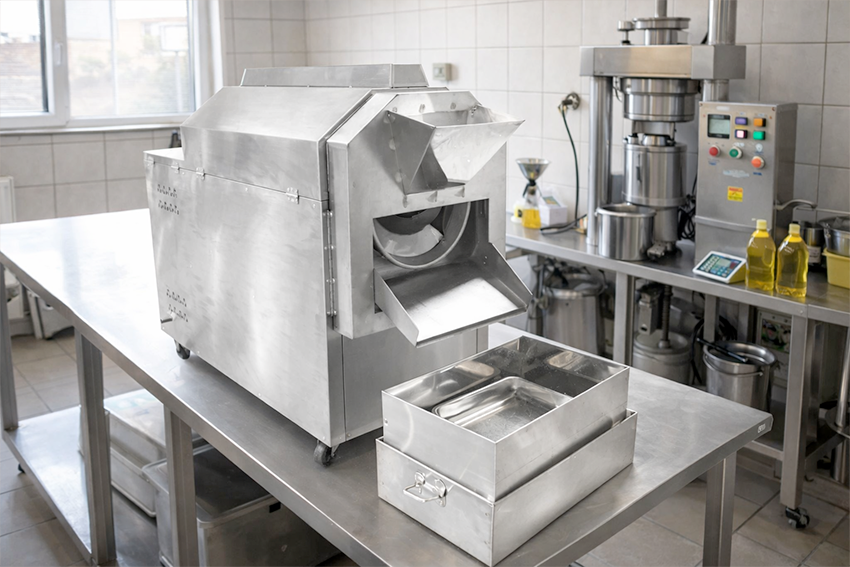
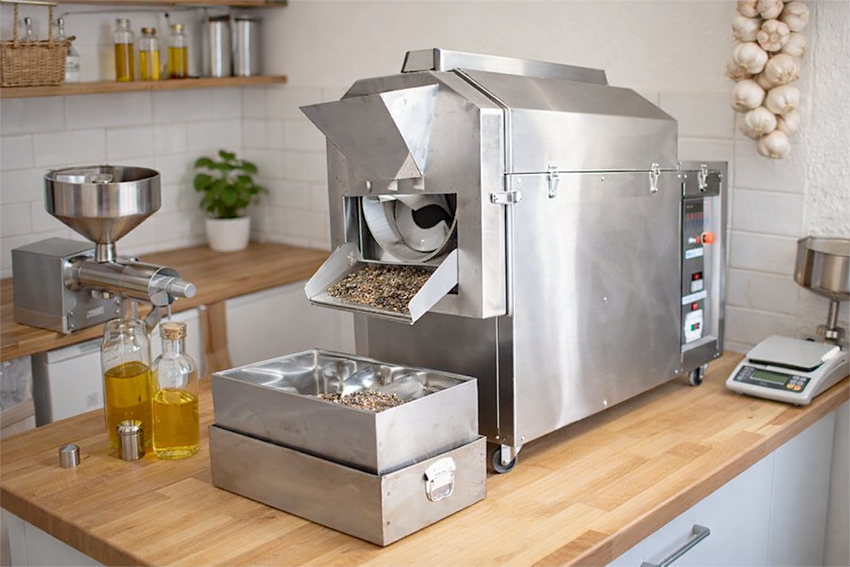
Drum roasters are devices in which grain rotates inside a cylindrical drum heated by a set of electric elements. The rotary motion ensures constant contact of the seeds with hot air from all sides - eliminating the risk of burning from below and under-roasting from above, which is the typical drawback of static roasting. Hot air circulating in the drum surrounds every seed evenly, resulting in uniform product quality across the entire batch.
HDF-50 Electric Grain Roaster - Technical Specifications and Capabilities
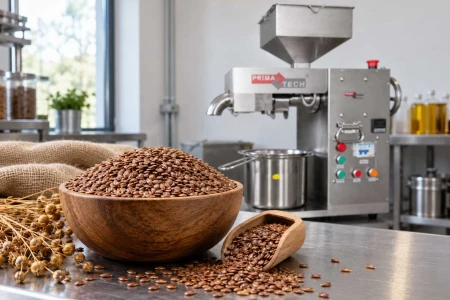
For oil presses operating at the scale of a small or medium production facility, an excellent solution is the Electric Grain Roaster HDF-50 (20-24 kg/h) available from pureoilpress.com. With a throughput of 20-24 kg/h and a single-load capacity of 10-12 kg, the device enables efficient raw material preparation without the need for repeated short-interval reloading. The 6.5 kW power and 400 V supply provide sufficient heating energy even for intensive roasting, up to 300°C.
The housing and working components made from stainless steel grades 304 and 201 meet food-grade sanitary requirements, which is a prerequisite in any food production setting. The device's weight of 105 kg and dimensions of 125/142 x 58 x 107 cm make it compact for its performance class - it fits in a standard workshop space without requiring any special modifications to the premises.
Grain loading takes place through a hopper chute, and the finished product is collected through a closable discharge spout, from which it falls into a dedicated container included with the device. The set is completed by an additional tray and scoop, making the entire handling process tidy and contained. Hot grain cools in the container - and is ready for pressing.
Temperature Control and Operational Safety
A precise thermostat with a digital display allows exact setting and monitoring of roasting temperature. This is the key element distinguishing professional equipment from rudimentary home methods. Repeatability of results - the same temperature, the same time, the same aroma - is an absolute prerequisite when producing flavoured oil intended for sale or regular supply to customers. An operator can set a specific profile for each type of grain and adhere to it without deviation across every subsequent batch.
The steel housing and well-considered construction ensure safe operation at high temperatures. Electrically live contact elements are insulated, and the handling design - with the hopper chute and closable discharge spout - minimises the operator's direct contact with hot grain during operation.
Who This Device Is For
The HDF-50 roaster is aimed primarily at small and medium oil presses whose daily requirement for roasted grain falls in the range of several tens of kilograms. It works excellently as a complement to an oil press in facilities producing flavoured oils for direct sale, to restaurants, or at regional food markets. It is also suitable for larger home producers making oil for their own use, where process repeatability and ease of operation matter, and hand-roasting in a pan is too cumbersome or unreliable. The availability of leasing makes the investment realistic even for operations just starting to build their facility.
Flavoured Oils - Applications in the Kitchen and the Restaurant Trade
Oils from roasted seeds occupy a distinct and increasingly prominent niche in the food market. They do not compete with refined oils or even cold-pressed products - they occupy an entirely different shelf, used as aromatic condiments and dish finishers rather than as a frying medium or neutral base.
Roasted Sunflower Oil in European Home Cooking
In the tradition of European oil production, sunflower oil from roasted grain was once the standard - the modernisation of the fat processing industry displaced it in favour of refined oils. Today it is making a comeback as an element of local gastronomy and regional cuisine. It is drizzled over coleslaw, stirred into braised cabbage dishes for depth of flavour, and used to brown onions. Its intense, nutty-sunny flavour enriches dishes in a way that refined oil simply cannot.
Roasted Rapeseed Oil as a Base for Sauces and Dressings
In European cuisine - particularly Scandinavian and Central European - oil from roasted rapeseed is gaining popularity as a base for salad dressings and sauces. It combines a neutral fatty acid base with a pronounced roasting aroma, making it more interesting in flavour than refined oils while being less intense than olive oil. A few drops of such oil on a warm cream soup or roasted vegetables can completely change the character of a dish.
Artisan Production and Sales of Flavoured Oil
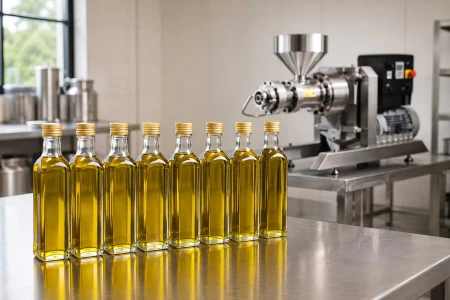
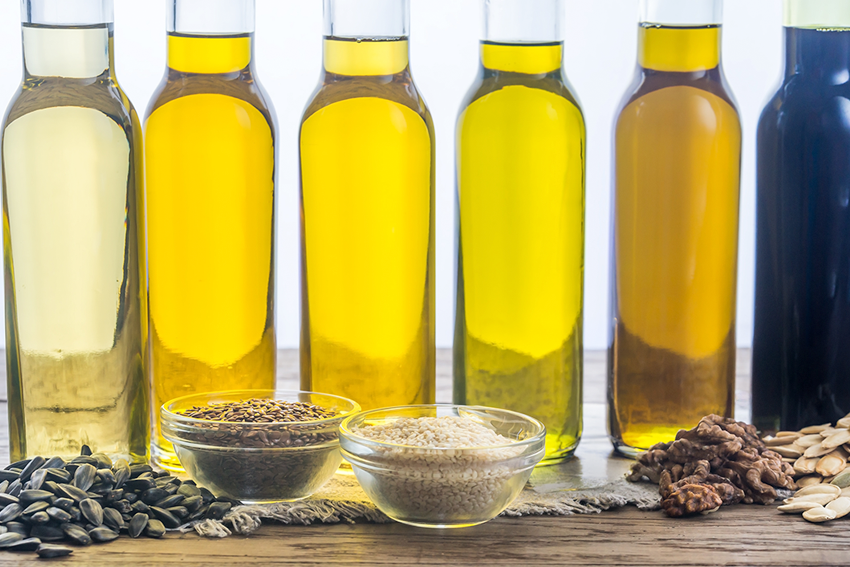
Oils from roasted seeds are attracting growing interest in the premium and local product segments. Sold in distinctive glass bottles with handwritten labels describing the raw material and production method, they command prices many times higher than mass-market oils. For small producers with high-quality raw materials and equipment that ensures roasting consistency, this is a real market niche with growing demand. The key to success lies in flavour profile consistency and traceability - a returning customer expects the same taste they remembered from their first purchase.
Storing Oil from Roasted Seeds
Even the finest oil can be spoiled by improper storage. Oils from roasted seeds have specific requirements that stem both from their chemical composition and from the nature of the aromatic compounds produced during thermal treatment.
The Effect of Roasting on Oil Shelf Life
Roasting has a dual effect on oil shelf life. On one hand, heating causes partial breakdown of natural antioxidants - in particular polyphenols - which in cold-pressed oil serve a protective function against rancidity. On the other hand, the new compounds formed during the Maillard reaction exhibit certain antioxidant properties, partially compensating for this loss. In practice, oils from roasted seeds have a similar or slightly shorter shelf life than their cold-pressed counterparts - and require the same storage principles.
Temperature, Darkness, and Airtight Sealing
The basic storage principles for oil from roasted seeds are analogous to those for any cold-pressed vegetable oil. Darkness is key - UV radiation accelerates oxidation and the breakdown of aromatic compounds. A dark or opaque glass bottle is the minimum requirement. Temperature should be as low and stable as possible - a cellar, pantry, or the lower shelf of a refrigerator. An airtight seal prevents contact with air and absorption of foreign odours.
Nut oils - from hazelnut, walnut, or peanut - require particular attention, as their high content of polyunsaturated fatty acids makes them prone to rapid rancidity. Bottles are best filled or purchased in small volumes - 250-500 ml - to avoid repeatedly opening and closing the product. An opened bottle of nut oil is best consumed within 4-6 weeks.
FAQ - Frequently Asked Questions
Can oil from roasted seeds be used for frying?
Oils from roasted seeds are typically used as flavour-finishing oils for dishes, sauces, and salads - not as a high-temperature frying medium. An exception is roasted peanut oil and sesame oil, which have higher smoke points and can be used for brief frying over low heat. In most cases, roasted sunflower, rapeseed, or flax oil is best added to finished dishes or used cold, to preserve its aroma and avoid generating thermal degradation products.
At what temperature are seeds roasted before oil pressing?
The roasting temperature range depends on the type of raw material and the desired flavour outcome. Three main variants are recognised: gentle roasting up to 140°C, intensive roasting in the range of 150-200°C, and high-temperature roasting above 200°C. Seeds rich in heat-sensitive omega-3 fatty acids - such as flax - are roasted at lower ranges. Rapeseed, sunflower, and sesame tolerate temperatures of 150-170°C well. Intensive roasting above 180°C requires shorter exposure time and continuous stirring of the grain.
How much more oil can be obtained from roasted grain compared to unroasted raw material?
Pressing efficiency after roasting increases depending on the raw material and degree of roasting - technological literature cites a rise of 5-15% relative to pressing raw grain. The effect results from two mechanisms: reduced raw material moisture content and increased permeability of cell membranes to fat. The most pronounced efficiency gains are observed with naturally moist raw materials or those stored under conditions of elevated humidity.
How long does grain roasting take in an electric roaster?
Roasting time depends on temperature, batch weight, and grain type. At 150°C with a 10 kg sunflower batch, the typical roasting time is 20-35 minutes. Rapeseed under similar conditions roasts somewhat more quickly - approximately 15-25 minutes. Flax seeds and fine-grained oilseeds achieve the desired effect faster, often within 10-15 minutes at lower temperatures. The operator should monitor the aroma and colour of the grain throughout the entire process and not rely solely on a timer.
Does roasting destroy the nutritional value of oil?
Roasting causes partial breakdown of thermolabile bioactive components - certain vitamins, enzymes, and unstable polyphenols. On the other hand, thermally stable tocopherols and phytosterols retain much of their activity. Fatty acids - the main fraction of oil - do not undergo significant degradation when roasting is carried out at moderate temperatures. Oil from roasted grain is therefore a product with a slightly modified nutritional profile compared to its cold-pressed counterpart, but it remains a valuable one. For consumers seeking maximum health-promoting properties, cold-pressed oil remains the better choice, while for those seeking depth of flavour and aroma, oil from roasted seeds has no equal.
Should grain be cooled before pressing after roasting?
Yes - hot grain fed directly into the press can cause excessive oil oxidation inside the pressing chamber and accelerated wear of the working components. After roasting is complete, grain should be emptied into the cooling container and allowed to reach a temperature close to ambient - typically 20-30 minutes depending on batch weight and ambient conditions. Cooling is an integral part of the technological process, not an optional step.
Can an electric grain roaster be used with all types of oilseeds?
Electric drum roasters are versatile and perform well with the majority of seeds used in oil pressing - sunflower, rapeseed, flax, pumpkin seeds, sesame, hazelnut, peanut, and walnut. The key is adapting temperature and time to the specific raw material. Certain limitations apply to very fine-grained seeds - such as poppy - which may require special screens or drum inserts to prevent material being carried out through the device's ventilation. The equipment manufacturer or distributor can advise on specific raw materials before purchase.
Summary
Roasting seeds before oil pressing is a technique that bridges traditional craft with modern processing technology. It yields products of an entirely different character from cold-pressed oils - more intense in flavour, more aromatic, and often more efficient in the production process. The key to success lies in precision: the right temperature for each specific raw material, controlled roasting time, and process repeatability that no home method is capable of delivering.
Investing in a professional electric grain roaster is a natural step for any oil press aiming to expand its offering with flavoured oils or to optimise the efficiency of existing production. For facilities processing several tens of kilograms of grain per hour, a device of the HDF-50 class represents a sound and technologically justified choice - combining temperature regulation precision, a well-engineered drum design, and food-grade materials.