
Table of Contents
- The Impact of Moisture on the Pressing Process and Oil Quality
- Optimal Conditions for Seed Storage During Winter
- Threats to Seed Quality During Winter Months
- Systematic Control of Raw Material Parameters Before Pressing
- Preparation and Conditioning of Seeds Before the Winter Season
- Winter Oil Pressing and Press Operation Characteristics
- Frequently Asked Questions
The winter period presents particular challenges for home oil pressing enthusiasts related to raw material storage. Although low temperatures may seem like a natural cold storage for seeds, it's actually during winter that the most problems occur with maintaining proper quality of seeds intended for pressing. Temperature fluctuations, moisture condensation, reduced room ventilation, and extended storage time mean that anyone serious about producing their own oil must take special care to ensure proper storage conditions for raw materials.
The quality of the resulting oil directly depends on the condition of the seeds before beginning the pressing process. Even the best oil press won't produce healthy, aromatic oil from seeds that have degraded during improper storage. That's why quality control of raw materials, especially monitoring moisture levels, forms the absolute foundation of success in home pressing. During the winter period, when many people accumulate seed supplies for several months, this topic becomes even more significant.
Modern technical solutions allow for precise control of raw material parameters and optimization of the pressing process in any weather conditions. Proper warehouse equipment, systematic moisture control, and conscious approach to seed conditioning before pressing are key to obtaining the highest quality oil year-round.
The Impact of Moisture on the Pressing Process and Oil Quality
Seed moisture is a parameter that fundamentally affects the entire oil pressing process and the properties of the final product. Seeds with improper moisture levels cause a range of technical problems during press operation, but more importantly, drastically reduce the nutritional value and shelf life of the resulting oil. Understanding these impact mechanisms allows for conscious control of raw material quality and avoidance of costly mistakes.
Problems Related to Excessive Seed Moisture
Excessively moist seeds pose a serious problem both for the press itself and for oil quality. Water contained in seeds transfers to the oil during pressing, leading to rapid development of hydrolytic and oxidation processes. Oil from moist seeds becomes cloudy much faster, loses clarity, and develops an unpleasant smell resembling mustiness. When seed moisture exceeds ten percent, the pressing process significantly slows down, and in extreme situations can become completely blocked. Excess moisture causes particles to clump in the pressing chamber, leading to motor overload and the need for frequent work interruptions for equipment cleaning.
Consequences of Excessive Seed Drying
Overly dried seeds prove equally problematic. Moisture below four percent makes seeds brittle and during pressing they break down into very fine particles. These microscopic fragments of husks and seed coatings penetrate the oil, causing cloudiness and giving it a bitter aftertaste. Additionally, over-dried seeds require greater pressure for effective oil extraction, which increases energy consumption and accelerates wear on press working elements. Oil from such seeds often contains more ballast compounds that shorten its shelf life.
Optimal Moisture Ranges for Different Species
Optimal moisture ranges differ slightly depending on the type of oilseed. Rapeseed presses best at moisture from six to eight percent, unhulled sunflower prefers a range of seven to nine percent, while delicate flax requires very precise moisture maintenance between seven and nine percent. Milk thistle seeds, increasingly used in home pressing, tolerate a wider range from eight to twelve percent. Any deviation from these norms leads to reduced pressing efficiency and lower quality of the final product.
The moisture problem becomes additionally complicated in winter, when temperature differences between room interior and external environment promote water vapor condensation on seed surfaces. Even properly dried seeds in autumn can absorb excessive moisture in winter if stored in inappropriate conditions. That's why moisture control cannot be a one-time activity before the pressing season begins, but requires systematic monitoring throughout the storage period.
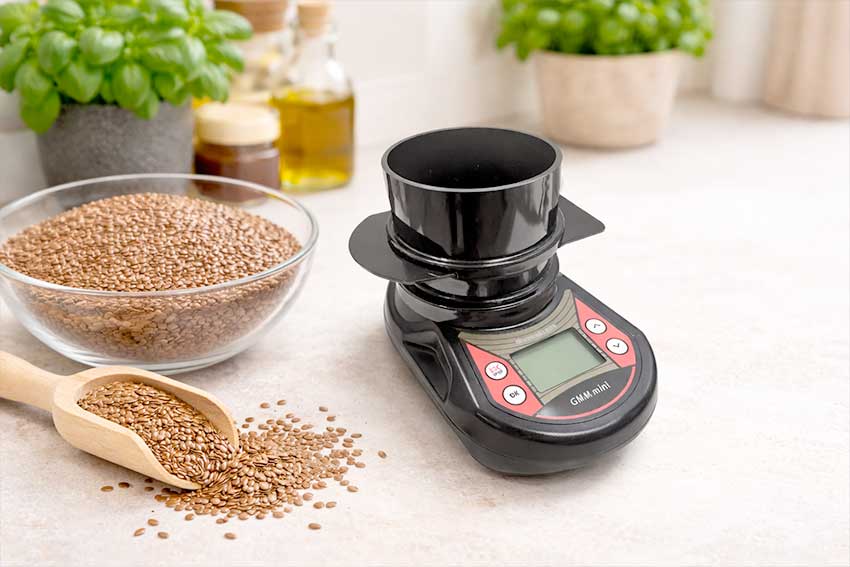
Professional Moisture Measurement of Oilseeds
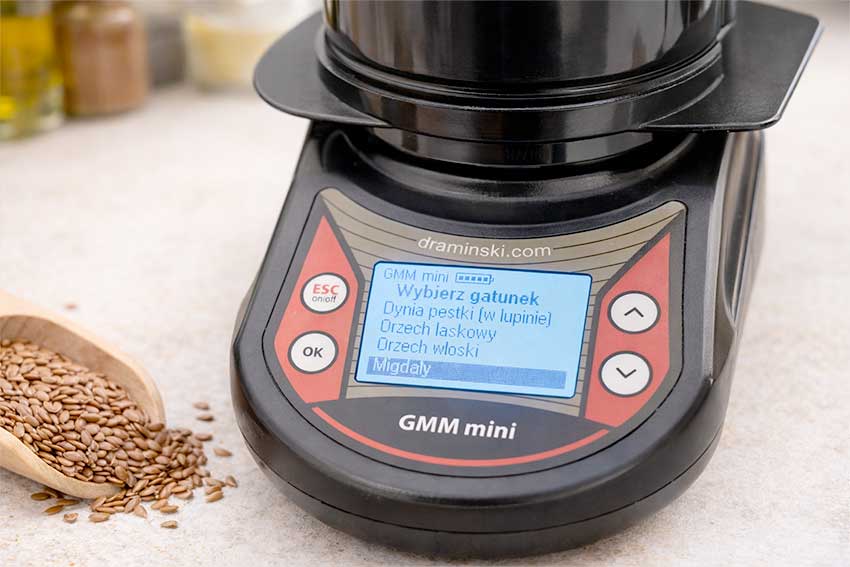
Modern electronic moisture meters, such as the Dramiński GMM mini II model valued at one thousand four hundred fifty zlotys, enable quick and precise moisture level checking directly at the storage location. This device has been specially calibrated for fourteen of the most popular oilseeds, including rapeseed, sunflower, flax, sesame, hemp seeds, and milk thistle. The meter weighs only seven hundred grams and fits in the palm of your hand, allowing convenient checking of different seed batches without the need to take samples to a laboratory. Measurement accuracy at one percent for moisture up to ten percent and one and a half percent above this value guarantees professional raw material quality control. The device's internal memory allows tracking moisture changes over time, which is particularly valuable during long-term winter storage.
The built-in digital temperature sensor automatically compensates for the influence of seed temperature on measurement results, eliminating the risk of incorrect readings when controlling raw materials transferred from a cold warehouse to a warm room. A large graphic display with LED backlighting facilitates reading even in poorly lit warehouses, and a special dispenser included in the set ensures collection of a representative sample with the proper volume of two hundred seventy milliliters. Regular moisture measurements, performed at least once a week during winter storage, allow early detection of problems and taking corrective action before an entire batch of seeds degrades.
Optimal Conditions for Seed Storage During Winter
Winter storage of oilseeds requires creating an environment that effectively protects raw materials from degradation while maintaining economic viability of the entire operation. The key challenge is maintaining stable microclimate parameters despite sharp outdoor temperature fluctuations and reduced room ventilation during the heating season. A properly organized seed warehouse should provide not only appropriate temperature and air humidity, but also protection against pests and minimization of mold and fungus appearance risk.
Storage Temperature and Its Impact on Seed Longevity
Storage temperature plays a primary role in maintaining seed freshness. The range from five to fifteen degrees Celsius constitutes the optimum for most oilseeds, with temperatures closer to the lower limit of this range being more favorable for long-term storage. Under such conditions, all metabolic processes occurring in seeds are slowed down, which translates to longer shelf life of fats contained in them. However, sub-zero temperatures must be absolutely avoided, as they can damage cellular seed structure and cause loss of viability. Equally harmful are sharp temperature fluctuations exceeding five degrees per day, as they lead to moisture condensation on seed surfaces.
The room intended for winter seed storage must have appropriate thermal insulation that prevents cold penetration from outside while minimizing the influence of heat from heated building parts. The ideal solution is unheated utility rooms with thick walls that naturally buffer external temperature fluctuations. However, it should be remembered that complete lack of heating on very frosty days can lead to temperatures that are too low, so it's worth equipping the warehouse with a thermometer that records minimum and maximum values.
Relative Air Humidity in the Warehouse
Relative air humidity in the seed warehouse should not exceed sixty percent, with the most favorable range being between forty and fifty percent. Higher humidity promotes microorganism development and can lead to water absorption by seeds, which particularly affects hygroscopic seeds like flax or sesame. In winter, when external air is usually drier, maintaining appropriate humidity may seem easier than in summer, however problems appear in warehouses located near water vapor sources, such as laundries or dryers.
Effective Ventilation in Winter Conditions
Effective ventilation forms the foundation of proper seed storage, but its organization in winter requires particular care. Too intensive air exchange leads to excessive room cooling, while its absence causes accumulation of moisture and gases released by seeds. The optimal solution is gravity ventilation based on natural air convection, supplemented by periodic airing on days with low external humidity. Mechanical ventilators should operate briefly, only to equalize air parameters throughout the warehouse volume.
Choice of Containers and Seed Arrangement Method
The seed storage method is equally important as environmental parameters. The best results come from air-permeable containers, such as wooden crates with slots or bags made from natural fabrics. Completely sealed packaging, although protecting against external moisture, promotes accumulation of water from seed respiration itself. The seed layer in a container should not exceed thirty centimeters, as thicker layers hinder gas exchange and can lead to local seed heating in the middle section. Containers should be placed on pallets or wooden racks that ensure air circulation from below as well and protect seeds from moisture drawn up capillarily from the substrate.
Space Organization and Warehouse Documentation
Warehouse space organization should enable systematic seed condition monitoring. All containers must be properly labeled with filling date, seed type, and initial moisture measurement result. It's worth maintaining a simple warehouse journal where weekly moisture and temperature measurements are recorded, allowing early detection of unfavorable trends. Particular attention should be paid to seeds stored near building exterior walls, as they are most exposed to temperature fluctuations.
Maintaining Cleanliness as a Preventive Element
Warehouse cleanliness constitutes another important element of proper storage. Before beginning the winter season, the room should be thoroughly cleaned of remnants from previous seed batches, dust removed, and any rotting organic remains eliminated. Regular cleaning during the season prevents development of warehouse pests that seek shelter in warm rooms during winter. Use of chemical plant protection products in warehouses with seeds intended for oil pressing is unacceptable due to the risk of final product contamination.
Threats to Seed Quality During Winter Months
The winter season, although seemingly favorable for seed storage due to low temperatures limiting pest and microorganism activity, harbors specific threats to oilseed raw material quality. Most problems appear at the junction of extremely different conditions prevailing inside heated buildings and outside, where temperature often drops below zero. It's precisely this temperature difference that becomes the source of moisture condensation, which belongs among the most serious enemies of properly stored seeds.
Moisture Condensation and Mold Development
Water vapor condensation occurs most often on container surfaces and in upper seed layers, where warmer air from room interior meets cold warehouse walls. Condensing water creates an ideal environment on seeds for development of mold fungi, which within a few days can destroy an entire batch of raw material. Particularly susceptible to this problem are warehouses in buildings with poor thermal insulation and rooms with concrete or stone exterior walls that become strongly cooled. A symptom of condensation is the appearance of dark, moist spots on walls and a characteristic musty smell rising in the room.
Molds developing on moist seeds not only destroy the raw material itself but also produce mycotoxins, meaning toxins that can penetrate oil during pressing. The most dangerous mold species from the Aspergillus and Penicillium genera develop even at temperatures close to zero, provided they have access to moisture. Fungal growth on seeds manifests initially as a whitish coating that gradually transitions to gray-green mats. Mold-affected seeds lose their shine, acquire a matte appearance, and a characteristic musty smell. Oil pressed from such seeds is cloudy, bitter, and loses its health properties.
Warehouse Pests During Winter
Warehouse pests, although less active in winter than summer, still pose a serious threat to stored seeds. The granary weevil, flour beetle, and other warehouse insects find excellent conditions for wintering in warm rooms, and oilseeds constitute food with high energy value for them. One small point infected with pests can spread throughout the entire warehouse during winter, destroying a significant portion of supplies. Pest presence manifests through a characteristic sweetish smell, presence of flour-like particles, and visible exit holes in seeds. Seeds damaged by pests quickly become rancid, lose nutritional value, and are unsuitable for pressing.
Rodents as a Winter Threat
Rodents constitute another winter threat to seed warehouses. Mice and rats, seeking food and warmth on frosty days, can penetrate through the smallest gaps and cause enormous damage in a short time. In addition to directly eating seeds, they leave droppings and urine on them, making the raw material completely unfit for consumption. Securing the warehouse against rodents requires careful sealing of all ventilation openings with metal screens and elimination of all access routes to room interior.
Fat Oxidation and Rancidification
Oxidation of fats contained in seeds progresses throughout the storage period, although in low temperatures this process slows down. Oxidation products are aldehydes and ketones responsible for the rancid taste and smell of old oil. Seeds richer in unsaturated fatty acids, such as flax or hemp seeds, oxidize much faster than seeds with higher saturated acid content. That's why winter storage of flax seeds should not last longer than three to four months, while rapeseed or sunflower maintain freshness for six months.
Risk of Freezing and Effects of Excessively Low Humidity
Seed freezing, although not causing complete loss of value, leads to cell membrane damage and loss of some nutrients. After thawing, such seeds more easily succumb to fungal infections and spoil faster. Particularly sensitive to frost are seeds with thin coatings, such as hulled sunflower or sesame. That's why warehouse temperature should never drop below zero, even on the frostiest days.
Chronic seed exposure to excessively low air humidity, below thirty percent, also carries risks. Seeds then lose natural protective moisture and become brittle, leading to excessive fragmentation during pressing. Flakes and coatings penetrating the oil cause cloudiness and give a characteristic bitter aftertaste. This problem particularly affects warehouses located near heat sources, where air becomes excessively dried.
Systematic Control of Raw Material Parameters Before Pressing
Regular monitoring of seed condition stored during winter forms the basis for ensuring high quality oil throughout the season. Control cannot be limited to one-time parameter checking before beginning the storage season, but requires systematic repetition of measurements and visual observations throughout the storage period. Only such consistency allows early problem detection and taking remedial action before irreversible quality deterioration of an entire raw material batch occurs.
Weekly Moisture Level Measurement
The basic parameter requiring weekly control is seed moisture level. Even when maintaining optimal storage conditions, seed moisture can change under the influence of weather conditions and natural biological processes occurring in the raw material. Particularly careful moisture monitoring is needed after thaw periods, when external air humidity sharply increases, and during the first frost days, when the temperature difference between warehouse and environment is greatest. Measurement should include samples taken from various warehouse locations, including container centers, surface layers, and places located closest to exterior walls.
The Dramiński GMM mini II device allows quick execution of a series of measurements without the need for complicated preparations. The measurement procedure comes down to filling the included dispenser with seeds from the tested batch, transferring them to the measurement chamber, and reading the result from the display after a few seconds. Automatic temperature compensation eliminates the need to equalize the sample to room temperature, which significantly speeds up the entire procedure. Results of successive measurements of the same batch should be recorded in the warehouse journal, allowing trend tracking and forecasting the moment when moisture may exceed safe limits.
Visual and Olfactory Assessment of Seed Condition
Visual seed assessment provides equally valuable information as instrumental measurements. Once a week, seed samples from various warehouse locations should be carefully examined, paying attention to color, shine, and batch uniformity. Fresh seeds are characterized by uniform color and natural shine, while degrading seeds become matte, darken, and lose their species-typical color. Appearance of whitish coating, dark spots, or change of smell from neutral to musty or sour constitutes an alarm signal requiring immediate reaction.
Olfactory seed assessment requires practice but provides extremely valuable information about raw material condition. Fresh oilseeds have a delicate, pleasant aroma characteristic of the given species. Rapeseed smells slightly of cabbage, sunflower of nuts, and flax has a specific smell resembling fresh hay. Any change in this natural aroma, appearance of mustiness notes, acidic fermentation smell, or characteristic rancid fat odor indicates progressive seed degradation. Olfactory changes often appear earlier than visible spoilage symptoms, so regular smell tests are worthwhile.
Checking Seed Flowability and Temperature Measurement
During control, attention should also be paid to seed flowability and lack of clumping. Fresh, properly stored seeds pour freely, not forming lumps. Appearance of clumps or stuck seed clusters indicates excessive moisture or fungal development, even if visible mold signs aren't yet apparent. Such seeds should be immediately separated from the remaining batch and subjected to more detailed assessment.
Seed temperature in various warehouse sections also requires systematic control. Temperature differences exceeding three degrees between container center and surface may indicate ongoing fermentation processes or developing fungal infection. A simple contactless thermometer allows quick measurement of seed surface temperature in various warehouse locations.
Maintaining Warehouse Documentation
Documentation of all performed measurements and observations in warehouse journal form constitutes invaluable knowledge when planning subsequent storage seasons. Records should contain control date, air temperature and humidity in the warehouse, moisture of individual seed batches, visual and olfactory assessment results, and all corrective actions taken. Such documentation allows identification of factors affecting storage quality and optimization of conditions in subsequent years.
Preparation and Conditioning of Seeds Before the Winter Season
Proper seed preparation before beginning winter storage is crucial for maintaining their quality throughout the season. Seeds intended for long-term storage require a series of conditioning treatments that will bring their parameters to optimal level and minimize degradation risk during storage. This process begins at the moment of harvest or raw material purchase and includes cleaning, drying, and proper seed packaging.
Thorough Cleaning as the First Preparation Stage
Cleaning constitutes the first and extremely important stage of seed preparation for storage. Even the cleanest commercial seed batch contains some amount of contaminants in the form of dust, husk fragments, soil particles, and damaged seeds. These contaminants constitute an excellent substrate for microorganism development and significantly increase the risk of mold appearance during storage. Additionally, dust particles and broken seeds contain exposed fats that oxidize much faster than fats protected by intact seed coating. Basic cleaning can be performed manually by sieving seeds through sieves with different mesh sizes, allowing removal of both fine contaminants and oversized fragments.
Proper Seed Drying Techniques
Drying seeds to the proper moisture level constitutes a key element of winter storage preparation. Freshly harvested seeds or those purchased directly after harvest usually contain too much water and require drying. This process should be conducted gradually, at a temperature not exceeding forty degrees Celsius for seeds intended for cold pressing, to avoid damaging valuable nutrients and reducing seed viability. Higher drying temperature, although it speeds up the process, can lead to partial protein denaturation and degradation of fat-soluble vitamins.
Practical drying in home conditions can be conducted in several ways. The simplest method is spreading a thin layer of seeds on screens or linen sheets in a dry, well-ventilated room. The layer should not exceed three to five centimeters, and seeds should be mixed at least twice daily to ensure even moisture release. Such natural method requires from one to two weeks, depending on initial moisture and room conditions. Alternatively, warm air flow from a heater or fan set to minimum power can be used, which shortens drying time to three to five days.
Moisture control during drying allows precise determination of the moment when seeds have reached the appropriate parameter. Regular measurements performed with a moisture meter show process progress and allow avoidance of over-drying, which would be equally harmful as under-drying. For most oilseeds, target moisture before storage should be from six to eight percent. It's precisely in this range that seeds best maintain freshness for a long time while not being excessively susceptible to mechanical damage.
Sorting by Size and Quality
Sorting seeds by size and quality before storage allows optimization of storage conditions and ensures better raw material homogeneity during later pressing. Seeds that are too small, damaged, or immature should be separated from full-value raw material and used first, as they have shorter storage longevity. Full, mature seeds of uniform size can be safely stored for longer periods.
Selection of Appropriate Storage Containers
Selection of appropriate storage containers requires consideration of oilseed specifics. The ideal packaging should ensure air exchange preventing moisture accumulation while protecting seeds from excessive drying and pest access. Bags made from natural canvas or burlap meet these requirements perfectly, as do wooden crates with slots enabling air circulation. Plastic containers can be used provided ventilation holes are drilled in them. Completely sealed packaging, such as plastic bags or plastic containers without holes, is unsuitable for long-term seed storage, as it leads to accumulation of moisture from seed respiration.
Before filling containers, they should be thoroughly cleaned and ensured to be completely dry. Even a small amount of water remaining on container walls can lead to local moisture increase and mold development. Canvas bags should additionally be washed and thoroughly dried in the sun, allowing removal of any fungal spores remaining from the previous season.
Labeling and Batch Identification
Labeling each seed container constitutes a simple but extremely important activity. The label should contain seed species name, filling date, moisture measurement result, and any notes regarding raw material origin. Such marking allows systematic stock rotation and use of oldest batches first.
Winter Oil Pressing and Press Operation Characteristics
The winter period introduces specific challenges to the oil pressing process that require appropriate preparation of both equipment and raw material. Low ambient temperature affects the viscosity of fats contained in seeds, which directly translates to pressing efficiency and quality of the resulting oil. Understanding these mechanisms allows process optimization and obtaining the best results even in the least favorable weather conditions.
Importance of Seed Temperature Before Beginning the Process
Seed temperature before beginning pressing is fundamentally important for the efficiency of the entire process. Cold seeds, stored in an unheated warehouse at temperatures close to zero, contain fats of very high viscosity that reluctantly release during pressing. Oil from such seeds flows slowly, drop by drop, and pressing efficiency drops even by thirty to forty percent compared to seeds warmed to room temperature. That's why before beginning pressing in winter it's worthwhile to transfer seeds to a warm room and leave them there for at least twelve to twenty-four hours to gradually equalize temperature with the environment.
Rapid heating of cold seeds, however, leads to moisture condensation on their surface, which can disrupt the pressing process and reduce oil quality. To avoid this problem, seeds should be transferred to a room with intermediate temperature, for example to a corridor or vestibule, where they can gradually warm up before introduction to a warm kitchen or workshop. Alternatively, seeds can be spread in a thin layer on a sheet and gently heated from below, controlling temperature by hand to ensure it doesn't exceed thirty to forty degrees.
Home Press with Temperature Control as a Winter Solution
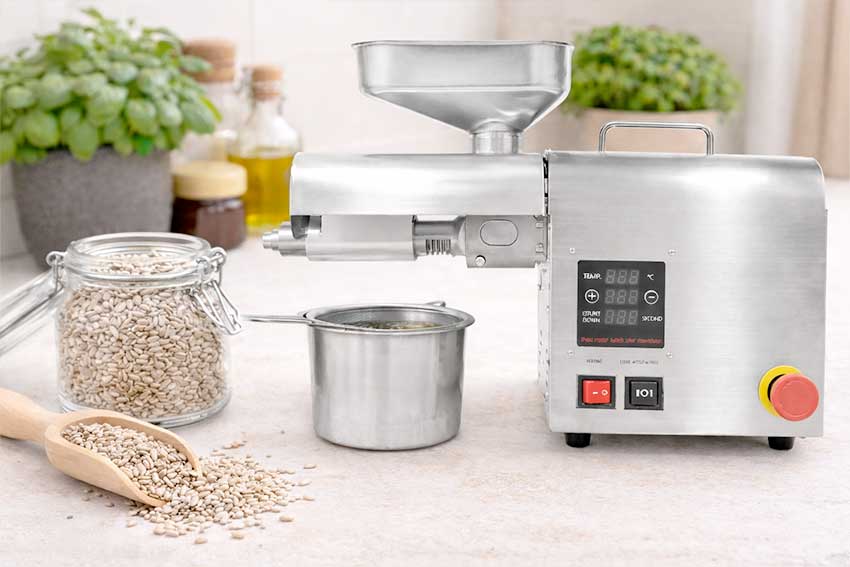
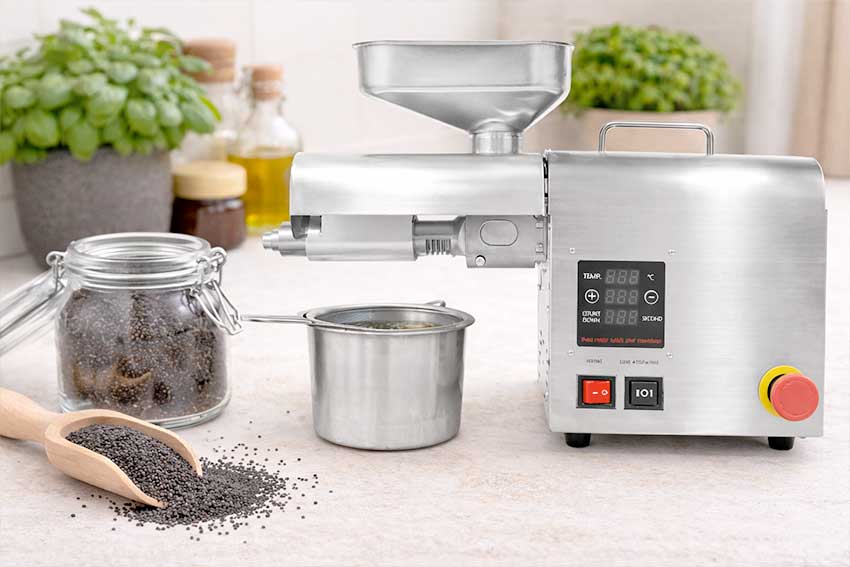
A home press for hot and cold pressing with output from five to seven and a half kilograms per hour, available at a price of two thousand three hundred fifty zlotys, constitutes an ideal solution for winter oil pressing. This model is equipped with an adjustable heater with four hundred fifty watts of power, which allows precise adjustment of pressing temperature to the type of processed seeds and environmental conditions. On cold winter days, the ability to heat seeds directly in the press eliminates the need for long-term raw material conditioning before beginning work.
A motor with three hundred watts of power provides sufficient power for effective pressing even of cooler seeds whose fats are characterized by increased viscosity. The steel press construction with stainless steel elements guarantees many years of operation without risk of corrosion, which is particularly important when pressing in winter, when air humidity often fluctuates. The press is suitable for a wide range of oilseeds, provided their oil content exceeds fifteen percent and moisture doesn't exceed ten percent.
Cold Pressing Versus Hot Pressing in Winter Conditions
For lovers of exclusively cold pressing, maintaining temperature not exceeding forty degrees Celsius, winter work requires particular care in seed preparation. Raw material must be thoroughly temperature-equalized with room temperature, and the room itself should be heated to at least eighteen to twenty degrees. Otherwise, the pressing process will be significantly slower, and part of the oil will remain in press cake, reducing overall efficiency.
Hot pressing, with temperature ranging from one hundred twenty to two hundred degrees Celsius, allows significant efficiency increase during winter. High temperature can effectively compensate for the natural decrease in fat fluidity caused by cold. Oil pressed hot has more intense taste and aroma, which will be particularly appreciated by people using it for cooking and baking. However, it should be remembered that with such pressing partial degradation of some vitamins and unsaturated fatty acids occurs, so cold-pressed oil retains higher dietary value.
Press Cleaning and Maintenance During Winter
Press cleaning after completed work in winter requires slightly more attention than in summer. Oil remaining on press elements solidifies faster at low temperature, which can hinder later cleaning. That's why press washing should be performed immediately after finishing pressing, when all elements are still warm. Warm water and gentle soap suffice for cleaning, while aggressive detergents should be avoided, as they could leave a smell that penetrates the oil during next use.
Regular press maintenance takes on particular importance in winter, when humidity fluctuations can lead to acceleration of corrosion processes. After each washing, all steel elements should be thoroughly dried, then wiped with a cloth moistened with edible oil, which provides a protective layer against moisture. Moving elements, such as the pressing screw, require periodic lubrication with food-safe lubricants.
How to Recognize Optimal Conditions for Oil Pressing in Winter
Despite winter challenges, some days create virtually ideal conditions for oil production. Optimal pressing can be conducted on sunny, frosty days without precipitation, when air humidity is low. Under such conditions, properly stored seeds maintain stable moisture, and work itself in dry air prevents moisture condensation on flowing oil. The best time is morning hours, when the work room is already well heated after the night but afternoon temperature fluctuations associated with sunset haven't yet occurred.
Thaw days, although warmer, constitute a worse moment for pressing due to sharply rising air humidity. Moisture condensing everywhere, including on seeds and press elements, can negatively affect the quality of resulting oil. Similarly unfavorable are days with intensive snow or rain, when air humidity reaches values close to one hundred percent.
Why It's Worth Pressing Oil in Winter and Storing for Cold Months
Oil pressed during the winter period naturally enters the best storage conditions. Low ambient temperature slows all oxidation and degradation processes, thanks to which freshly pressed oil retains full aroma and nutritional value for many weeks. In unheated utility rooms or on balconies of multi-family buildings, oil can be stored at temperatures from five to ten degrees, which constitutes ideal conditions for flax, rapeseed, or sunflower oil.
Winter pressing also allows better planning of seed supplies. Raw material purchased in autumn after harvest, when prices are lowest, can be gradually processed throughout winter, supplying fresh oil according to current needs. Such systematic production of small batches ensures access to oil of highest freshness throughout the season, which would be difficult to achieve with one-time pressing of large oil quantities in summer.
Frequently Asked Questions
What Seed Moisture Is Optimal Before Beginning Oil Pressing
Optimal seed moisture before pressing differs slightly depending on species, but for most oilseeds falls within the range of six to nine percent. Rapeseed presses best at moisture from six to eight percent, unhulled sunflower from seven to nine percent, while flax requires precise moisture between seven and nine percent. Milk thistle seeds tolerate a wider range from eight to twelve percent. Seeds that are too moist, above ten percent, cause pressing efficiency problems and can completely block the press, while over-dried seeds below four percent fragment excessively, and their fragments penetrate the oil causing cloudiness and bitter aftertaste.
How Often Should Seed Moisture Be Checked During Winter Storage
Systematic moisture control should occur at least once a week throughout the winter storage period. Particularly important are measurements after sudden weather changes, such as thaw after prolonged frosts or the first days of intensive snowfall, when air humidity sharply increases. Seeds stored near exterior building walls require more frequent control, even twice a week, as they are most exposed to temperature fluctuations and moisture condensation. Each measurement should be documented in the warehouse journal along with date, ambient temperature, and any observations regarding seed appearance and smell. Such documentation allows early detection of unfavorable trends and taking corrective action before serious problems occur.
Can Oil Be Pressed from Seeds Immediately After Transferring from Cold Storage
Pressing oil from cold seeds immediately after transferring from an unheated warehouse is not recommended and leads to significant efficiency reduction. Fats contained in cold seeds have increased viscosity and reluctantly release during pressing, which can reduce efficiency even by thirty to forty percent. Additionally, rapid transfer of cold seeds to a warm room leads to moisture condensation on their surface, which disrupts the pressing process and can reduce quality of resulting oil. Seeds should be transferred to a room with temperature close to room temperature at least twelve to twenty-four hours before planned pressing to gradually equalize temperature. Alternatively, a press equipped with an adjustable heater can be used, which allows gentle seed heating directly before and during pressing.
What Are the First Signs of Seed Spoilage During Winter Storage
The first symptoms of seed degradation can often be detected using the sense of smell even before visible changes appear. Characteristic musty smell, sour fermentation odor, or rancid old fat aroma indicate progressive spoilage processes even when seeds still look normal. Another early symptom is loss of natural shine and surface matting, where seeds change from shiny and smooth to matte and rough. Appearance of whitish coating, even very delicate, indicates beginning fungal growth and requires immediate reaction. Seeds beginning to spoil often show tendency to stick together in lumps, lose free flowability, and may noticeably change temperature in the container center. Systematic visual and olfactory control once a week allows detection of these early symptoms and taking rescue action before an entire batch degrades.
Does Pressing Temperature Affect Resulting Oil Shelf Life
The pressing process temperature has significant impact on both oil nutritional value and its later shelf life during storage. Cold-pressed oil, at temperature not exceeding forty degrees Celsius, retains all natural antioxidants, vitamins, and polyunsaturated fatty acids, which translates to high dietary value. However, these same components, particularly unsaturated fatty acids, are sensitive to oxidation and cause cold-pressed oil to have shorter shelf life, usually from three to six months when stored at room temperature. Hot-pressed oil, at temperature from one hundred twenty to two hundred degrees, loses some vitamins and unsaturated acids, but simultaneously becomes more stable and can be stored for a period from six to twelve months. The choice of pressing temperature should therefore consider the planned oil use and anticipated storage time.
How to Store Freshly Pressed Oil During Winter
Freshly pressed oil requires particular care in the first days after production, when it still contains suspension particles and natural sediment. Oil should be set aside for twenty-four to forty-eight hours in a dark place at temperature from ten to fifteen degrees so suspension can settle to the bottom. After this time, clean oil should be gently poured into dark glass bottles, avoiding stirring up sediment. Bottles should be filled almost to the brim to minimize oil contact with air. In winter, the ideal storage location is unheated utility rooms, basements, or balconies where temperature remains in the range from five to fifteen degrees. Such natural cold storage significantly extends oil shelf life and slows oxidation processes. Flax oil, most sensitive to oxidation, can even be stored in the refrigerator, though before use it should be taken out earlier to regain liquid consistency. Oil bottles should be clearly labeled with pressing date and seed type, allowing systematic stock rotation and use of oldest batches first.
What to Do When Seeds Have Absorbed Excessive Moisture During Storage
Detection of excessive seed moisture requires immediate action, as moist seeds very quickly succumb to mold infection. The first step is separating seeds with elevated moisture from remaining batches to prevent problem spread. Moist seeds should be spread in a thin layer, not exceeding three centimeters, on screens or linen sheets in a dry, well-ventilated room. If seed moisture exceeded fifteen percent and mold signs appeared, such seeds are no longer suitable for pressing oil intended for consumption. They can potentially be used as poultry feed or compost. Seeds with moisture from eleven to fifteen percent, without mold signs, can be saved through gradual drying at temperature not exceeding forty degrees over a period of three to five days. During drying, seeds should be mixed at least twice daily and moisture controlled with a moisture meter to avoid over-drying. After reaching target moisture from six to eight percent, seeds can return to the warehouse, but should be used first, as their storage longevity has been shortened.