

Table of Contents
- Winter and Hair – Why Is This Season So Unbearable?
- Hair Oiling – What Does It Really Mean and Why Does It Work?
- Best Oils for Winter Hair Care – Pressed at Home
- How to Properly Oil Hair in Winter – Step by Step
- Why Is Home-Pressed Oil Better Than Store-Bought?
- Oil Press for Cold Pressing – What Is It and How Does It Work
- Building Your Winter Care Set
- Popular Myths About Winter Hair Oiling
- Summary – Winter Doesn't Have to Be Your Hair's Enemy
- Frequently Asked Questions About Winter Hair Oiling
Winter is the season that ruthlessly tests the condition of our hair and scalp. Dry air indoors, low temperatures outdoors, hats and hoods, plus central heating on top of it all – each of these factors acts like a miniature aggressor simultaneously attacking the hair fibers and the delicate skin barrier on the scalp. The result? Hair becomes brittle, dry, and devoid of natural shine, while the scalp begins to flake, itch, and send out alarm signals. Fortunately, there is a proven, natural way to deal with this problem – systematic hair oiling with cold-pressed oil. Not the kind from the pharmacy, not the kind from the supermarket in a plastic bottle, but the kind that comes from seeds that you pour into the press yourself and can observe the entire process from seed to finished product.
Winter and Hair – Why Is This Season So Unbearable?
How Winter Destroys Hair from the Inside and Outside
Hair is a structure composed of three layers: the medulla (core), the cortex (cortical layer), and the outer cuticle layer. It is precisely this outermost layer that is our first line of defense against the outside world. When temperature drastically fluctuates between cold air outside and warm, dry air inside heated buildings, the cuticle scales open and close in a way that leads to their mechanical damage. An open cuticle is an invitation for moisture to escape from the hair – and the more water the hair loses, the more brittle and prone to breakage it becomes.
At the same time, winter is the season when our daily behaviors unconsciously exacerbate the problem. Wearing hats squeezes hair into tight spaces, causing friction and mechanical stress. Hot showers and baths, which we enjoy more on cold days, thoroughly strip natural oils from the hair and scalp. Drinking less water in winter – a mistake we make because days are shorter and we have less tendency to feel thirsty – leads to cellular-level dehydration, which manifests precisely on the hair and skin.
The Scalp as the Foundation of Healthy Hair
Many people think of hair care exclusively in terms of caring for the fibers themselves. Meanwhile, the scalp is an organ of absolutely crucial importance – it produces natural sebum that lubricates the hair root and protects it for the first several millimeters of length. In winter, the scalp produces less sebum because sebaceous glands are less active at lower temperatures. This in turn leads to the hair root being less nourished, and the scalp itself begins to dry out, which manifests as flaking and itching – symptoms that are extremely easy to confuse with dandruff.
That's precisely why effective winter hair care cannot be limited only to what we do with the hair itself. It must prioritize the scalp – because a healthy, moisturized, and nourished scalp is the only guarantee that hair will grow healthily and strongly.
Hair Oiling – What Does It Really Mean and Why Does It Work?
How Oil Comes into Contact with Hair
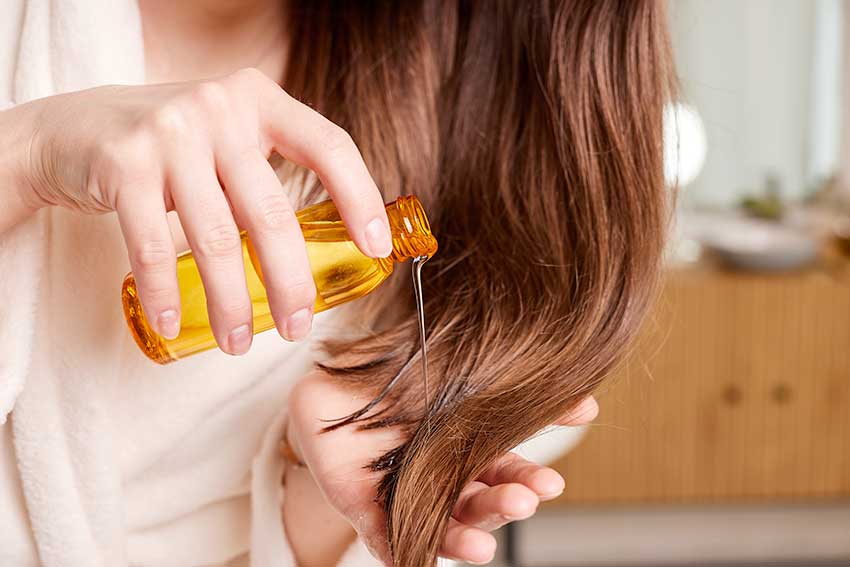
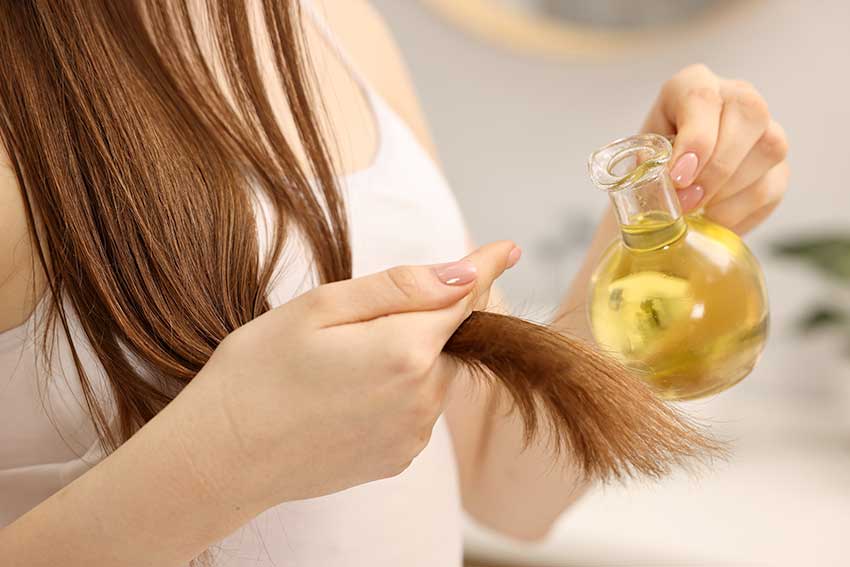
Hair oiling is a technique involving the application of plant oil to hair and/or scalp for the purpose of moisturizing, strengthening, and protecting the hair fiber. The mechanism of action is simple but fascinating. Plant oils contain fatty acids that are structurally similar to the natural lipids contained in hair. This is precisely what enables them to penetrate through the cuticle scale layers into the interior of the hair, where they can moisturize and fill gaps caused by lipid loss. In practice, this means that oil doesn't just sit on the hair surface like a greasy layer – it enters inside and rebuilds the fiber structure from within.
Temperature is crucial here. Cold-pressed oil, in which the pressing temperature does not exceed 40°C, preserves all important components – omega-3 and omega-9 fatty acids, vitamin E, phytosterols, and other bioactive compounds. These components are not just decorative elements in the composition – they are active, enter into chemical reactions with the hair and scalp structure, repairing damage at the molecular level.
Why Doesn't Oiling Weigh Down Hair?
One of the most common myths is the belief that hair oiling makes it greasy and heavy. Reality is completely different if we do it correctly and with the right oil. Only oils with very heavy molecular structure are problematic, as they don't penetrate the hair but land on its surface as a greasy layer. Cold-pressed oils from seeds rich in unsaturated fatty acids have a light, volatile structure – they penetrate the hair instead of sticking to it. If we use them in the appropriate amount and with the pre-wash technique (before washing), the problem of excess oil on hair disappears completely.
Best Oils for Winter Hair Care – Pressed at Home
Black Cumin Oil – Medicinal Since Ancient Egypt
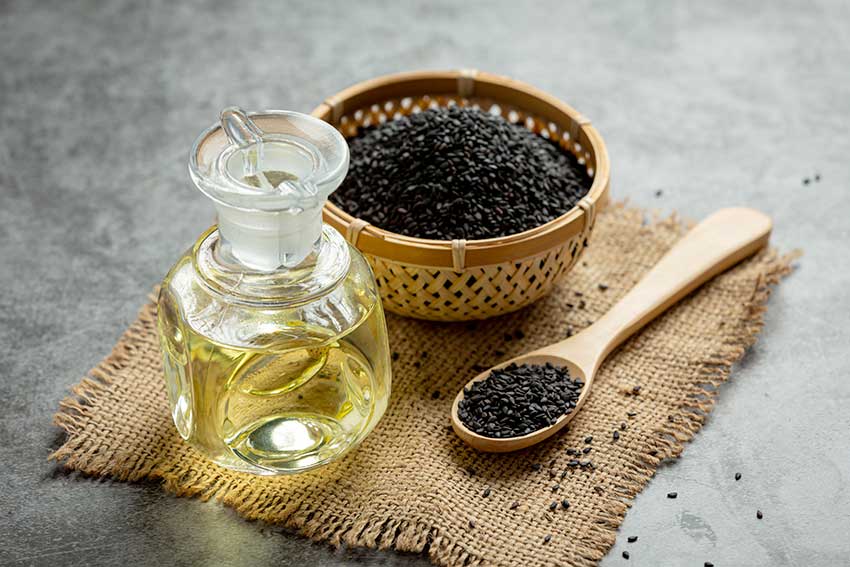
Black cumin (Nigella sativa) is one of the oldest medicinal plants in human history. Black cumin seeds were found by archaeologists in the tomb of Pharaoh Tutankhamun – which means that already over 3000 years ago, people appreciated this plant for its remarkable health properties. Today, black cumin oil is valued in cosmetics primarily for its effects on hair and scalp. It contains thymoquinone – a powerful antioxidant that protects hair follicles from oxidative stress, which is one of the causes of hair weakening in winter. Regular application of black cumin oil to the scalp strengthens follicles, improves hair condition at the base, and helps regulate sebum production – which is invaluable precisely in winter when sebaceous glands work less efficiently.
If you want to try pressing black cumin oil at home, you can reach for Organic Black Cumin Seeds 200g BIO – organic seeds of guaranteed purity, GMO-free and without any processing. From 200g of seeds, you'll obtain enough oil for several weeks of regular hair and scalp care.
Flaxseed Oil – Omega-3 for Brittle Hair
Brown flax seeds are one of the richest natural sources of alpha-linolenic acid (ALA), which belongs to the omega-3 fatty acid family. For hair, this is an absolutely crucial component – omega-3 strengthens cell membranes in the hair, making it more elastic and less prone to breaking. In winter, when hair loses more moisture than in other seasons, flaxseed oil acts like a seal, preventing further dehydration of the fiber. What's particularly important – flaxseed oil is extremely light and quickly penetrates the hair, which means that even with regular use, it won't weigh down the hair. Vitamin E contained in flaxseed oil acts on the scalp like a protective shield against irritation, which is exceptionally common in winter.
For pressing flaxseed oil at home, you'll need Organic Brown Flax Seeds 300g BIO – organic seeds rich in 42g of fat per 100g of product, a significant portion of which is omega-3. Brown flax oil has a darker color and slightly nutty aroma, making it pleasant to use on both hair and scalp.
Sesame Oil – Strength and Natural Shine
Sesame is one of the most versatile oilseed plants, and the oil pressed from it has exceptional care properties for hair. It contains sesamol and sesamin – powerful antioxidants that protect hair from damage caused by oxidative stress and slow down fiber aging processes. Sesame oil excellently moisturizes hair without weighing it down because it has a light, volatile structure. Moreover, it's extremely useful in scalp massages – in Ayurvedic tradition, sesame has long been used precisely for head massage as a means of supporting blood circulation in the scalp and stimulating hair growth. Regular massage with sesame oil leads to noticeable improvement in hair density and their overall health.
In our offer, you'll find Organic Sesame Seeds 400g BIO – organic sesame seeds with a content of 50g of fat per 100g of product, which means excellent pressing efficiency. Hulled sesame is ideal for cold pressing, and the obtained oil has a characteristic nutty aroma and golden color.
Pumpkin Seed Oil – Zinc as a Weapon Against Hair Loss
Pumpkin seeds are the undisputed champion when it comes to providing zinc – a mineral of crucial importance for hair health. Zinc is essential for the proper functioning of hair follicles and plays a key role in scalp regeneration. In winter, when the scalp is more exposed to dryness and irritation, pumpkin seed oil acts like a soothing balm – it moisturizes, nourishes, and accelerates epidermis regeneration. What's particularly valued – pumpkin seed oil also supports hair from within, strengthening their structure and preventing excessive hair loss, which happens to many people precisely in winter.
Pumpkin seeds are available in our offer as Organic Hulled Pumpkin Seeds 400g BIO – organic seeds of Polish origin, rich in 49g of fat per 100g of product and as much as 30.2g of protein. This is one of the richest natural sources of zinc among oilseed plants, making it an exceptionally valuable raw material for pressing oil for hair care.
How to Properly Oil Hair in Winter – Step by Step
Choosing Oil for Hair Type
Not every oil suits every hair type. Thin and brittle hair responds great to flaxseed oil and black cumin oil – both are light and quickly penetrate the hair without weighing it down. Thick and curly hair can handle sesame oil or pumpkin seed oil, which have a slightly heavier structure and can fill the spaces between hair fibers, giving them shape and shine. For the scalp, regardless of hair type, the best options are black cumin oil, which works well for irritated or flaking-prone scalp, and pumpkin seed oil for dry scalp needing regeneration.
Pre-wash Technique – Oiling Before Washing
Pre-wash is the most effective hair oiling technique in winter because it allows maximum oil penetration into the hair while eliminating the problem of excess grease after treatments. The idea is simple: we apply oil to dry or slightly damp hair before washing, keep it for a specified time, then wash hair with shampoo as usual. Shampoo removes excess oil from the hair surface, but what has managed to penetrate inside the fiber stays and works for the following days. We recommend keeping oil on hair for at least 30 minutes before washing, and preferably – as we include in the later part of the article – overnight.
Overnight Oiling – Deep Conditioning for Winter
If you want maximum effect, overnight oiling is the option that gives the best results. In the evening, we apply oil to hair from roots to ends, gently massage the scalp for 2-3 minutes, then tie hair in a loose bun or braid it and cover with a silk or cotton cap. We don't recommend plastic caps – they trap moisture but simultaneously suffocate the scalp. Overnight, the oil has time for full penetration into the hair and intensive regeneration. In the morning, we wash hair as normal – the effect is almost immediate in the form of soft, elastic, and shiny hair.
Scalp Massage – A Ritual That Changes Everything
Scalp massage with oil is a care element that works in two ways simultaneously. First, mechanical massage stimulates blood flow in the scalp, which accelerates the delivery of nutrients to hair follicles and supports growth. Second, oil applied to the scalp directly moisturizes and nourishes the epidermis, eliminating the problem of dry and flaking skin. The best results come from a massage lasting 3 to 5 minutes, performed with fingertips in a circular motion from the forehead to the back of the head. It's worth doing this at least twice a week – preferably before washing hair so the oil has time to penetrate the skin.

Why Is Home-Pressed Oil Better Than Store-Bought?
Cold Pressing – What Protects and What Destroys
The key difference between home-pressed oil and typical supermarket oil lies in the production process. Cold pressing means that the oil temperature during production does not exceed 40°C. At such a low temperature, all bioactive components are preserved: omega-3 and omega-6 fatty acids, vitamin E, phytosterols, antioxidants, and ethereal oils. Each of these components has specific, documented effects on hair and scalp – from strengthening fiber structure, through scalp moisturization, to protection against oxidative stress.
In the industrial oil production process – especially that which ends up on supermarket shelves – temperature can exceed 200°C. At such temperatures, vitamin E degrades, omega-3 acids transform into trans fats, and bioactive compounds completely break down. What remains is, in the best case, a fatty carrier devoid of active components – almost useless from the perspective of hair and scalp care.
From Seed to Bottle – What Happens with Home Pressing
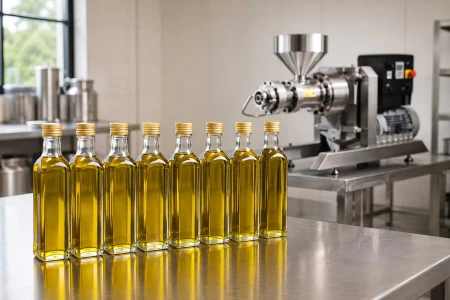
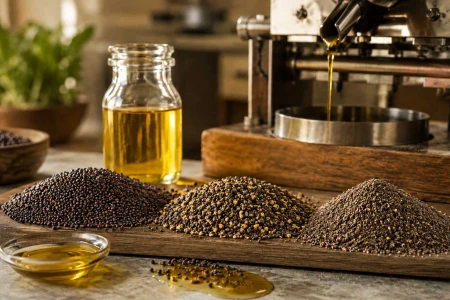
The process of pressing oil at home is surprisingly simple and gives visible, immediate effects. We pour seeds into the oil press, turn on the machine, and observe how oil gradually flows from the screw mechanism – golden, aromatic, and clearly more alive than that in a store bottle. The press cake, or the by-product of pressing, is not wasted – it can be 100% utilized as animal feed or as an addition to cakes and salads. The whole process is simple and direct, in which you know exactly what raw material your oil comes from and how it was produced. There are no hidden ingredients, preservatives, or artificial enhancers here – pure, living oil pressed from seeds you chose yourself.
Oil Press for Cold Pressing – What Is It and How Does It Work
Why Pressing Temperature Matters for Cosmetics
If you're deciding to press oil for care purposes, pressing temperature is of fundamental importance. Oil pressed for culinary purposes can be subjected to slightly higher temperatures because taste and aroma are most important here. But oil intended for hair and scalp needs maximum protection of bioactive components – which means pressing at a temperature below 40°C. That's why it's worth having equipment that gives you control over pressing parameters and allows precise process control.
Semi-Industrial Oil Press LY-129 – Efficiency and Quality in One Device
One of the best devices for pressing oil both hot and cold is the Semi-Industrial Oil Press 15-20 kg/h. This compact machine with a capacity of 15-20 kg/h is an ideal choice for anyone who wants to press oil regularly – both for kitchen and for care. The LY-129 press enables pressing both cold and hot, giving you full control over the process: for cosmetic purposes, you use cold pressing mode where oil temperature doesn't exceed 40°C, and for culinary purposes, you can increase the temperature to the level corresponding to your needs.
The LY-129 press housing is made of 304 and 420 stainless steel – materials compliant with food hygiene standards, but simultaneously guaranteeing that no chemical substances enter the oil. The set includes two interchangeable screws, which allows optimization of pressing depending on seed type. The hopper capacity is 4-5 kg, the motor has 1.5 kW power, and the entire machine has dimensions of 70 x 30 x 74 cm – dimensions that fit in any kitchen. The press is powered from a standard 230V network, and its weight is 53 kg, which ensures stable operation without the need for additional mounting.
For people who want to start pressing oil at home and intend to do it regularly – which we strongly encourage – the LY-129 press is one of the best choices on the market. It's efficient enough to press for stock, while compact enough not to take up too much space. The manufacturer Prima-Tech offers this press with a quality guarantee and after-sales service.
Building Your Winter Care Set
Four Key Oils and Seeds for Pressing Them
Optimal winter hair oiling is based on mixing two or three oils that complement each other. We recommend the following set as a starting point: Black Cumin BIO for scalp massage and strengthening hair follicles, Brown Flax Seeds BIO as a base for hair oiling – light and rich in omega-3, Hulled Sesame BIO for scalp massages and giving hair shine, and Pumpkin Seeds BIO as a supplement for scalp needing regeneration and zinc supply. Each of these seeds is available in organic BIO version, GMO-free, preservative-free, and without any processing.
Weekly Care Routine with Home Oil
We propose the following weekly structure that gives the best results with minimal time investment. On Mondays and Thursdays, we perform full hair oiling – we apply a mixture of flaxseed and sesame oil to hair from roots to ends and leave overnight or for a minimum of 30 minutes before washing. On Wednesdays and Saturdays, we do scalp massage with black cumin or pumpkin seed oil – 3 minutes of massage with fingertips, then washing hair 20 minutes after oil application. On remaining days, we wash hair normally without additional oiling – this gives the scalp time for natural sebum secretion, which is extremely important in winter.
Popular Myths About Winter Hair Oiling
Oil Makes Hair Greasy – How It Really Works
This myth stems from improper oiling – too much oil or wrong oil choice for hair type. Cold-pressed oil from oilseeds, used in moderate amounts and with the pre-wash technique, leaves no greasy feeling. The key is technique: we apply oil before washing and wash hair with normal shampoo after treatments. Shampoo removes excess from the surface, and what stays inside the fiber works from within – without any greasy feeling on the hair exterior.
Oiling Only Works in Summer – Why Winter Is Actually Ideal
Paradoxically, winter is the season when hair oiling brings the best effects. This is because it's precisely in winter that hair loses the most moisture and is most exposed to damage. Cold-pressed oil acts like an ideal supplement for these losses – it supplies lipids that hair has naturally but loses excessively in winter. In summer, hair is naturally better moisturized and has more sebum from sebaceous glands – summer oiling is common and beneficial, but not as necessary as in winter.
More Expensive Oil Means Better Oil – About the Value of Pressing at Your Own Cost
Oil price in stores has no relation to its quality in terms of hair care. What really matters is the pressing method, raw material quality in the form of seeds, and bioactive component content. Pressing oil at home from organic BIO seeds using an oil press gives you a product of quality significantly higher than anything you buy in a store for several hundred dollars – and the cost of one pressing is only the price of seeds, which in the case of discussed products ranges from several dozen dollars for a package sufficient for several pressing sessions.
Summary – Winter Doesn't Have to Be Your Hair's Enemy
Hair oiling with cold-pressed oil is one of the simplest, most effective, and healthiest ways to deal with dry hair and problematic scalp in winter. It doesn't require any complicated procedures or expensive cosmetics – it only requires good oil, a bit of time, and consistency. Pressing oil at home from BIO seeds using an oil press gives you a product of exceptional quality, full control over composition, and low cost. Oils from black cumin, flax, sesame, and pumpkin seeds, cold-pressed and systematically applied, will transform your winter hair from brittle and dull to strong, elastic, and healthy.
Frequently Asked Questions About Winter Hair Oiling
How often should I oil my hair in winter?
We recommend oiling hair twice a week – once as full overnight oiling with pre-wash technique, and once as scalp massage before washing. Too frequent oiling can disrupt natural sebum production by sebaceous glands, leading to the opposite effect from intended. Twice a week is the optimal pace that allows hair and scalp to regenerate between treatments.
Can I mix different oils together?
Yes, mixing oils is not only allowed but actually recommended. Each oil has a different profile of fatty acids and bioactive components, so mixing them allows supplementing deficiencies. A popular mixture is 60% flaxseed oil and 40% sesame oil for hair, with pure black cumin or pumpkin seed oil for scalp. You can experiment with proportions depending on your hair and scalp needs.
Does hair oiling help fight dandruff?
If the problem concerns dry scalp rather than true dandruff caused by Malassezia fungus, oiling can bring significant relief. Black cumin oil has antifungal and anti-inflammatory properties that can help alleviate symptoms. However, if scalp flaking is intensive and accompanied by strong itching and visible inflammation, we recommend consultation with a dermatology specialist – oiling is not a cure for fungus, but excellent prophylaxis and help for dry scalp.
How long do I need to keep oil on my hair?
Minimum 30 minutes before washing – this is enough for oil to penetrate the hair at a level giving visible results. However, overnight oiling gives the best effects – keeping oil for 6 to 8 hours allows maximum penetration into the fiber and regeneration. The longer oil is in contact with hair and scalp, the better the effects, but even 30 minutes is sufficient as a start to the oiling adventure.
Can I oil wet hair or must they be dry?
The best option is slightly damp hair – towel-dried after bathing but not completely dried. Wet hair has an open cuticle, which facilitates oil penetration into the fiber interior. On dry hair, you apply oil to a closed cuticle, which hinders penetration. Golden rule: oil hair that is damp but not dripping with water.
Is pressing oil at home difficult?
Absolutely not. Operating an oil press is extremely simple – just pour seeds into the hopper, turn on the machine, and wait. The entire process from seeds to finished oil takes from several to several dozen minutes depending on seed quantity. Oil presses such as LY-129 were designed to be operated without any specialist knowledge – the only thing you need to do beforehand is choose seeds and decide whether you want to press cold or hot.
How to store home-pressed oil for hair care?
Cold-pressed oil is best stored in a dark glass bottle in a cool place – preferably in the refrigerator or in a dark cabinet. Oil stored this way retains its properties from 2 to 6 months depending on type. Black cumin oil and sesame oil are more stable and can be kept longer, while flaxseed oil is more sensitive to oxidation and we recommend its use within 2-3 months of pressing.