
Table of Contents
- Anonymous Producer vs. Author of a Product - Two Extreme Positions on the Value Chain
- The Oil Press as a Tool of Image Transformation
- The Architecture of an Oil-Pressing Brand - What the Premium Customer Actually Buys
- Practical Dimensions of the Transformation - From Seed to Delicatessen
- Sales Channels for the Premium Brand - Where the Farm Gains a Face
- Communication of the Oil-Pressing Brand - From Field to Narrative
- Long-Term Consequences of the Image Transformation
- Frequently Asked Questions (FAQ)
In the traditional farming model, a farm is a supplier of raw material. Seeds go to the buying station, change hands, lose their origin and ultimately become an anonymous component of products that no longer bear any trace of the farmer. The field where they grew disappears in the trading chain together with its name, its people, its history and the quality of its soil. What the farmer receives in return is a price dictated by the commodity market.
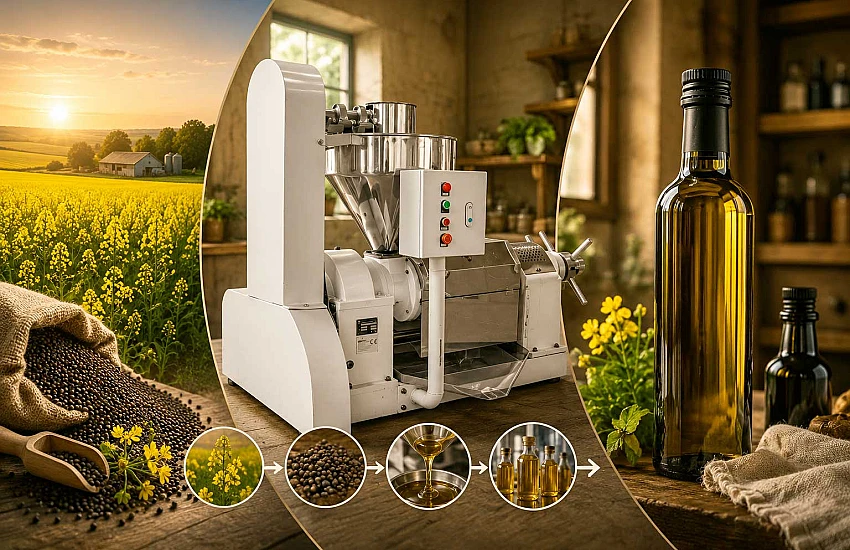
Pressing oil within one's own infrastructure reverses this order. A raw material becomes a product that has a bottle, a label, a pressing date, the producer's name and a place of origin. The farmer ceases to be an anonymous link in the chain - they become an author. The significance of this change goes far beyond margin and annual balance. It is an image transformation through which the farm enters a segment in which the value of a product is determined by cultural, narrative and identity factors.
This text describes how this transformation unfolds: how a supplier of raw materials differs from the author of a brand, which elements build a premium position, how to communicate one's presence on the market and why investing in an oil press with the right technical parameters constitutes a turning point in the history of the farm.
It is worth emphasising that the transformation discussed here is neither a marginal phenomenon nor a passing trend. It fits into a broader cultural and consumer shift in which the value of products with a clear origin, a short supply chain and a legible authorship is rising. The 21st-century premium customer increasingly seeks not a corporate brand but a craft manufacture in which a human being can be recognised. A farm that launches its own oil-pressing line aligns with this direction with a natural credibility that many larger producers lack. This privilege stems from the very structure of the farm, but translating it into a real market position requires consistent work on each of the dimensions described below.
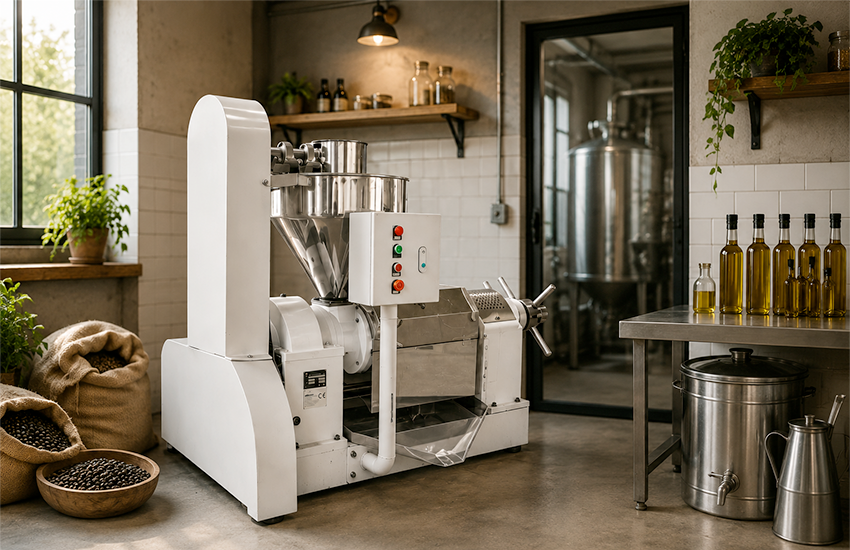
Anonymous Producer vs. Author of a Product - Two Extreme Positions on the Value Chain
The Logic of the Commodity Market and the Trap of Commoditisation
The market for agricultural raw materials operates on a logic in which the products of different farms are treated as interchangeable. A tonne of rapeseed from one field does not differ in commodity trading from a tonne from another, as long as it meets the buyer's parameters. The fact that the seed grew on better soil, in a more balanced crop rotation, or was stored more carefully, is not reflected in the price. From the buyer's perspective, it is a technical raw material.
Commoditisation is a trap because it cements the position of the farmer as a passive entity. Price is not negotiated - it is imposed by global quotations, exchange rates, seasonal surpluses and decisions of large processors. The farm has no influence whatsoever on how its field, name or work philosophy is perceived. In this world, success means increasing yield per hectare, and failure means a drop in buying-station prices.
Who the Farmer Becomes Upon Owning an Oil Press
An oil press changes this logic at its foundation. The raw material that previously vanished into the trading chain stays on site and undergoes a transformation process. Together with each litre of oil, a product is created that can be named, packaged, narrated and sold directly. The farmer is no longer a supplier - they are a final producer.
This change of roles translates into a fundamentally different dynamic in the relationship with the market. A retail customer, a restaurateur, a delicatessen buyer or a distributor of luxury food products does not evaluate a litre of oil according to exchange quotations. They evaluate it according to the story it carries, its taste, its freshness, the aesthetics of its packaging and the way the farm tells its own story. The same hectare, the same seeds, a completely different category of value.
The Oil Press as a Tool of Image Transformation
From Anonymous Raw Material to Signed Product
The moment a farm introduces an oil press into its infrastructure, its status in the eyes of the market changes. It is no longer merely a place where raw material is produced - it becomes a place where added value is produced. This change is not merely operational, but above all symbolic. The label that can be placed on a bottle carries a name, a place, a date, a batch. Each of these elements constitutes a market signal of a strength that the buying station never had a chance to offer.
Signing a product is an act of declaration. The farmer says: I made it, I take responsibility for it. In marketing terms, this is the creation of what brand specialists call a signature - a recognisable trace of a specific person or place that becomes a guarantee of quality and repeatability. The oil press is the place where this signature comes into being. Without it, the farmer remains nameless.
The Terroir of Oil - the Local Answer to the Wine Narrative
For decades, the world of wine has built its value on the concept of terroir - a weave of soil, climate, exposure, microflora and human work that determines the unique character of the product. Olive oil has travelled an analogous path: today, premium Italian, Spanish or Greek olive oil is described in a language close to that of wine, with indications of the region of origin, the variety, the harvest date and the pressing method.
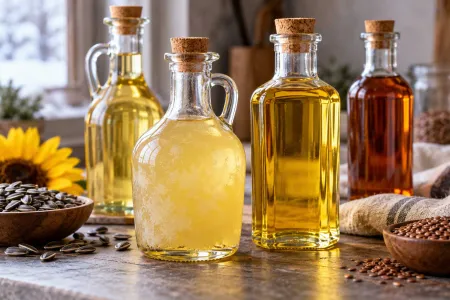
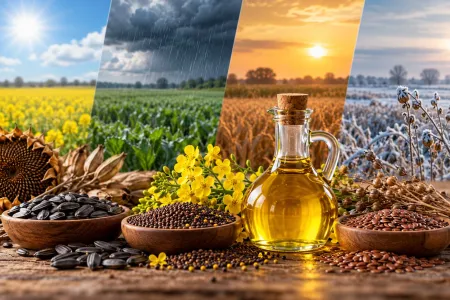
Oils from local seeds - rapeseed, flax, sunflower, pumpkin, milk thistle, hemp, black cumin, sesame - have all the conditions to participate in this narrative. The land, the climate, the local varieties, the regional tradition - all of this constitutes fully valid material for building a terroir identity. A farm that presses its own oil can tell the story of its rapeseed growing on a particular soil type, of a crop rotation composed in a specific way, of seeds resting after harvest under controlled conditions. This narrative has no analogue in raw-material production.
In communications practice, the terroir narrative also means the courage to name details. The geographical coordinates of the field, the local name of the valley, the type of subsoil, the microclimate - each of these elements can enter the language of the brand and enrich it with a layer that the premium customer reads as a guarantee of authenticity. In other categories of food, such attachment to place is already taken for granted; in the craft oil sector it remains terrain only partly explored, which creates an opportunity for producers starting their projects today.
Control of the Process as the Foundation of a Premium Narrative
The oil press gives the farm control over the entire process: from the moment the seed leaves the storage and enters the hopper, to the moment the oil flows into the clarifying tank. What happens in between is the place where value is created and where narrative is born. Pressing temperature, purity of the raw material, moisture parameters, the manner of filtration - each of these elements is a point at which the producer makes a quality decision. At the buying station, such decisions do not exist, because the raw material is a uniform mass.
The premium customer buys not only the oil, but also the certainty that someone watched over that oil. The possibility of showing the facility, telling the story of the process, describing it in marketing materials - all of this is possible only when the farm has its own oil press. Without it, the process remains someone else's, and the narrative - borrowed.
The Architecture of an Oil-Pressing Brand - What the Premium Customer Actually Buys
The Product is Not Just Oil - It is a Story, a Place and a Person
In the premium segment, a product functions as a carrier of meaning. A customer buying a bottle of oil in a delicatessen, at a producers' market or in the online shop of a craft manufacture does not make a purely consumer decision. They make a cultural decision - they choose a particular vision of eating, a particular relationship with the farmer, a particular aesthetic of everyday life. The oil becomes an element of a wider composition in which it matters who made it, where, why and how.
This multilayered nature of the product is what distinguishes the premium segment from the mass segment. In the mass segment, the product communicates exclusively its utility function: frying oil, salad oil. In the premium segment, the product also communicates an identity: oil from a family farm, oil from a specific field, oil from a specific tradition.
Origin, Freshness, Traceability - Three Pillars of Perceived Luxury
Contemporary food luxury rests on three pillars that together form the value system of the premium segment. The first is origin - the customer wants to know where the product was made, who produced it and whether this information is verifiable. The second is freshness - the pressing date, the bottling date and a short distribution chain are today attributes nearly as important as composition. The third is traceability - the ability to follow the product from field to bottle, based on concrete batch numbers, dates and parameters.
A farm that presses its own oil meets all three conditions with natural ease. Origin is obvious, because the press is at the farm. Freshness is full, because the oil reaches the bottle within days of pressing. Traceability is complete, because each batch has its history in one place. These three pillars, difficult to build in raw-material production, are in the craft model a free consequence of the infrastructure.
Bottle and Label Aesthetics as a Manifesto of Identity
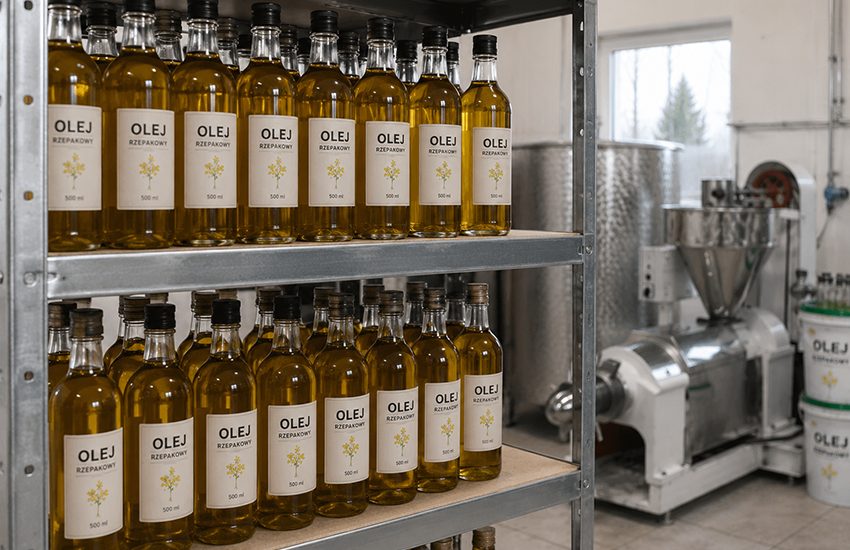
In the premium segment, packaging is not an addition to the product - it is its co-author. The bottle, the label, the cork, the description on the side, the way the batch and pressing date are placed - each of these elements builds the impression of dealing with a carefully crafted product. A luxury customer reads aesthetic signals instantly and assigns them economic value. Weak packaging lowers the perceived quality of the content, even if the oil itself is excellent.
In practice this means that the design of the label, the choice of bottle, the decision in favour of dark glass, the format of the description, the language of the brand - are investments as important as the investment in the press itself. An oil-pressing manufacture is a design project in which technological infrastructure meets visual infrastructure. A good premium farm thinks about both simultaneously.
A separate and undervalued dimension of this work is naming. The name of the brand, the names of individual oils, the names of limited lines - these are elements that the customer repeats, remembers and passes on. A name built with awareness of the segment works as a semantic shorthand, containing within itself the origin, the atmosphere and the promise of the product. Manufactures that have neglected this layer often discover over time that their oil sells excellently in the farm shop but fails to find a place on the delicatessen shelf, because its name does not distinguish it in the buyer's catalogue from dozens of competing offers.
Practical Dimensions of the Transformation - From Seed to Delicatessen
Production Scale and Brand Positioning
Contrary to intuition, the premium segment does not require extremely small scale. Small scale can be helpful in a boutique narrative, but in practice it limits product availability, raises unit costs and makes entry into delicatessen networks more difficult. The optimal scale for an oil-pressing brand is one that allows steady wholesale customers, retail clients, restaurants and direct sales to be served without breaks and without having to refuse deliveries.
In this context, a press with a capacity of several tonnes of seed per day proves to be a strategic solution. It provides production freedom, allows rational batch planning, makes it easier to separate different seeds within the weekly cycle and leaves a safety margin for periods of increased demand, such as holidays or the gift season.
Professionalisation as a Condition of Entry into the Premium Segment
The delicatessen buyer, the wholesaler, the organic chain, the starred restaurant - all these recipients expect from the producer not only a product, but also professionalism at every stage of cooperation. Repeatable quality, punctual deliveries, complete documentation, clean labels compliant with current requirements, certificates, EAN codes, VAT invoices, the ability to issue certificates of conformity - all of this requires a facility organised in a professional manner, not a hobbyist workshop.
An industrial-class oil press meets these expectations not only through its capacity parameters but also through the very presence of appropriate infrastructure. A reinforced construction, stainless-steel components, a CE certificate, suitability for continuous operation, the possibility of integration with a production line - these are attributes that, at the level of an audit or a delicatessen buyer's visit, build the credibility of the facility. A premium brand is not born in a garage, even if the founding myth likes to refer to the garage.
The Screw Oil Press 3.5–5 t/24h as the Foundation of a Craft Facility
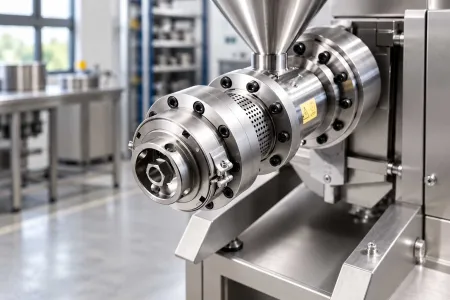
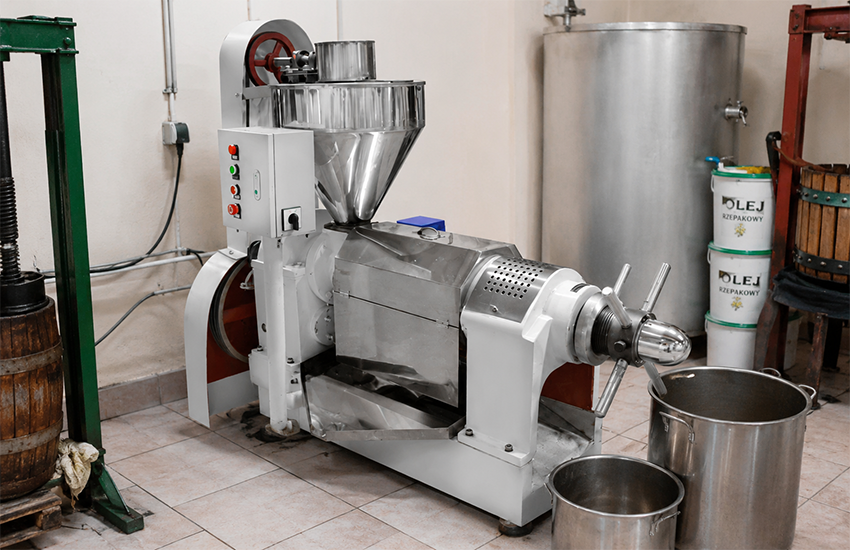
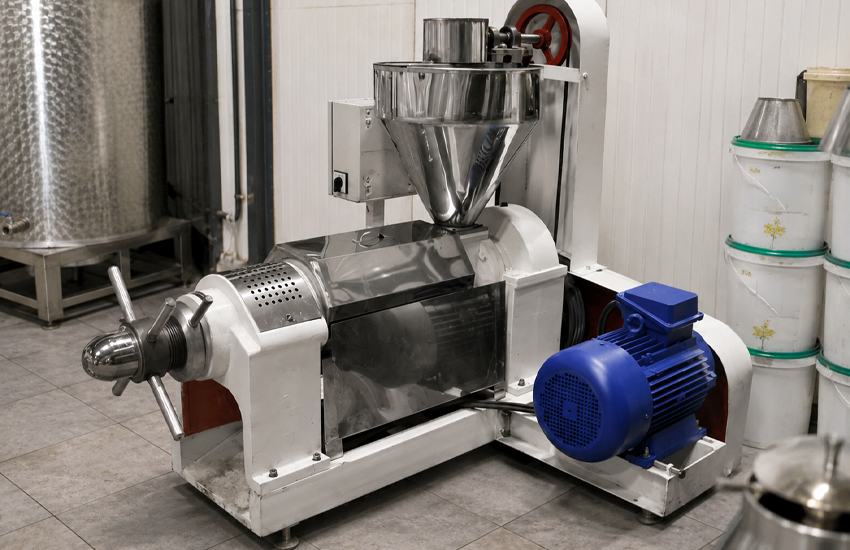
From the perspective of a farm aiming at the premium segment while wishing to retain scaling flexibility, a good starting point is the Screw Oil Press 3.5–5 t/24h. This is an industrial-class machine designed for continuous operation, based on the proven method of mechanical pressing, without chemical intervention. A capacity of 3.5 to 5 tonnes of seed per day covers the needs of both a large family farm with its own brand and a specialised oil mill cooperating with the delicatessen and wholesale channels.
The construction of the press has been designed with durability and repeatability in mind. A reinforced body, an efficient drive system with 11 kW power, 400 V 50 Hz supply, stainless-steel components in the parts in contact with raw material and oil, stable operation under heavy load, service access enabling ongoing maintenance - these are features that translate directly into the facility's ability to maintain uniform product quality over a long horizon. The unit holds a CE certificate and is suitable for operation in a 24/7 production environment. A residual oil content in the cake of up to 8 percent means full use of the raw material and a second fully valuable product in the line.
Body dimensions of 160 x 70 x 140 cm and a weight of 550 kg mean that the press fits into the typical layout of a medium-sized craft manufacture's production hall and can be integrated with feeders, cleaners and a filtration system. From the standpoint of building a premium brand, however, the key point is not merely scale but precisely this integration - because it is what allows one to speak of the facility as of a place, and not as of a single workstation.
Sales Channels for the Premium Brand - Where the Farm Gains a Face
Delicatessens and Concept Stores
The most natural environment for a premium oil-pressing brand is the delicatessen. It is a place where the customer has already accepted that the product will be more expensive, because they came for a product that is different - better, more interesting, narrated. The delicatessen shelf functions like a curated selection: presence on it is a form of recommendation, and the neighbourhood of other premium brands builds resonance.
Entry into this channel, however, requires meeting expectations that go beyond the product itself. The delicatessen buyer expects stable deliveries, uniform quality, professional documentation and marketing materials that make sales easier - tasting notes, culinary suggestions, product cards. An oil-pressing manufacture that thinks about this channel treats it as a partnership, not as a transaction.
Authorial Restaurants and Curatorial Sommelier Collections
The second premium channel is authorial gastronomy. Restaurants in which the chef composes menus with specific products from specific producers are today one of the most powerful tools for building an oil-pressing brand. Mentioning the producer's name on the dish card, describing the origin of the oil in the waiter's narrative, including the product in tastings - these are acts of communication of great effectiveness, because they reach customers who then look for the product in stores or directly from the farmer.
Oil sommeliers - a profession that is only beginning to function in Central Europe but is already established in Mediterranean countries - play the role of market curators. Their recommendation builds the product's status in the gastronomic and media environment. A manufacture that consciously works on its presence in this world gains a position difficult to undermine.
Cooperation with chefs can also take more advanced forms. Dedicated oil editions prepared for a specific seasonal menu, short batches pressed from raw material indicated by the chef, joint tastings for restaurant guests, the marking of origin in the menu - all these are instruments that distinguish a craft brand from a mass product. Such partnerships do not arise in the first season of activity, but consistently built over several years they create around the manufacture a network of recommendations and mutual references that cannot be reproduced through advertising.
Direct-to-Consumer and the Farm's Digital Ecosystem
The third channel, growing ever stronger, is direct sales - the farm's online shop, sales at producers' markets, subscription sales, tasting packages, seasonal collections. Direct-to-consumer allows the manufacture to bypass intermediaries, to control the entire customer experience and to build a base of customers who become brand ambassadors.
The digital ecosystem of the farm - website, social-media profiles, newsletter, culinary blog, films from the press room - plays the role of an open door. A customer who does not physically visit the facility can today see it in a way that ten years ago would have been reserved for television documentaries. A manufacture that consciously builds this communication layer gains an emotional presence in the homes of its customers. This is the essence of the premium brand - it not only sells a product, it inhabits the imagination.
In this context, it is worth remembering that the digital ecosystem is not limited to promotional activities. Subscription formats are gaining increasing importance, in which the customer receives regular deliveries of freshly pressed oils together with a story about a given season, field or edition. Such formats turn a one-off purchase into a long-term relationship in which the manufacture plays the role of curator of the customer's everyday table. For the farm this means predictability of demand, for the customer - a sense of dealing with a living brand that changes seasonally. It is one of the strongest models of building loyalty in the premium segment.
Communication of the Oil-Pressing Brand - From Field to Narrative
Language, Photography and the Visual Codes of the Premium Segment
The communication of a premium brand has its own internal rules, which differ from the communication of a mass brand. The language is sparing, concrete, free of hyperbole. The photography tends to be raw, the lighting natural, the compositions focused on detail, on hands, on the structure of the seed, on the surface of the oil in glass. The aesthetic refers to craft, to process, to place - and not to an advertising effect.
A message composed in this way works because the premium customer reads codes discreetly. The advertising shout is inelegant in this world and lowers the perceived value. What builds credibility is calm. A manufacture that speaks of itself with restraint paradoxically strengthens its position, because it leaves room for the customer's imagination.
Meetings, Tastings and Open Doors at the Press Room
An oil-pressing brand gains a three-dimensional quality when the customer has the opportunity to experience the farm physically. Meetings at the press room, open days, tastings with the participation of chefs, themed dinners organised around oil - these are formats that transform the product into an experience. A customer who has tasted the oil in the place where it was made does not buy oil at the supermarket anymore. They buy a product from a farm where they have been.
This direct experience creates the strongest kind of loyalty. A customer who has seen the field, the press and the bottle in one place becomes a witness to the process. A witness no longer needs further arguments - they know. A manufacture that regularly invites witnesses builds around itself a community that naturally plays the role of ambassador.
Certificates, Awards and External Curators
A premium brand does not function in a vacuum - it is embedded in a network of external acknowledgements. Oil competitions, quality certificates, regional programmes, organic markings, mentions in gastronomic guides, presence in curatorial catalogues - these are elements that strengthen the market position without the need for active promotion. The premium customer trusts curators: if an oil is recommended by a renowned chef, by a respected culinary magazine, by a prestigious competition - its status is confirmed by a network of authorities.
A manufacture that consciously works on its presence in this world - submits products to competitions, seeks publications, maintains contact with food journalists - builds image capital of long durability. Each distinction is not only a one-off promotional effect, but an element of a lasting narrative about the brand. Over the years, this capital becomes what distinguishes a farm with an established position from a beginning one. In practice this means that competition entries and contacts with the media are worth treating as part of the brand's communications plan, and not as occasional promotional actions undertaken only when a free moment appears.
Long-Term Consequences of the Image Transformation
Pricing Sovereignty Instead of Dependence on the Buying Station
A farm that has become a recognisable brand ceases to function according to the logic of a price-taker. Its products are priced not according to exchange quotations, but according to the value carried by the brand. This is a fundamental change, because it moves the farm from a passive position to an active one. Price becomes the producer's decision, not the market's verdict. A bundle of factors - recognisability, customer loyalty, sales channels, communications materials, brand history - forms a structure that protects against fluctuations of the business cycle.
Pricing sovereignty does not mean arbitrariness. It means that the farm has tools with which it can actively manage its position. Introducing new products, raising packaging standards, changing distribution channels, opening export sales - these are decisions that do not exist in the raw-material model, and that constitute strategic everyday life in the craft model.
The other side of this change is a gradual shift in the farm's revenue structure towards higher-value products. While raw materials may continue to constitute part of the activity, their role diminishes in favour of bottled oil, oil cake sold as a high-quality feed, and complementary products such as tasting sets, flavoured oils or seasonal collections. A portfolio constructed in this way is less susceptible to fluctuations in agricultural conditions and gives the farm a risk-management tool that simply does not exist in the purely raw-material model.
Succession, Transmission of Values and Brand Heritage
Today the farm faces the challenge of succession. The younger generation often does not want to take over work perceived solely as raw-material production, because it sees no place there for itself, for its own professional identity, for the development of competencies beyond the field. An oil-pressing brand changes this picture. A craft manufacture requires competencies that are attractive to a generation raised in a project-based culture: brand management, visual communication, sales, curation of product collections, storytelling.
Succession then becomes a transmission of values, not merely a handover of land. Young owners inherit a brand that they can develop, open to new markets, combine with other products of the farm. Material heritage becomes cultural heritage, which in the long horizon strengthens family and economic cohesion.
From the perspective of the entire farming family, an oil-pressing manufacture can also serve as a scaffolding on which various professional paths of successive generations rest. The older generation remains the steward of the field and the custodian of knowledge about crop rotation, the middle one runs production and quality control, the younger one develops the brand, the online shop, communications and customer relations. A family business understood in this way ceases to be a monolith and becomes a network of roles, in which everyone has their own place and their own achievements. The manufacture then becomes not only an economic product but also an instrument sustaining family continuity in times when many traditional models of agricultural succession are losing their coherence.
The Farm as a Place - Tourism, Education and Cultural Capital
An oil-pressing manufacture that has gained recognition becomes a place on the map. Not only the commercial map, but also the cultural and tourist map. Farms with strong brands attract visitors - urban customers who treat the visit as a weekend element, culinary travellers, journalists, children attending lessons on the origin of food, adults at tasting workshops. This traffic generates additional lines of activity: agritourism, the shop, the restaurant, workshops.
On a macro scale, this creates a new category of the farm's presence in culture. The manufacture ceases to be solely an economic entity - it becomes a local institution that shapes the identity of the region and raises the value of surrounding fields. This cultural capital has its reflection in prices, but above all in a symbolic position that cannot be purchased - it can only be built through consistent work over time.
Frequently Asked Questions (FAQ)
Can every farm become a premium brand through oil pressing?
Potentially yes, but in practice success depends on the combination of several factors: the quality of the raw material, awareness of the process, consistency in communications and patience in brand building. The press is a tool, not a guarantee. Farms that treat the brand as a multi-year project encompassing not only technology but also packaging, narrative, sales channels and media presence have the greatest chances of building a lasting premium position. Those that invest only in the press, without investing in the remaining elements of the system, most often stop at the level of local direct sales.
Which seeds are best suited for building a premium offer?
The classical foundation of a craft oil manufacture in Central Europe is rapeseed, flax, sunflower and pumpkin. These four oils form the core of the offer, because they are recognisable, have clear culinary applications and do not require educating the customer from scratch. Around them it is worth building a complementary offer - oil from milk thistle, black cumin, hemp, sesame, nuts - which plays the role of a collection enriching the line. A premium brand resonates more strongly when it proposes a thoughtful collection rather than a single product, because the delicatessen customer returns more readily to a producer where they find a full range.
How many products are worth introducing at the start of an oil line?
The practice of craft manufactures suggests that starting with three to five main products works well, allowing the breadth of the offer to be presented without dispersing the consumer's attention. Too small an offer makes a presence in delicatessens difficult, because the buyer prefers partners delivering a full category. Too wide an offer at the start burdens the facility logistically and makes maintaining uniform quality difficult. The optimal solution is a careful selection of a few leading products, to which in successive seasons one adds limited editions, seasonal oils and specialities that reinforce the image of the manufacture as a creative place.
Does a premium brand require organic certification?
An organic certificate is not a necessary condition of premium position, but in many sales channels - organic shops, biological-food chains, online stores oriented towards conscious customers - it is an asset granting access to a shelf where competition is smaller. Many manufactures function without this certificate, basing their credibility on other attributes: origin, transparency of the process, a direct relationship with the customer. The decision on certification should result from analysis of distribution channels and brand positioning, not from a reflex of fashion.
How long does it take to build a recognisable oil-pressing brand?
Building recognition in the premium segment is a process measured in years, not months. The first effects - a local customer base, presence at producers' markets, the first agreements with restaurants - usually appear in the first two seasons. Entry into delicatessen networks, media presence, the first competition distinctions are a perspective of three to five years of consistent work. A full position as a brand recognised on a national scale is a horizon of seven to ten years. Manufactures that accept this horizon from the beginning plan their development rationally. Those that expect quick results most often become disappointed and abandon the project before reaching critical mass.
Is a large press of 3.5-5 t/day not contradictory to the idea of a craft manufacture?
It is not. The idea of a manufacture rests on control of the process, quality and authorship, and not on small scale as such. Many recognisable oil-pressing brands in Europe work on industrial-class equipment, because only such infrastructure ensures the repeatability necessary for serving multiple sales channels simultaneously. Production scale should result from the planned market presence, not from aesthetic assumptions. Craft does not mean small - it means authorial. A well-designed press with a capacity of several tonnes per day allows the production of both smaller limited batches and larger basic batches, which is a practical convenience, not a contradiction.
Which sales channels best build a premium position?
The strongest are channels in which the product is subjected to curatorial selection: delicatessens, authorial restaurants, producer shops, culinary festivals, loyalty programmes aimed at conscious consumers. Direct online sales is an important complement, because it allows the building of a base of regular customers and control of the full experience. The least effective strategic choice for a premium brand is entry into discount stores or niche subpages of online shops, where the product loses its context and competes solely on price. The decision on channels should be the first, not the last, element of the plan, because it is what shapes the image position of the farm to the greatest extent.