

Table of Contents
Conscious cooking is not just about choosing fresh vegetables or organic products, but also selecting the right fats. More and more people are turning to homemade oil pressing, using an oil press to have full control over quality and freshness. In this guide, you will learn which oil pairs best with different types of dishes, how to press oil at home, and which accessories and presses to choose to enjoy health and flavor at the highest level.
Why Press Oil at Home?
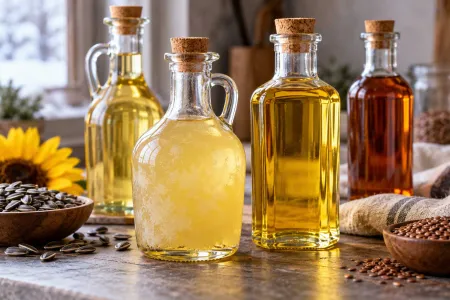
Homemade oil pressing guarantees freshness, full flavor, and nutritional value. Cold-pressed oils made at home contain no preservatives or artificial additives, and you decide which seeds or nuts become your oil. It’s also economical and allows you to experiment with flavors that are hard to find on store shelves.
Benefits of Homemade Oil Pressing:
Full control over ingredients
- No preservatives or artificial additives
- Retention of vitamins and omega-3, -6, -9 fatty acids
- Intense, natural flavor and aroma
- Ability to use leftover press cake as flour or baking additive
Types of Oils and Their Culinary Uses
Flaxseed Oil – For Cold Dishes
Use for: Salads, sandwich spreads, smoothies, yogurt
Why: Rich in omega-3, supports brain function and immunity
Tip: Not suitable for frying – loses nutritional value at high temperatures
Coconut Oil – For Frying and Baking
Use for: High-temperature frying, baking cakes, desserts, Asian cuisine
Why: Stable at high temperatures, adds a subtle tropical flavor
Pumpkin Seed Oil – Aromatic Addition
Use for: Salads, creamy soups, spreads, bread
Why: Strong nutty flavor, rich in phytosterols, supports heart and digestive health
Walnut Oil – For Salads and Desserts
Use for: Salads, desserts, bread, cold dishes
Why: Distinctive flavor, high in omega-3, contains vitamin E
Sesame Oil – For Oriental Cuisine
Use for: Frying (light, refined), seasoning (dark, unrefined)
Why: Intense flavor, rich in antioxidants, ideal for Asian dishes
Grapeseed Oil – For Salads and Light Cooking
Use for: Salads, light frying, dressings
Why: Neutral flavor, rich in antioxidants
How to Press Oil at Home – Step by Step
1. Choose Raw Material
Seeds and nuts with high fat content work best: rapeseed, sunflower, flax, pumpkin, walnuts, almonds, sesame, grape seeds.
2. Prepare the Oil Press
Place the press on a stable surface
Ensure all parts are clean and dry
3. Fill the Funnel with Seeds or Nuts
Seeds should have moisture below 10% (ideal 4–6%)
Cleaned to room temperature
4. Start Pressing
Oil flows out through the gap – collect it in a clean container
Use leftover press cake as flour or baking additive
5. Storage
Store cold-pressed oil in the fridge, ideally in a dark bottle
Consume within a few weeks – homemade oil oxidizes quickly
Oil Presses – How to Choose?
The choice of an oil press depends on your needs, budget, and preferences. At pureoilpress.com, you’ll find a wide range of devices and accessories.
Screw Oil Press (Electric)
Advantages: Convenience, speed, high efficiency, ability to press various seeds and nuts
For whom: Those who want comfort and frequently press larger amounts of oil
Example: LY-011 press – presses flax, rapeseed, sunflower, nuts, sesame, and more
Key Considerations When Choosing a Press
- Efficiency (how much oil you get per kg of raw material)
- Ease of cleaning
- Ability to press different seeds and nuts
- Availability of accessories (funnels, containers, cleaning kits)
- Durability and manufacturer warranty
Essential Accessories for Home Oil Pressing
To make pressing convenient, clean, and efficient:
Containers and bottles – for storing fresh oil
Cleaning kits – keep the press in top condition
Dispensers and labelers – useful for sharing oil
Grinders – to crush seeds and nuts before pressing, increasing efficiency
FAQ – Frequently Asked Questions
Is homemade cold-pressed oil healthier than store-bought?
Yes, it retains more vitamins, omega-3, -6, -9 fatty acids, and antioxidants. No preservatives, full control over quality.
How long can homemade cold-pressed oil be stored?
Consume within a few weeks due to lack of preservatives. Store in the fridge in a dark bottle to slow oxidation.
Which seeds and nuts are suitable for home pressing?
High-fat seeds and nuts: rapeseed, sunflower, flax, pumpkin, sesame, walnuts, hazelnuts, almonds, macadamia, pistachios, peanuts, and more.
Is home oil pressing cost-effective?
The press pays off after a few months of regular use. Homemade oil is cheaper, healthier, and tastier than store-bought, and press cake can be used in baking.
Which accessories make home pressing easier?
Containers, cleaning kits, grinders, dispensers, and labelers ensure a clean, efficient, and convenient process.
Summary
Home oil pressing is more than a trend – it’s a way to ensure health, taste, and control over what’s on your plate. By choosing the right press and accessories from pureoilpress.com you bring new quality into your kitchen. Match oils to dishes consciously: flax for salads, coconut for baking, pumpkin seed and walnut oils for cold dishes and desserts.
Pressing your own oil is a culinary adventure – experiment with seeds and nuts, discovering new flavors and aromas. Take care of your health and your loved ones by choosing natural, fresh fats that enrich every dish. Get inspired and start your homemade oil pressing journey today!