
Table of Contents
Are you wondering how to achieve the highest quality oil in your kitchen or production facility? Discover the power of modern oil presses! Invest in control, freshness, and sustainability by choosing the perfect solution tailored to your needs. Uncover the secret to exceptional taste and outstanding oil quality with our guide to oil presses.
Oil press types
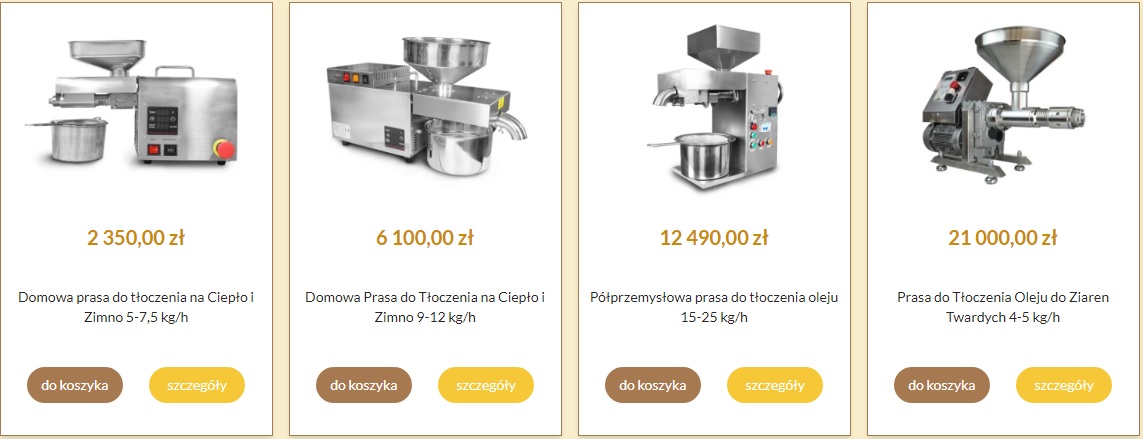
In the industrial world, oil presses play a crucial role in extracting oil from various raw materials, such as oilseeds and nuts. This process allows us to enjoy products like sunflower, flaxseed, or rapeseed oil in our daily diet. However, oil presses differ in design, application, and efficiency. In this article, we will take a closer look at the four main types of oil presses: manual, hydraulic, mechanical, and electric.
Manual Oil Presses
Manual presses are the oldest and most basic type of oil press. As the name suggests, they operate through manual power, usually by using a lever or wheel that the user turns by hand.
Advantages:
No need for electricity or other power sources.
Simple design and easy to operate.
Low purchase cost.
Disadvantages:
Low efficiency compared to other types of presses.
Requires significant physical effort.
Hydraulic Oil Presses
Hydraulic presses use fluid (usually oil) under pressure to generate the force needed to extract oil from raw materials. This mechanism is more complex than manual presses but offers much higher efficiency.
Advantages:
High efficiency and pressing force compared to manual presses.
Stable and precise operation.
Adjustable pressure according to needs.
Disadvantages:
Higher purchase and maintenance costs.
Requires regular maintenance and fluid replacement.
Mechanical Oil Presses
Mechanical presses use gears, shafts, and bearings to convert rotational motion into the linear motion needed for oil extraction. They are more efficient than manual presses and are often used in medium-scale production.
Advantages:
Relatively high efficiency.
Do not require electricity (though often paired with electric motors).
Durable with long service life.
Disadvantages:
Require regular maintenance and lubrication.
Can be noisy during operation.
Electric Oil Presses
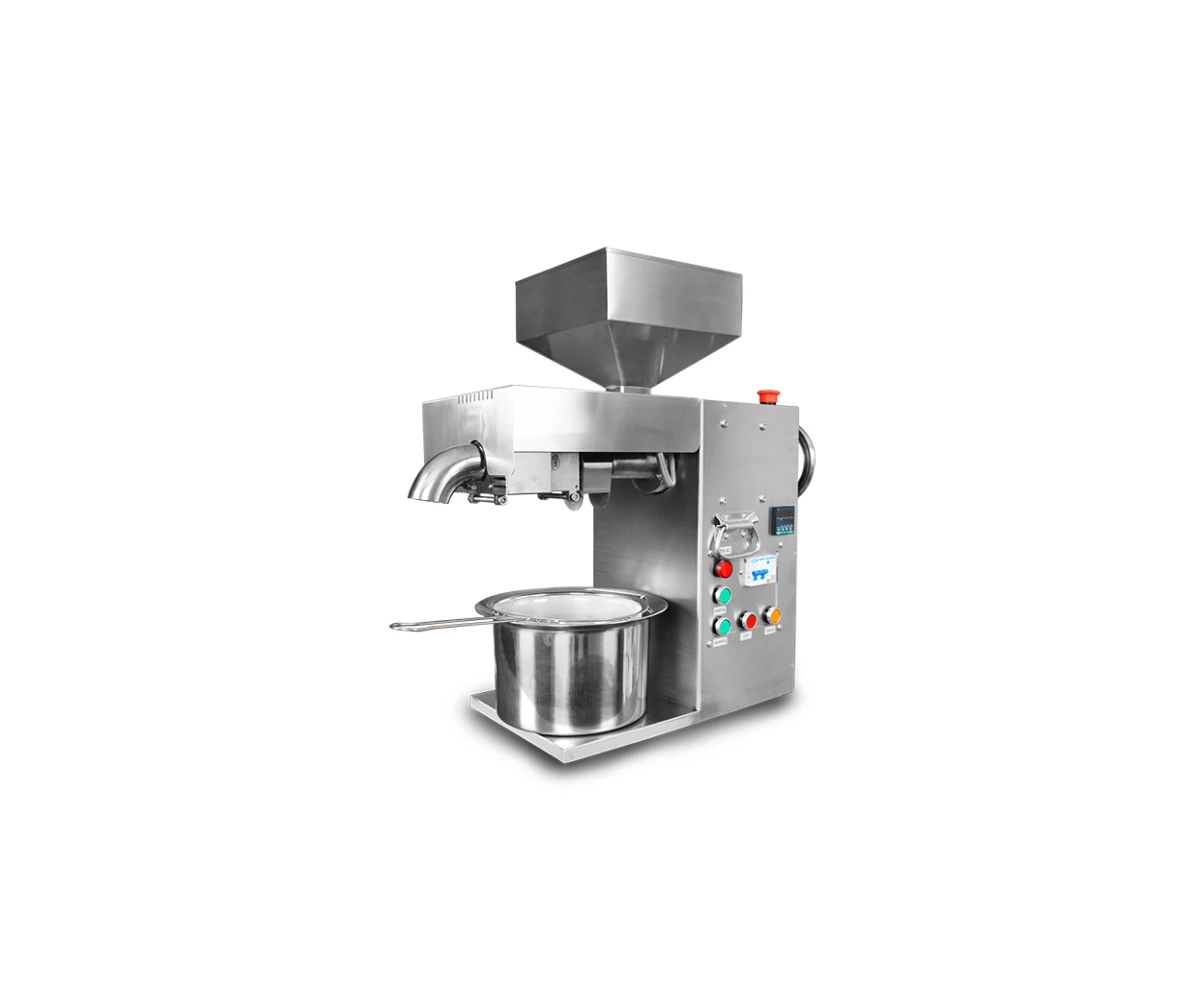
Electric oil presses are the most modern and advanced type. They use electric motors to drive the pressing mechanisms, resulting in high efficiency and precision.
Advantages:
High efficiency and precision.
Ability to automate the process.
Often equipped with temperature and pressure control systems.
Disadvantages:
High purchase cost.
Require access to electricity.
Potentially higher operating costs.
Choosing the Right Oil Press
The choice of oil press depends on factors like production scale, resource availability, and budget. Each type has its pros and cons, so it’s important to carefully assess your needs before making a purchase. Regardless of the choice, regular maintenance and proper care are key to effective oil extraction.
Case Study: How Ania Chose the Right Oil Press
Situation:
Ania ran a small family business producing natural edible oils, including flaxseed, rapeseed, and sunflower oil. As her business grew, she noticed her manual press could not keep up with increasing production demands. She realized she needed a more efficient press but wasn’t sure which type to choose.
Problem:
Although Ania was an expert in oil production, she lacked technical knowledge about oil presses. She wanted to make the best possible investment that would support long-term growth for her company.
Solution:
Searching online, Ania found our article on different types of oil presses. By reading it, she learned about the advantages and disadvantages of each type, which helped her clarify her production needs.
Considering her production scale and the need for automation, Ania focused on an electric oil press. She noticed that this type offered high efficiency, precision, and temperature and pressure control—exactly what she needed for producing top-quality oils.
Outcome:
After comparing options for several weeks, Ania purchased a modern electric oil press. Within a few months, her production increased significantly, and the oil quality improved. By gaining knowledge about the different types of presses, Ania made a well-informed investment that brought tangible benefits to her business.
A thorough understanding of the different types of oil presses allowed Ania to make the right investment decision. Choosing an electric press proved to be a perfect choice, enabling her company to increase production and elevate quality standards. Knowledge is the key to success, and properly selected technology can bring invaluable benefits to any business.
20 Most Frequently Asked Questions About “Types of Oil Presses” (FAQ)
1. What are the main differences between types of oil presses?
The main differences relate to the drive method and application:
- Manual presses operate by hand, usually turning a lever or wheel.
- Hydraulic presses use fluid under pressure to extract oil from raw materials.
- Mechanical presses use gears, shafts, and other mechanisms to convert rotary motion into linear motion for pressing.
- Electric presses are powered by electric motors and often incorporate advanced technologies for process control.
2. Which type of oil press is the most efficient?
For large-scale production, electric and hydraulic presses are the most efficient. Electric presses offer high precision, automation, and process control, while hydraulic presses are known for their strong pressing force.
3. Are manual presses still popular? Who are they for?
Yes, manual presses remain popular for small production facilities, home use, or places with limited electricity. They are ideal for small-scale production or hobbyists.
4. What factors should I consider when choosing an oil press?
Key factors include:
- Production scale (home or industrial).
- Budget.
- Availability of electricity.
- Type of raw material.
- Available space.
5. Is regular maintenance required for oil presses?
Yes. Manual presses require minimal care but still need cleaning and inspection. Hydraulic presses need fluid replacement and seal checks. Mechanical and electric presses require lubrication, cleaning, and periodic inspections.
6. Can oil presses overheat during extended use?
Yes, like most industrial machines, presses can overheat if improperly cooled or used beyond recommended limits. Electric presses often include temperature controls that shut down the machine in case of overheating.
7. What are the typical operating costs for different types of presses?
- Manual presses: Low costs, mainly cleaning and minor repairs.
- Hydraulic presses: Costs for hydraulic fluid, seals, and pump maintenance.
- Mechanical presses: Costs for lubrication and replacing worn parts.
- Electric presses: Electricity costs, plus maintenance and replacement of mechanical/electrical components.
8. Can I repair an oil press myself?
Basic maintenance can be done, but major repairs should involve a professional or the manufacturer, as some parts require specialized knowledge or tools.
9. Are there presses designed for specific seeds or nuts?
Some presses are optimized for certain seeds like peanuts or flax, although many are universal. Always check the manufacturer’s specifications.
10. Does the extraction process affect oil quality?
Yes. Temperature, pressure, and extraction method influence oil flavor, color, and nutrients. High-temperature processes may degrade certain nutrients. Proper press selection and settings are key.
11. Are oil presses safe to use?
Generally, yes, if safety guidelines are followed. Regular checks, cleaning, and avoiding overloading are essential.
12. What are the benefits of electric oil presses compared to other types?
Benefits include:
- Automation for efficiency and precision.
- Continuous and stable operation.
- Adjustable temperature and pressure settings.
- Less physical effort compared to manual presses.
13. Can oil presses be used at home?
Yes. Home-use presses are smaller, quieter, and easier to operate and clean than industrial models.
14. Which raw materials can be processed?
Most presses handle seeds like flax, sunflower, rapeseed, sesame, and nuts. Check the press specifications for compatibility.
15. Are oil presses difficult to operate?
It depends on the type. Manual presses are simple but physically demanding. Electric presses are more complex but often feature intuitive control panels.
16. What potential issues can arise during use?
Potential problems include:
- Blockages from certain raw materials.
- Overheating with extended use.
- Wear of mechanical/hydraulic parts.
- Electrical issues in electric presses.
17. Does raw material quality affect pressing efficiency?
Yes, moisture content and impurities can reduce yield and increase the risk of blockages.
18. How long does oil extraction take?
It varies by press type, raw material, and desired extraction level. Manual presses take longer; electric and hydraulic presses are faster.
19. are the benefits of making your own oil?
- Quality control over raw material and process.
- Fresher product than store-bought oils.
- Long-term savings despite initial investment.
- Ability to experiment with blends and raw materials.
20. Are oil presses environmentally friendly?
Yes. They usually don’t rely on chemical solvents and consume less energy. Press cake can be used as animal feed or fertilizer, reducing waste.
Oil Presses: The Key to Top-Quality Oil in Your Hands
Want full control over the quality and freshness of your oil? Oil presses are the answer! Whether you are an industrial producer or a home enthusiast, we have the ideal press for you.
Why invest in an oil press?
- Control: Manage raw material and production quality.
- Efficiency: Modern presses, especially electric models, ensure fast, efficient extraction.
- Savings: Long-term benefits outweigh initial costs.
- Eco-friendly: Avoid chemical solvents; produce sustainably.
- Options for Everyone: From simple manual presses to efficient hydraulic and advanced electric models – there’s a solution for every need.
Discover the power of modern technology and enjoy superior taste and quality with PRIMA-TECH oil presses!