
Table of Contents
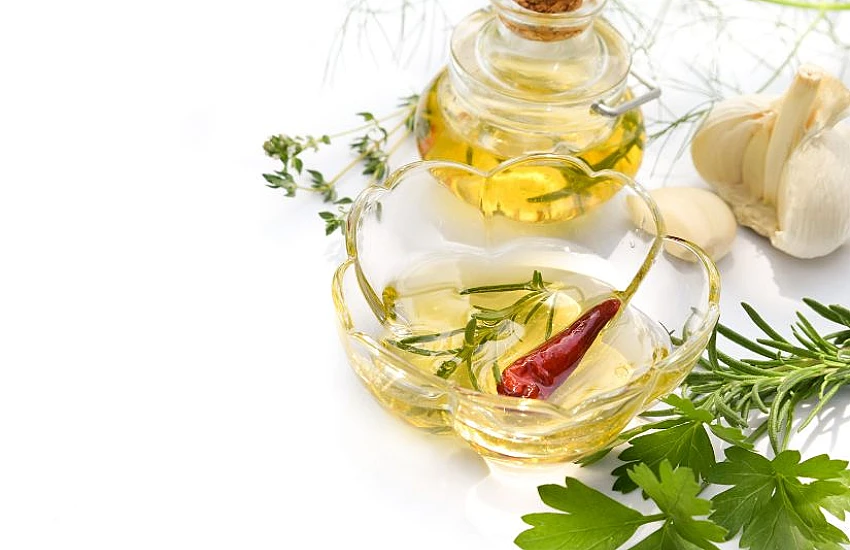
Spice- and Herb-Infused Oil – a true culinary treasure. Thanks to its simple preparation and the ability to customize flavors, it becomes an indispensable addition to everyday cooking. In this article, we’ll explore how spices and herbs can enhance the flavor and properties of oils, as well as discuss their versatile culinary applications.
Why is it worth infusing oils with herbs and spices?
Why Infuse Oils with Herbs and Spices?
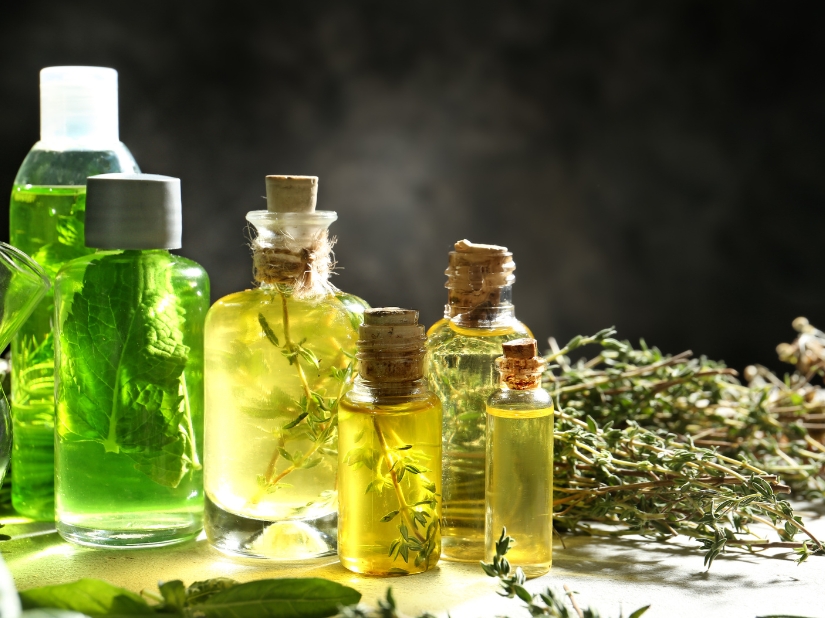
Infusing oils not only enhances their flavor but also helps extend the shelf life of the herbs and spices used. The process takes advantage of fat as a carrier of flavor — the oil absorbs and releases aromas, giving dishes a deeper, more refined character.
In addition, infused oils are:
Versatile – perfect for both cooking and cold dishes.
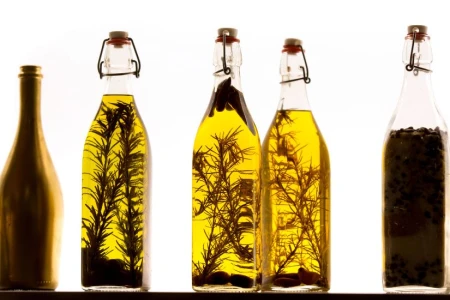
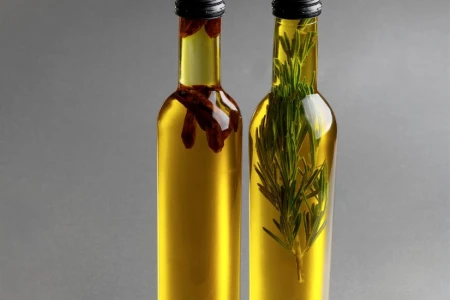
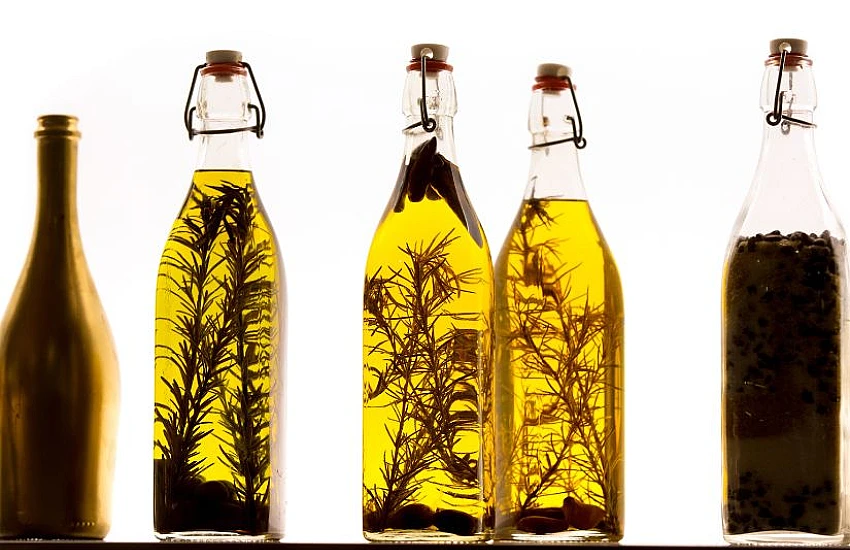
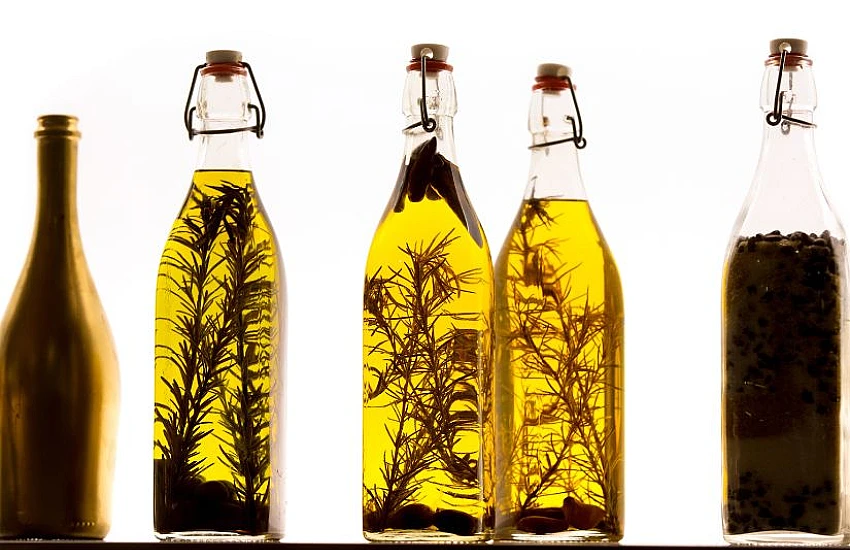
Aesthetic – herbs and spices in bottles of oil make a beautiful addition to any kitchen.
Practical – they allow you to add rich, complex flavor to meals without using multiple seasonings.
Which Herbs and Spices Can Be Added to Oils?
Almost any herb or spice can be used for oil infusion. The choice depends on your personal taste preferences and the intended use. Below are the most popular ingredients and their characteristics.
1. Fresh and Dried Herbs
Basil – perfect for olive oil; ideal for salads and Italian dishes.
Thyme – strong herbal aroma; pairs well with meats and vegetables.
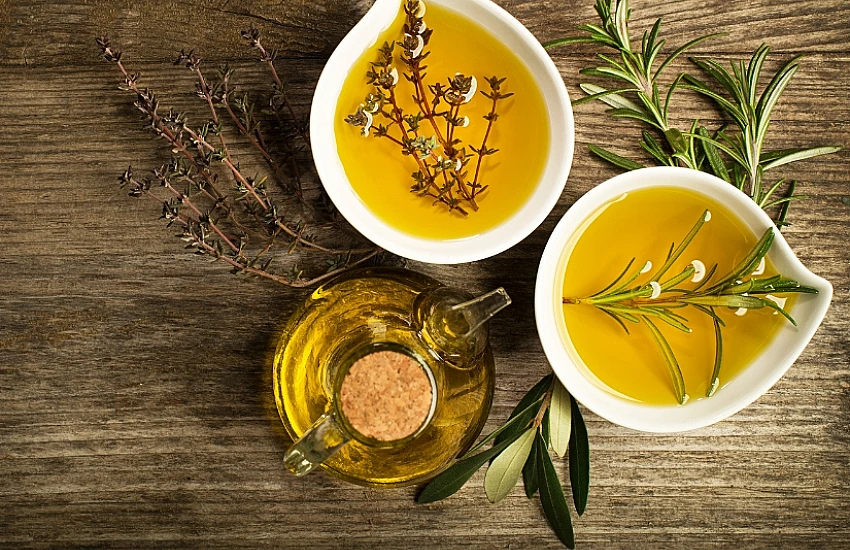
Rosemary – great with rapeseed oil; perfect for roasted potatoes and fish.
Oregano – classic Mediterranean flavor; recommended for pasta and pizza.
Coriander – fresh, exotic aroma; ideal for Asian and Mexican cuisine.
2. Spices
Garlic – one of the most popular additions; complements almost any dish.
Chili peppers – add heat and intensity; great for Asian dishes, sauces, and meats.
Ginger – slightly spicy and exotic; perfect for marinades and oriental meals.
Allspice & bay leaves – provide a deep, warm aroma; excellent for soups and roasted meats.
Pepper (black, white, pink) – a universal spice that enhances both meat and vegetable dishes.
3. Other Additions
Citrus peels (lemon, lime, orange) – add freshness and lightness; great for salads and fish.
Sun-dried tomatoes – perfect for Mediterranean-style dishes.
Edible flowers (lavender, marigold) – give oils a subtle floral fragrance and elegant touch.
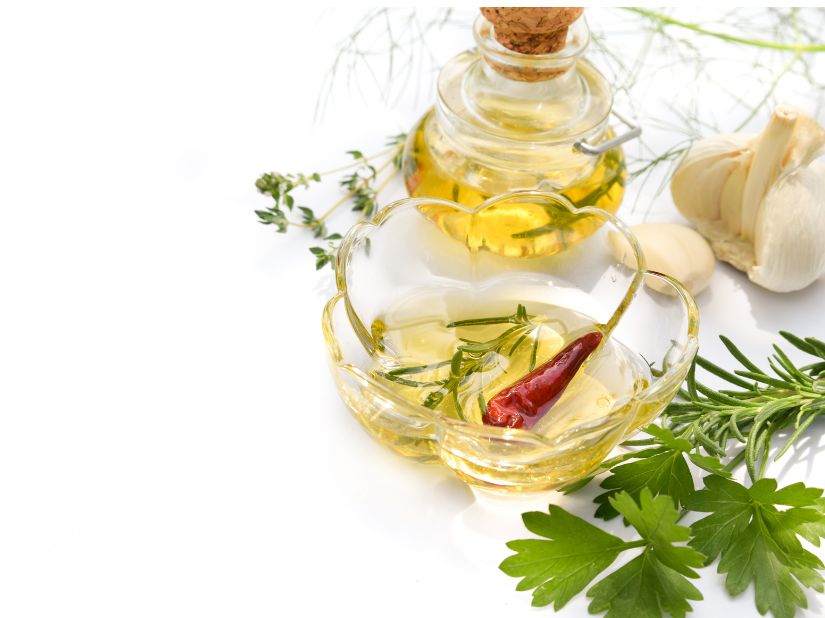
Example: Garlic and Chili Infused Oil
Ingredients:
500 ml olive oil
4 garlic cloves
2 chili peppers
Preparation:
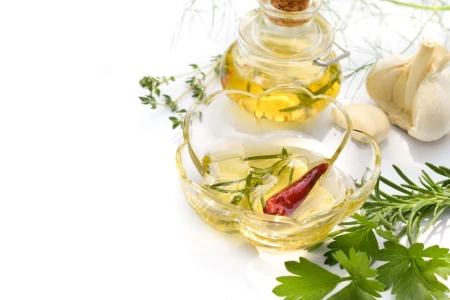
Slice the chili into smaller pieces and crush the garlic cloves.
Gently heat the olive oil over low heat (do not boil).
Add the garlic and chili, and simmer for a few minutes.
Pour the mixture into a bottle and let it infuse for 1–2 weeks.
2. Rosemary and Lemon Infused Oil
Ingredients:
500 ml cold-pressed rapeseed oil
2 sprigs of rosemary
Zest of 1 lemon
Preparation:
Place the rosemary and lemon zest in a clean bottle.
Gently heat the oil (do not boil) and pour it over the ingredients.
Let the mixture infuse for at least one week to allow the flavors to develop fully.
3. Italian Herb Infused Oil
Ingredients:
500 ml olive oil or rapeseed oil
1 teaspoon each of dried basil, oregano, and thyme
Preparation:
Combine all the ingredients in a bottle with the oil.
Leave the mixture to infuse for several days to release the herbal aromas.
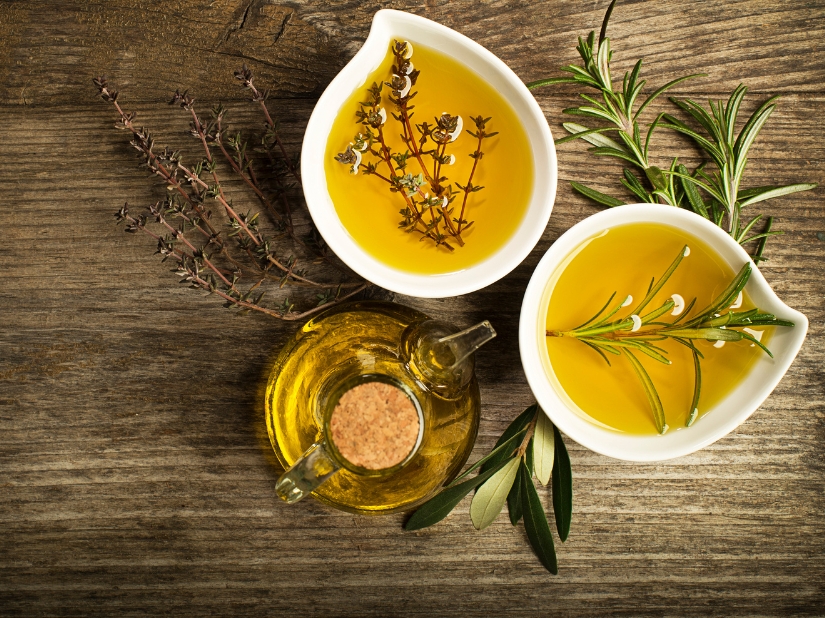
Uses of Flavored Oils in the Kitchen
- For salads and dressings
Flavored oils make the perfect base for dressings. For example, garlic oil beautifully enhances the flavor of Greek salads, while lemon oil pairs wonderfully with seafood salads. - For roasting meats and vegetables
Oils infused with rosemary, thyme, or garlic add depth of flavor to roasted potatoes, root vegetables, and poultry. - For marinades
Chili, ginger, or coriander oils are ideal for marinating meat—especially in Asian-inspired or grilled dishes. - For frying
Flavored oils add character to dishes even during short frying. For instance, ginger oil gives stir-fried vegetables a rich, aromatic taste. - For pasta and pizza
A drizzle of oil with sun-dried tomatoes, basil, or oregano on hot pasta or pizza brings out an authentic Italian flavor. - As a bread dip
Herb-infused oils can be served as delicious dips for fresh bread or focaccia.
Tips and Notes on Flavoring Oils
- Sterility – Use clean, dry containers and bottles to prevent bacterial growth.
- Storage – Keep flavored oils in a cool, dark place.
- Infusion time – The longer the oil infuses, the more intense the flavor. The optimal time is 1–2 weeks.
- Freshness of ingredients – Make sure fresh herbs are completely dried before adding them to oil to avoid mold growth.
FAQ – Common Questions About Spices and Herbs Used in Flavored Oils
1. Which oils are best for flavoring?
The most commonly used oils include:
- Olive oil – Ideal for Mediterranean cuisine; absorbs herbal and spice aromas beautifully.
- Rapeseed (canola) oil – Neutral flavor that pairs well with most ingredients.
- Sunflower oil – Also neutral; suitable for both hot and cold dishes.
- Coconut oil – Exotic flavor, perfect for Asian dishes and desserts.
2. Can fresh herbs be used?
It’s best to use dried herbs to prevent bacteria and mold growth. Fresh herbs contain water, which can cause the oil to spoil.
3. How long can flavored oils be stored?
Oils infused with dried herbs and spices can be stored for 1–3 months in a cool, dark place.
4. What are the most popular flavor combinations?
Here are some tried-and-true blends:
- Garlic + rosemary – for roasted meats and vegetables.
- Basil + sun-dried tomatoes – for salads and pasta.
- Chili + garlic – for Asian and Mexican dishes.
- Thyme + lemon – for fish and seafood.
5. Can flavored oils be used for frying?
Yes, but high heat can reduce the aroma. It’s best to use them for short frying or finishing dishes.
6. What are the benefits of using flavored oils?
They enhance flavor without the need for many separate spices.
They make cooking easier—one product replaces several ingredients.
They’re versatile—great for both hot and cold dishes.
7. Can citrus be used for flavoring oils?
Yes! Lemon, lime, or orange peel work beautifully. Just make sure to avoid the white pith (albedo), which can make the oil bitter.
8. Which herbs best suit Mediterranean cuisine?
Perfect choices include:
Rosemary, oregano, thyme, basil, garlic, and sun-dried tomatoes.
9. How long does the flavoring process take?
You’ll notice the first aromas after 24–48 hours, but the full flavor develops after 1–2 weeks.
10. Can flavored oils be given to children?
Yes—but avoid spicy ingredients (like chili) and allergens (such as nuts). Mild herbs like basil or dill are ideal for kids.
11. Can ground spices be used (e.g., paprika powder)?
Yes, but ground spices can leave sediment. To keep the oil clear, strain it before serving.
12. How to prevent flavored oils from spoiling?
Use only dry herbs and spices.
Store in sterile, airtight bottles in a cool place.
Avoid water contact—moisture promotes bacterial growth.
13. How can flavored oils be used in cooking?
For salads – as a dressing or sauce base.
For roasting – meats, fish, and vegetables.
For marinades – adds rich depth of flavor.
For drizzling – over bread, pizza, or grilled vegetables.
For Asian dishes – chili, garlic, or ginger oils enhance stir-fry flavors.
14. Can flavored oils be used as gifts?
Absolutely! Homemade flavored oils make perfect DIY gifts. Use a stylish bottle, a few sprigs of herbs, and a creative touch—an elegant gift that always impresses.
15. Do flavored oils have health benefits?
Yes, many herbs and spices (e.g., garlic, rosemary, chili) have anti-inflammatory, antioxidant, and digestive benefits. Flavored oils can enhance both the taste and the health value of your meals.
Summary
Flavored oils with herbs and spices are a simple yet elegant way to enrich everyday dishes with deep, aromatic flavors. Whether you’re making a salad, roasted vegetables, or a complex marinade, just a few drops of infused oil can transform your meal. Experiment with different ingredients, discover new flavor combinations, and enjoy your culinary creations!