
Table of Contents
- Why Press Capacity Matters So Much
- The Three Most Important Oilseed Crops Grown in Poland
- How Much Raw Material Does a Hectare Yield and What It Means for the Mill
- How to Match Press Capacity to Farm Size
- Pressing Seasonality and Mill Work Organisation
- Specifics of Pressing Different Seeds on a Screw Press
- Organising the Mill Space on the Farm
- Oil Quality and Pressing Speed and Conditions
- Press Cake as a Valuable By-Product of Pressing
- Practical Tips for Choosing a Press for Your Farm
- Frequently Asked Questions
- Summary
Running your own oil mill on the farm is an idea that gains more supporters every year. Farmers looking for an alternative to selling raw materials at prices dictated by middlemen are increasingly choosing to process their seeds in-house. On-site oil pressing allows full control over product quality while giving the raw material an entirely new value. Before deciding to purchase a press, however, it is worth carefully considering what capacity will be right for your farm. A press that is too small means weeks of pressing sessions and the risk that some of the harvest will spoil before reaching the pressing chamber. One that is too large will only run a few days a year, spending the rest of its time idle in the barn. In this article, we will explain how to precisely match oil press capacity to the acreage of your crops, the type of seeds being pressed, and the rhythm of work dictated by the seasons.
Why Press Capacity Matters So Much
Oil press capacity is a parameter that directly translates into the speed at which harvested crops are processed. For a small farm with a few hectares of rapeseed or sunflower, the difference between a press processing fifty and one hundred kilograms of seed per hour is enormous. Imagine harvesting around fifteen tonnes of rapeseed from five hectares. A press with a capacity of fifty kilograms per hour would need to run for three hundred hours - over twelve full days without a break - to process all the material. At eight working hours per day, that amounts to more than thirty-seven working days. That is a very long time, especially in autumn, when the farm has plenty of other tasks after the rapeseed harvest.
Press capacity also affects the freshness of the processed material. Oilseeds have a limited shelf life for pressing. Stored in improper conditions, they lose quality, absorb moisture, and in extreme cases develop mould. The sooner they are pressed after harvest, the better the oil. Therefore, choosing the right press capacity is not a matter of convenience but a fundamental decision affecting the quality of the final product.
The Three Most Important Oilseed Crops Grown in Poland
Polish oilseed farming is built primarily on three species that have been the backbone of domestic vegetable oil production for centuries. Each of these crops has different soil requirements, a different growing cycle, and a different oil yield per tonne of raw material. Understanding these differences is essential when planning the work of an oil mill.
Winter and Spring Rapeseed as the King of Polish Oil Mills
Rapeseed is by far the most important oilseed crop grown in Poland. In recent years, rapeseed acreage in the country has hovered around one million hectares, making Poland one of the leading producers in Europe. Winter rapeseed, sown in September and harvested the following July, dominates. Spring rapeseed, sown in spring and harvested in autumn, makes up a small percentage of national production but in some regions with harsher climates it may be the only option.
Winter rapeseed yields in Polish conditions average between two and a half and four tonnes per hectare, though the best farms achieve even five tonnes. Oil content in rapeseed ranges from forty to forty-five percent, meaning that from one tonne of raw material, three hundred and fifty to four hundred litres of oil can be pressed. This is one of the best results among oilseed crops grown in the Polish climate.
The winter rapeseed harvest falls at the turn of June and July. This is when the seeds reach an optimal harvest moisture content of eight to nine percent. After combining, the material needs to be dried down to seven percent moisture if it is to be stored for longer before pressing. Well-prepared rapeseed presses excellently on screw presses, producing oil with a beautiful golden colour and a characteristic, slightly nutty aroma.
Common Flax and Its Renaissance in Polish Agriculture
Flax is a plant with an extremely rich tradition in Polish farming. A hundred years ago, flax fields stretched across central and eastern Poland. Then came a period of decline, but over the past two decades, flax has been experiencing a genuine renaissance. The reason is simple: linseed oil, rich in omega-3 fatty acids, is winning the hearts of health-conscious consumers and commands some of the highest prices among vegetable oils on the market.
Flax grown for seed, known as oil flax, differs from fibre flax. Oil varieties are shorter, more branched, and produce more seed capsules. In Poland, oil flax yields range from one to two tonnes per hectare, with much depending on the variety, location, and weather conditions. Oil content in flaxseed is thirty-five to forty-five percent, so from one tonne of raw material, three hundred to three hundred and sixty litres of oil can be pressed.
Flax is sown at the turn of March and April, and harvest falls in August and September. Flaxseeds are small and have a distinctive slippery surface, which makes them behave slightly differently in the pressing chamber than rapeseed. Pressing flax requires proper adjustment of the nozzle gap and a slightly slower feed rate, but the result is worth it. Freshly pressed linseed oil has an intense golden-yellow colour and a delicate, slightly earthy flavour that connoisseurs of healthy cuisine appreciate.
Sunflower as a Heat-Loving Crop Gaining Popularity
Sunflower is a crop that until recently was primarily associated with Ukraine or southern Europe. However, climate change and breeding advances have meant that sunflower performs increasingly well in Polish conditions. The sunflower acreage in Poland is steadily growing, particularly in the southern and western voivodeships, where summers tend to be warmer and longer.
Sunflower yields in Poland range from two to three tonnes per hectare for oil varieties. Oil content in sunflower seeds with husks is around thirty-five to forty-five percent. It is important to remember, however, that cold pressing is primarily suited to unhulled sunflower, because the hard shell helps the screw work properly and maintains a low process temperature. Hulled sunflower, stripped of its protective shell, is soft and requires heating before pressing, which rules it out of the cold-pressing process.
The sunflower harvest falls in September and October, sometimes even early November in warmer regions. This relatively late timing means that sunflower oil pressing can be planned for the quieter autumn period, when most field work is already done. Cold-pressed sunflower oil from unhulled seeds has a mild, slightly nutty taste and a light golden colour. It is versatile in the kitchen and works equally well raw and for gentle frying.
How Much Raw Material Does a Hectare Yield and What It Means for the Mill
Planning the work of an oil mill begins with a simple question: how many tonnes of seed will need to be processed after harvest? The answer depends on the crop species, the acreage, and the conditions of a given season. Let us take average Polish yields for the three crops discussed and see how this translates into press requirements.
Estimating Rapeseed Yields by Acreage
A farm with five hectares of winter rapeseed can expect a harvest of twelve and a half to twenty tonnes of seed, assuming an average yield of two and a half to four tonnes per hectare. With ten hectares, we are talking about twenty-five to forty tonnes of raw material. This is a serious volume that requires a press with sufficient throughput to process it in a reasonable time.
The period from the rapeseed harvest to the start of autumn sowing is only a few weeks. Within this window, the farmer must not only press the material but also prepare the field for the next crop, handle other produce, and attend to a thousand other farm tasks. That is why a press that can work intensively and efficiently for many hours a day becomes an invaluable tool.
Converting Flax Yields Into Press Working Hours
Oil flax at a yield of one and a half tonnes per hectare gives about seven and a half tonnes of seed from five hectares. From ten hectares, we harvest fifteen tonnes. Flax is harvested slightly later than rapeseed, so the pressing season shifts to September and October. It is worth noting that flax presses somewhat more slowly than rapeseed due to the nature of the seeds, so when planning press working time, an additional buffer should be factored in.
Sunflower and Its Seasonal Logistical Challenges
Sunflower harvested in October requires rapid drying and processing. Two hectares yield four to six tonnes of raw material; five hectares means ten to fifteen tonnes. Autumn weather is not conducive to long-term seed storage without proper drying facilities, so pressing speed is particularly important here. A press that can run around the clock without overheating allows the material to be processed before autumn moisture begins to threaten it.
How to Match Press Capacity to Farm Size
Matching oil press capacity to crop acreage is a process that requires taking several factors into account simultaneously. It is not enough to divide the amount of raw material by the hourly capacity of the machine. You need to consider realistic working conditions, available time, and the farm's development plans.
Small Farms of Up to Five Hectares
A farm growing up to five hectares of oilseed crops harvests between five and twenty tonnes of raw material annually, depending on the species. For this scale of production, a press with a capacity of fifty to eighty kilograms per hour may seem sufficient, but only if the farmer has several weeks for leisurely pressing. In practice, such a comfortable schedule is rarely possible. Harvest season is a tense time, full of parallel tasks, and every day of delay in processing the raw material risks quality loss.
That is why, even for small acreages, it is worth considering a press with a capacity that allows all the material to be processed within one to two weeks of intensive work. A machine capable of handling one to two tonnes per day can process five tonnes of rapeseed in just three to five days, giving enormous flexibility in planning the season.
Medium Farms of Five to Twenty Hectares
With an acreage of five to twenty hectares of oilseed crops, raw material volumes grow to several dozen tonnes. Here, a small home-capacity press becomes a bottleneck that can paralyse the entire farm's workflow. Imagine twenty hectares of rapeseed at a yield of three tonnes per hectare. That is sixty tonnes of seed to process. A press handling fifty kilograms per hour would need twelve hundred hours of work - one hundred and fifty eight-hour days. That is over five months of non-stop pressing, which is obviously unrealistic.
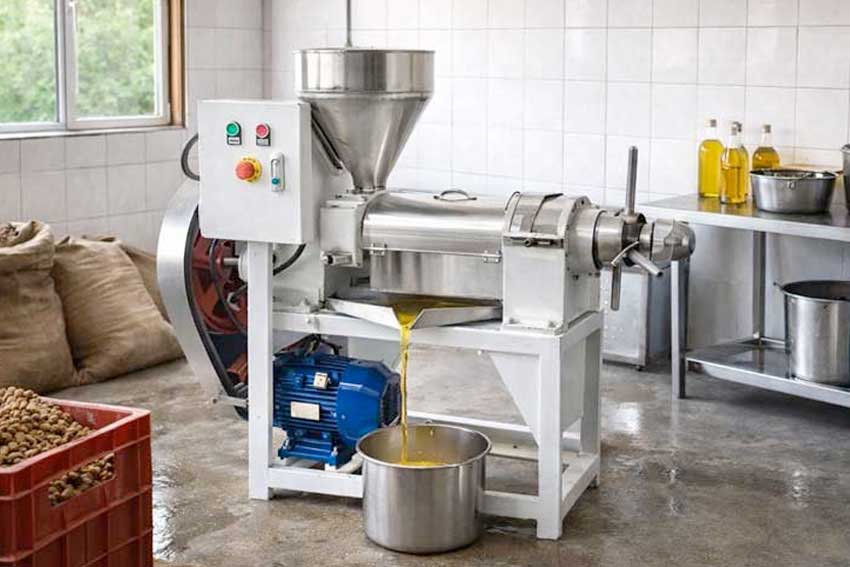
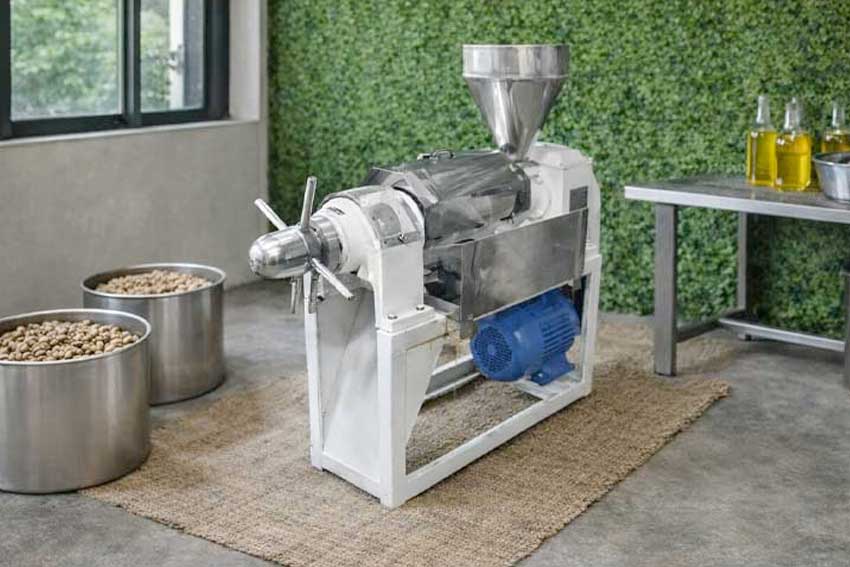
For farms of this scale, the ideal solution is a screw press with a capacity of one and a half to two tonnes per day. Such a machine allows sixty tonnes of rapeseed to be processed in thirty to forty working days, which fits within a realistic seasonal window. An excellent example is the Screw Oil Press ZX85 with a capacity of 1.4–2 tonnes per day, equipped with a 5.5 kW motor and powered by three-phase 400V supply. Its solid construction, weight of two hundred and fifty kilograms, and stainless steel components guarantee reliable operation even during long pressing sessions. Importantly, the machine is CE certified and designed for round-the-clock operation, which during peak season can be invaluable.
Planning With Future Growth in Mind
When choosing an oil press, it is worth thinking not only about the current acreage but also about plans for the coming years. Many farmers start with a few hectares of rapeseed and, seeing the potential of their own oil, gradually increase their oilseed crop area. A press bought with some capacity headroom means that farm growth does not require an immediate equipment upgrade. A machine with a capacity of two tonnes per day can easily handle both five and fifteen hectares of rapeseed, and with intensive work, it can even manage twenty hectares.
Pressing Seasonality and Mill Work Organisation
The work of an oil mill on a farm is distinctly seasonal, closely linked to the growth cycles of the cultivated crops. Understanding this seasonality is key to making effective use of equipment and maintaining the highest oil quality.
Summer Rapeseed Season From July to August
The pressing season in a Polish farm opens with the winter rapeseed harvest, which depending on the region falls in the second half of June or early July. After combining and drying the seeds to seven percent moisture, pressing can begin. Ideally, processing should start within two to three weeks of harvest, when the seeds are still fresh and their oil potential is at its peak. July and August are warm months in the Polish climate, which benefits pressing because warmed seeds release oil more readily in the press chamber.
However, it is important to remember that excessively high ambient temperatures can affect the pressing process temperature. A screw press generates frictional heat, and if it is operating in an uncooled room in thirty-degree heat, the oil temperature at the outlet may exceed the desired threshold of forty degrees Celsius. Therefore, it is worth ensuring good ventilation in the room housing the press or scheduling work for cooler hours of the day.
Autumn Flax and Sunflower Season
September and October are the time for pressing flax and sunflower. Flax harvested in late summer needs a few days of drying in sheaves or windrows before the seeds reach optimal moisture. Sunflower, meanwhile, often does not leave the field until October, and in cooler regions even the first days of November. Autumn pressing has its advantages: lower ambient temperatures help keep the process within the optimal thermal range, and oils pressed in cool conditions have better quality parameters.
However, autumn also brings shorter days, higher air humidity, and unpredictable weather. Raw material stored in an unheated warehouse may absorb moisture from the surroundings, so regular checking of seed moisture before pressing is mandatory. Seeds with moisture above nine percent press poorly, yield less oil, and generate more sediment requiring subsequent settling.
Winter Pressing to Order and From Stock
Winter does not have to mean a shutdown for the mill. On the contrary, many small farm oil mills work most intensively in winter, fulfilling orders from individual customers and local shops. Well-stored seeds, kept in a dry, cool, and dark warehouse, retain quality for many months. Winter pressing has an additional advantage: the low ambient temperature naturally supports the cold-pressing process, and the oil comes out of the press cooler, retaining more bioactive substances.
Planning winter pressing, however, requires having built up adequate stocks of raw material beforehand. A farmer who immediately presses all the seeds after harvest will have nothing to produce oil from in winter. A strategy of processing part of the material immediately after harvest and the rest gradually through autumn and winter allows continuous production of fresh oil and a constant presence on the local market.
Specifics of Pressing Different Seeds on a Screw Press
Each type of oilseed behaves slightly differently in the pressing chamber. Differences in husk hardness, oil content, seed size, and internal structure all affect pressing parameters, oil yield, and press cake quality. An experienced oil maker can tell by the sound of the press whether the material is optimally prepared and whether the process is running correctly.
Rapeseed on the Screw Press and Its Behaviour in the Pressing Chamber
Rapeseed is one of the most rewarding materials for pressing on a screw press. Its small, round seeds with a hard husk fill the space between the screw flights perfectly, ensuring even material advancement. At the correct moisture level, rapeseed presses smoothly, producing a steady stream of oil and dry, well-formed press cake in characteristic flakes.
The pressing efficiency for rapeseed on a professional screw press is high. On a machine such as the Screw Oil Press ZX85, the residual oil content in the press cake is only up to eight percent, which means very efficient extraction of the raw material. This parameter is comparable to large industrial presses and is achieved thanks to a precisely engineered pressing chamber and the appropriate drive ratio.
Flax and Its Demands on the Oil Press
Pressing flax is an art that requires a little more patience. Flaxseeds are small, flat, and covered with a natural mucilage that becomes sticky when exposed to moisture. Therefore, keeping the raw material at low moisture - ideally six to seven percent - is crucial. Flax that is too moist clogs the pressing chamber, slows the process, and reduces yield.
With proper preparation, flax presses on a screw press without problems, though the optimal approach is a slightly slower feed rate than for rapeseed. Linseed oil flows from the press in a dark golden colour, and its characteristic aroma is proof of the richness of omega-3 fatty acids. Flaxseed press cake is a valuable by-product, prized as a feed additive and increasingly used in the kitchen as linseed flour.
Unhulled Sunflower and the Secrets of Pressing It
Unhulled sunflower presses very well on a screw press, provided the seeds are not hulled. The hard sunflower husk plays a dual role during pressing: first, it provides proper material structure in the chamber, preventing the mass from compacting, and second, it acts as a natural thermal insulator, helping to maintain a low process temperature. The husk contains no oil, so its presence lowers the percentage oil yield per kilogram of raw material, but at the same time it improves the quality of the oil itself and facilitates its filtration.
Cold-pressed sunflower oil from unhulled seeds is light, delicate in flavour, and versatile in culinary applications. Sunflower press cake with husk is somewhat less valuable as feed due to the high fibre content from the husk, but it is excellent as an additive for heating pellets or as organic fertiliser.
Organising the Mill Space on the Farm
Setting up an oil press on a farm is not just about purchasing the equipment. The entire working space needs to be planned, taking into account material flow, oil collection, press cake storage, and maintaining basic production hygiene standards.
Press Room and Technical Requirements
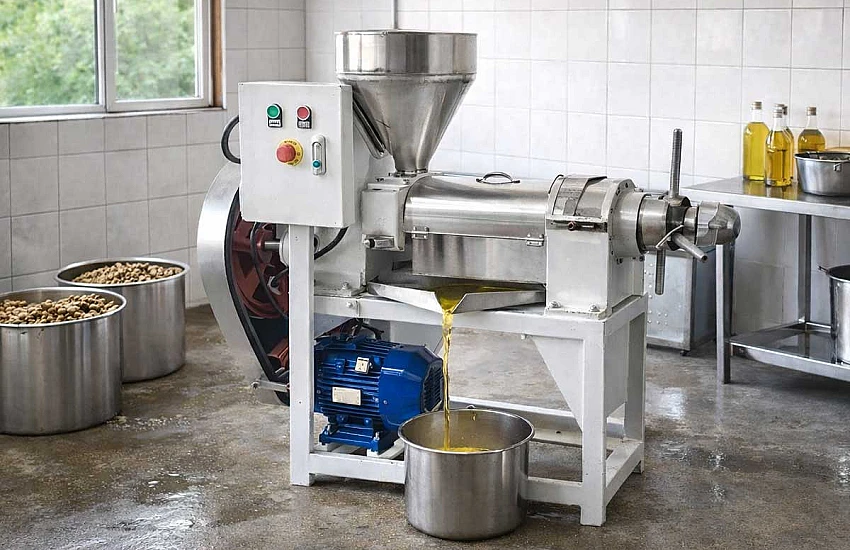
A screw press with a capacity of up to two tonnes per day, such as the ZX85 model measuring 130 by 60 by 120 centimetres, does not require a large room. A space of around ten to fifteen square metres is sufficient, providing unobstructed access to the machine from all sides. The key requirement is three-phase 400V power supply, which is standard on most farms. The floor should be level, preferably concrete, capable of bearing the press weight of two hundred and fifty kilograms. Good room ventilation is important because during intensive work, the press generates heat, and removing excess hot air helps maintain the optimal pressing temperature. The press mounted on a tall frame makes it easy to collect oil into containers placed underneath and to conveniently gather press cake - in daily use this saves time and eliminates awkward bending over a low machine. Components in contact with oil, made from stainless steel, ensure production hygiene and ease of cleaning.
Raw Material Zone and Finished Oil Zone
A well-organised mill has clearly separated zones. The raw material zone is where bags or containers of seeds prepared for pressing are kept. It should be dry, cool, and protected from rodents. The pressing zone is the machine itself and its immediate surroundings. The finished oil zone is where the oil settles in sedimentation tanks and is then filtered and bottled. Press cake should have its own storage area, preferably in a well-ventilated room where it can cool quickly after leaving the press.
Oil Quality and Pressing Speed and Conditions
Not only the type of raw material but also the way the pressing process is conducted affects the quality of the final oil. Temperature, seed feed rate, pressing chamber condition, and time from harvest to processing are the factors that determine whether we obtain top-class oil or an average product.
Process Temperature and the Concept of Cold Pressing
Cold pressing is a term that in the oil industry means that the temperature of the oil at the press outlet does not exceed a certain threshold, usually forty to fifty degrees Celsius. Maintaining a low temperature is key to preserving the nutritional value of the oil, because higher temperatures degrade vitamins, antioxidants, and delicate fatty acids - especially the omega-3s found in linseed oil.
A screw press generates frictional heat in the pressing chamber, so temperature control requires proper setting of working parameters. A slower feed rate lowers the temperature but reduces throughput. Faster pressing increases throughput at the cost of temperature. The art lies in finding the golden mean that ensures a satisfactory work pace without exceeding the thermal threshold.
Impact of Raw Material Freshness on Oil Parameters
The best oil comes from seeds that are fresh, fully ripe, and properly stored. Seeds that have been sitting too long in suboptimal conditions undergo oxidation, which translates into a higher acid value in the oil and deterioration in taste. Therefore, the ideal is pressing on an ongoing basis, in small batches, from material stored no longer than a few months after harvest.
In practice, a farmer with a press of adequate capacity can afford to process raw material in batches - for example, pressing a portion sufficient for current orders every two weeks. This model of work guarantees that the oil reaching the customer is always fresh while also spreading the mill's work over a longer period.
Press Cake as a Valuable By-Product of Pressing
Every oil pressing process generates a by-product in the form of press cake - the residue remaining after extracting oil from the seeds. Press cake is by no means waste but a full-value material with a wide range of applications that in many cases represents a significant supplement to the mill's income.
Rapeseed, Flaxseed, and Sunflower Press Cake in Animal Nutrition
Rapeseed press cake is one of the most valuable plant proteins used in livestock feeding. It contains thirty to thirty-five percent protein, is rich in essential amino acids, and is an excellent component of feeds for cattle, pigs, and poultry. Flaxseed press cake, thanks to its mucilage content and omega-3 fatty acids, is particularly valued in horse and dairy cattle nutrition because it has a beneficial effect on the condition of the animals' coat and skin. Sunflower press cake with husk has somewhat lower feed value due to its higher fibre content, but it is an excellent supplement to rations for beef cattle and sheep.
Culinary and Industrial Uses of Press Cake
An increasingly popular trend is using press cake in the kitchen. Finely ground flaxseed press cake serves as a gluten-free flour for baking, while rapeseed and sunflower press cake is used as an addition to salads, smoothies, and muesli. In the chip form that comes out of the screw press, press cake is also fried or baked as a protein snack. Industrially, press cake finds applications in heating pellet production, organic fertilisers, and even bioplastics.
Practical Tips for Choosing a Press for Your Farm
Choosing an oil press is a decision for years. A well-matched machine will work reliably for many seasons, while an ill-considered purchase may generate frustration and losses. Here are a few practical tips to help you make the right decision.
Capacity With Room for Growth
As we have already mentioned, it is better to choose a press slightly more capable than current needs suggest. Capacity headroom gives flexibility: it allows you to shorten the pressing season, take on a job from a neighbouring farmer, or expand your oilseed acreage without having to replace your equipment.
Construction and Build Quality
The durability of a press depends on the quality of its construction. Components in contact with food should be made of stainless steel, the motor should be designed for continuous operation, and the frame should be stable and resistant to vibration. The Screw Oil Press ZX85 meets these requirements, offering a drip tray, hopper, and chamber cover made of stainless steel, a 5.5 kW motor designed for continuous operation, a drive belt guard, and a control panel. The machine is engineered to run twenty-four hours a day, which during peak season allows the raw material processing time to be minimised.
Service and Technical Support
An oil press, like any mechanical device, requires periodic maintenance and occasional repairs. When choosing a supplier, it is worth paying attention to service availability, the ability to purchase spare parts, and technical support. Professional suppliers offer training on machine operation that helps avoid the typical mistakes of beginner oil makers and fully exploit the press's potential from day one.
Frequently Asked Questions
What press capacity is sufficient for a farm with five hectares of rapeseed?
For five hectares of rapeseed yielding an average of twelve to twenty tonnes of seed, a press with a capacity of one to two tonnes per day is optimal. Such a machine allows all the material to be processed in six to twenty working days, which fits within the natural seasonal window between harvest and autumn sowing. A smaller home press with a capacity of a few kilograms per hour would require many weeks of work, limiting oil freshness and paralysing other farm operations.
Can one screw press handle rapeseed, flax, and sunflower?
Yes, a professional screw press is a universal machine designed for pressing different types of oilseeds. The key is proper preparation of the raw material and adjustment of working parameters - primarily the outlet nozzle gap and seed feed rate. When switching from one species to another, it is worth carrying out a short test pressing to find the optimal settings. It is important that the seeds being pressed have a hard husk and moisture below ten percent.
How much oil can be obtained from one tonne of rapeseed, flax, and sunflower?
From one tonne of rapeseed at seven percent moisture, three hundred and fifty to four hundred litres of oil can be pressed on a screw press. One tonne of oil flax yields three hundred to three hundred and sixty litres. Unhulled sunflower gives two hundred and fifty to three hundred and twenty litres per tonne, the lower yield being due to the presence of the husk, which contains no oil. It is worth emphasising that actual yield depends on raw material quality, its moisture content, and the press working parameters.
What is the best time of year to press each oil?
The pressing season in Poland stretches from July to March. Rapeseed is best pressed from July to September, immediately after harvest. Flax is processed from September to November. Sunflower goes to the press from October to December. In winter, from January to March, any seed type can be pressed from warehouse stocks, provided they were properly stored. Many oil makers deliberately spread pressing across the entire year to ensure a constant supply of fresh oil.
Is a press with a capacity of two tonnes per day too large for a small farm?
Absolutely not. Higher press capacity does not mean it has to run at full speed all year round. For a small farm, a press with a capacity of two tonnes per day allows all the material to be processed in a few days instead of a few weeks. That represents an enormous time saving during the busy harvest period. Outside the season, the machine can work more slowly, processing smaller batches for current orders. Capacity headroom also provides the option of offering pressing services to neighbouring farms.
What technical conditions must a press room meet?
The press room should have access to three-phase 400V power, a level and stable floor capable of bearing the press weight, good ventilation for removing heat generated during pressing, and protection from moisture and dust. Ten to fifteen square metres of floor space is enough for a press and its working area. It is also worth planning room for sedimentation tanks for oil settling and a space for storing press cake.
How should oilseeds be stored to maintain quality for winter pressing?
Oilseeds intended for longer storage should be dried to a maximum of seven percent moisture. They should be kept in a dry, cool, and dark room, ideally in sealed containers or bags that protect against moisture and pests. The optimal storage temperature is five to fifteen degrees Celsius. Before each pressing session, it is worth checking the moisture of a sample with a grain moisture meter. Seeds stored under proper conditions retain full quality for six to nine months after harvest.
Summary
Running your own oil mill on the farm is an investment that opens entirely new possibilities. The key to success is precisely matching the press capacity to the crop acreage, the type of seeds being pressed, and the realistic seasonal schedule. Rapeseed, flax, and sunflower are the three pillars of Polish oil making, each with its own specifics and optimal processing period. A screw press with a capacity of one and a half to two tonnes per day represents the sweet spot for most Polish farms cultivating five to twenty hectares of oilseed crops. It allows the raw material to be processed within a reasonable time while maintaining the highest oil quality, and at the same time offers capacity headroom for future growth.
If you are looking for a machine that combines professional capacity with solid construction and a size appropriate for a farm, it is worth taking a closer look at the Screw Oil Press ZX85 with a capacity of 1.4–2 tonnes per day. This is a machine that has proven itself in many oil mills and which, thanks to its CE certification, steel construction, and continuous-operation capability, provides a solid foundation for any farm-based oil mill.