
Table of Contents
- Golden Flowers in the Traditions of the World – The History of Safflower Through the Ages
- Safflower in Traditional Chinese Medicine
- Healing Traditions in Arabic Folk Medicine
- Safflower in Polish Folk Tradition
- Traditional Oil Extraction Methods – The Wisdom of Generations
- Safflower in Polish Culture – More Than a Medicinal Plant
- Uses of Safflower in Polish Folk Tradition
- Safflower as a Source of Precious Oil – From Tradition to Modernity
- Scientifically Confirmed Modern Properties
- Why Return to Traditional Methods?
- Modern Oil Presses – Technology in the Service of Tradition
- How to Continue the Tradition Today
- Home Oil Press – An Investment in Health and Tradition
- Recipes and Inspirations from Tradition
- Seasonality and the Cycles of Nature in Traditional Practice
- Modern Challenges and Opportunities
- Frequently Asked Questions
- Summary – Returning to Our Roots with Modern Support
When we walk through Polish meadows and fields in the summertime, we often pass by small yellow flowers without realizing that we are looking at one of the most valuable treasures of our traditional medicine and folk culture. Safflower, also known in Poland as “field saffron” or “red safflower,” was for centuries an inseparable part of Poland’s cultural and health heritage. Today, as more and more people seek natural and traditional ways to support their well-being, it is worth returning to the wisdom of our ancestors and rediscovering the secrets of homemade safflower oil extraction from this remarkable flower.
Golden Flowers in the Traditions of the World – The History of Safflower Through the Ages
The history of safflower dates back to ancient times, when the inhabitants of the Mediterranean basin discovered its remarkable properties. In ancient Egypt, safflower was used not only as a dye for fabrics — hence the name “dyer’s safflower” — but also as an ingredient in precious oils used in religious rituals and embalming processes. Cleopatra is said to have added safflower oil to her baths, believing in its rejuvenating effects.
In medieval Europe, safflower was considered true wealth. Monks in monasteries cultivated these plants in their herbal gardens, producing oils and ointments that served not only as medicines but also as natural preservatives and colorants. Chronicles from the 13th century contain the first mentions of safflower in Polish lands, where it quickly earned the nickname “the golden flower of the poor.”
Safflower in Traditional Chinese Medicine
A fascinating aspect of safflower’s history is its place in Traditional Chinese Medicine, where it is known as hong hua (红花). In this system, safflower is classified as a plant with a “warm nature” and “pungent taste,” indicating its ability to stimulate the circulation of energy (qi) and blood in the body.
For thousands of years, Chinese physicians used safflower mainly to treat conditions associated with “blood stasis” — according to TCM theory, many health issues stem from poor circulation of blood and energy. Safflower oil was therefore used for menstrual discomfort, joint pain, injuries and bruises, as well as post-stroke recovery.
In classical Chinese medical texts such as the Shen Nong Ben Cao Jing from the 2nd century CE, safflower is described as a plant that “removes stagnation and opens the meridians.” The Chinese believed that regular use of safflower oil could prevent many illnesses by maintaining proper energy flow throughout the body.
Modern scientific studies conducted in China confirm many of these traditional uses. Researchers have found that safflower contains compounds with anticoagulant properties that improve microcirculation, which explains its effectiveness in traditional applications. This convergence of ancient wisdom and modern science demonstrates how valuable it can be to combine different medical traditions.
The Poor Man’s Saffron – Safflower in Arabic Cuisine
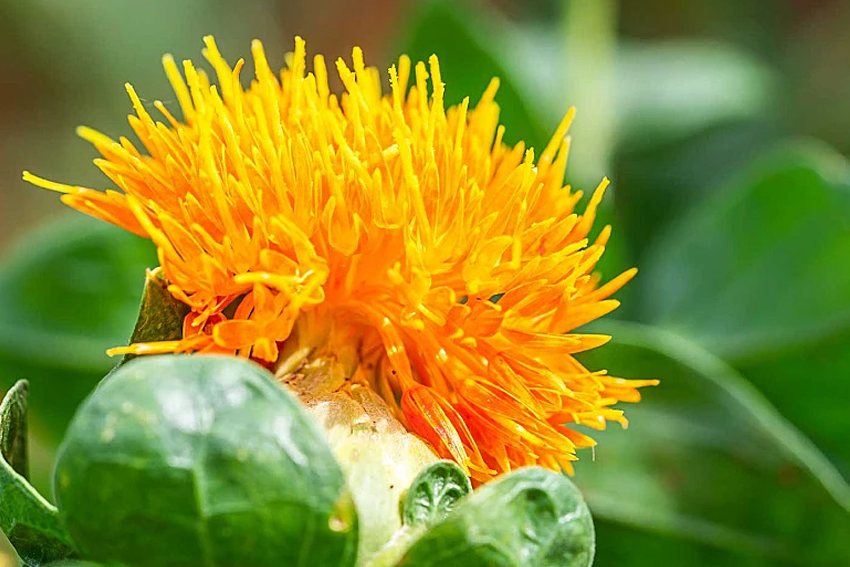
In Arab countries, safflower has earned a special place in both cuisine and traditional folk medicine, mainly due to its remarkable resemblance to true saffron once dried. The dried petals of safflower take on an intense orange-red hue that closely imitates the precious saffron threads, making it a popular and much cheaper substitute for the “red gold” of the Orient.
In traditional Arabic cuisine, safflower — known as usfur or ward al-sahraa — was widely used in the preparation of a variety of dishes. Arab chefs added it to aromatic desserts such as muhallabia and basbousa, where it imparted a delicate floral aroma and a beautiful golden color. In baked goods, especially festive bread and honey cakes, safflower played a similar role to saffron but at a far more affordable price.
Safflower was particularly valued in soups and broths. Arab housewives added a pinch of dried safflower to lentil or bean soups, believing that it not only improved the flavor but also enhanced the dish’s nutritional value. In meat dishes, especially lamb and goat, safflower served as a natural agent to soften the strong taste and aroma.
Healing Traditions in Arabic Folk Medicine
In traditional Arabic medicine, safflower flower infusions were a staple home remedy. They were made by pouring boiling water over a teaspoon of dried petals and steeping for 10–15 minutes. When consumed regularly, the infusion was believed to relieve pain, especially menstrual cramps and stomach ailments.
Arab healers also believed in the cleansing properties of safflower tea. When drunk over several consecutive days, it was said to remove toxins from the body and purify the blood. Its antispasmodic effects were used to alleviate digestive issues, stomach cramps, and intestinal colic. Women during menstruation often turned to this natural remedy, trusting in its ability to ease pain and regulate cycles.
Modern research conducted at universities in Arab countries confirms many of these traditional applications. Studies show that regular consumption of safflower extract can help stabilize blood pressure — an important benefit in diets rich in salt and spices, typical of Arabic cuisine. Research has also indicated positive effects on insulin regulation, suggesting potential benefits in preventing type 2 diabetes — a growing concern in modern Arab societies.
The cardioprotective properties of safflower, confirmed by recent studies, explain why it was traditionally recommended in Arabic folk medicine for older people as a heart-strengthening and circulation-improving remedy. Regular consumption of the infusion was believed to help prevent heart disease, long recognized as a leading cause of premature death.
Safflower in Polish Folk Tradition
In Poland, safflower began to play a significant role as early as the 14th century. Rural women used it primarily as a natural dye to color fabrics in bright yellow and orange hues. Over time, its medicinal and cosmetic properties were also discovered. In traditional Polish households, safflower oil became a valuable part of the home medicine cabinet.
A particularly fascinating aspect is the way our grandmothers produced safflower oil. The process was an art passed down through generations. Women would go out at dawn, while the flowers were still covered in dew, to pick the petals at just the right stage of maturity. It was believed that the morning dew enhanced the plant’s healing properties, and flowers picked before sunrise retained their potency the longest.
Traditional Oil Extraction Methods – The Wisdom of Generations
Home oil extraction techniques varied from region to region, but all relied on natural, time-tested principles. Our great-grandmothers had no access to modern oil presses, so they depended on simple yet effective methods.
The Sunlight Extraction Method
The most popular technique was sun infusion, also known as the “grandmother’s jar method.” Freshly picked safflower petals were layered in glass jars and mixed with finely ground seeds. The mixture was then topped with sunflower or flaxseed oil, depending on availability. The jars were placed on a sunny windowsill for 4–6 weeks and shaken daily.
This process required patience and consistency. Women believed that the oil needed to “absorb the sun” for a full lunar cycle to reach its full potency. Afterward, the oil was strained through linen cloth and stored in dark glass bottles.
The Warm Oven Extraction Technique
In homes where bread was baked, women utilized the residual heat of the oven. After removing the loaves, when the temperature had cooled to a gentle warmth, small pots filled with safflower petals immersed in oil were placed inside. The soft, even heat gently drew out the essence from the flowers over several hours.
This method was especially prized because it allowed for precise temperature control — our ancestors instinctively knew when the oven was just warm enough not to destroy the delicate active compounds in the petals.
The Stone Press – The Ancestor of Modern Equipment
In some regions of Poland, particularly in Lesser Poland and Subcarpathia, primitive stone presses were used. These consisted of large, flat stones between which small sacks of safflower seeds were placed. By gradually adding weight to the upper stone, oil was slowly squeezed out over several days. Though labor-intensive, the resulting oil was exceptionally pure and concentrated.
Safflower in Polish Culture – More Than a Medicinal Plant
In Polish folk culture, safflower held a meaning that extended beyond its practical uses. It symbolized fertility, health, and protection against evil forces. In many regions, people believed in the flower’s magical powers.
Safflower gathered on St. John’s Night was thought to possess special strength. Oil made from such flowers was believed to protect against curses and bring luck in love. Young girls carried small pouches filled with dried petals as amulets, while mothers anointed their children’s foreheads with safflower oil to protect them from illness.
Another interesting custom was the “blessing of safflower oil” during the Feast of the Assumption. Women would bring small bottles of their homemade oil to church for a priest’s blessing. This consecrated oil was believed to have powerful healing properties and was kept for use in the most serious illnesses.
In Polish folklore, numerous folk songs mention safflower. One of the most well-known verses says:
“Safflower golden, safflower dear,
Give me health and calm this year.
I’ll seal you tight within my jar,
And winter’s gloom will stay afar.”
These simple words reflect the deep bond between people and nature — a defining feature of Polish folk tradition. Safflower was not just an ingredient or a medicine; it was a friend, a guardian, and a symbol of continuity between generations.
Uses of Safflower in Polish Folk Tradition
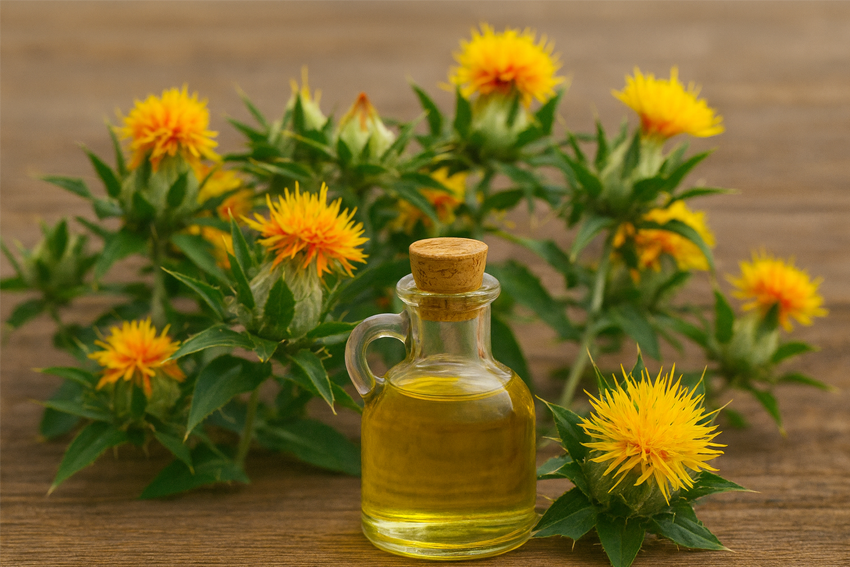
In traditional folk medicine, safflower oil was valued primarily for its anti-inflammatory and regenerative properties. Our grandmothers used it externally for various skin ailments and internally as a digestive aid and general tonic to strengthen the body.
In old Poland, safflower oil was an essential element of the household medicine chest. It was most often applied topically to cuts, scratches, sunburns, and skin irritations. People believed that it could “draw out” infections and accelerate wound healing.
It was especially prized for digestive issues. A teaspoon of safflower oil taken on an empty stomach was thought to soothe stomach discomfort, aid digestion of fatty foods, and boost overall vitality. Elderly women often added a few drops to warm tea during colds and throat inflammations.
In traditional Polish folk cosmetics, safflower oil played an important role as an ingredient in facial and hand creams. It was mixed with other animal or plant fats to make ointments protecting the skin from harsh weather conditions.
Safflower oil was also a popular hair treatment. It was massaged into the scalp and left overnight, believed to strengthen hair roots and add shine. This tradition survives to this day — and modern research supports the beneficial effects of safflower oil on hair and skin health.
Safflower as a Source of Precious Oil – From Tradition to Modernity
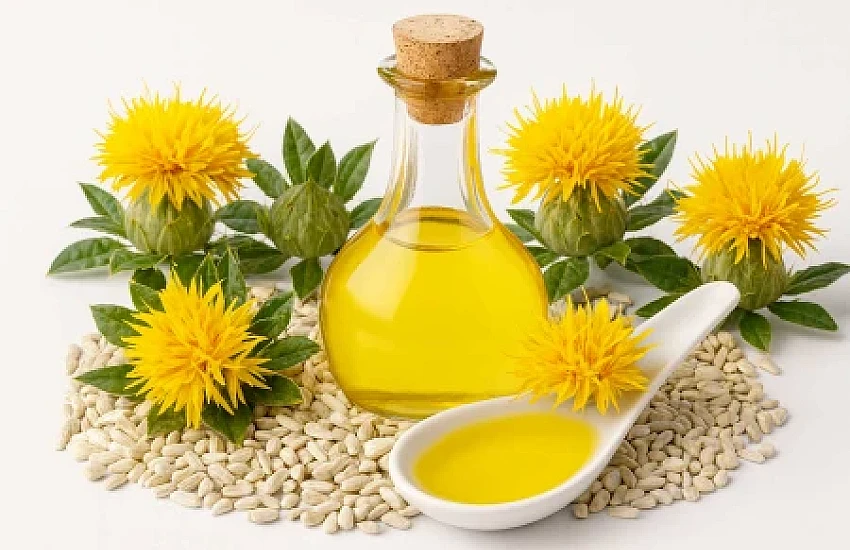
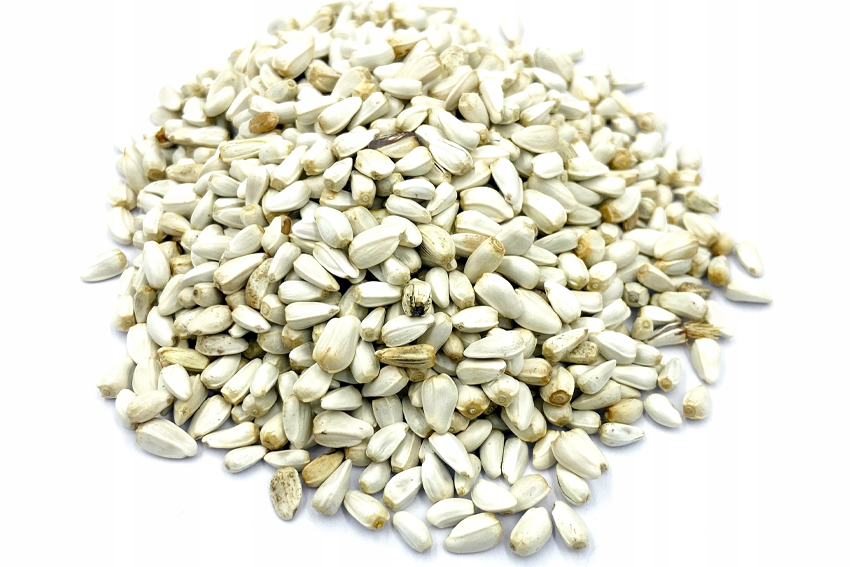
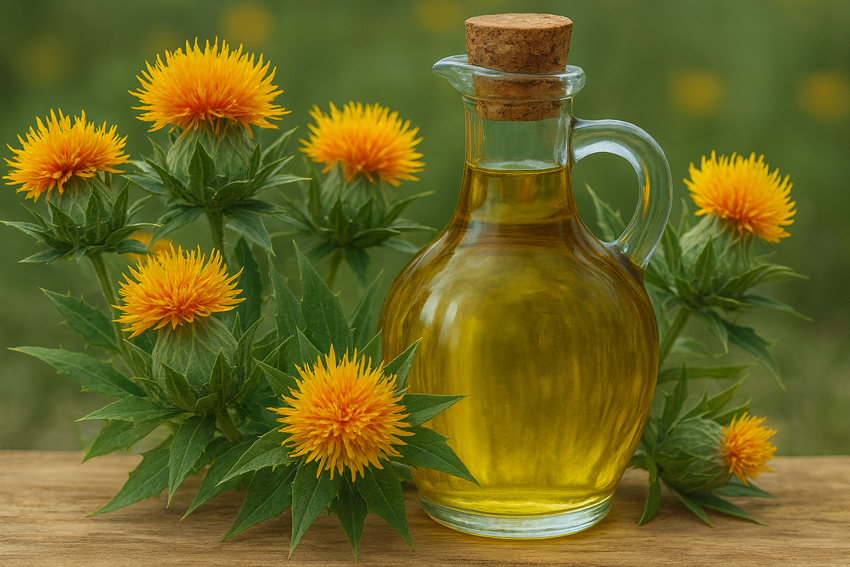
Although safflower can be used in many forms — dried petals for infusions, fresh flowers in dishes, or powdered in baking — its most valued form is the oil extracted from its seeds. This golden liquid contains the plant’s most potent bioactive compounds, which made safflower such a sought-after medicinal and cosmetic plant for centuries.
Safflower oil contains a remarkably rich composition of bioactive substances, whose concentration in liquid form is several times higher than in other preparations. This is why traditional oil extraction methods, developed over generations, represent valuable knowledge worth preserving and refining with modern technology.
Scientifically Confirmed Modern Properties
Modern research confirms many of the traditional uses of safflower oil. Its rich phytochemical composition — including flavonoids, carotenoids, phenolic acids, and unsaturated fatty acids — explains its wide-ranging effects on the body.
Laboratory studies have shown strong antioxidant properties, supporting traditional beliefs about its anti-aging and protective effects. Its high content of linoleic acid and other unsaturated fatty acids makes it an important dietary component for cardiovascular health.
Why Return to Traditional Methods?
Today’s world is increasingly turning toward natural healing and preventive approaches. In an age of industrialized pharmaceuticals and cosmetics, traditional plant oil extraction methods are regaining both cultural and practical value.
Quality Versus Industry
Safflower oil obtained through traditional methods differs significantly from industrially produced oil. Slow, gentle extraction preserves the valuable active compounds that are often degraded or destroyed by high-temperature industrial processing.
Traditional methods also ensure full control over raw material quality. Our ancestors knew every plant they harvested — where it grew, under what conditions, and when it reached its peak maturity. This intimate knowledge directly translated into the superior quality of the final product.
The Meditative and Therapeutic Aspect
The traditional process of making safflower oil also had a psychological and spiritual dimension, often overlooked today. The ritual of gathering flowers at dawn, patiently waiting for the infusion to develop, and observing daily changes in the oil created a deep connection between people and the healing process.
Modern psychology increasingly acknowledges the therapeutic benefits of mindfulness — the conscious observation and participation in natural processes. Preparing your own safflower oil can serve as a form of active meditation, a way to slow down, reconnect with nature, and rediscover harmony in everyday life.
Modern Oil Presses – Technology in the Service of Tradition
Although the methods of our ancestors were effective, modern technology offers possibilities that preserve all the benefits of traditional processes while eliminating their drawbacks. Contemporary home oil presses, such as those available at pureoilpress.com, are a perfect fusion of tradition and innovation.
Principles of Operation
Modern home oil presses work based on controlled pressure and temperature. This allows precise extraction of oil from seeds and flowers without exposing them to excessive heat, which could destroy valuable active compounds. Most models allow for both cold and warm pressing modes.
Cold pressing (at temperatures not exceeding 40°C) preserves the maximum amount of vitamins, unsaturated fatty acids, and antioxidants. It is the modern equivalent of traditional sun extraction — faster and far more efficient.
Warm pressing increases yield and enables oil extraction from harder raw materials. This method corresponds to the traditional use of gentle heat from a bread oven.
Benefits of Home Oil Pressing
Using a home oil press to extract safflower oil offers numerous undeniable benefits. Most importantly, you have full control over the quality of the raw material — you can gather flowers yourself at the right time and place or buy them from trusted suppliers.
Home pressing also allows experimentation with different techniques and recipes. You can combine safflower with other oil-bearing plants to create unique blends tailored to your personal health or cosmetic needs.
Another invaluable advantage is freshness. Home-pressed oil contains no preservatives and can be consumed or applied topically almost immediately after production, when its beneficial properties are at their peak.
How to Continue the Tradition Today
To effectively revive the heritage of safflower oil extraction, we need to combine ancient knowledge with modern tools.
Choosing and Preparing the Raw Material
The first step is selecting the right flowers. The best safflower blooms for oil extraction are those collected at full bloom, in early summer, when petals are rich in sap but not yet wilted. Flowers should be gathered gently, ideally with a small portion of the stem. The ideal time is a dry, sunny morning, when dew has evaporated but the sun is not yet strong.
Avoid collecting near polluted areas, busy roads, or industrial zones. The best sites are meadows, field edges, and natural open spaces far from pollution sources.
After harvesting, gently rinse the flowers in cool water and let them dry on a paper towel for about an hour. They should be slightly moist but not wet.
The Pressing Process
Safflower oil should be cold-pressed, and the process temperature should not exceed 40°C.
Place the flowers in the press chamber in layers, lightly pressing them down. Do not overfill the chamber — it is better to press several small batches than one large, inefficient one.
Freshly pressed safflower oil has a deep yellow-orange color and a delicate, floral scent. The first press is the most valuable — it should be filtered and stored separately.
Filtering and Storage
Fresh safflower oil contains fine plant particles that must be removed through filtering. The best way is to use several layers of gauze or specialized oil filters. The filtering process should be slow and unforced.
Store the filtered oil in dark glass bottles, preferably amber-colored, to protect it from light exposure. Bottles should be filled almost to the top to minimize contact with air. When kept in a cool, dark, and dry place, the oil retains its properties for 6–9 months.
Home Oil Press – An Investment in Health and Tradition
The decision to purchase a home oil press is an investment that goes far beyond financial aspects. It’s a step toward greater health independence, a return to traditional values, and a way to reconnect with nature and your own well-being.
Choosing the Right Model
When selecting a home oil press for extracting safflower oil, it’s worth paying attention to several key parameters. The power of the device should match your production needs — for small quantities, a press with 200–300W is sufficient, while higher demands require models with 500W or more.
Equally important is temperature control. Safflower is delicate and requires gentle handling, so the press should allow for low-temperature or cold pressing. An automatic shut-off feature at the maximum temperature is an added safeguard against overheating.
The quality of materials used in the press is crucial for both safety and oil purity. All components that come into contact with the raw material should be made of high-grade stainless steel. Avoid devices with aluminum parts or low-quality plastics.
Professional Home Oil Press for Safflower Extraction
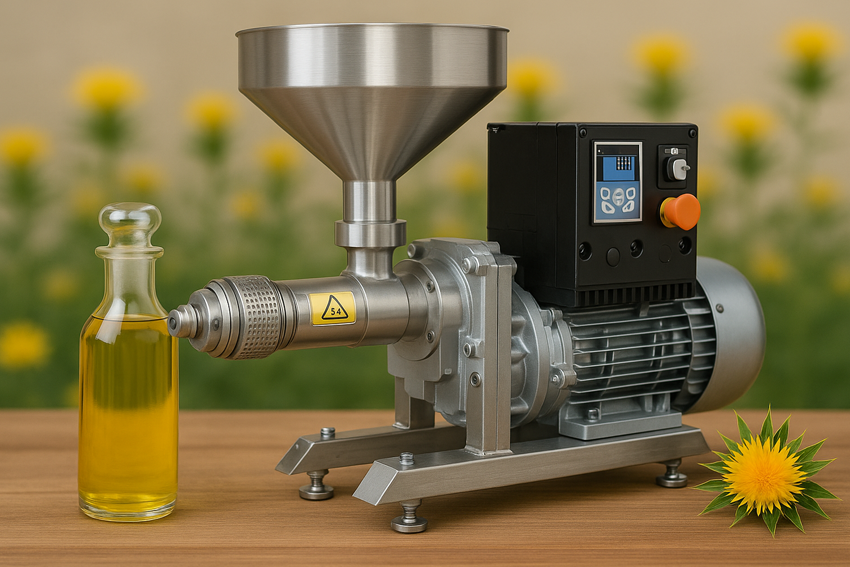
For those who treat safflower oil pressing not merely as a hobby but as a regular way to produce premium-quality oil for themselves and their families, we recommend a cold and hot oil press (14 kg/h capacity) available at pureoilpress.com. This German-made device perfectly combines home functionality with semi-professional capabilities.
Firstly, the press features adjustable heating temperature, which is rare among home models. This allows you to precisely set the temperature according to the sensitivity of safflower flowers, maintaining optimal conditions to preserve all valuable nutrients. In cold-press mode (up to 40°C), the oil retains maximum nutritional value, including vitamins and omega fatty acids — crucial for safflower oil’s health benefits.
The device also supports hot pressing (120–200°C), useful when working with dried safflower or when higher output is desired. A 300W motor combined with a 450W heater ensures stable performance, while the 14 kg/h yield makes it suitable for both small-scale home use and larger production batches.
Stainless steel components ensure food safety and easy cleaning — an especially important factor when working with oily plant materials.
With dimensions of 80 × 25 × 57 cm and a weight of 47 kg, the press is sturdy yet portable enough for home or workshop use. It’s an ideal solution for those who take the tradition of home oil making seriously and wish to invest in a long-lasting, high-quality device.
Importantly, safflower is explicitly listed by the manufacturer as one of over 50 oil-bearing plants compatible with the press. This confirms that the device has been tested and optimized for such delicate raw materials.
Economic Aspects of Home Oil Extraction
While the health and cultural aspects of home oil pressing are most significant, the economic benefits are equally noteworthy. If you harvest safflower yourself, the cost of raw materials is practically zero — requiring only time and effort during collection.
Even when purchasing dried safflower flowers from reputable suppliers, the cost per liter of homemade oil is several times lower than that of store-bought oils from health food shops. In addition, you have full assurance of the freshness and purity of your oil — something commercial products cannot guarantee.
A home oil press also offers the opportunity to experiment with other oil-rich plants such as pumpkin seeds, sunflower, flax, or sesame, further increasing the device’s versatility and making it a truly worthwhile investment.
Recipes and Inspirations from Tradition
To fully embrace the richness of traditional knowledge about safflower, it’s worth discovering a few tried-and-true recipes and application methods that have been passed down through generations in Polish homes.
Traditional Regenerating Ointment
Our grandmothers made an effective regenerating ointment by combining safflower oil with other natural ingredients. They mixed 50 ml of safflower oil with one tablespoon of melted beeswax and one teaspoon of honey. The mixture was gently heated in a water bath until blended, then cooled and stirred until a smooth consistency was achieved.
This ointment was excellent for dry and irritated skin, small wounds, and chafing. It was also used preventively — applied to the hands before fieldwork to protect the skin from harsh conditions.
Hair Oil from Old Recipes
A traditional hair-care oil was made by combining safflower oil with linseed oil in a 2:1 ratio. A few drops of natural lavender or rose essential oil were added — depending on availability and preference.
The oil was massaged into the scalp and hair once a week and left overnight. In the morning, the hair was washed with mild homemade soap or herbal infusions. Regular use was believed to prevent hair loss, add shine, and improve softness.
Health Elixir Based on Safflower
In Polish folk medicine, there was also a recipe for a “health elixir” containing safflower oil. A glass bottle was filled with 100 ml of safflower oil, one tablespoon of linden honey, and a pinch of dried lavender. The bottle was left in a sunny place for a week, shaken daily.
After a week, the elixir was strained and stored in a dark place. It was taken by the teaspoon on an empty stomach each morning — especially during periods of fatigue, recovery, or increased stress. It was believed to strengthen the body and improve immunity.
Seasonality and the Cycles of Nature in Traditional Practice
One of the most important lessons from traditional safflower-oil making is respect for the natural cycles and rhythms of the seasons. Our grandmothers knew well that nature has its own timing — and that following it brings the best results.
The Safflower Harvest Calendar
The traditional safflower-harvesting calendar was closely linked to observing nature and the changing stages of the plant. The first flowers were collected at the end of May, but the most valuable ones came from the peak of summer — from mid-June to mid-July.
Certain days in the liturgical calendar were considered particularly auspicious. Safflower gathered during the Octave of Corpus Christi was believed to possess special power, as were flowers picked on Midsummer Night (St. John’s Eve). These dates coincided with the period when the blossoms contained the highest concentration of active substances.
The time of day was equally important. The best time for harvesting was early in the morning, between 5 a.m. and 8 a.m., when the dew had just evaporated, but the sun was not yet too strong. In these conditions, the flowers were full of natural juices and not stressed by heat.
Storage in Harmony with Nature
Traditional methods of storing safflower oil also followed the rhythm of nature. Oil prepared in summer was kept in cool, dark places throughout autumn and winter. It was believed that during this time the oil matured and gained strength.
Modern Challenges and Opportunities
In today’s world, the return to traditional methods of extracting safflower oil faces a number of challenges — yet at the same time, it opens up new and fascinating possibilities. Changing environmental conditions, urbanization, and evolving lifestyles require the adaptation of old practices to modern realities.
Environmental Challenges
One of the main challenges is finding suitable places to collect wild safflower. Ongoing urbanization, the widespread use of agricultural chemicals, and environmental pollution have significantly reduced the areas where plants can be safely gathered for food or medicinal purposes.
A practical solution may be to grow safflower at home — in a garden, on a balcony, or even indoors. Safflower is a relatively undemanding plant that thrives well in Central European climates. It can be cultivated both in open soil and in pots, making it accessible even to city dwellers.
New Technological Opportunities
Modern technology offers possibilities that our grandmothers could only dream of. Home oil presses now allow for precise control of temperature, pressure, and pressing time. This enables experimentation with various parameters, documenting results, and perfecting the process.
Access to information and scientific research provides a deeper understanding of the processes that occur during oil extraction, helping optimize traditional methods. We can now combine the intuitive wisdom of our ancestors with accurate measurements and quality control.
Community and Knowledge Sharing
One of the most exciting aspects of our time is the ease of sharing knowledge and experiences with others. Communities of natural-living enthusiasts are forming — people who exchange recipes, experiences, and insights related to homemade oil extraction and herbal remedies.
The internet provides access to traditional recipes from different regions of Poland and across Europe, enriching our understanding and encouraging experimentation with diverse approaches. We can learn from one another, blend cultural traditions, and develop new, improved methods together.
Frequently Asked Questions
Can safflower be harvested anywhere, or are there restrictions?
Safflower should only be harvested in ecologically clean areas — far from roads, industrial zones, and fields heavily treated with chemical fertilizers. The best locations are meadows, field edges, recreational areas, and parks. It’s also important to check whether the land is protected — collecting plants in national parks or nature reserves is prohibited. If you’re gathering on private land, always ask the owner for permission.
How long can homemade safflower oil be stored, and how can you tell if it’s spoiled?
Properly prepared and stored safflower oil retains its properties for about 6–9 months. It should be kept in dark glass bottles, in a cool, dry place, away from direct sunlight. Signs of spoilage include an unpleasant, rancid smell, a darkened or cloudy color, and the appearance of sediment or mold. Spoiled oil should be discarded — it’s unsafe for both consumption and topical use.
Can a home oil press be used for plants other than safflower, and what are the possibilities?
Yes, a home oil press is a versatile device that can extract oil from many oil-bearing seeds and nuts. You can use it for sunflower seeds, pumpkin seeds, flax, hemp, walnuts, almonds, and more. This opens up a world of possibilities — from creating your own oil blends to experimenting with flavors and properties, all while ensuring a steady supply of fresh, preservative-free oils.
What are the main differences between cold and hot pressing of safflower oil?
Cold pressing (at temperatures below 40°C) preserves the highest amount of vitamins, unsaturated fatty acids, and antioxidants. The resulting oil is more aromatic and retains its natural qualities.
Hot pressing increases yield — you can extract more oil from the same amount of raw material — but some delicate compounds may degrade. For therapeutic and cosmetic uses, cold pressing is preferable; hot pressing works better when efficiency is the priority.
Are there any contraindications to using safflower oil, and is it safe for consumption?
Safflower oil is generally safe for most people, but there are a few exceptions. Those allergic to plants in the Asteraceae family (to which safflower belongs) may experience allergic reactions. Pregnant or breastfeeding women should consult a doctor before using it.
For first-time use, it’s recommended to do a patch test — apply a small amount of oil to the inside of your forearm and observe for 24 hours. If you have medical conditions or take medications, always consult your healthcare provider beforehand.
Summary – Returning to Our Roots with Modern Support
Safflower, the humble golden flower of Polish fields, carries within it the ancient wisdom of generations and a wealth of natural healing properties. From ancient Egypt to modern Poland, from traditional Chinese medicine to Arab herbal practices — safflower has long been valued as one of nature’s hidden treasures.
Producing safflower oil at home is much more than simply making a natural cosmetic or medicinal product. It’s a journey into our cultural identity — a return to a harmonious relationship with nature and a conscious choice of quality over quantity.
In an age when industrial processing often strips plants of their most valuable qualities, traditional methods — enhanced by modern home oil press technology — offer us the chance to reclaim control over what we eat and how we heal.
Investing in a home oil press is an investment in health, independence, and heritage. It’s an opportunity to rediscover the magic of golden blossoms that have always grown beside us, waiting for us to recognize their worth once more.
With every drop of safflower oil we extract, we reconnect not only with nature’s active compounds but also with the timeless wisdom of generations — a wisdom that never loses its relevance.