
Table of Contents
- Ancient Beginnings – When Oil Was More Valuable Than Gold
- Egyptian Perfection in the Art of Oil Extraction
- Phoenician Trade and the Spread of Technology
- Greco-Roman Technological Revolution
- Medieval Heritage and Monastic Traditions
- Renaissance Revival and Scientific Approach
- Industrial Revolution – Blessing or Curse?
- 20th Century – Triumph of Technology over Nature
- 21st Century – Renaissance of Cold-Pressing
- Frequently Asked Questions (FAQ)
- Summary
Nowadays, as consumers increasingly reach for natural and unprocessed products, we are witnessing a fascinating phenomenon—the return to ancient methods of cold-pressing oil. This trend, which might seem like a step backward in an era of advanced technology, is proving to be a revolution in the food industry. The history of oil pressing is a story of millennia of innovation, experimentation, and the pursuit of perfection, which today translates into our health-conscious and culinary awareness.
Ancient Beginnings – When Oil Was More Valuable Than Gold
Mesopotamia and the Birth of the Art of Pressing
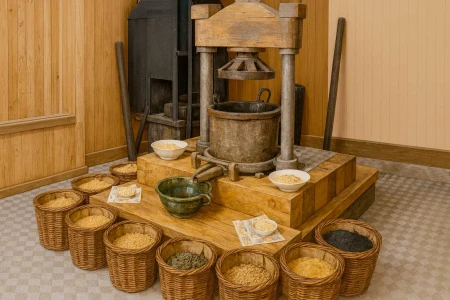
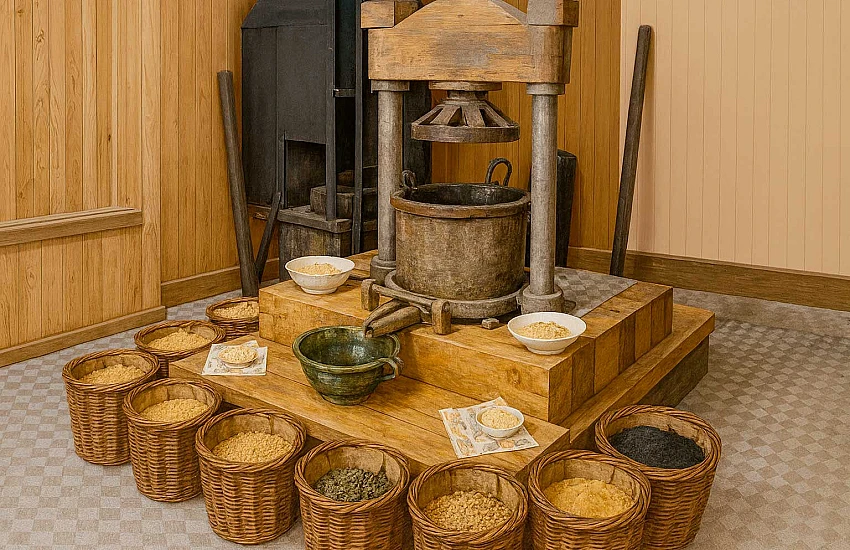
The history of oil pressing begins in the cradle of civilization—ancient Mesopotamia—around 6,000 years ago. Archaeologists have uncovered remnants of the first olive presses in the ruins of ancient cities, dating back to approximately 4000 BCE. These early devices were feats of true engineering, using a system of levers and counterweights to exert enormous pressure on olives placed in baskets woven from palm fibers.
The process was extremely labor-intensive and demanding. Olives had to be harvested at the perfect stage of ripeness, then sorted and cleaned. Only after these steps were they placed in the press, where they were subjected to gradually increasing pressure over several hours. From harvest to finished oil, the entire process could take several days.
At that time, olive oil was so precious that it was often called “liquid gold.” It served as a versatile product—from a dietary staple to fuel for oil lamps, and from a cosmetic to a medicine. The ancient Sumerians developed the first methods of preserving oil, storing it in special clay amphorae coated with wax to protect the product from light and air.
Egyptian Perfection in the Art of Oil Extraction
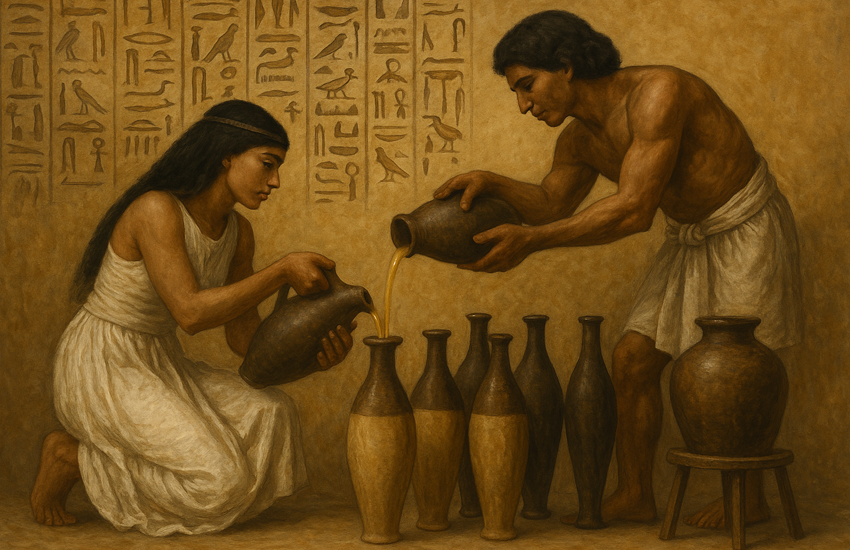
Ancient Egypt brought revolutionary changes to oil pressing technology. The Egyptians did not limit themselves to olives—they were the first to press oil on a larger scale from sesame, flax, moringa, and almonds. They developed an advanced system of presses with stone weights, which allowed for much more efficient oil extraction than the earlier Mesopotamian methods.
The most important discovery by Egyptian technologists was recognizing the effect of temperature on oil quality. They observed that pressing in cool morning hours produced oil with better taste and longer shelf life. This observation forms the foundation of today’s cold-pressing methods. The Egyptians also developed the first oil filtration methods using linen cloth, producing a clear and transparent product.
Frescoes in the tombs of pharaohs depict the oil production process in detail—from workers harvesting olives, to press operators, to craftsmen handling bottling and storage. This production system was so efficient that Egypt exported oil throughout the Mediterranean world.
Phoenician Trade and the Spread of Technology
The Phoenicians, among the most prominent traders of antiquity, played a key role in spreading oil pressing technology throughout the Mediterranean world. They transferred Egyptian innovations to Greece, southern Spain, and North Africa. Phoenician trading ships carried not only finished oil but also knowledge of its production.
The Phoenicians also introduced the first quality standards for oil. They distinguished between different grades depending on the production method—the highest-quality oil came from the first, gentle pressing of fresh olives, while oil from subsequent, more intense pressings was used for technical purposes.
Greco-Roman Technological Revolution
Greek Innovations and the Philosophy of Quality
Ancient Greece contributed not only technical innovations to oil pressing but also a philosophy of quality and excellence. The Greeks developed the screw press around the 5th century BCE—a device used for the next two millennia and forming the basis for all later press designs.
The Greek screw press used a vertical wooden screw to apply pressure to olives placed in baskets. The system was so efficient that one press could serve the production needs of an entire community. The Greeks also introduced the concept of different pressings—the first, gentlest pressing produced “parthenius” (virgin) oil, reserved for religious and medicinal purposes.
Greek philosophers, including Aristotle, wrote about the effects of oil on health and longevity. It was in ancient Greece that the link between oil quality and health benefits was first documented. Hippocrates, the father of medicine, prescribed different types of oil as remedies for various ailments.
Roman Industrialization and Production Scale
The Roman Empire transformed oil pressing from a craft into a true industry. The Romans built the first “oil factories”—production complexes capable of processing thousands of tons of olives annually. These facilities, called “torcularium,” were equipped with multiple presses working simultaneously.
The Roman system of oil classification was extremely detailed. They distinguished "oleum ex albis ulivis"—oil from green olives of the first pressing, "oleum viride"—oil from unripe olives with an intense, pungent flavor, and "oleum cibarium"—technical oil used for lamps and soaps.
The Romans also developed the first legal regulations for oil production and trade. The Lex Iulia de Annona regulated the quality of oil sold in Rome, introducing penalties for product adulteration. This system was so effective that it survived the fall of the empire and influenced later European commercial law.
Roman Technical Achievements
Roman engineers introduced a series of technical innovations that revolutionized oil production. They developed a heated water system for washing olives, improving process hygiene. They also applied stone mills for preliminary crushing of olives, which increased pressing efficiency.
The most important Roman invention was the introduction of a multi-stage pressing system with temperature control. The first phase was cold and produced the highest-quality oil. Subsequent phases used gradually increasing temperatures, maximizing raw material utilization while maintaining quality differentiation.
.png)
Medieval Heritage and Monastic Traditions
Monasteries as Centers of Innovation
During the Middle Ages, when Europe was plunged into the chaos of wars and plagues, monasteries became the guardians of ancient knowledge about oil pressing. Benedictine monks, Cistercians, and other orders not only preserved classical techniques but also introduced their own improvements.
Monasteries in southern France and northern Spain developed a system of water mills for oil pressing. This was the first true mechanization of the process since Roman times. The force of flowing water powered large wheels, which in turn operated the presses. The system was so efficient that a single mill could meet the needs of several villages.
Medieval monks were also the first to systematically study the influence of various factors on oil quality. They kept detailed records on the impact of weather, seasons, storage methods, and transportation on the properties of the final product. These medieval chronicles are true treasures of knowledge about the history of oil pressing.
Guild Standards and Quality Control
The development of towns and craft guilds in the 12th and 13th centuries led to the formation of the first professional associations of oil pressers. Guilds in Venice, Genoa, Marseille, and Seville established detailed regulations covering every aspect of production—from raw material quality to pressing methods and final product standards.
Guild regulations often required that the highest-quality oil be pressed only at certain times of the year and under favorable weather conditions. The first quality marks were also introduced—special seals and labels guaranteeing the origin and production method of the oil.
Medieval guilds were also pioneers in quality control. They introduced the position of “master testers”—experts who evaluated each batch of oil before it could be sold. This system was so effective that it survived in some parts of Europe until the 19th century.
Spread of Oilseed Cultivation
The Middle Ages were also a period of widespread expansion of oilseed crops across Europe. Monks introduced rapeseed, flax, and even exotic plants brought from Asia and Africa. Each new crop required the development of specific pressing techniques, leading to continuous technological innovation.
Particularly important was the introduction of rapeseed to Central Europe. This plant, easier to cultivate than olives, allowed for the development of local oil production in cooler regions. Medieval farmers developed special techniques for preparing rapeseed for pressing, including roasting and fermentation.
Renaissance Revival and Scientific Approach
Leonardo da Vinci and Oil Engineering
The Renaissance brought a new approach to oil pressing, combining traditional craftsmanship with a scientific approach. Leonardo da Vinci designed several innovative oil presses, applying his knowledge of mechanics and hydraulics. His sketches show advanced systems using levers, screws, and counterweights to maximize pressure with minimal operator effort.
Da Vinci was also the first to scientifically study the influence of various factors on pressing efficiency. His notes include detailed observations on optimal seed moisture, ambient temperature, and process duration. These Renaissance studies laid the foundation for the modern, scientific approach to oil production.
Venetian and Genoese Trade Innovations
Venice and Genoa, the great trading powers of the Renaissance, introduced a series of innovations in oil commerce. The Venetians developed the first standardized containers for oil transport—special amphorae of uniform capacity that facilitated trade and quality control.
Genoese merchants introduced an origin certification system—the first "brands" guaranteeing that the oil came from specific regions known for high-quality production. This system was a precursor to today’s geographical indications and quality certifications.
Scientific Foundations of Oil Pressing
Renaissance scholars, such as Georgius Agricola, were the first to apply scientific methods to study the oil pressing process. In his work De Re Metallica, Agricola described in detail the mechanisms of different types of presses and conducted the first systematic experiments on the effects of pressure and temperature on oil quality.
These Renaissance studies led to an important discovery: oil pressed at lower temperatures not only tastes better but also stays fresh longer. This observation became the foundation for the later development of cold-pressing techniques.
.png)
Industrial Revolution – Blessing or Curse?
Steam Presses and Mechanization
The Industrial Revolution of the 18th century fundamentally transformed oil production. The introduction of steam engines enabled the construction of hydraulic presses capable of exerting hundreds of tons of force. The first such press was built by Joseph Bramah in England in 1795. This machine could exert a pressure of 1,000 tons per square inch, which was unattainable for traditional screw presses.
Mechanization brought a dramatic increase in efficiency. Where previously a few craftsmen produced several dozen liters of oil per day, a single steam-powered machine could produce thousands of liters. However, this technological progress had a dark side— in the race for efficiency, quality was often overlooked.
Industrial steam presses operated at much higher temperatures than traditional methods. While this increased output, it simultaneously destroyed delicate nutrients in the oil. For the first time in history, quantity began to outweigh quality.
Solvent Extractors – A Chemical Revolution
A true revolution of the 19th century was the invention of solvent extraction by the German chemist Ferdinand von Schubert in 1856. The process used chemical solvents—initially gasoline, later hexane—to extract oil from raw materials.
The method was extremely efficient, allowing for extraction of up to 99% of oil from seeds, while traditional pressing reached a maximum of 85% yield. Additionally, solvent extraction could process raw materials that were previously difficult or impossible to use.
However, the success of this method had long-term consequences. Oil obtained via extraction was deprived of most natural components—antioxidants, vitamins, and natural flavors. This marked the beginning of the era of “empty calories” in the oil industry.
The First Refineries and Purification Process
By the late 19th century, complex oil refineries began to develop. The refining process included several stages: degumming (removing phospholipids), neutralization (removing free fatty acids), bleaching (removing pigments), deodorization (removing volatile aromatic compounds), and sometimes partial hydrogenation.
Each of these processes required high temperatures and the use of chemicals. The goal was to produce a uniform product with long shelf life and a neutral taste. Consumers quickly became accustomed to cheap, refined oils with predictable properties.
Ironically, refinement, intended to improve oil quality, actually drastically reduced its nutritional value. The process removed nearly all components that made oil a valuable dietary product.
.png)
20th Century – Triumph of Technology over Nature
Mass Production and Standardization
The first half of the 20th century marked the complete triumph of industrialization in the oil industry. Large international corporations such as Unilever, Procter & Gamble, and Cargill built enormous oil processing plants capable of handling millions of tons of raw materials annually.
The development of rail and maritime transport allowed for the centralization of production. Instead of thousands of small, local presses, hundreds of massive factories served entire continents. Oil produced in Argentina could be consumed in Europe, while Malaysian palm oil reached American households.
This globalization of production brought quality standardization but also signaled the end of regional diversity. Local varieties of oils, often with unique flavor and nutritional properties, began disappearing from the market.
Hydrogenation and the Birth of Trans Fats
One of the most significant (and later, most unfortunate) inventions of the 20th century in the oil industry was hydrogenation. Developed by Wilhelm Normann in 1901, the process allowed liquid vegetable oils to be converted into solid fats by adding hydrogen at high temperatures with metal catalysts.
Hydrogenation enabled the production of margarine, shortening, and many other industrial products. For decades, these were considered healthier than butter and other animal fats. Industrial marketing convinced consumers that plant-based products were inherently healthier than animal fats.
Only by the end of the 20th century were the tragic consequences of hydrogenation discovered. The process created trans fats, which proved to be far more harmful to health than natural saturated fats. Trans fats increase the risk of heart disease, diabetes, and many other conditions.
The Green Revolution and Intensification of Cultivation
The 1950s and 1960s brought the so-called "Green Revolution" – the intensification of oilseed crop cultivation using chemical fertilizers, pesticides, and new plant varieties. Yields of oil seeds increased dramatically, further reducing the cost of oil production.
However, intensification had its dark sides. Monocultures replaced diverse agricultural systems, pesticides and fertilizers polluted the environment, and genetic uniformity led to the loss of valuable local varieties.
Oils produced from intensively cultivated crops often had lower nutritional content than those from traditional farming. Soil quality, biodiversity, and traditional cultivation methods proved to have a significant impact on the nutritional value of oil.
The First Signs of Awakening
Discovery of the Mediterranean Diet
The 1970s brought breakthrough studies by Ancel Keys on the Mediterranean diet. Keys observed that inhabitants of Mediterranean countries, who consumed large amounts of extra virgin olive oil, had much lower rates of heart disease than Americans eating highly processed foods.
These studies were the first in decades to draw scientific attention to fat quality rather than quantity. It became clear that not all oils are the same – traditionally pressed oils had completely different health properties than industrial products.
Keys’ research initiated a scientific renaissance in the interest of traditional oil production methods. For the first time in a century, systematic studies compared cold-pressed oil with refined alternatives.
The Organic Food Movement
The 1980s and 1990s saw the rise of the organic food movement. Consumers began to question the logic of intensive chemical agriculture and food industry practices. In this context, traditional cold-pressing methods began to gain popularity.
Early organic oil producers often returned to ancient cold-pressing techniques. Although their products were more expensive than industrial equivalents, they attracted an increasing number of consumers valuing quality over price.
The organic movement also revived interest in local oilseed varieties. Organic farmers began cultivating old strains of rapeseed, sunflower, and flax that had been displaced by industrial hybrids.
21st Century – Renaissance of Cold-Pressing
Awareness Revolution
The 21st century brought a true revolution in consumer food awareness. The internet provided wide access to scientific nutrition information, and social media enabled knowledge exchange among informed consumers. In this context, cold-pressing has experienced a genuine renaissance.
Modern consumers increasingly seek natural, minimally processed products rich in nutrients. Concepts such as “superfood,” “clean eating,” and “whole food” have become popular, and cold-pressed oil fits perfectly into these trends.
Recent scientific studies have provided strong evidence of the superiority of cold-pressed oils over refined products. Cold-pressed oils retain natural antioxidants, vitamins, unsaturated fatty acids in their natural form, and many other bioactive compounds.
Globalization of Local Traditions
Paradoxically, 21st-century globalization has contributed to the revival of local oil traditions. Consumers worldwide can now taste Andalusian Picual olive oil, Provencal Tanche olive oil, or Moroccan argan oil. Each region preserves its unique oil heritage.
The internet allows small, local producers to reach a global audience. Family farms that produced oil only for local consumption for decades can now sell their products worldwide.
This trend supports not only culinary diversity but also biodiversity. Local producers often cultivate old, indigenous plant varieties with unique flavor and nutritional properties.
Technological Innovations Serving Tradition
Modern cold-pressing combines ancient wisdom with cutting-edge technology. Today’s presses use advanced temperature control systems to ensure that temperatures never exceed 40°C during the entire process. Sensors monitor every stage, automatically adjusting parameters according to the type of raw material.
Modern filtration systems remove mechanical impurities without chemicals, preserving all valuable oil components. Some facilities use nitrogen atmospheres to prevent oxidation during pressing.
21st-century technologies also allow precise real-time analysis of oil composition. Infrared spectroscopy can determine fatty acid content, antioxidants, and other compounds in seconds, enabling continuous quality monitoring.
Contemporary Challenges and Industry Future
Consumer Education as Key to Success
One of the biggest challenges for today’s cold-pressed oil industry is consumer education. Many people still do not understand the differences between production methods or how to interpret product labels.
Cold-pressed oil producers increasingly invest in educating their customers. They organize tastings, culinary workshops, and factory visits. Social media has become an important educational tool, showing the entire production process from field to bottle.
Key education areas include production method differences, health benefits of various oils, storage and usage guidelines, and label interpretation skills.
Legal Regulations and Quality Standards
The growing cold-pressed oil market requires clear legal regulations and certification systems. In Poland and the EU, standards for products labeled “cold-pressed” are developing, but uniform, strict criteria are still lacking.
Major legal issues include the definition of “cold-pressed” (maximum temperature, measurement methods), purity and quality standards, labeling requirements, and certification procedures.
Some countries have introduced their own certification systems. Italy has DOP (Denominazione di Origine Protetta) for olive oil, France is developing AOC (Appellation d’Origine Contrôlée) for local oils, and Germany has Bio-Siegel for organic products.
Sustainable Development and Environmental Responsibility
The future of cold-pressed oil is inseparable from sustainability principles. Consumers increasingly consider not only product quality but also environmental impact.
Modern oil pressing facilities implement waste management systems using all by-products. Pressed cake becomes animal feed or organic fertilizer, and seed husks are used as biomass for energy production.
More producers are investing in renewable energy – solar panels and wind turbines power production facilities. Some companies have already achieved carbon neutrality, while others are pursuing this goal.
Future Innovations
The future of oil pressing may bring fascinating technological innovations. Artificial intelligence could optimize pressing parameters in real time, adjusting to each batch of raw material. Blockchain could provide full traceability from field to bottle.
Researchers are exploring new extraction methods, such as ultrasound-assisted pressing or supercritical CO2 extraction, which can increase yield while preserving all cold-press benefits.
Technologies are also emerging for oil personalization – producing small batches with specific properties tailored to individual consumers or culinary applications.
Practical Aspects of Returning to Tradition
Home Oil Production – Back to the Roots
One of the most fascinating aspects of the modern cold-press renaissance is growing interest in home oil production. More people are purchasing small home presses to produce fresh, high-quality oil in their own kitchens.
Home oil production guarantees quality and freshness while providing a rewarding educational experience. It allows understanding the entire process, from seed to finished product. Children can participate, learning the origins of their food.
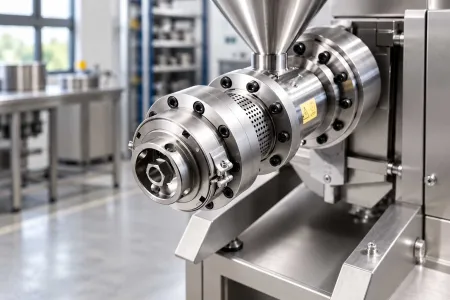
For those interested in home production, a small hot and cold press with a capacity of 5–7.5 kg/h is ideal. It allows pressing various seeds while maintaining full control over temperature and process quality.
Commercial Opportunities in Local Production
For those interested in commercial production, today’s market offers excellent opportunities. Local cold-pressed oil producers can rely on a growing audience of conscious consumers willing to pay a premium for high-quality products.
A screw press with a capacity of 3.5–5 tons per 24 hours is a professional solution for serious commercial operations, enabling efficient production of high-quality oil.
Success in this industry requires not only good equipment but also deep knowledge of raw materials, processes, and the market. Building relationships with local farmers, restaurateurs, and informed consumers is crucial.
.png)
Frequently Asked Questions (FAQ)
Why is cold-pressed oil healthier than refined oil?
Cold-pressed oil retains all natural nutrients that are lost during refining. It contains natural antioxidants (vitamin E, polyphenols), unprocessed unsaturated fatty acids, plant sterols that lower cholesterol, and many other bioactive compounds. The refining process, which uses high temperatures and chemicals, destroys most of these valuable components, leaving virtually “empty calories.”
How should cold-pressed oil be stored to preserve its properties?
Cold-pressed oil is more sensitive to light, heat, and air than refined products. It should be stored in a dark, cool place (ideally in the refrigerator after opening), in dark glass bottles or metal cans. Avoid exposure to air – always tightly close the container after each use.
Can cold-pressed oil be used for frying?
It depends on the type of oil and frying temperature. Some cold-pressed oils, such as rapeseed or sunflower, have relatively high smoke points and are suitable for medium-heat frying. Others, like flaxseed or evening primrose oil, should only be used raw. Extra virgin olive oil can be used for low-heat frying. The general rule is to use cold-pressed oils primarily raw to preserve all their health benefits.
Which seeds are best for home oil pressing?
For beginners, sunflower seeds are the easiest – widely available, relatively inexpensive, and yield a good amount of oil. Rapeseed, sesame, flax, pumpkin seeds, and walnuts also work well. Each type of seed requires slightly different pressing parameters. It is important to buy seeds intended for oil pressing (not for sowing), preferably from certified organic sources.
How much does it cost to start a small cold-pressed oil production?
Costs depend on the scale of the operation. For home use, a press costs around 3,000–8,000 PLN and pays off quickly with regular use. For commercial operations, investments range from 50,000–200,000 PLN (press, auxiliary equipment, premises preparation). Additional costs include raw materials, packaging, certification, and marketing. With a solid business plan, the investment can pay off in 2–4 years.
How can you recognize real cold-pressed oil?
Authentic cold-pressed oil has a characteristic aroma and taste corresponding to the seeds it was made from. It may be cloudy or have sediment (natural components), and its color is more intense than refined oil. The label should indicate “cold-pressed” and the pressing temperature (max 40°C). Avoid products with chemical additives, unusually long shelf life (over 2 years), or suspiciously low prices. It is best to buy from trusted, local producers.
Summary
The history of oil pressing is a fascinating story of human civilization, coming full circle. From the ancient stone presses of Mesopotamia, through Roman innovations, medieval monastic traditions, Renaissance scientific discoveries, the Industrial Revolution and the chemical era, to the modern renaissance of natural production methods.
Today’s return to cold-pressing is not just a culinary or health trend – it is a profound shift in awareness, connecting us to the millennia-old wisdom of our ancestors. Modern technology allows us to perfectly combine tradition with innovation, creating products of the highest quality while preserving all natural properties.
The history of oil pressing shows how important it is to balance technological progress with respect for natural processes. The future of the industry depends on wisely combining innovation with tradition, efficiency with quality, global reach with local authenticity. In a world dominated by the food industry, cold-pressed oil remains one of the last authentic products that connect us to our culinary heritage and health.