
Table of Contents
- What Are Labeling Machines and Why Are They Essential in Oil Production?
- Types of Labeling Machines Available on the Market
- Specific Labeling Requirements for Cold-Pressed Oils
- Automatic Labeling Machine with Date Printer – A Solution for Professionals
- Key Features of the Device
- Technical Specifications
- Economic Benefits of Automation
- The Impact of Labeling Quality on Brand Perception
- Technical Aspects of Choosing the Right Labeling Machine
- Implementing a Labeling Machine in Oil Production
- Trends in Natural Oil Labeling
- Cost Analysis and Return on Investment
- The Future of Labeling in the Oil Industry
- Frequently Asked Questions (FAQ)
- Summary
Have you ever wondered why some bottles of oil catch your eye on the store shelf while others go unnoticed? Why do consumers reach for certain brands while ignoring others of similar quality? The answer often lies in the quality and professionalism of the label – the very first element that influences the purchasing decision.
For cold-pressed oil producers, every bottle is not just a product – it’s a business card for the entire brand. A crooked label, an illegible expiration date, or missing product information can undermine months of work spent perfecting the oil. On the other hand, a professionally designed and applied label instantly elevates the perceived value of the product and builds customer trust.
What Are Labeling Machines and Why Are They Essential in Oil Production?
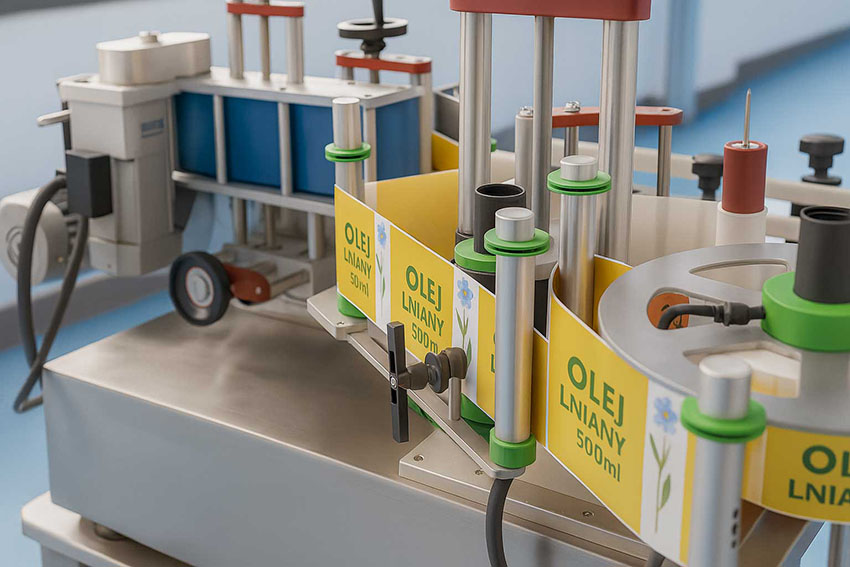
Labeling machines are specialized devices designed to apply labels to a wide range of packaging types. In the context of cold-pressed oil production, they serve as an invaluable tool that combines functionality with aesthetics. It’s not just about sticking a piece of paper onto a bottle – it’s a process that shapes the customer’s first impression and can directly influence their purchasing decision.
Producers of natural oils face a unique challenge. They must not only ensure the highest product quality but also present it in a way that reflects its exceptional properties. Cold-pressed oils are premium products that require proper market positioning. This is where modern labeling machines come into play, enabling precise, consistent, and efficient label application.
The Importance of First Impressions in Oil Sales
Studies show that consumers take an average of seven seconds to decide whether to purchase a food product. In that short time, the label must communicate all essential information: the type of oil, the method of extraction, its origin, expiration date, and nutritional values.
Types of Labeling Machines Available on the Market
Manual Labeling Machines – A Starting Point for Small Producers
For beginner oil producers, manual labeling machines can be a sensible entry point. They are relatively affordable and easy to operate. However, their limitations become apparent as production volumes increase. Hand-labeling is time-consuming and prone to human error, which can affect the quality of the final product. It often leads to uneven placement, wrinkles, or air bubbles—defects that can deter potential customers.
Semi-Automatic Labeling Machines – A Balance Between Cost and Efficiency
Semi-automatic labeling machines offer a step up from manual models. They automate part of the process while allowing the operator to retain control over key aspects. These machines are ideal for medium-scale oil producers who need increased productivity but are not yet ready for full automation.
Automatic Labeling Machines – The Future of Professional Labeling
Automatic labeling machines represent the pinnacle of labeling technology. They deliver the highest precision, speed, and repeatability. For cold-pressed oil producers, investing in an automatic labeling machine can mark the difference between remaining a local business and becoming a national or even international brand.
Specific Labeling Requirements for Cold-Pressed Oils
Legal and Regulatory Requirements
Labeling edible oils is subject to strict legal regulations. According to EU Regulation No. 1169/2011 of the European Parliament and Council, labels must include precise information about ingredients, nutritional values, allergens, and minimum durability dates. For cold-pressed oils, it’s particularly important to highlight the production method and emphasize product freshness.
Packaging Challenges
Oil bottles often come in non-standard shapes—from classic cylindrical to elegant, asymmetrical designs. A labeling machine must be flexible enough to handle different packaging geometries. Additionally, glass bottle surfaces can be slippery, requiring special adhesives and application techniques to ensure proper adhesion.
The Importance of Date Coding and Batch Numbering
Cold-pressed oils have a limited shelf life due to the absence of preservatives. Product dating is crucial not only for regulatory compliance but also for quality management. Modern labeling machines equipped with date coding functions allow automatic printing of expiration dates and batch numbers, significantly improving quality control and facilitating potential product recalls.
Automatic Labeling Machine with Date Printer – A Solution for Professionals
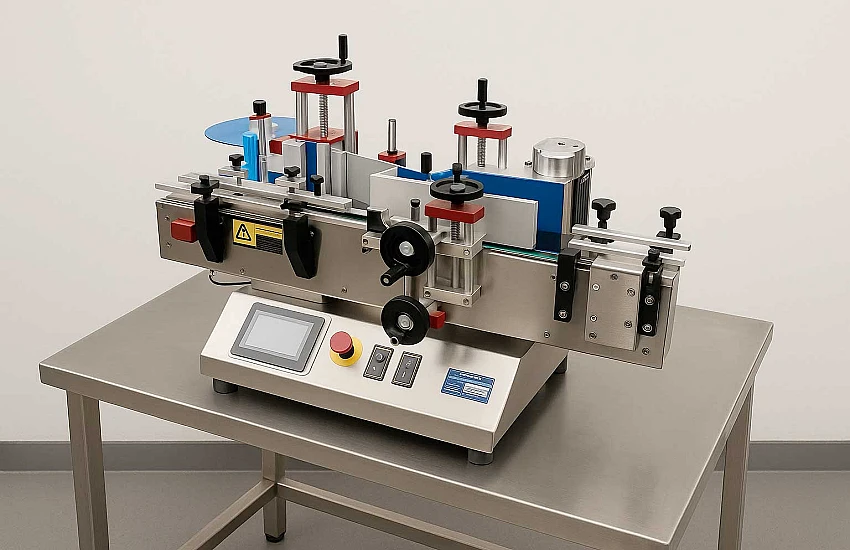
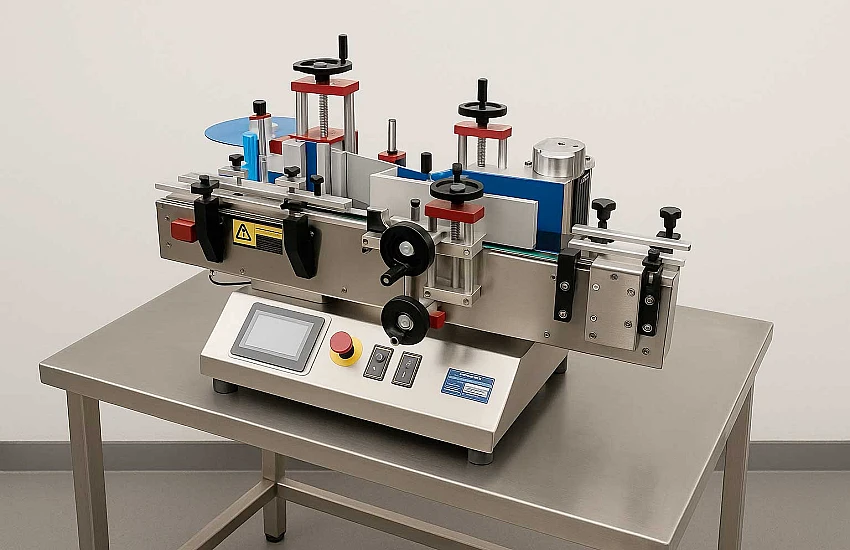
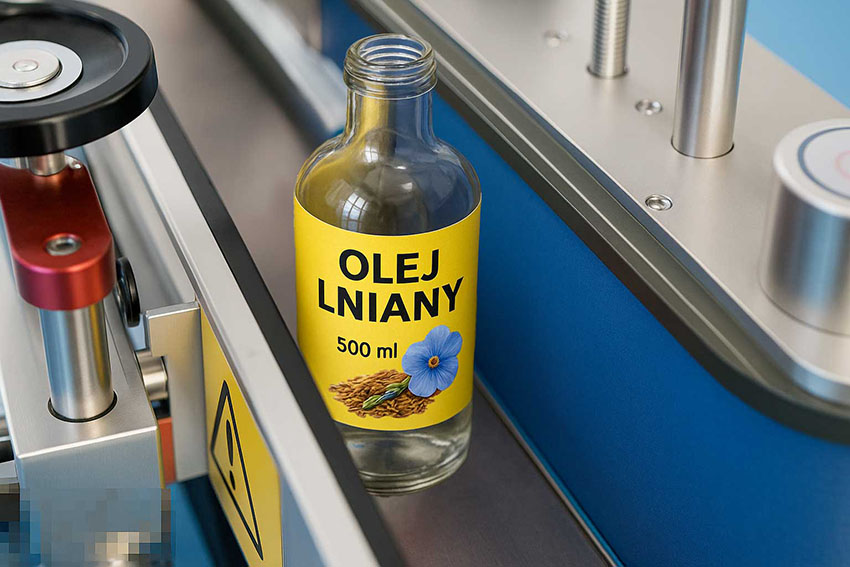
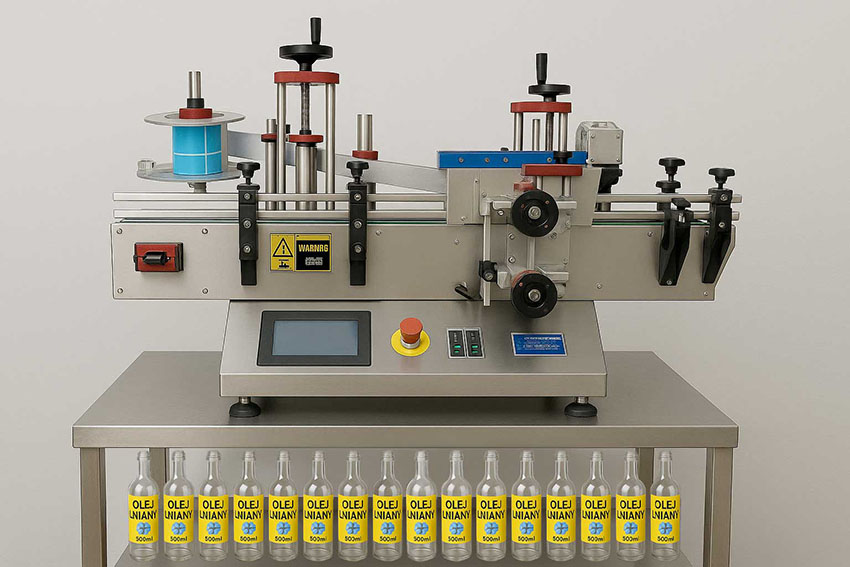
Among the labeling solutions available on the market, the automatic labeling machine with an integrated date printer deserves special attention. This device is designed for producers who do not accept compromises when it comes to quality and efficiency.
Key Features of the Device
The automatic labeling machine with date printer offers a range of advanced features that make it an ideal choice for oil producers:
Precise label positioning: Advanced optical systems ensure accurate label placement in every cycle, regardless of bottle shape or oil type.
Integrated date printing system: The built-in printer automatically marks the expiration date, batch number, and other required information directly on the label, eliminating the risk of human error.
High performance: Capable of labeling hundreds of bottles per hour, it allows producers to handle large orders with ease — without the need for additional staff.
Ease of operation: An intuitive interface enables quick operator training and minimizes downtime during setup and maintenance.
Technical Specifications
The automatic labeling machine with date printer is characterized by impressive technical parameters, making it a perfect solution for a wide range of production needs:
Performance Parameters
- Output: 20–60 units per minute – efficient handling of medium and large production batches
- Positioning accuracy: ±1 mm – precision that ensures a professional appearance for every bottle
Packaging Compatibility
- Bottle diameter: 30–120 mm – versatile enough to handle most standard oil bottles
- Label length: 25–220 mm – flexibility for different label sizes
- Label height: 15–120 mm – supports both small information labels and large marketing labels
Roll Specifications
- Maximum outer roll diameter: 260 mm – accommodates large rolls, reducing the need for frequent replacements
- Inner roll core diameter: 75 mm – industry standard compatible with most label suppliers
Power and Dimensions
- Power consumption: 120 W – energy-efficient without compromising performance
- Power supply: 230 V – standard industrial power compatible with most facilities
- Weight: 110 kg – solid construction ensuring stable operation
- Dimensions: 130 × 95 × 85 cm (L × W × H) – compact size allowing seamless integration with existing production lines
These specifications demonstrate that the machine was designed with professional applications in mind while offering the flexibility needed in a dynamic production environment.
Economic Benefits of Automation
Investing in a professional automatic labeling machine may seem significant at first glance, but the economic benefits quickly outweigh the initial costs. Automating the labeling process allows producers to:
- Reduce labor costs by eliminating manual labeling
- Increase production efficiency by 300–500%
- Improve product quality by removing human error from the process
- Enhance inventory management through accurate date and batch coding
- Boost market competitiveness with a professional, high-quality product appearance
The Impact of Labeling Quality on Brand Perception
The Psychology of Shopping and Label Design
Neuromarketing studies show that consumers judge product quality based on packaging before they ever taste what’s inside. For cold-pressed oils, which are often positioned as premium products, the quality of labeling can directly influence the perceived value of the oil.
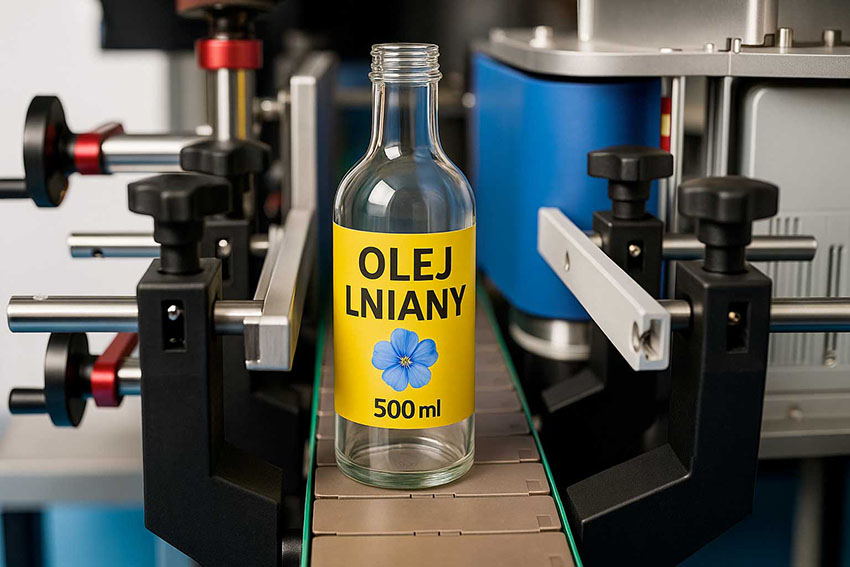
Evenly applied labels — free from wrinkles and air bubbles — signal professionalism and attention to detail. Consumers subconsciously associate these traits with the quality of the oil itself. Conversely, crooked or damaged labels may raise doubts about production standards and product reliability.
Building Trust Through Consistency
Consistency in labeling is crucial for building brand recognition and trust. When every bottle of oil looks identical — with the label placed at the exact same angle and position — consumers are more likely to remember and choose that brand again.
Automatic labeling machines ensure the kind of precision and consistency that manual labeling simply cannot achieve. Every bottle leaving the production line looks identical, reinforcing the brand’s professional image and reliability.
Technical Aspects of Choosing the Right Labeling Machine
Label Materials and Their Properties
Choosing the right label material is just as important as selecting the labeling machine itself. Since cold-pressed oils are often stored in cool environments, the labels must be resistant to moisture and temperature fluctuations.
Vinyl materials offer excellent adhesion and durability, even in humid or refrigerated conditions. Laminated paper labels provide an elegant appearance while maintaining functionality. When selecting label materials, producers should consider not only aesthetics but also durability, legibility, and compliance with food contact regulations.
Adhesives and Their Applications
The adhesive used for labels must meet specific standards. It should provide strong bonding to glass surfaces without affecting the quality of the oil. Acrylic adhesives have become the industry standard due to their stability, safety, and resistance to environmental changes.
Adjusting Machines for Different Bottle Sizes
Modern labeling machines offer quick and easy reconfiguration for different packaging sizes, which is essential for producers offering oils in multiple formats — from small gift bottles to large family-sized containers.
This flexibility allows manufacturers to handle diverse product lines efficiently without requiring separate machines for each bottle type.
Implementing a Labeling Machine in Oil Production
Preparing the Production Line
Implementing an automatic labeling system requires careful preparation of the production flow. The layout must accommodate product movement, workspace accessibility, and integration with existing bottling and capping systems.
It’s also crucial to maintain proper environmental conditions — including temperature, humidity, and lighting — as both labels and adhesives are sensitive to environmental factors that directly affect final product quality.
Staff Training
While modern labeling machines are increasingly user-friendly, staff training remains essential. Operators should understand not only basic functions but also troubleshooting procedures and preventive maintenance to avoid production downtime.
Maintenance Schedule
Regular maintenance ensures the long-term reliability and precision of the labeling machine. A good maintenance plan should include:
- Daily cleaning of moving parts and sensors
- Weekly technical checks for calibration and alignment
- Periodic servicing by certified technicians
Consistent maintenance extends the machine’s lifespan, reduces errors, and guarantees a consistently high-quality finish on every bottle.
Trends in Natural Oil Labeling
Eco-Friendly and Sustainable Labels
Growing consumer awareness of environmental issues is driving demand for sustainable packaging solutions. Labels made from biodegradable or recycled materials are becoming increasingly popular among producers of cold-pressed oils and other natural products.
Personalization and Limited Editions
The ability to quickly change label designs enables producers to create limited editions or seasonal products. Automatic labeling machines equipped with digital printing systems make this possible without significant additional costs, allowing flexible, creative branding strategies.
Interactive Labels with QR Codes
More and more oil producers are integrating QR codes into their labels, linking to additional product information, recipes, or quality certificates. Labeling machines must be precise enough to ensure these codes are positioned accurately and remain fully scannable.
Cost Analysis and Return on Investment
Direct and Indirect Costs
When assessing the profitability of investing in a labeling machine, it’s essential to consider both direct costs (purchase, installation, training) and indirect savings (reduced labor, higher productivity, and improved product quality).
Payback Period Calculation
For an average cold-pressed oil producer, the payback period for a professional automatic labeling machine typically ranges from 12 to 18 months. Key factors influencing this include:
Production volume
Labor cost savings
Increased product price thanks to better presentation
Reduction in waste caused by labeling errors.
The Future of Labeling in the Oil Industry
Integration with Industry 4.0 Systems
Modern labeling machines are increasingly designed for integration with manufacturing management systems, enabling automatic report generation, real-time performance monitoring, and predictive maintenance.
Artificial Intelligence in Quality Control
AI-powered vision systems can automatically detect labeling defects — such as crooked placement, air bubbles, or surface damage — taking quality control to a new level of precision and automation.
Augmented Reality in Maintenance
AR technology is starting to revolutionize machine servicing, allowing remote technical support and operator training. This can significantly reduce downtime and lower maintenance costs.

Frequently Asked Questions (FAQ)
How long does it take to amortize an automatic labeling machine?
The amortization period for an automatic labeling machine depends on the level of production, but typically ranges from 12 to 24 months. For producers processing more than 200 bottles per day, the return on investment is usually achieved within the first year.
Key factors influencing ROI include labor cost savings, increased production efficiency, and improved product quality. Long-term benefits, such as enhanced brand competitiveness and the ability to handle larger orders, should also be considered.
Is an automatic labeling machine suitable for small-scale oil production?
An automatic labeling machine can also be profitable for small producers, especially those planning to scale up in the near future.
For production volumes below 50 bottles per day, it may be more cost-effective to consider semi-automatic models or renting a machine during peak demand periods.
Investing in automation early can be a strategic decision, preparing the company for future growth. Moreover, professional labeling from the very beginning helps establish a premium brand image.
What are the most common labeling problems in oil production?
The most frequent issues in oil labeling include crooked label placement on curved bottles, air bubbles under the label, unclear date printing, and poor adhesion to oily surfaces.
Automatic labeling machines eliminate most of these problems through precise positioning systems, controlled pressure application, and oil-resistant adhesives.
Proper bottle surface preparation and choosing the right label material are also essential for optimal results.
How can producers ensure label compliance with food regulations?
Compliance requires several key elements:
All mandatory information (ingredients, nutritional values, best-before date)
Legible font size and clear layout
Polish language for products sold in Poland
Allergen declarations and accurate product data
A labeling machine with a built-in date printer ensures up-to-date expiration marking. It’s advisable to consult label designs with a food law specialist and regularly monitor regulatory changes to maintain full compliance.
Can one machine label different types of oils?
Yes. Modern automatic labeling machines are designed to work with various packaging types and oil varieties — such as rapeseed, sunflower, flaxseed, and others — as long as the bottles have similar shapes.
Proper adjustment of labeling position, pressure, speed, and label type is key.
Advanced models allow you to save individual product settings for quick switching between product lines. Some machines are even equipped with automatic bottle recognition systems for seamless adaptation.
What are the operating costs of an automatic labeling machine?
Operating costs consist of several components:
Electricity consumption: typically 1–3 kW/h
Consumables: labels, adhesives, date-printing ink
Service inspections: 2–4 times per year
Wear part replacements as needed
For an average producer, monthly operating costs range from €40 to €100 (200–500 PLN).
Regular cleaning and maintenance significantly extend the machine’s lifespan and reduce repair expenses.
It’s also important to consider labor savings, as automation eliminates the need for manual labeling work.
Summary
Automatic labeling machines — particularly models with integrated date printers — represent the future of professional cold-pressed oil labeling.
Investing in a high-quality labeling system can significantly improve product presentation, production efficiency, and brand credibility.
Success depends not only on choosing the right machine but also on proper implementation, operator training, and regular maintenance.
Modern labeling systems go beyond basic label application — they offer integration with production management systems, quality control features, and product traceability tools.
In an increasingly competitive market for natural oils, professional labeling is no longer a luxury — it’s a necessity.
Producers who embrace automation gain a clear competitive edge, resulting in higher profits and faster business growth.
The future will bring even more advanced technologies, including AI integration, predictive maintenance systems, and greater flexibility in label personalization.
Investing in a modern labeling machine is, therefore, an investment in the company’s future and its long-term position in the market.