
Table of Contents
- Is Oil Pressing Profitable? A Farmer’s Guide
- Key Factors Influencing Return on Investment in an Oil Press
- Production Scale and Profitability of Oil Pressing
- Example ROI Calculation – Rapeseed Oil from Own Crop
- How Seasonality Affects the Profitability of Rapeseed Oil Production from Farm-Grown Crops
- How to Effectively Promote Your Own Cold-Pressed Oil
- Effective Marketing Strategies
- Most Common Mistakes Made by Beginner Producers
- Cold and Hot Oil Press 25 kg/h – A Professional Solution for Agriculture and Small Oil Mills
- FAQ – Frequently Asked Questions
- What factors most affect the return on investment in an oil press?
- How does the scale of production affect the profitability of oil pressing on the farm?
- Which oil seeds are the most profitable and popular in the local market?
- How can you effectively promote your own cold-pressed oil in the local community?
- What accessories and tools are essential for efficient oil production?
- Summary – Who Is Oil Pressing Really Profitable For?
In recent years, more and more farmers have been considering investing in an oil press and starting the production of cold-pressed oil. Increasing consumer awareness, the trend for healthy food, and rising prices of premium products make selling processed oil potentially much more profitable than selling raw seeds. Additionally, the press cake produced during oil extraction serves as valuable animal feed, allowing farmers to make even better use of their farm’s potential.
Is Oil Pressing Profitable? A Farmer’s Guide
Growing Interest in Local Processing
In the face of rising agricultural production costs, inflation, and decreasing purchase prices for grains and oilseeds, farmers are seeking new ways to improve the profitability of their farms. One increasingly popular and profitable direction is on-farm processing of raw materials.
Particular interest is focused on cold and hot oil pressing, which significantly increases the added value of the product. More and more farms are choosing to sell processed oil instead of raw seeds. Moreover, by-products of the pressing process — oil cakes and meal — are valuable feed ingredients for livestock.
In this guide, we analyze whether oil pressing is profitable, how to get started, and what the costs, revenues, and potential profits look like.
Key Factors Influencing Return on Investment in an Oil Press
The return on investment (ROI) from purchasing an oil press depends on several essential factors:
1. Equipment Cost
Prices for semi-industrial oil presses with a capacity of 15–25 kg/h start from several thousand euros, while more advanced models can cost significantly more — depending on the level of automation and additional features.
2. Operating Costs
These include electricity consumption, maintenance and servicing, replacement parts, and labor costs related to machine operation, cleaning, and packaging.
3. Availability and Quality of Raw Materials
Using your own oilseeds significantly reduces production costs and increases profit margins. The higher the quality of the raw material, the better the final oil yield and product quality.
4. Technological Efficiency
Modern screw and hydraulic presses, equipped with automatic temperature and pressure control systems, improve extraction efficiency and oil quality. This results in a higher oil yield and better market value.
5. Sales Channels and Marketing
Diversifying your sales outlets — retail, wholesale, local markets, or online — and engaging in active product promotion helps you reach profitability faster.
Production Scale and Profitability of Oil Pressing
The scale of production has a major impact on the profitability of oil pressing on a farm:
- Small Scale (up to 1,000 kg of seeds per month)
Ideal for family farms looking to test the market, sell locally, and use the oil and press cake for their own needs.
- Medium Scale (1–5 tons of seeds per month)
Allows for regular retail and wholesale sales, participation in local fairs, and cooperation with shops and restaurants.
- Large Scale (over 5 tons per month)
Enables entry into retail chains, export markets, and professionalized production, which significantly shortens the payback period.
The larger the production scale, the lower the unit production cost and the faster the return on investment.
However, expanding too quickly without testing the market can lead to overproduction and sales difficulties. It’s recommended to start with test production and gradually scale up as demand grows.
Example ROI Calculation – Rapeseed Oil from Own Crop
Let’s assume you use a press with a capacity of 25 kg/h, operating 4 hours a day for 20 days per month (80 hours total).
You process 2,000 kg of rapeseed, yielding approximately 700 liters of oil.
- Monthly input: 2,000 kg of rapeseed
- Oil yield: 700 liters
- Sales revenue (25 PLN/liter): 17,500 PLN
- Raw material cost (3 PLN/kg): 6,000 PLN
- Energy cost (1.5 kW × 80 h × 1 PLN/kWh): 120 PLN
- Other costs (packaging, labor, service): 2,000 PLN
- Monthly gross profit: 17,500 – 6,000 – 120 – 2,000 = 9,380 PLN
- Return on investment:
With a press cost of 40,000 PLN, the investment pays off after approximately 4.3 months of intensive operation.
In practice, considering seasonality, production startup, and marketing activities, a realistic payback period is typically 12–24 months.
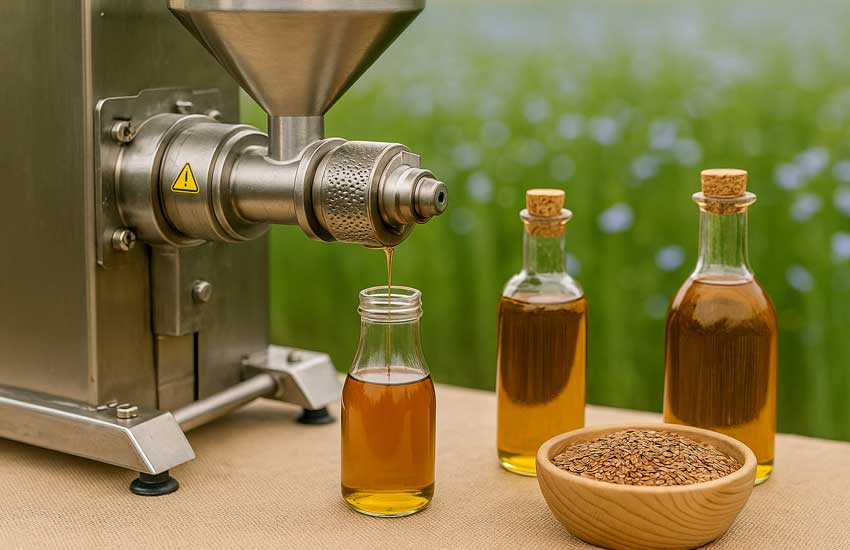
How Seasonality Affects the Profitability of Rapeseed Oil Production from Farm-Grown Crops
Fluctuations in Yields and Raw Material Availability
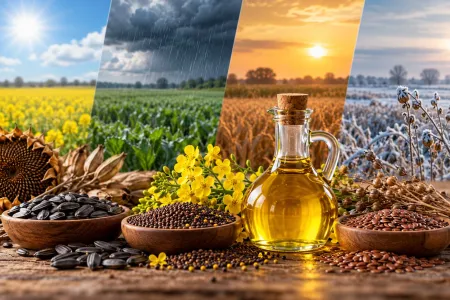
Rapeseed is harvested once a year, which means raw material availability is highest immediately after harvest. High yields can lead to a temporary market surplus, often resulting in lower prices for both seeds and oil. Conversely, in years with weaker harvests, limited seed availability drives up production costs and can reduce overall profitability.
Seasonal Oil Price Variations
Rapeseed oil prices are closely tied to harvest cycles and market supply. Right after the harvest, when most producers press oil from fresh seeds, prices tend to drop due to oversupply. During the winter months and just before the next harvest, when stocks are running low, oil prices usually rise — allowing for higher margins on sales.
Impact of Weather and Growing Conditions
Unpredictable weather conditions — such as drought, excessive rainfall, or frost — directly affect both the quantity and quality of harvested rapeseed. Poor weather can significantly limit the amount of raw material available for pressing, increasing unit costs and lowering profitability. Favorable conditions, on the other hand, lead to higher yields and better-quality oil.
Storage Opportunities
Farmers with their own crops can store seeds and press oil when market prices are most favorable. However, this requires investment in proper storage facilities to prevent quality loss. Effective inventory management allows flexible responses to market fluctuations and can significantly boost profits.
Demand and Alternative Sales Channels
Growing demand for rapeseed oil — both in the food industry and the biofuel sector — helps offset the negative effects of seasonal price drops. Diversifying sales channels and selling by-products such as press cake helps maintain stable farm income throughout the year. Consistent demand for healthy, locally produced vegetable oils supports the long-term profitability of the investment.
Most Profitable and Popular Oilseeds for Pressing
The choice of raw material determines both profitability and market appeal:
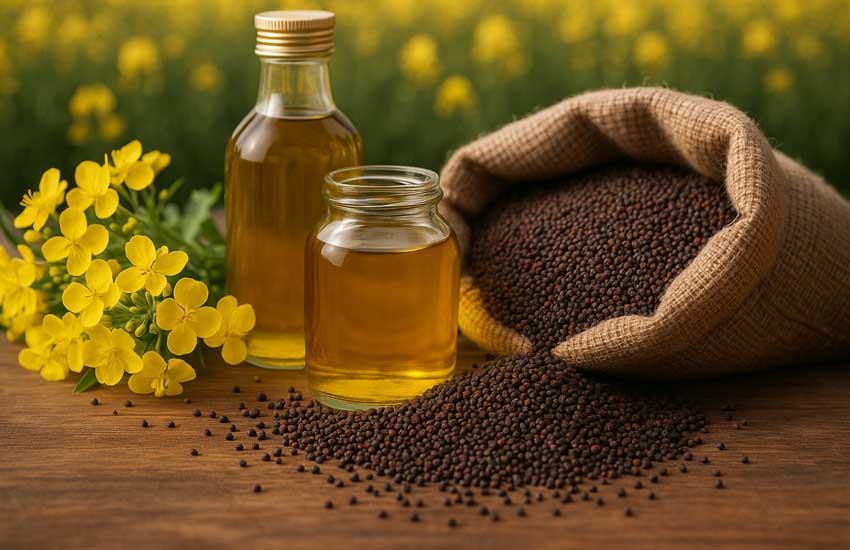
- Rapeseed – the most popular in Poland; high oil yield, neutral taste, and versatile use.
- Flax (Linseed) – rich in omega-3, mild flavor, high nutritional value, ideal for health-conscious consumers.
- Sunflower – easy to press, produces a light and clear oil, widely used in Polish cuisine.
- Hemp – rich in essential fatty acids, high market value; requires consumer education (legality, origin).
- Black Cumin (Nigella sativa) – niche but highly valued; low yield, yet can sell for up to 100 PLN per liter.
Rapeseed dominates Polish oilseed production (about 95% of total crops) thanks to its availability and high oil yield. Flax and sunflower are prized for their health and flavor benefits, while hemp and black cumin are niche products that achieve premium retail prices and attract conscious consumers.
Press Cake – Added Value and Savings
Press cake produced after oil extraction is rich in protein, fiber, vitamins, and minerals. Using it in livestock feed not only reduces waste but also provides real savings on feed costs. Rapeseed, flaxseed, and sunflower press cakes can be used for cattle, sheep, and goats, and — after proper processing — also for pigs and poultry.
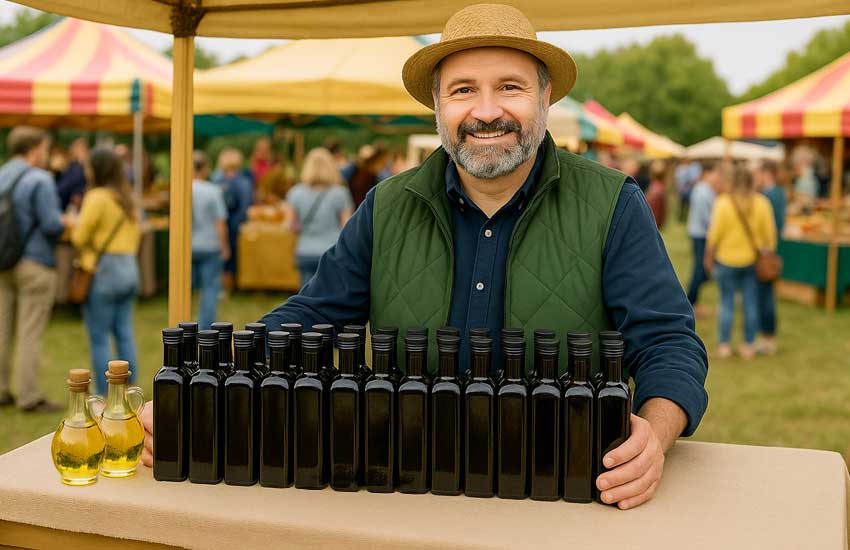
How to Effectively Promote Your Own Cold-Pressed Oil
To make your oil business profitable, active promotion and brand building are essential. Below are proven strategies:
Effective Marketing Strategies
Presence at local fairs and markets:
Direct contact with customers, offering tastings, and educating them about the benefits of cold-pressed oils.
Cooperation with local shops, restaurants, and eco-delis:
Regular deliveries, showcasing products on menus and store shelves, and building long-term partnerships.
Social media:
Active profiles on Facebook and Instagram with recipes, health tips, behind-the-scenes production photos, and coverage of local events.
Workshops, cooking shows, and tastings:
Educating customers, building trust, and positioning yourself as an expert in the field.
Own brand and labeling:
Attractive, eco-friendly packaging emphasizing local origin and the natural character of the product.
SEO and website optimization:
Creating keyword-optimized content (e.g. “cold-pressed rapeseed oil,” “local farm oil,” “flaxseed oil”) and publishing blog posts with tips and recipes.
It’s also worth introducing a loyalty program, collaborating with local dietitians and chefs, and organizing charity events or seasonal promotions to increase brand recognition.
Most Common Mistakes Made by Beginner Producers
Expanding Too Quickly Without Market Testing
Starting large-scale production without first testing demand can lead to overproduction and sales issues. Market testing helps identify customer preferences and tailor your offer to real needs, minimizing financial losses and improving production efficiency.
Lack of a Sales Strategy
Not having a clear sales plan makes it harder to reach the right audience and limits business growth. A successful strategy should include distribution channels, product promotion, and brand development. Without these elements, the risk of failure in a competitive market increases significantly.
Improper Oil Storage – Loss of Quality
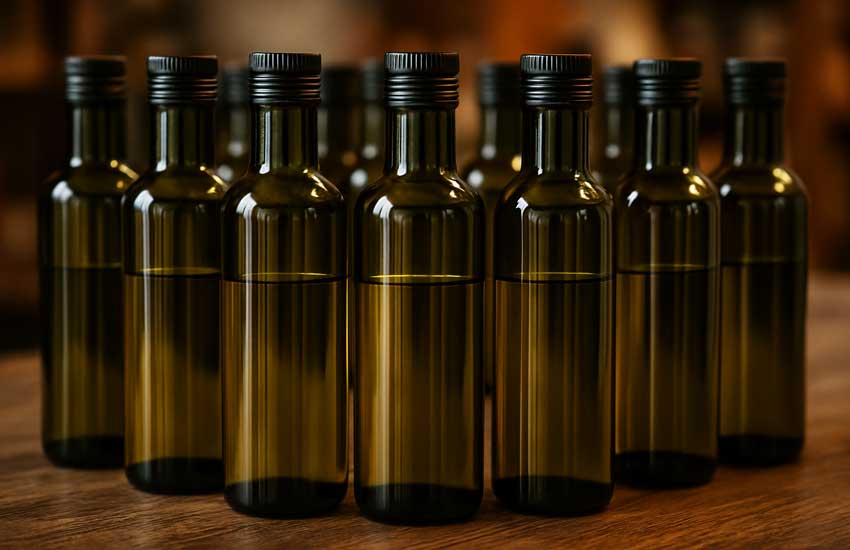
Cold-pressed oil is sensitive to light, temperature, and air exposure, which can cause it to spoil quickly. Poor storage conditions — such as high temperature or exposure to sunlight — lead to nutrient loss and flavor deterioration. Always use dark glass bottles and store oil in a cool, shaded place.
Using the Wrong Press for the Type of Seed
Choosing the wrong type of oil press may result in low pressing efficiency and poor oil quality. Each seed type requires specific pressing parameters, so it’s crucial to select a press suitable for your raw material. The right press improves production efficiency and ensures better-quality oil.
Ignoring the Costs of Packaging, Labels, and Certifications
New producers often overlook costs related to packaging, label design, or obtaining necessary certifications. These factors are vital for product attractiveness and customer trust. Underestimating them can lead to financial strain and make it harder to enter the market.
Recommendation
It is advisable to start with test production and local sales before expanding your operations. This approach minimizes risk and helps tailor your offer to real market needs.
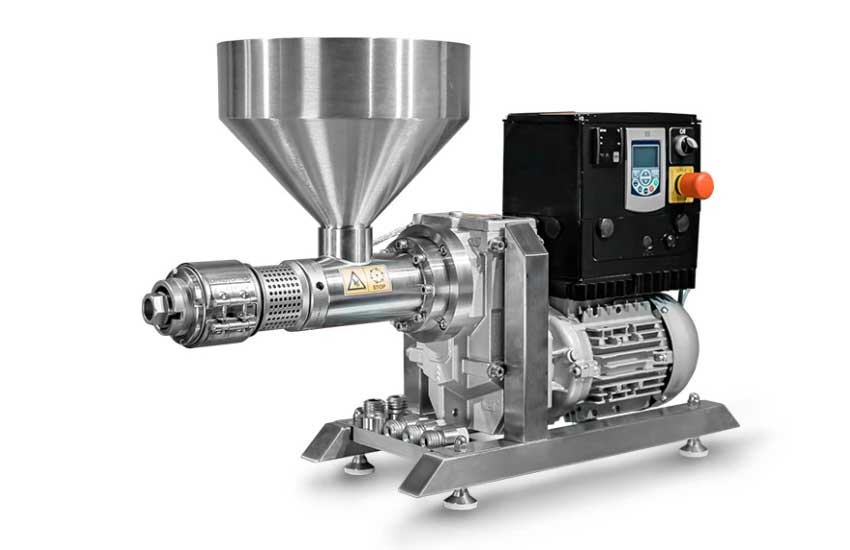
Cold and Hot Oil Press 25 kg/h – A Professional Solution for Agriculture and Small Oil Mills
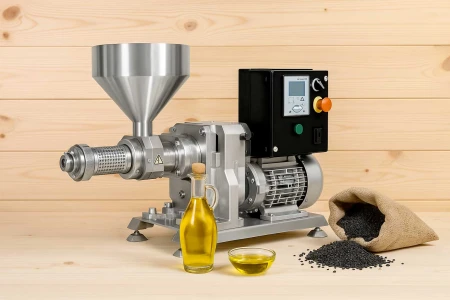
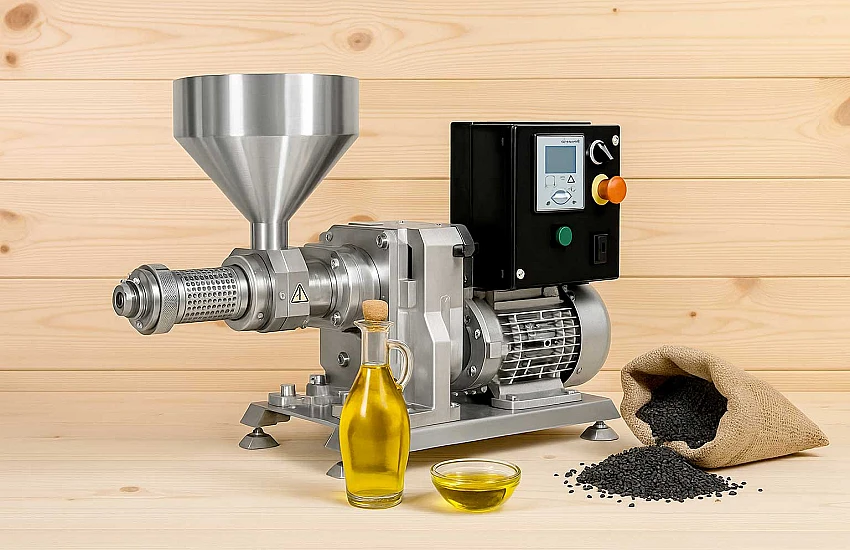
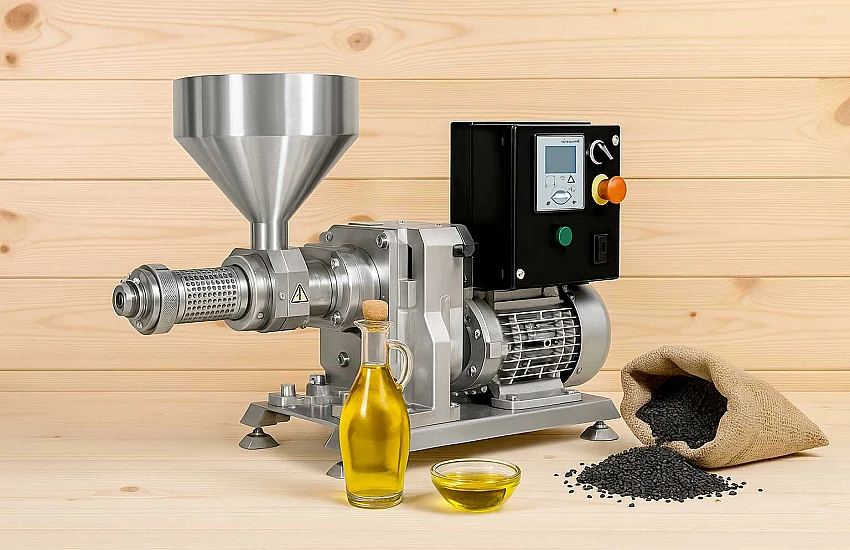
The cold and hot oil press with a capacity of 25 kg/h is a high-performance device designed for both agricultural producers and small professional oil mills or agricultural stores.
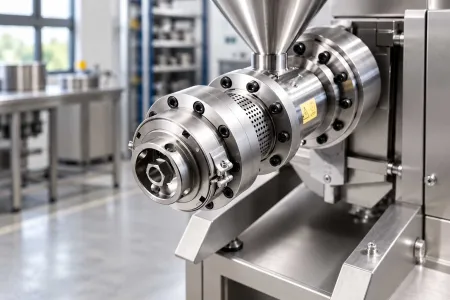
All components that come into contact with the raw material are made of hardened, medical-grade stainless steel, ensuring top-level hygiene, food safety, and easy cleaning – even in a dishwasher. The press allows smooth adjustment of the screw speed and pressure gap, making it possible to fine-tune settings for different seeds to achieve optimal efficiency and oil quality.
The integrated head heating system and digital temperature control enable both cold and hot pressing, ensuring full control over the process and consistent oil quality. The compact design, low power consumption, and quiet, reliable operation make this press ideal for both stationary and mobile production — such as trade fairs and promotional events.
The press can process over 100 types of seeds and nuts, making it suitable not only for food production but also for chemical, pharmaceutical, and cosmetic applications. It’s a versatile and profitable solution that meets the growing demand for high-quality cold-pressed oils among conscious consumers.
FAQ – Frequently Asked Questions
What factors most affect the return on investment in an oil press?
The main factors include: purchase and operating costs, raw material price and availability, device efficiency, sales channels, and product marketing. The larger the production scale and the better the sales organization, the faster the return on investment.
How does the scale of production affect the profitability of oil pressing on the farm?
A larger scale reduces unit costs, accelerates profitability, and increases margins — but it also requires better sales management and customer diversification.
Which oil seeds are the most profitable and popular in the local market?
The most profitable and widely used are rapeseed, flax, and sunflower. In the premium segment, black cumin (nigella) and hemp seeds are increasingly popular due to their high retail value.
How can you effectively promote your own cold-pressed oil in the local community?
Through participation in fairs, cooperation with local shops and restaurants, active social media presence, tasting events, and developing a recognizable brand focused on local origin and quality.
What accessories and tools are essential for efficient oil production?
A grain moisture meter, oil decanter, replacement parts, and the right screw press — all of which can be found at pureoilpress.com
Summary – Who Is Oil Pressing Really Profitable For?
Oil pressing is an excellent way to increase farm profitability and reduce dependence on wholesale markets. It’s ideal for both small family farms and larger agricultural enterprises.
When combined with a local brand, high-quality raw material, and professional equipment, it can form the foundation of a stable and profitable business. Using oil cakes (press residues) as animal feed further reduces costs, while growing consumer demand for natural, locally produced oils boosts sales potential.
The return on investment depends on production scale, but many producers achieve profitability within 12–24 months. Before purchasing, it’s important to analyze local demand for cold-pressed oils and the potential use of byproducts like oil cakes. A solid business plan and strong local marketing strategy will significantly speed up ROI.