
Table of Contents
- Why Cold-Pressed Oil is the Future of Agriculture
- YZYX90-2 Oil Press – The Heart of Your Mill
- Small Oil Mill Business Plan – Profitability Analysis
- Step-by-Step Cold-Pressed Oil Extraction Process
- Press Cake – a Valuable Byproduct
- Legal Requirements and Certification
- Marketing and Sales of Cold-Pressed Oils
- Seasonality of Production and Planning
- Prospects for Oil Mill Development
- Oil Market Trends in 2025
- Technical Support from pureoilpress.com
- Summary – Your Path to Success in Oil Pressing
- Frequently Asked Questions (FAQ)
Did you know that one hectare of rapeseed can generate up to 3 525 € in additional annual profit through your own oil mill? In times of rising food prices and growing environmental awareness, small-scale oil pressing is becoming an increasingly profitable investment for farms.
2025 Brings New Opportunities for Polish Farmers. Rising demand for natural, local products and high market prices for vegetable oils make investing in an oil press a key way to increase farm profitability. In this article, you’ll learn everything you need to know about starting your own small cold-pressed oil mill.
Why Cold-Pressed Oil is the Future of Agriculture
Growing Demand for Natural Oils
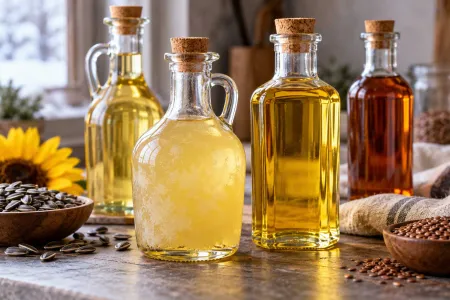
Modern consumers are increasingly reaching for cold-pressed oils, which retain all the valuable nutrients. Unlike refined oils, which undergo aggressive chemical processing, natural cold pressing preserves:
- Unsaturated omega-3 and omega-6 fatty acids – essential for proper body function
- Natural vitamins (especially vitamin E)
- Phytochemicals and antioxidants that protect cells from aging
- Authentic taste and aroma unique to each type of seed
Economic Benefits of Your Own Mill
For farms growing oilseeds, a screw press is not only a way to process your own harvest but also a source of significant additional income. Market analysis shows that:
- Cold-pressed rapeseed oil retails for 25–35 PLN per liter (~5.88–8.23 €)
- First-press sunflower oil sells for 20–30 PLN per liter (~4.70–7.05 €)
- Press cake finds ready buyers at 1,200–1,500 PLN per ton (~282–353 €)
- Return on investment in a professional oil press can occur within 2–3 years
Investing in a cold-press oil mill allows farmers to increase profitability, add value to their crops, and meet the growing consumer demand for healthy, natural oils.
YZYX90-2 Oil Press – The Heart of Your Mill
Technical Specifications
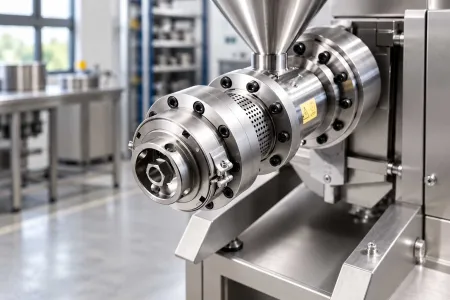
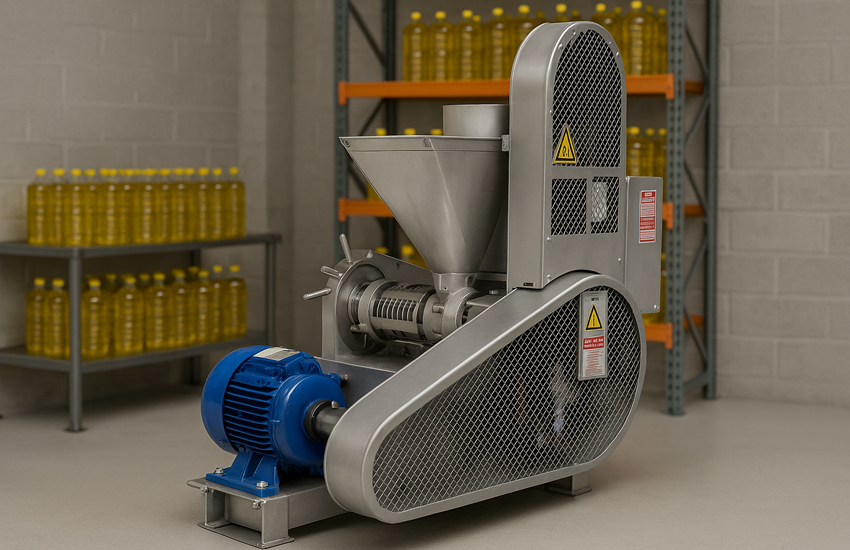
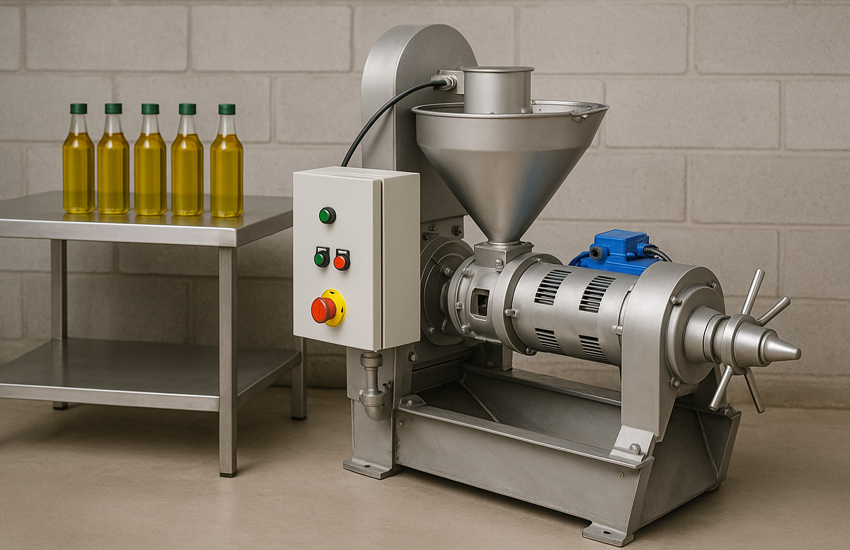
The YZYX90-2 screw press for cold-pressing oil, available at pureoilpress.com, is perfect for small and medium-sized farms. Its technical parameters are impressive:
- Capacity: 2.6–3 tons of seeds per 24 hours
- Pressing method: Natural, 3-stage
- Oil residue in cake: up to 8%
- Motor: 5.5 kW, high-quality
- Power supply: 400V 50Hz
- Dimensions with equipment: 130 x 125 x 120 cm
- Weight: 285 kg
Why Choose This Oil Press?
By selecting the YZYX90-2 from pureoilpress.com, you invest in a machine designed for Polish climate conditions and a wide variety of oilseed crops. Key advantages:
- Durable construction – built for heavy 24-hour continuous operation
- Versatility – suitable for pressing most seeds with over 15% oil content
- Efficiency – maximum oil residue in cake is only 8%
- Safety – equipped with drive belt covers and a control panel
- Hygiene – drip tray and chamber cover made from stainless steel
Which Seeds Can You Press?
The YZYX90-2 handles a wide range of oilseeds:
- Rapeseed – a staple in Polish agriculture, ideal for cold-pressing
- Sunflower – unhulled seeds are best for optimal yield
- Flaxseed – rich in omega-3 fatty acids
- Hemp – increasingly popular, high-value oil
- Mustard – seeds with a characteristic flavor and health benefits
- Sesame – exotic seeds with high oil content and unique taste
It’s important that seeds have moisture below 10% and retain their natural hard shell to ensure optimal pressing performance.
Small Oil Mill Business Plan – Profitability Analysis
Project Description
The investment involves starting a small oil mill using the YZYX90-2 press, capable of processing approximately 364 tons of seeds per year. The goal is to produce high-quality natural oil and press cake as a byproduct. The expected return on investment is 3–5 years, considering realistic market and operational conditions.
Company Overview
The business will operate in the oilseed processing sector, offering cold-pressed natural oil and press cake as animal feed or an energy raw material. The company will be set up as a sole proprietorship, with facilities adapted for production and installation of the necessary equipment.
Product Description
Main product: Cold-pressed natural oil retaining full nutritional value and natural aroma, produced with the YZYX90-2 screw press at up to 3 tons of seeds per day.
Byproduct: Press cake – a high-value raw material used as animal feed or for pellet production.
Production Assumptions
- Daily processing: ~1.4 tons of seeds for 260 working days/year
- Annual processing: ~364 tons of seeds
- Oil yield: ~320 liters per ton of seeds
- Total oil production: ~116,500 liters/year
- Press cake production: ~247 tons/year
Market and Competition Analysis
Growing local demand for natural and eco-friendly oils
Opportunities for collaboration with local farmers and buyers in health food stores and feed wholesalers
Main competition: large industrial oil mills
Competitive advantage: high-quality, locally produced product
Startup Costs (per year)
(Assuming 1 PLN ≈ 0.235 EUR)
| Item | Cost (PLN) | Cost (EUR) |
|---|---|---|
| YZYX90-2 Oil Press | 23,500 | 5,523 € |
| Facility preparation | 5,000–10,000 | 1,175–2,350 € |
| Additional equipment (scales, containers, filters) | 3,000–8,000 | 705–1,880 € |
| Certifications and permits | 2,000–3,000 | 470–705 € |
| Total Startup Cost | 33,500–44,500 | 7,873–10,460 € |
Annual Operating Costs
| Item | Cost (PLN/year) | Cost (EUR/year) |
|---|---|---|
| Electricity | 15,000–20,000 | 3,525–4,700 € |
| Maintenance & service | 3,000–5,000 | 705–1,175 € |
| Packaging & labels | 25,000–35,000 | 5,875–8,225 € |
| Seed purchase | 730,000–1,095,000 | 171,550–257,325 € |
| Other (marketing, logistics, administration) | 10,000–15,000 | 2,350–3,525 € |
| Total Operating Costs | 783,000–1,170,000 | 183,975–274,950 € |
Revenue and Profitability
| Revenue Source | Annual Revenue (PLN) | Annual Revenue (EUR) |
|---|---|---|
| Oil sales | 932,000–1,398,000 | 218,920–328,230 € |
| Press cake sales | 296,400–370,500 | 69,554–87,043 € |
| Total Revenue | 1,228,400–1,768,500 | 288,474–415,273 € |
| Estimated Net Profit | 45,400–985,500 | 10,669–231,543 € |
Return on Investment: 3–5 years, considering:
Conservative production and sales forecasts, accounting for seasonality and operational risks
High costs of raw materials and operations, affecting net cash flow
Potential additional investment in marketing, logistics, and business growth
Differences between accounting profit and cash flow
Action Plan and Timeline
Purchase and install press and equipment – 1–2 months
Adapt facilities and obtain permits – parallel with equipment purchase
Begin production after staff training and testing – within 3 months
Build customer network and marketing – from the first months of operation
Profitability Outlook
The small oil mill project is feasible and has strong potential for success due to a stable local market and a high-quality product. ROI within 3–5 years is realistic, provided raw material costs are optimized and sales are effectively managed.
Step-by-Step Cold-Pressed Oil Extraction Process
Seed Preparation
The quality of cold-pressed oil largely depends on properly preparing the raw material. The process begins with:
Cleaning seeds – removing impurities, stones, and plant debris
Drying – reducing moisture content to below 10%
Quality control – checking seed maturity and condition
Calibration – removing seeds that are too small or damaged
Proper Pressing Process
The YZYX90-2 screw press uses a 3-stage pressing process to maximize oil yield while preserving nutritional value:
Stage I – Preliminary crushing
Seeds are fed into the pressing chamber, where the increasing-diameter screw begins mechanical crushing. Initial oil extraction occurs at this stage.
Stage II – Intensive pressing
Pressure in the chamber rises, leading to intense oil extraction. The process temperature does not exceed 60°C, preserving all valuable nutrients.
Stage III – Final pressing
The last phase ensures maximum oil yield, leaving no more than 8% residual oil in the press cake.
Filtration and Oil Storage
Freshly pressed oil requires proper handling:
Pre-filtration – removal of large solid particles immediately after pressing
Sedimentation – leaving the oil undisturbed for 24–48 hours for natural clarification
Final filtration – passing oil through paper or cloth filters
Storage – in dark, airtight containers in a cool place
Press Cake – a Valuable Byproduct
Nutritional Value of Press Cake
Press cake produced during oil extraction is not waste but a valuable resource. Depending on the seed type, it contains:
High protein content (25–40%)
Residual oil (up to 8%)
Rich amino acid profile
Fiber supporting digestion
Applications of Press Cake
Animal Nutrition:
- Feed for dairy and beef cattle
- Supplement for pigs
- Component in poultry feed
- Fish feed for aquaculture
Food Industry:
- Gluten-free flour for baking
- Additive for bread and grain products
- Ingredient for energy bars and snacks
- Raw material for protein supplements
Gardening & Agriculture:
- Natural organic fertilizer
- Compost additive
- Improves soil structure
Economics of Press Cake Sales
Press cake sales can account for 20–25% of the mill’s total revenue. At market prices of 1,200–1,500 PLN per ton (~282–353 €), annual production of 340 tons from 500 tons of processed seeds can generate an additional 94,000–120,000 € in revenue.
Legal Requirements and Certification
Permits and Registrations
Operating an oil mill requires compliance with specific legal requirements:
Business registration with the appropriate industry code (PKD)
Registration of the plant for processing plant-based products
Notification to the State Sanitary Inspection (if selling retail)
Permit for storage of raw materials and finished products
HACCP System
To ensure the highest product quality, implementing a HACCP system is recommended, including:
Hazard analysis in the production process
Identification of critical control points
Establishment of monitoring procedures
Documentation of all processes
Regular internal audits
Organic Certification
For processing seeds from organic farms, obtaining BIO certification is possible, which significantly increases the product’s market value. Organic oils can sell for 30–50% higher prices than conventional products.
Marketing and Sales of Cold-Pressed Oils
Distribution Channels
Direct sales at the farm
- Highest profit margin and direct customer contact
- Opportunity to build a local brand
- Hosting open days and tastings
Health food stores
- Growing market segment
- Customers aware of nutritional value
- Steady orders and predictable revenue
Fairs and agricultural markets
- Product promotion and brand awareness
- Networking with other producers
- Direct sales to consumers
Online sales
- Wide geographic reach
- Ability to build a base of loyal customers
- Higher margins with an effective marketing strategy
Building a Local Brand
Story and tradition – highlighting the local character of production
Quality and freshness – guaranteeing products straight from the press
Ecology and sustainability – responding to market trends
Transparency of the process – showing the entire production process
Seasonality of Production and Planning
Harvest Schedule for Different Seeds
| Seed Type | Harvest Period |
|---|---|
| Rapeseed | July / August |
| Sunflower | August / September |
| Flax | August / September |
| Mustard | August / September |
Storage and Stock Rotation
Proper seed storage allows the oil mill to operate year-round:
- Temperature- and humidity-controlled storage
- Regular aeration of stocks
- Pest and mold monitoring
- Rotation system – "first in, first out"
Prospects for Oil Mill Development
Expanding the Product Range
Once the basic production is stable, consider:
Specialty oils – chia, hemp, black cumin
Oil blends – combining different oils for specific uses
Cosmetic products – oils for skin and hair care
Dietary supplements – oil capsules in gelatin shells
Automation and Modernization
Automated seed feeding systems
Bottling and labeling lines
Quality control systems with temperature and pressure sensors
Production and sales management software
Collaboration with Other Producers
Agricultural cooperatives – joint investments and marketing
Supplier networks – stable sources of raw material
Producer groups – joint certifications and promotion
Oil Market Trends in 2025
Growing Importance of Functional Oils
Consumers increasingly seek oils with specific health benefits:
- High-linoleic oils (sunflower, rapeseed)
- Oils rich in omega-3 (flax, chia)
- Oils enriched with natural antioxidants
- Oils tailored for specific age groups
Importance of Locality and Short Supply Chains
The "farm to table" trend favors small oil mills:
- Consumers willing to pay more for local products
- Low carbon footprint due to short-distance transport
- Opportunity to meet the producer and see the production process
- Support for the local economy
Technologies Supporting Quality
- New pressing methods that preserve maximum nutrients
- Temperature control systems to prevent overheating of oil
- Filtration techniques that remove impurities without losing nutritional value
- Protective packaging that extends product shelf life
Technical Support from pureoilpress.com
Training and Implementation
Purchasing an oil press from pureoilpress.com is not just buying a machine—it’s comprehensive support:
Operator Training – hands-on familiarization with all press functions
Process Optimization – adjusting parameters for specific seeds
Troubleshooting – quick assistance in case of issues
Business Consulting – support in planning and developing your oil mill
Service and Spare Parts
- Manufacturer’s warranty on all components
- Fast access to spare parts – short delivery times
- Authorized service – repairs carried out by specialists
- Preventive maintenance – extending equipment lifespan
User Community
- Experience-sharing forum for oil press owners
- Industry training – updates on new trends and methods
- Trade fairs and conferences – networking and learning about technological innovations
- Newsletter with tips – regular advice on optimizing production
Summary – Your Path to Success in Oil Pressing
Starting a small oil mill with the YZYX90-2 press from pureoilpress.com is an investment that can significantly increase farm profitability. Growing demand for cold-pressed natural oils, favorable market prices, and technical support from the manufacturer create optimal conditions for launching this business.
Keys to success:
- Proper analysis of the local market and identification of the best sales channels
- Ensuring a constant supply of high-quality oil seeds
- Maintaining product quality at every stage of production
- Building a local brand based on tradition and trust
- Continuously expanding knowledge of market trends and new technologies
The YZYX90-2 screw press is a reliable, efficient machine that will serve your farm for years, providing stable income and the satisfaction of producing healthy food for your local community.
Remember, success in running an oil mill is not only about modern equipment—it’s about passion, commitment, and continuous improvement of your craft. With an oil press from pureoilpress.com, you have all the tools needed to achieve this goal.
Frequently Asked Questions (FAQ)
How many seeds do I need to run a profitable oil mill?
To make a mill with the YZYX90-2 press profitable, it is recommended to process at least 300–500 tons of seeds per year. This corresponds to cultivating approximately 150–200 hectares of rapeseed or securing raw material supply through contracts with farmers.
Is the YZYX90-2 oil press suitable for all types of oil seeds?
The press works best with seeds containing more than 15% oil and less than 10% moisture, with a natural hard shell. It is ideal for rapeseed, unhulled sunflower, flax, mustard, hemp, and sesame. Soft seeds, like hulled sunflower or pumpkin, require higher pressing temperatures, achievable via pre-roasting or special press settings.
What are the monthly operating costs of the oil press?
For 20 working days per month (8 hours per day), the YZYX90-2 press has estimated monthly costs of €430–€645, including:
| Cost Component | PLN (approx.) | EUR (approx.) |
|---|---|---|
| Electricity | 1,200–1,500 | 260–320 |
| Maintenance & spare parts | 300–500 | 65–110 |
| Packaging for oil | 500–1,000 | 110–215 |
| Total | 2,000–3,000 | 430–645 |
Actual costs may vary depending on local energy prices and press usage intensity.
How long can cold-pressed oil and cake be stored?
Cold-pressed oil stored in dark, sealed containers at 15–20°C retains freshness for 12–18 months. Limiting exposure to light and oxygen is essential.
The cake should be used within 3–6 months after production, as residual oil can go rancid. Store it in dry, ventilated spaces such as bags or silos.
Do I need special permits to sell oil from my own mill?
Yes, running an oil mill requires:
- Business registration with the correct PKD code (10.41.Z – Production of vegetable and animal oils and fats)
- Registration in the plant registry for processing plant-based products
- Notification to the State Sanitary Inspection if selling directly to consumers
- Implementing HACCP is recommended for quality assurance and to facilitate access to larger retail networks.