
Table of Contents
- Why Make Oilseed Flour at Home?
- The Fascinating World of Oilseeds Perfect for Grinding
- Traditional vs. Modern Techniques for Grinding Oilseeds
- Traditional vs. Modern Techniques for Grinding Oilseeds
- Practical Aspects of Preparing Seeds for Grinding
- Culinary Applications of Oilseed Flour
- The Art of Storing Homemade Oilseed Flour
- Economic Aspects of Homemade Oilseed Flour Production
- Choosing the Ideal Mill – A Buyer’s Guide
- Inspiring Recipes Using Homemade Oilseed Flour
- Solving Common Oilseed Grinding Issues
- The Future of Home Oilseed Grinding
- Summary – An Investment in Health, Savings, and the Environment
- Frequently Asked Questions
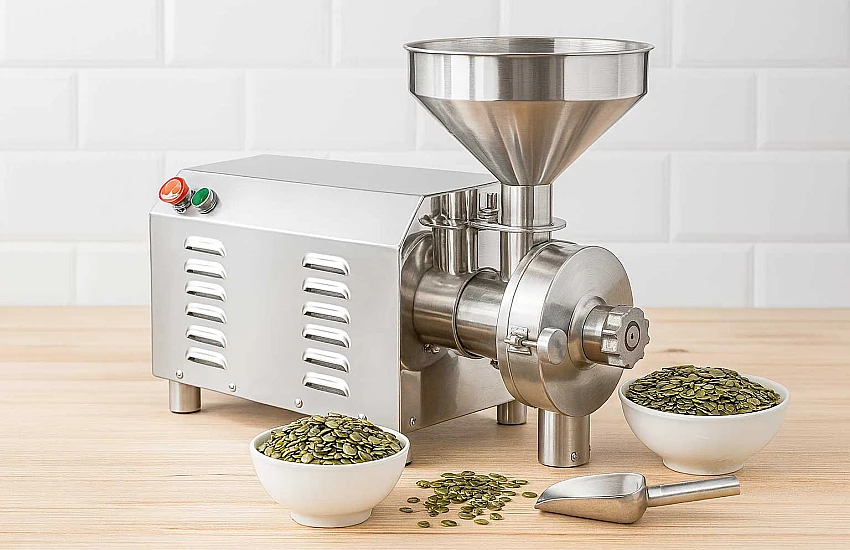
- Stable construction, compact dimensions, and ease of cleaning and maintenance.https://www.pureoilpress.com/en/product/category/grain-and-seed-grinders
In an era of growing health awareness and environmental care, more and more people are looking for ways to produce healthy ingredients right in their own kitchens. One of the most valuable and practical skills is grinding oilseeds into flour. Did you know you can make coconut, pumpkin, almond, or black cumin flour at home? In this comprehensive guide, you will learn everything about producing oilseed flours at home.
Why Make Oilseed Flour at Home?
Unmatched Health Benefits of Homemade Seed Flour
Oilseed flour is a true treasure trove of nutrients, surpassing traditional wheat flour in every way. It contains 2–3 times more plant-based protein than wheat flour, providing the body with all essential amino acids. Additionally, it is rich in healthy fats, including valuable omega-3 and omega-6 fatty acids in optimal ratios, supporting brain function and cardiovascular health.
The dietary fiber in this flour acts as a natural regulator of the digestive system, helping to maintain a healthy gut microbiome. Its abundance of minerals such as magnesium, zinc, iron, and calcium makes oilseed flour a functional dietary ingredient. B vitamins and vitamin E provide antioxidant effects, protecting cells from the harmful impact of free radicals.
Economic Aspects of Homemade Production
By producing seed flour at home, you can achieve significant financial savings. Ready-made almond or coconut flour in stores often costs between 30 and 50 PLN per kilogram. Buying seeds in bulk and grinding them yourself can reduce the cost by up to 70%. This means that investing in the right equipment pays off after just a few months of regular use.
Zero Waste in Practice
Grinding the cake left after oil extraction is a perfect example of the zero-waste philosophy. If you own an oil press, you can fully utilize all by-products, transforming them into valuable flour rich in protein and fiber. This way, from a single batch of seeds, you obtain both fresh, aromatic oil and nutritious flour for a variety of culinary applications.
.png)
The Fascinating World of Oilseeds Perfect for Grinding
Sunflower Seeds – A Solid Foundation for Homemade Flour
Sunflower seeds are an excellent starting point for those beginning their journey with home grinding. They are easily accessible, reasonably priced, and have a neutral flavor that blends perfectly with a variety of baked goods. Their high vitamin E and magnesium content makes them a valuable addition to the daily diet, and their good shelf life after grinding allows for preparing larger batches.
Sunflower flour works exceptionally well in gluten-free breads, giving them a delicate, nutty aroma. It also complements cakes and muffins, enhancing their nutritional value. You can add it to smoothies as a natural thickener and protein source, or use it in coatings for meat and vegetables, creating crispy, golden crusts.
Pumpkin Seeds – Green Gold Packed with Nutrients
Grinding pumpkin seeds produces flour with a distinctive, slightly nutty flavor and a hint of sweetness. Pumpkin seeds are a true health powerhouse, containing the highest zinc concentration among all seeds, essential for proper immune function. They are also a natural source of iron, making them particularly valuable for those on plant-based diets.
Regular consumption of pumpkin seed flour supports prostate health in men due to its phytosterol content. Additionally, pumpkin seeds have traditionally been known for their anti-parasitic properties. Their mild flavor makes the resulting flour perfect for both sweet and savory baked goods.
Flaxseed – Omega-3 in a New Form
Ground flaxseed creates flour with exceptional health and culinary properties. It contains the highest concentration of omega-3 fatty acids among oilseeds, which are crucial for heart and brain health. Its natural emulsifying properties allow flax flour to replace eggs in vegan baking while helping regulate blood sugar levels.
Due to the delicate structure of omega-3s, flaxseed flour requires careful storage and should be consumed soon after grinding. Its lightly nutty flavor with a fresh note pairs perfectly with fruit smoothies and yogurts.
Almonds – Aristocratic Elegance in the Home Kitchen
Almond flour is the foundation of many exquisite desserts and gluten-free baked goods. Its delicate, sweet flavor with a hint of vanilla makes it highly prized in confectionery. Rich in vitamin E and magnesium, it also has a long shelf life after grinding, making it practical for home use.
Fresh, homemade almond flour surpasses store-bought versions in flavor, as it retains the full aroma and essential oils. It is essential for preparing authentic macarons, gluten-free cakes, and delicate sponge cakes. Its creamy texture after grinding creates a perfect base for desserts and creams.
Nigella Seeds – An Oriental Accent in European Cuisine
Nigella, also known as black cumin, when ground produces an intensely aromatic flour with a characteristic, spicy flavor. Its anti-inflammatory and immune-boosting properties make it a valuable functional addition to the daily diet. The distinctive, exotic aroma makes nigella flour ideal for breads and flatbreads with a southern flair.
The flavor intensity of nigella means that small amounts can significantly enhance the taste profile of baked goods. Traditionally used in Middle Eastern cuisine, it is increasingly finding its place in contemporary European kitchens as a natural flavor enhancer.
.png)
Traditional vs. Modern Techniques for Grinding Oilseeds
Home Grinding Methods and Their Limitations
A standard coffee grinder can be used to grind small portions of seeds, but it has significant limitations. It heats up quickly during operation, which can destroy delicate nutrients, especially omega-3 fatty acids. There is also a high risk of clogging with very oily seeds, and the limited capacity of around 50 grams per batch makes it suitable only for occasional use.
A powerful food processor handles oilseeds slightly better due to its larger capacity (up to 200 grams) and improved motor cooling. It also allows some control over grind size by adjusting processing time. However, the risk of clogging still exists during longer grinding sessions, particularly with very oily seeds like walnuts or macadamia.
A Revolutionary Solution – Specialized Oilseed Grinder
The biggest challenge in grinding oilseeds is their high fat content, which causes clogging in traditional devices. Therefore, investing in a specialized oilseed grinder designed to handle these challenges is crucial.
These machines feature cast iron grinding discs, resistant to high temperatures and capable of producing an even grind without clogging. With adjustable particle size from 60 to 200 micrometers, users can precisely tailor the final product for specific culinary applications.
Professional Oilseed Grinder – A Revolution in the Home Kitchen
Innovative Technical Solutions
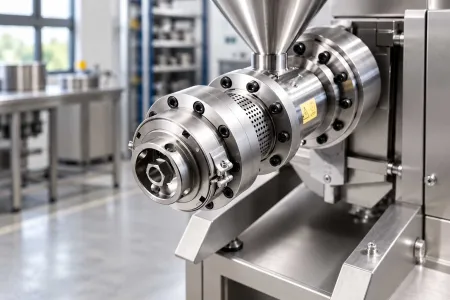
Specialized oilseed grinders stand out due to their use of cast iron grinding discs, which provide reliability and durability. Cast iron is highly resistant to the high temperatures generated during grinding while ensuring uniform particle size without clogging the mechanism.
Adjustable particle size is another key feature of a professional grinder. Precise control over grind size from 60–200 micrometers allows for various textures—from the finest flour ideal for baking, to coarse sprinkles for desserts, to thicker flakes perfect for salads and granola.
High efficiency, at 30–40 kilograms per hour, makes professional grinders ideal not only for larger families but also for small farms, health food producers, or catering businesses. While home devices grind only a few hundred grams per hour, professional equipment allows preparation of monthly flour supplies in just a few hours.
Zero Waste Philosophy in Practice
One of the greatest advantages of a specialized grinder is its ability to process seed cakes left after oil extraction. This makes it a perfect element of a zero-waste kitchen system. After pressing sunflower, pumpkin, flax, or other oilseeds, the remaining cake can be fully utilized, transforming it into nutrient-rich flour high in protein and fiber.
With this approach, one batch of seeds produces both fresh, aromatic cold-pressed oil and nutritious flour for various culinary uses. This is a true implementation of the zero-waste principle, where no part of the raw material is wasted.
Variety of End Products
A professional oilseed grinder opens unlimited possibilities for creative use of different seeds. You can prepare fine coconut flour for Asian desserts, aromatic nigella flour for Middle Eastern breads, creamy nut flours for French pastries, or coarse pumpkin seed flour for autumn baking.
The adjustable particle size also allows for creating diverse textures from the same raw material. Sunflower seeds can yield fine flour for gluten-free bread, coarse sprinkles for salads, or thicker flakes for homemade granola.
.png)
Traditional vs. Modern Techniques for Grinding Oilseeds
Home Grinding Methods and Their Limitations
A standard coffee grinder can be used to grind small portions of seeds, but it has significant limitations. It heats up quickly during operation, which can destroy delicate nutrients, especially omega-3 fatty acids. There is also a high risk of clogging with very oily seeds, and the limited capacity of around 50 grams per batch makes it suitable only for occasional use.
A powerful food processor handles oilseeds slightly better due to its larger capacity (up to 200 grams) and improved motor cooling. It also allows some control over grind size by adjusting processing time. However, the risk of clogging still exists during longer grinding sessions, particularly with very oily seeds like walnuts or macadamia.
A Revolutionary Solution – Specialized Oilseed Grinder
The biggest challenge in grinding oilseeds is their high fat content, which causes clogging in traditional devices. Therefore, investing in a specialized oilseed grinder designed to handle these challenges is crucial.
These machines feature cast iron grinding discs, resistant to high temperatures and capable of producing an even grind without clogging. With adjustable particle size from 60 to 200 micrometers, users can precisely tailor the final product for specific culinary applications.
Professional Oilseed Grinder – A Revolution in the Home Kitchen
Innovative Technical Solutions
Specialized oilseed grinders stand out due to their use of cast iron grinding discs, which provide reliability and durability. Cast iron is highly resistant to the high temperatures generated during grinding while ensuring uniform particle size without clogging the mechanism.
Adjustable particle size is another key feature of a professional grinder. Precise control over grind size from 60–200 micrometers allows for various textures—from the finest flour ideal for baking, to coarse sprinkles for desserts, to thicker flakes perfect for salads and granola.
High efficiency, at 30–40 kilograms per hour, makes professional grinders ideal not only for larger families but also for small farms, health food producers, or catering businesses. While home devices grind only a few hundred grams per hour, professional equipment allows preparation of monthly flour supplies in just a few hours.
Zero Waste Philosophy in Practice
One of the greatest advantages of a specialized grinder is its ability to process seed cakes left after oil extraction. This makes it a perfect element of a zero-waste kitchen system. After pressing sunflower, pumpkin, flax, or other oilseeds, the remaining cake can be fully utilized, transforming it into nutrient-rich flour high in protein and fiber.
With this approach, one batch of seeds produces both fresh, aromatic cold-pressed oil and nutritious flour for various culinary uses. This is a true implementation of the zero-waste principle, where no part of the raw material is wasted.
Variety of End Products
A professional oilseed grinder opens unlimited possibilities for creative use of different seeds. You can prepare fine coconut flour for Asian desserts, aromatic nigella flour for Middle Eastern breads, creamy nut flours for French pastries, or coarse pumpkin seed flour for autumn baking.
The adjustable particle size also allows for creating diverse textures from the same raw material. Sunflower seeds can yield fine flour for gluten-free bread, coarse sprinkles for salads, or thicker flakes for homemade granola.
.png)
Practical Aspects of Preparing Seeds for Grinding
Key Steps in Preparing Raw Material
Proper preparation of seeds for grinding is crucial for the quality of the final product. The process begins with thorough sorting, removing all damaged, moldy, or discolored seeds. Even a single spoiled seed can impart an unpleasant taste to the entire batch of flour.
The next essential step is rinsing the seeds in cold water to remove dust, debris, and potential contaminants. After washing, it is vital to dry the seeds completely, as moisture can cause clogging in the grinder and accelerate spoilage. Seeds can be dried naturally in a ventilated area or gently in an oven at a temperature not exceeding 40°C.
An optional final step is sifting through a fine mesh to remove remaining debris and ensure uniformity of the raw material for grinding.
Roasting to Enhance Flavor
Lightly roasting seeds before grinding is a traditional technique that significantly enhances the flavor and aroma of the flour. This process intensifies natural aromas, giving them a deeper, nuttier character. Additionally, roasting reduces moisture, making grinding easier and increasing the shelf life of the final product.
Roast seeds at temperatures not exceeding 150°C for about 10–15 minutes, stirring constantly to ensure even heating. Excessive heat can destroy delicate nutrients, particularly omega-3 fatty acids and fat-soluble vitamins.
Optimal Grinding Techniques for Different Seeds
Sunflower Seeds – Ideal for Beginners
Sunflower seeds are an excellent choice for beginners due to their relative ease of processing. Grind at room temperature for 2–3 minutes to achieve medium-fine flour. The finished product can be stored for up to three months in an airtight container in the refrigerator.
Sunflower flour has a neutral taste with a subtle nutty note, making it a versatile ingredient for various baked goods. Its natural lecithin content acts as a natural emulsifier in cakes and breads.
Pumpkin Seeds – Gentle Approach
Pumpkin seeds require a more delicate approach due to their unique structure. Light roasting is recommended to facilitate grinding and enhance flavor. Grind in short cycles with breaks to prevent overheating and preserve delicate nutrients.
Keep the temperature below 40°C during grinding, and store the resulting flour for a maximum of two months in the refrigerator. Its sweet, nutty flavor pairs perfectly with autumnal baked goods and desserts.
Flaxseed – Special Technique for Unique Properties
Flaxseed, due to its high content of delicate omega-3 fatty acids, requires particularly careful grinding. Process in small batches of up to 100 grams, and use the flour immediately or store for no more than one week in the refrigerator.
Flaxseed flour has a unique gelling property when mixed with water, making it an excellent egg substitute in vegan baking. One tablespoon of flaxseed flour mixed with three tablespoons of water and left for 15 minutes forms a consistency similar to an egg.
Almonds – The Royal Standard of Home Grinding
Grinding almonds requires patience and proper technique to achieve the delicate, creamy texture characteristic of high-quality almond flour. Grind at moderate speeds, avoiding over-processing, which can release oil and turn the product into almond paste instead of flour.
Fresh homemade almond flour has a much more intense flavor than commercial products because it retains the full range of natural essential oils. It can be stored in the refrigerator for up to four months, and its versatility makes it indispensable in the kitchen of any healthy baking enthusiast.
.png)
Culinary Applications of Oilseed Flour
A Revolution in Gluten-Free Baking
Oilseed flour completely transforms the perspective on gluten-free baking, providing not only exceptional flavor but also significantly increasing nutritional value. Unlike traditional starch-based gluten-free flours, seed flours contribute high-quality protein and healthy fats to baked goods.
Gluten-free bread enriched with pumpkin seed flour gains not only a characteristic sweet flavor but also a beautiful golden color. Optimal proportions are 40% pumpkin seed flour, 30% rice flour, 20% potato starch, and 10% psyllium flour, which ensures the proper elasticity of the dough.
Almond flour in muffins can replace up to 50% of traditional flour, adding moisture and a delicate flavor while boosting protein content and extending freshness. Its natural preservative properties help baked goods remain fresh significantly longer.
Next-Generation Smoothies and Protein Shakes
Ground oilseeds are a revolutionary addition to beverages, enhancing nutritional value and giving a creamy texture without the need for dairy products. Two tablespoons of sunflower seed flour combined with a banana, 300 ml of plant-based milk, a spoonful of honey, and a handful of spinach create a balanced meal rich in protein, healthy fats, and minerals.
Flaxseed flour acts as a natural thickener and source of omega-3 fatty acids in smoothies, while its delicate, nutty flavor pairs perfectly with fruits and vegetables. Its gelling properties also give the drink a silky, smooth consistency.
Innovative Breading and Coatings
Seed flour opens new possibilities for creating crispy, flavorful coatings with much higher nutritional value than traditional breadcrumbs. A coating made from pumpkin seed flour, combined with cornmeal and aromatic spices, creates a golden, crunchy crust ideal for fish, poultry, or vegetables.
This coating not only adds unique flavor but also provides valuable zinc, iron, and plant-based protein. Additionally, the natural fats in seed flour help maintain crispiness much longer than conventional coatings.
Desserts and Sweets on a New Level
Homemade almond flour is the secret to perfect macarons with intense flavor and delicate texture. Fresh ingredients and control over particle size allow you to achieve exactly the consistency required for each dessert. Fine almond flour works well in light sponge cakes, while slightly coarser flour gives macarons their characteristic texture.
Being able to adjust the grind of seed flour opens new opportunities for creating desserts with varied textures. From creamy mousses to crunchy toppings – everything depends on the chosen grind and preparation technique.
.png)
The Art of Storing Homemade Oilseed Flour
Basic Principles for Maintaining Freshness
Oilseed flour, due to its high natural fat content, requires special care during storage. The ideal storage temperature is 4–8°C, which means keeping it in the refrigerator to maintain optimal quality. Temperature fluctuations are particularly harmful, as they accelerate fat oxidation.
Airtight containers made of glass or high-quality plastic protect against moisture and odors. Metal should be strictly avoided, as it can catalyze oxidation. Vacuum bags are an excellent solution for long-term storage, especially for larger quantities of flour.
Labeling with the production date is crucial since different types of flour have varying shelf lives. Relative humidity should not exceed 60%, so in humid environments, moisture absorbers are recommended.
Shelf Life of Different Flours and Signs of Spoilage
Sunflower seed flour has the longest shelf life among oilseed flours. It can be stored in the refrigerator for up to three months and in the freezer for up to a year. Signs of spoilage include a bitter taste and mold growth on the surface.
Pumpkin seed flour retains freshness for about two months in the fridge and up to ten months in the freezer. Spoilage is indicated by a musty smell and a color change from golden to brown.
Flaxseed flour is the most delicate product and should be consumed within a week of grinding due to its high omega-3 content. In the freezer, it can be stored for up to six months. Signs of spoilage include yellowing, darkening, and a characteristic unpleasant odor.
Almond flour, thanks to its natural vitamin E content, stays fresh the longest—up to four months in the fridge and up to eighteen months in the freezer. Spoilage manifests as a bitter taste similar to that of old nuts.
Economic Aspects of Homemade Oilseed Flour Production
Detailed Cost Analysis and Savings
Comparing homemade production costs with store-bought products reveals significant savings. Almond flour purchased in stores costs around 45 PLN per kilogram, while grinding almonds at home costs about 25 PLN per kilogram. This results in a 20 PLN saving per kilogram, a 44% reduction in cost.
Coconut flour in retail costs around 35 PLN per kilogram, whereas coconut flakes for grinding can be bought for 15 PLN per kilogram. This represents a 20 PLN saving per kilogram, or 57% of the original price. Pumpkin seed flour is another example of substantial savings—store price 40 PLN per kilogram vs. 18 PLN per kilogram for seeds, a 22 PLN savings, or 55%.
Return on Investment and Long-Term Benefits
With regular use, an oilseed grain mill pays for itself within two to four months of intensive use. A family consuming an average of 5 kilograms of various flours per month can save 1200–1500 PLN annually, far exceeding the cost of a professional mill.
Long-term benefits go beyond financial savings. Controlling ingredient quality, maintaining product freshness, and experimenting with flavors create a new level of quality in the home kitchen. Additionally, processing press cakes from an oil press aligns with the zero-waste philosophy, offering both economic and ecological advantages.
Choosing the Ideal Mill – A Buyer’s Guide
Key Technical Parameters Determining Quality
Motor power is a fundamental factor determining the effectiveness of oilseed grinding. A minimum of 2.2 kW is essential for working efficiently with fatty seeds. A weaker motor will overheat and strain, negatively affecting product quality. Overload protection and quiet operation under 70 decibels are additional advantages for comfortable use.
A grinding system based on cast iron grinding discs is the best solution for oilseeds. Cast iron provides excellent resistance to high temperatures and ensures uniform grinding without clogging. Adjustable particle size and ease of cleaning and maintenance significantly enhance daily practicality.
An output of 30–40 kilograms per hour is ideal for home or semi-professional use, allowing preparation of large quantities of different flours without hours of work. Stable performance during extended operation reflects the professional construction of the device.
Safety and Ergonomics
Safety is a top priority when choosing any kitchen appliance. An emergency stop switch, covers for moving parts, and a stable vibration-resistant construction are basic requirements. Ergonomic features such as a convenient feed chute, easy access to the grinding chamber, and practical transport handles greatly enhance user comfort.
Recommended Solution
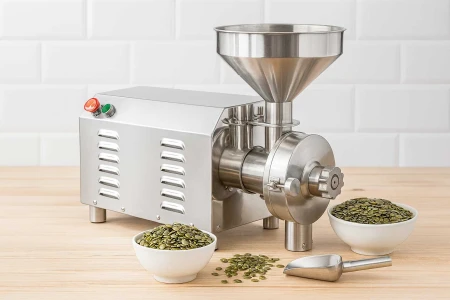
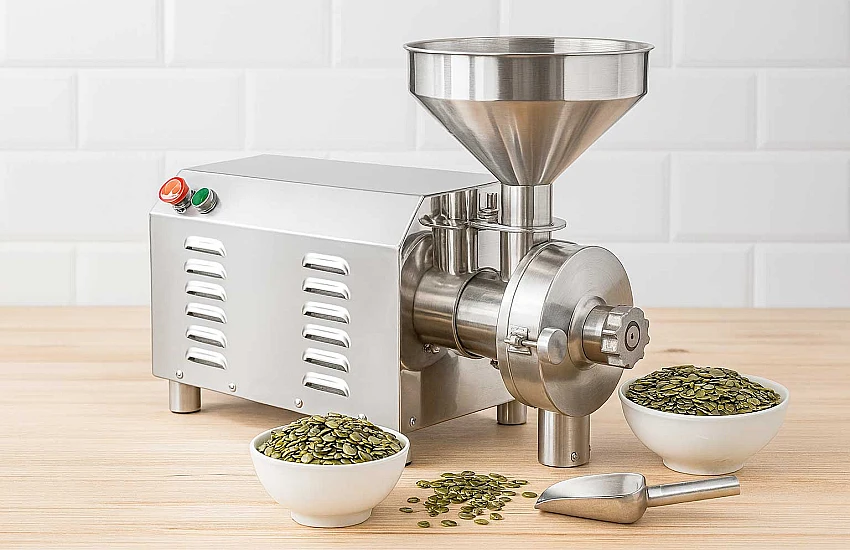
After a thorough analysis of available market options, a 30–40 kg/h oilseed grain mill is highly recommended. It combines all the essential features of a professional device. Cast iron grinding discs ensure durability and high-quality grinding, while adjustable particle size from 60 to 200 micrometers allows full control over the final texture.
A powerful 2.2 kW motor handles all types of oilseeds, from delicate sunflower seeds to hard nuts. Compact dimensions of 60x29x45 cm allow placement in any kitchen, and its professional construction makes it suitable for both intensive home use and semi-commercial operations.
This model is also perfect for processing press cakes from an oil press, making it an ideal component of a comprehensive zero-waste system in the home kitchen. High output allows the preparation of large quantities of various flours in a short time, saving both time and energy.
Inspiring Recipes Using Homemade Oilseed Flour
Gluten-Free Multiseed Bread – Full of Flavor and Nutrients
This exceptional recipe combines flours from various oilseeds, creating bread with a unique taste and impressive nutritional value.
200 g sunflower seed flour forms the base, providing a mild, nutty flavor.
150 g rice flour adds lightness.
100 g pumpkin seed flour contributes a characteristic sweetness and a beautiful golden color.
50 g flaxseed flour enriches the bread with valuable omega-3 fatty acids and acts as a natural emulsifier.
10 g fresh yeast, 15 g sea salt, 350 ml warm water, and 2 tablespoons cold-pressed oil complete the composition.
Mix all dry ingredients, then add water with dissolved yeast. Incorporate the oil and knead the dough, leaving it to rise for one hour. Bake at 180°C for 45 minutes.
Oat and Almond Cookies – Healthy Sweet Treats
150 g oats combined with 100 g fresh almond flour form a base for aromatic cookies.
80 ml multiflower honey and 60 ml coconut oil provide natural sweetness and moisture.
50 g raisins add juiciness.
1 teaspoon Ceylon cinnamon completes the flavor.
Mix dry ingredients, add wet ingredients, form balls, and bake at 180°C for 15–18 minutes. The cookies have a delicate, crispy surface and a soft interior with a rich almond flavor.
Sunflower Seed Protein Smoothie – Energy for the Whole Day
Two tablespoons of fresh sunflower seed flour, one ripe banana, 200 ml oat milk, one tablespoon peanut butter, and one teaspoon acacia honey create a nutritious beverage. Add a handful of ice cubes for a refreshing texture.
Blend all ingredients for 60 seconds until smooth. The smoothie provides about 25 grams of protein and is ideal as a morning meal or post-workout recovery drink.
Solving Common Oilseed Grinding Issues
Common Challenges and Proven Solutions
Clogging is the most frequent problem when grinding oilseeds. Causes include high seed moisture, prolonged grinding without breaks, and insufficient mill power. Solutions: dry seeds thoroughly, take breaks every 2–3 minutes, and use a dedicated oilseed mill with a strong motor and cast iron grinding discs.
Uneven grinding may result from dull blades, incorrect speed, or processing too much at once. Regular maintenance, adjusting settings for the specific seed, and grinding in appropriate portions ensure uniform particle size.
Overly coarse flour is caused by incorrect particle size settings, too short grinding time, or worn grinding discs. Professional mills with adjustable granulation allow precise control over flour texture, while regular monitoring of grinding elements ensures consistent quality.
The Future of Home Oilseed Grinding
Growing Trends in Healthy Food
The alternative flour market grows by 15–20% annually, reflecting increasing consumer interest in healthy and functional foods. Rising demand for gluten-free, high-protein, and functional ingredients creates an ideal environment for home oilseed grinding.
Consumers are becoming more aware of ingredient sources and quality, motivating more people to produce basic kitchen staples at home. Home oilseed milling perfectly aligns with this trend, providing full control over product quality and freshness.
Technological Innovations in Mills
New oilseed mills include advanced cooling systems to protect delicate nutrients during grinding. Automatic particle size adjustment and real-time temperature monitoring are already featured in the latest models.
Future developments may include mobile app integration for remote control, notifications, and AI-driven adjustments to optimize grinding parameters for each seed type and desired texture.
Sustainability and Ecology
The zero-waste philosophy is increasingly important, and home oilseed grinding fits perfectly. Utilizing all plant parts, reducing packaging, producing locally, and supporting local seed producers are elements of a sustainable nutrition system.
Environmentally conscious consumers increasingly prefer solutions that minimize environmental impact. Home milling reduces transport needs, packaging, and ensures full utilization of raw materials.
Summary – An Investment in Health, Savings, and the Environment
Home oilseed milling offers multiple benefits:
Health: Fresh, preservative-free ingredients, full control over quality, and the ability to diversify the diet. Regular consumption provides high-quality plant protein, healthy fats, vitamins, and minerals in an easily absorbable form.
Economics: Savings of 40–60% compared to store-bought specialty flours. The mill pays for itself in 2–4 months and generates long-term savings. Families using alternative flours can save hundreds annually.
Ecology: Reduced waste through zero-waste practices, less packaging, support for local producers, and a smaller carbon footprint. Press cakes can be converted into nutrient-rich flour, maximizing the value of each seed.
A professional oilseed mill transforms home kitchens, introducing a new era of conscious, healthy, and economical food production. A 30–40 kg/h mill with cast iron grinding discs and adjustable granulation provides fresh, healthy oilseed flour year-round for the whole family.
Start your journey into home flour production today and discover a new dimension of cooking and baking!
Frequently Asked Questions
Can all types of oilseeds be ground in one mill?
Yes. A specialized oilseed mill with cast iron discs handles all oilseed types, from delicate sunflower seeds to hard pumpkin seeds and very fatty nuts. Adjust granulation and speed, and rinse the mill with dry rye flour when switching seeds to avoid flavor mixing.
How long can homemade oilseed flour be stored?
Shelf life depends on seed type and storage conditions. Sunflower and pumpkin seed flours can be kept up to 3 months in the fridge in airtight containers. Flaxseed flour should be consumed within a week. Almond flour stays fresh up to 4 months in the fridge. Freezing can triple shelf life with minor texture changes.
How much does it cost to produce one kilogram of flour compared to buying it?
Home production is significantly cheaper. Almond flour costs about 25 PLN/kg at home versus 45 PLN/kg in stores—a 44% saving. Pumpkin seed flour costs 18 PLN/kg at home versus 40 PLN in stores—a 55% saving. The mill pays for itself within 2–4 months of regular use.
Can press cakes from an oil press be used in the mill?
Yes. Press cakes can be fully processed into nutrient-rich flour, providing protein and fiber. This exemplifies zero-waste: from one batch of seeds, you get both fresh oil and versatile flour.
What are the key parameters for choosing an oilseed mill?
Minimum 2.2 kW motor for effective grinding.
Cast iron grinding discs for durability and clog-free operation.
Adjustable granulation (60–200 micrometers) for full control over flour texture.
30–40 kg/h capacity for home or semi-professional use.