
Table of Contents
- The Aroma of Fresh Oil - What the Nose Actually Detects
- The Anatomy of Smell - Why the Aroma of Fresh Oil Acts So Powerfully
- Aroma and Appetite - What Happens in the Body
- The Aroma Profiles of the Most Popular Freshly Pressed Oils
- Fresh vs Aged - the Role of Time and Storage
- Pressing on Your Own - How to Experience Fresh Aroma in Daily Life
- Sensory Quality as a Marketing Tool for Oil Mills
- A Kitchen Built on Fresh Oils - Practical Compositions
- Frequently Asked Questions
The first few seconds after opening a bottle of freshly pressed oil are a short but remarkably intense lesson in sensory perception. Within a couple of breaths, the nose picks up dozens of volatile compounds, the brain builds a full mental picture of the product, and the appetite begins to work before the spoon ever touches the lips. This phenomenon is one of the most fascinating intersections of organic chemistry and human psychology, and at the same time it is a cornerstone of quality in traditional oil pressing. The fresh aroma of pressed oil is not an accessory to the product - it is its most reliable witness. It speaks of the origin of the raw material, the pressing technique, the way the oil has been stored, and even how long it has waited in its container before reaching the table.
Understanding the psychology of oil aroma is not just an interesting topic for food enthusiasts. It is also a practical tool for every oil mill, every artisan producer, and every person who has ever wondered why two seemingly identical oils can deliver such different experiences on the plate and in the sensory memory. Fresh oil straight from the press smells different from aged oil, different from refined oil, and entirely different from its industrial supermarket counterpart. The reason for this difference lies in a very precise, very fleeting chemistry that unfolds in the first minutes, hours, and days after the seed is pressed.
The Aroma of Fresh Oil - What the Nose Actually Detects
The aroma of oil is not a simple phenomenon. It is a composition made up of hundreds of volatile compounds released from the cells of the seeds at the moment they are crushed and pressed. During pressing, the plant tissues are broken down and substances previously locked inside cell membranes escape into the oil and into the air. Only then can a person actually perceive them. What we experience as "the smell of fresh oil" is in fact a cloud of molecules suspended in the air above its surface - aldehydes, alcohols, ketones, terpenes, esters, and other groups of chemical compounds whose specific composition depends on the plant species, the way the seed was prepared, and the parameters of the pressing process.
Volatile Compounds Released During Pressing
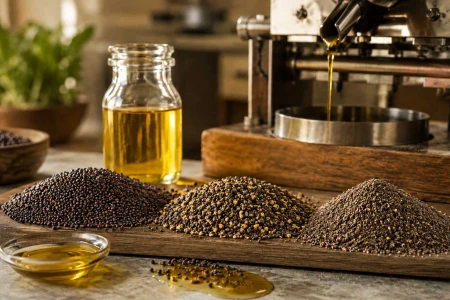
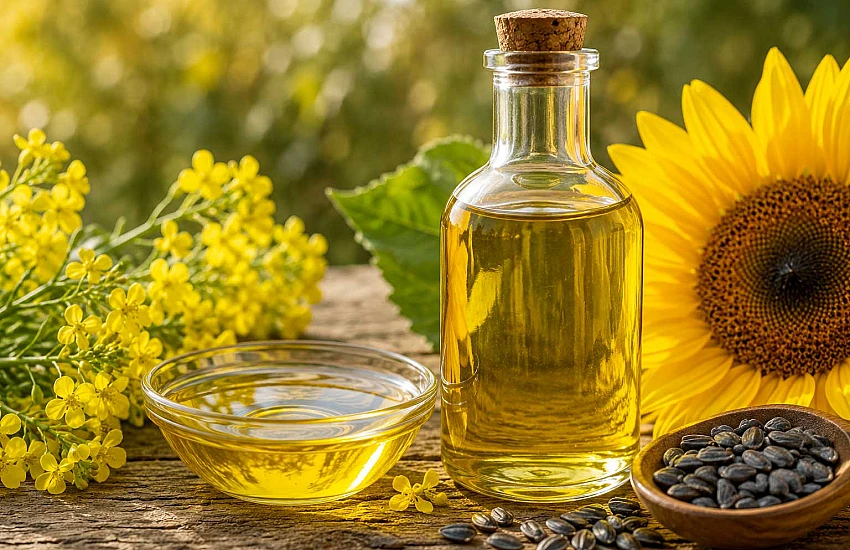
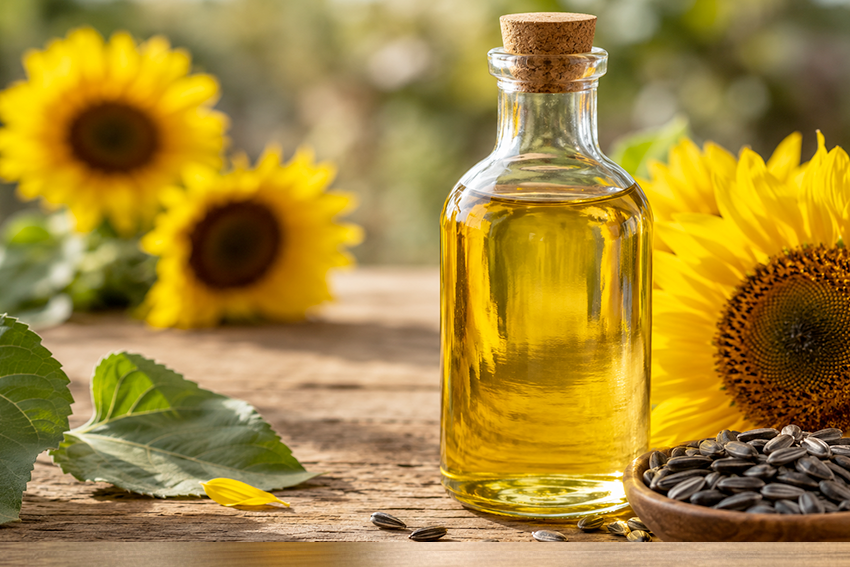
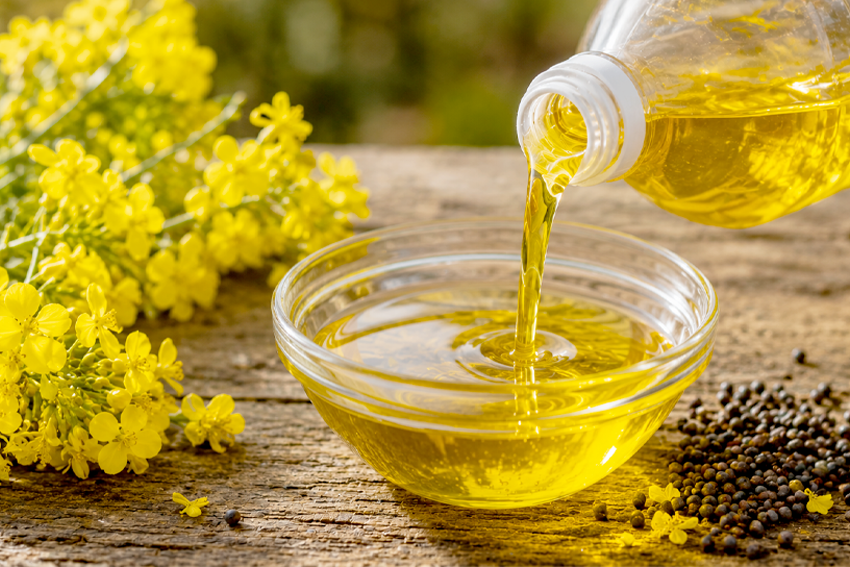
Every seed has its own characteristic "aromatic fingerprint". Linseed oil is dominated by aldehydes and ketones that deliver notes of freshly cut grass and a green, cereal background. Rapeseed oil releases sulfur compounds typical of the entire brassica family - these are responsible for the gently cabbage-like tone that, for many people, is the trademark of a fresh, unrefined rapeseed oil. Sunflower oil in its raw form smells grainy and slightly nutty, with a subtle floral undercurrent. Pumpkin seed oil, when pressed from roasted seeds, carries a deeply caramel, almost coffee-like aroma. Sesame oil, especially from roasted seeds, offers a toasted, gingerbread-like aroma whose source is the Maillard reactions triggered during thermal treatment.
Even within a single species, the smell can vary. Oil from brown flax seeds has a heavier, more nutty character than oil from golden flax seeds, which is more delicate and grassy. Rapeseed oil from low-erucic varieties smells gentler than traditional winter rapeseed oil with its full composition. A thoughtful producer chooses the raw material with the expected aroma profile in mind, much as a winemaker selects grape varieties.
How Temperature Changes the Aroma Profile
The pressing method has a decisive influence on what the nose detects after opening the bottle. Cold pressing, in which the oil does not exceed roughly forty degrees Celsius, preserves the subtle, fresh, almost "green" notes of the raw material. The aroma is delicate yet remarkably authentic - it is the essence of the seed itself. Hot pressing, in which the seed is heated before extraction, generates an entirely different profile. High temperature triggers Maillard reactions and sugar caramelization, bringing forward notes of gingerbread, roasted nut, bread, and sometimes even chocolate. The same seed can smell completely different depending on whether it has been pressed cold or hot.
From the perspective of aroma psychology, the difference between cold-pressed and hot-pressed oil is the difference between refreshment and comfort. A fresh, green oil from cold pressing works like a deep breath of spring air - it stimulates, opens the appetite for fresh, raw, vegetable-based foods. Oil from hot pressing has a soothing effect, evoking baked bread, the warmth of the home, the festive meal. A professional press that allows work in both modes therefore gives access to two different aromatic worlds from a single raw material.
The Anatomy of Smell - Why the Aroma of Fresh Oil Acts So Powerfully
The human reaction to the smell of fresh oil has deep biological roots. Unlike sight or hearing, smell is a primal sense, and its signals reach the brain through a shorter route, without conscious analysis acting as a filter. That is why aroma can trigger an immediate, almost involuntary emotional response - delight, longing, relaxation, appetite - before a person even becomes aware of what exactly they are perceiving.
A Direct Path to the Emotional Brain
Volatile molecules in the inhaled air reach the olfactory epithelium in the upper part of the nasal cavity. From there, the signal travels to the olfactory bulb and then directly to the limbic system - the part of the brain responsible for emotion, motivation, and memory. In doing so, it bypasses the thalamus, the relay station through which signals from the other senses must pass. The result is that smell ignites emotions before a person has the chance to name them. Fresh rapeseed oil can, in a single second, bring back the image of a grandmother's kitchen - not because someone has decided to remember it, but because that is how the biological mechanism works.
This short route from the nose to the emotional system makes smell the strongest memory trigger of all the senses. A perfume shop does not just smell - it activates chains of association. The opening of a bottle of fresh linseed, rapeseed, or roasted pumpkin seed oil works in the same way. The brain immediately summons images, situations, flavors, and emotions that once accompanied the same aroma into the foreground of awareness.
The Proust Effect and Olfactory Memory
In psychology, this phenomenon is known as the Proust effect, named after the famous passage in which the taste of a madeleine cookie brings the protagonist's entire childhood back to life. Olfactory memory is more lasting and more emotional than visual or auditory memory. The smell of freshly pressed oil often becomes a carrier of memories - the kitchen of childhood, Sunday dinners, the countryside, the farm, the years of one's grandparents. This is not marketing but neurobiology. Producers of good oil do not need to "build emotion" - the oil evokes it on its own, provided it is fresh, natural, and comes from quality raw material.
For someone running an oil press, this property of aroma carries enormous practical value. A customer returning to a small oil mill does not return only for the product. They return for an experience that connects them to a specific memory, place, or mood. Aroma quality is therefore not only a chemical parameter but also a loyalty mechanism - customers come back to oils that bring something back to them.
Individual Smell Maps
Each person perceives the same aroma slightly differently. This depends on both the genetics of the olfactory receptors and the history of personal experience. Someone who grew up on a farm where linseed oil was pressed will perceive its smell as familiar and desirable. Someone meeting it for the first time may find it too intense or too grassy. With time, as positive associations begin to form, the same smell shifts into the "liked flavors" category. This phenomenon is called exposure-based familiarization and is one of the mechanisms by which culinary cultures maintain their aromatic identities.
In practical terms, this means that the tradition of oil pressing in a given region shapes the sensory awareness of subsequent generations. European farmhouse traditions of pressing linseed, rapeseed, and sunflower oil continue to influence how artisan oils are perceived today - as familiar, trusted, and locally rooted products. A modern producer building on that heritage has a sensory advantage that mass industry cannot replicate.
Aroma and Appetite - What Happens in the Body
The smell of fresh oil affects not only emotion but also concrete physiological reactions. Appetite is not merely hunger but a complex cognitive and hormonal state in which the sense of smell plays the leading role. Long before anything appears on the plate, the brain has already decided whether to engage with it or not.
The Cephalic Phase of Digestion
The mere detection of a food aroma activates what is known as the cephalic phase of digestion. The brain, recognizing the smell, sends signals to the salivary glands, the stomach, and the pancreas. These organs begin to secrete enzymes and digestive juices before any bite reaches the mouth. That is why opening a bottle of fresh oil instantly produces saliva and a kind of "aroma hunger". The body is already prepared to digest, and the rate of nutrient absorption will be higher when food actually appears in the digestive tract. In the context of cold-pressed oils rich in unsaturated fatty acids and tocopherols, this fact has genuine nutritional significance. A better-prepared digestive system absorbs the fat-soluble vitamins A, D, E, and K more efficiently, along with valuable omega-3 and omega-6 acids.
Selective Appetite and Sensory Cravings
The aroma of fresh oil not only stimulates general appetite but also influences what specifically the body craves at a given moment. The grassy notes of linseed oil can awaken a desire for bread with chives, fresh cheese, and spring vegetables. The caramel tones of roasted pumpkin seed oil direct the mind toward mature cheeses, dark bread, or a pear-based dessert. The toasted aroma of sesame oil inclines the mind toward Asian cuisine, rice, and stir-fried vegetables. This phenomenon is sometimes called sensory appetite - a mechanism through which the senses help to choose meals that complement each other nutritionally.
In kitchen practice, this means that fresh oil does not merely complete a dish but also suggests which other ingredients should accompany it. Experienced cooks often begin composing a salad or appetizer with the oil - the rest of the recipe is derived from its aroma. This method predates contemporary gastronomy and is built into the sensory intuition of anyone who cooks regularly with natural ingredients.
Aroma and Satiety
An interesting, often overlooked fact is that an intense, well-defined smell helps to achieve satiety with a smaller portion. The brain, receiving rich sensory information, registers the meal as valuable more quickly than in the case of olfactorily neutral food. A salad dressed with a few spoons of freshly pressed linseed oil delivers greater satisfaction than the same salad with refined oil, and it does so without raising the caloric load. This phenomenon is one of the arguments in favor of the deliberate use of aromatic oils in the diet - as a tool for managing appetite, not merely as an addition.
The Aroma Profiles of the Most Popular Freshly Pressed Oils
Encountering a well-prepared, freshly pressed oil is a lesson in sensory vocabulary. The overview below covers the aromas most often found in artisan oil mills - those characteristic of seeds grown in temperate European climates as well as imported raw materials often used in home and craft pressing.
Linseed Oil - the Freshness of Grass and Grain
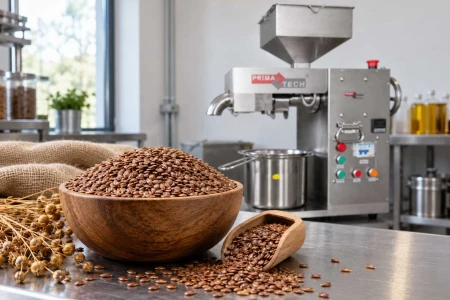
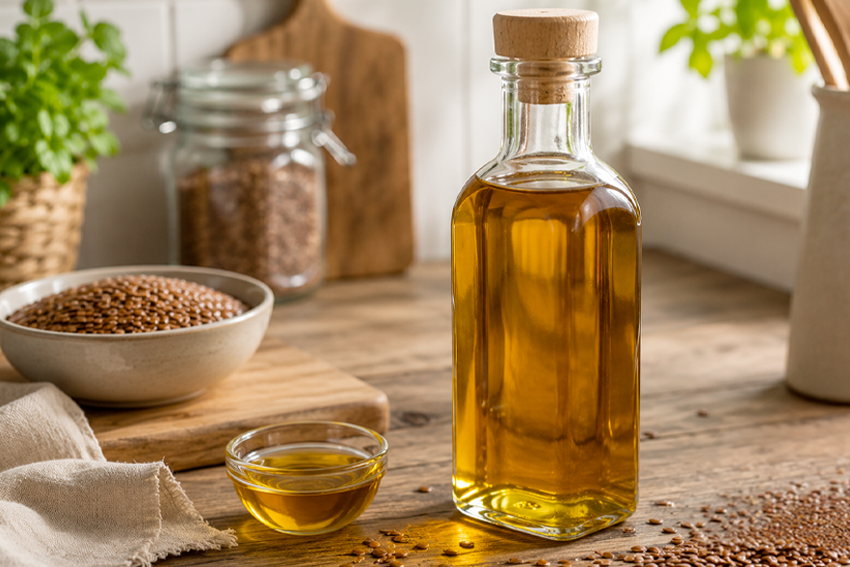
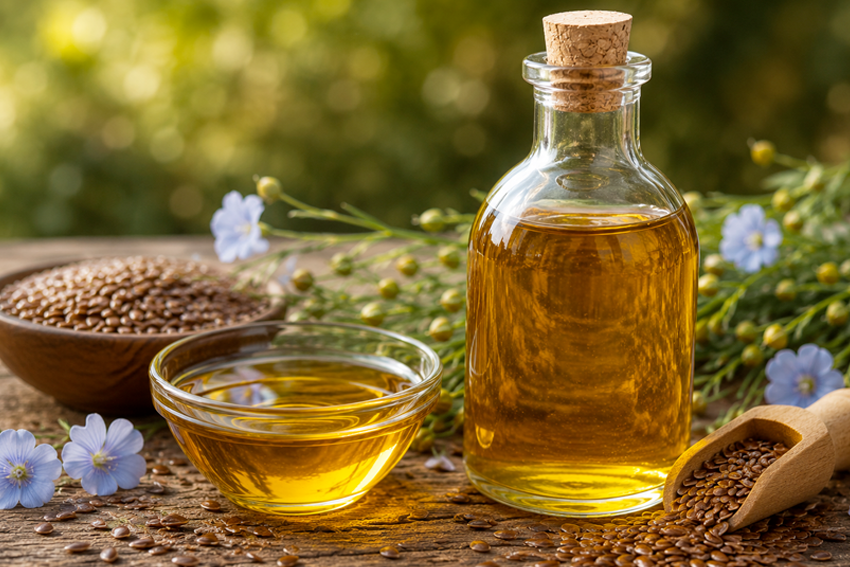
Fresh linseed oil smells of greenery. The notes of grass, light herbaceousness, and freshly baked wholegrain bread are pronounced. Behind them sits a nutty undertone, more prominent in oils from brown linseed than from golden linseed. The aroma is delicate yet clear - the essence of the seed shortly after extraction. A few weeks after pressing, the profile begins to shift, giving way to fishy and oxidized notes, which is why linseed oil makes sense only when it is consumed truly fresh. For this reason, freshness is one of the most important quality parameters of this oil - fresh linseed oil pressed from good flax seeds is a full-value product, while aged linseed oil becomes a product of significantly reduced sensory and nutritional value.
Rapeseed Oil - a Cabbage-Like Accent and Buttery Softness
Raw cold-pressed rapeseed oil has a very characteristic aroma with a cabbage-like, grassy opening that soon transitions into a soft, almost buttery background. Rapeseed oil from hot pressing loses its sharper notes in favor of deeper, roasted aromas - this is the version preferred for warm cooking, while cold pressing works best for cold dishes, salads, and spreads. Rapeseed is the staple oil of much of northern Europe and one of the best balanced oils in terms of fatty acid composition. Its sensory profile, although demanding for some palates at first, has become a foundation of regional culinary tradition.
Sunflower Oil - a Sweet, Grainy Tone
Fresh sunflower oil has a very subtle, grainy aroma with a delicate sweetness. Oil from roasted hulled sunflower seeds is a different story - intensely nutty, with notes of caramel and praline, perfect for finishing soups, roasted vegetables, and cheeses. Sunflower is a forgiving raw material for pressing, easier than rapeseed and less capricious than linseed, which is why it is often the first choice for those starting to press oil themselves.
Pumpkin Seed Oil - Caramel and Roasted Grain
Oil from roasted hulled pumpkin seeds is among the most aromatic oils in the world. The almost coffee-like, dense scent, in which roasted nut, caramel, and dark bread can all be heard, makes even a few drops capable of transforming the character of a dish. The oil has an intense, dark green color and a uniquely deep flavor profile. It is also an oil with a strong regional identity - in Styria and parts of central Europe it forms an element of artisan tradition, and its aroma functions as a cultural signature.
Sesame Oil - Toast and Gingerbread
Oil from roasted sesame seeds smells like freshly baked bread topped with toasted seeds. The aroma is so distinctive that even a few drops can define the flavor of an entire dish. The cold-pressed version from untoasted sesame is far more delicate - it has a light color and a slightly milky, mildly sweet aroma. Sesame is a classic example of a seed in which the roasting stage plays a greater role than the pressing itself - controlling roasting temperature is effectively the act of designing the final aroma.
Nut Oils - Softness and Depth
Walnut oil smells of fresh walnut skin and a delicate resinous note. Almond oil delivers marzipan and milky tones. Hazelnut oil has a deep, almost chocolate-like profile. Each of these is a valuable addition to desserts, fruit salads, and dressings for white meats. Nut oils are particularly sensitive to oxidation, which is why their aromatic peak shines brightest in the first days after pressing and fades far more quickly over the following weeks than that of oils from classic oilseeds.
Fresh vs Aged - the Role of Time and Storage
Even the best-pressed oil changes its aroma over time. Air, light, heat, and oxygen slowly transform its profile. The rich, fresh bouquet gives way to heavier, sometimes unpleasant oxidized notes. That is why the sensory peak of fresh oil is both a high point and a fleeting moment.
When Aroma Reaches Its Peak
Most cold-pressed oils reach their sensory maximum in the first two to four weeks after pressing. The more delicate the oil, the shorter the window - linseed oil shows its full character within the first month, rapeseed oil can hold its profile for a quarter, and oils from roasted seeds are more stable but also lose their most volatile notes within the first few weeks. From the perspective of a sensory-aware consumer, this means that the pressing date is more important than the best-before date, and an oil bought a week after pressing is essentially a different product from one bought half a year later.
What to Avoid When Storing
To preserve as much of the original aroma as possible, freshly pressed oil should be bottled in glass with a light barrier - ideally dark, brown, or green. Storage temperature should not exceed several degrees Celsius above refrigerator level, and the bottle should be tightly sealed. Each opening introduces oxygen, which is why oils with the most delicate profiles benefit from being decanted into smaller containers. Some oil mills experiment with bottling under a protective atmosphere, for instance under nitrogen - a solution known from winemaking that can also noticeably extend the period in which the full sensory profile of oil is preserved.
Pressing on Your Own - How to Experience Fresh Aroma in Daily Life
The fullest aroma of freshly pressed oil can only be known in one way - by pressing it yourself. Home-use and semi-industrial presses make this possible today even in a domestic kitchen, an agritourism farm, or a small manufacturing space. The technological barrier that, even a decade ago, forced producers to rely exclusively on large industrial facilities has essentially disappeared. A modern compact press is a small-footprint appliance, easy to operate and maintain, and at the same time capable of producing oil whose quality rivals the finest artisan products.
What Pressing Your Own Oil Offers
Oil from one's own press provides what no oil from a supermarket shelf ever can - freshness measured in hours rather than weeks. The aroma is complete, the bouquet rich, and the difference in smell between oil straight from the press and even a well-stored alternative is immediately apparent. Pressing your own oil also gives full control over the raw material, its origin, its purity, and the parameters of the process. It is also a meaningful economic advantage - one kilogram of seeds yields significant quantities of oil, and the resulting press cake is not waste but a fully valuable by-product used as animal feed, an additive in baking and salads, or as a base for flour production.
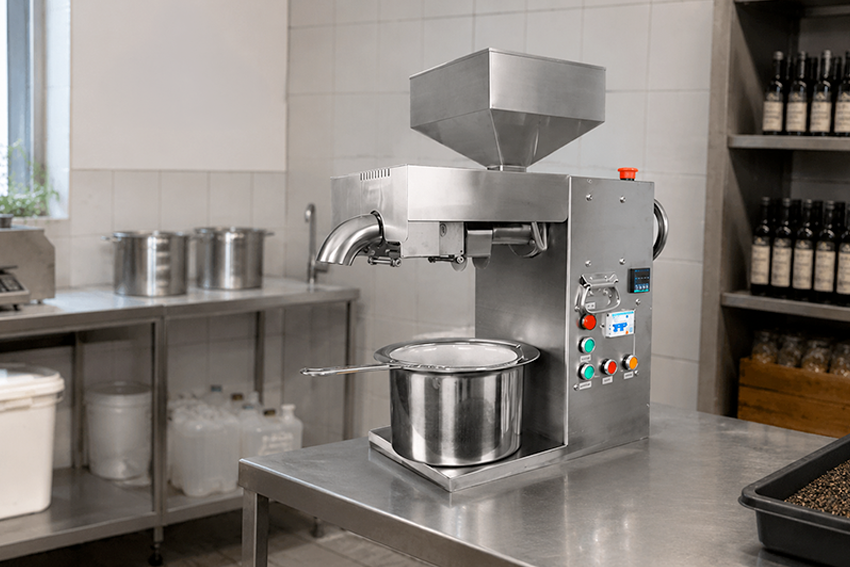
The Semi-Industrial Oil Press LY-129
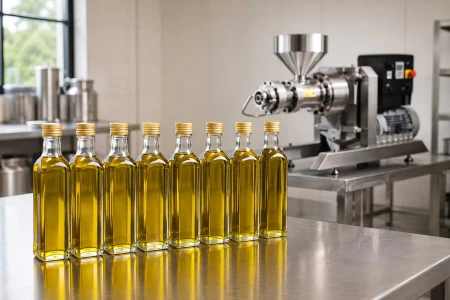
A good example of an appliance that combines a small footprint with serious capacity is the Semi-Industrial Oil Press LY-129. This is a compact press with a capacity of fifteen to twenty kilograms per hour, which performs equally well in more advanced home use and in professional oil mills of modest scale, agritourism farms, and family manufactories.
The LY-129 supports both cold and hot pressing, which means that a single appliance can deliver both aromatic styles - the delicate, green profile of cold extraction and the deep, roasted character of pressing at higher temperatures. The working range reaches two hundred and fifty degrees Celsius, allowing oil to be pressed from a genuinely wide range of raw materials - from classic rapeseed, linseed, and sunflower, through pumpkin seeds, sesame, and desiccated coconut, all the way to shelled nuts. The press handles raw materials with an oil content above fifteen percent and moisture below ten percent, which covers virtually all of the most popular oilseeds grown in temperate climates and many imported raw materials.
The heart of the appliance is a pressing chamber equipped with a set of two interchangeable screws. Changing the screw allows the press to be adapted to the type of raw material and the desired result - one screw handles harder seeds better, while the other optimizes performance with more delicate materials or those requiring finer crushing. The oil residue in the press cake stays at the level of up to five percent, which is an excellent result in this class of equipment and allows maximum use of the raw material with minimal loss.
The construction of the LY-129 has been designed with food hygiene standards in mind. The surface of the machine is made of stainless steel, and the components in direct contact with the processed material are made of 304 and 420 grade stainless steel. This makes cleaning after operation quick, and the material itself is neutral in taste and smell - a key feature for preserving the pure, true aroma of the pressed oil. The sensory profile of artisan oils is extraordinarily sensitive to foreign aromatic notes, so the choice of materials in the working parts of the press has a real impact on the quality of the final product.
In technical terms, the press features a 1.5 kW motor, a 500 W heater responsible for warming the chamber during hot pressing, and a hopper with a capacity of four to five kilograms. The 230 V 50 Hz power supply allows the appliance to be plugged into a standard outlet. The press weighs 53 kilograms, and its dimensions of 70 x 30 x 74 cm make it easy to find space for it even in a small production room, a garage, or an adapted kitchen.
From the perspective of aroma psychology, the LY-129 has one particularly valuable property - thanks to its capacity, it allows oil to be pressed "on demand", in quantities matched to current needs. The oil does not have to wait weeks for sale or consumption - it is produced in small batches and reaches the bottle, and then the table, during the period of peak aromatic intensity. For a small oil mill, a farm, or a manufactory, this is a competitive advantage that cannot be offset by better labels or wider distribution.
The resulting press cake, the residue left behind after pressing, can be used further - as animal feed, an ingredient in baking and salads, and when combined with a grain and seed grinder, as the base for producing an aromatic, oil-rich flour that is itself a product with an intense aromatic profile. In this way, a single appliance generates two marketable products - premium oil and a fully valuable by-product useful in feed and food processing.
Sensory Quality as a Marketing Tool for Oil Mills
For small oil mills, agritourism farms, and artisan producers, the aroma of fresh oil is one of the strongest sales tools available. A customer who has the chance to smell oil straight from the press naturally moves toward purchase - not because of pricing strategy but because the brain has already registered the emotional value of the product. Sensory experience is therefore not only a quality parameter but also an element of marketing communication whose effectiveness is hard to overstate.
Tastings and Open Pressing Days
Open pressing, where the customer can observe the work of the press, smell the oil as it forms, and taste it immediately, is an experience that cannot be replicated in a supermarket. It is also an effective educational method - the customer learns to recognize fresh oil and its sensory signals and will choose more consciously in the future. For small producers, such events also become a way of building a community around the brand - customers return, recommend, take part in seasonal tastings, and introduce the products to friends and family.
Product Descriptions in the Language of the Senses
Labels and product descriptions written in sensory language - green, grassy, roasted, nutty, caramel, buttery - convey the character of an oil far more effectively than dry technical data. A well-built sensory description allows the customer to know what to expect and even, subconsciously, to generate the aroma in memory before opening the bottle. This is the deployment of olfactory psychology in sales - the customer is buying not just oil but an anticipated sensory experience that they can imagine in considerable detail based on a few carefully chosen words. Combined with consistent labeling equipment and clean filling machines, the visual and sensory promise of the bottle aligns with the experience inside it.
A Kitchen Built on Fresh Oils - Practical Compositions
The aroma of fresh oil is a full-fledged ingredient in a dish, not merely its background. The conscious use of fresh oils consists in pairing their profiles with other ingredients in ways that emphasize and reinforce both sides. This approach is well known in classical French and Italian gastronomy, where olive oil is not an addition but an active element of composition. The cuisines of central and northern Europe, built on local oils - linseed, rapeseed, pumpkin, sunflower - hold enormous potential here, which is only beginning to be fully realized.
Pairing Aromatic Profiles
Linseed oil pairs beautifully with fermented dairy, fresh cheese, pickled cucumber, and rye bread. Roasted pumpkin seed oil gains from a partnership with mature cheese, pear, buckwheat honey, and nuts. Cold-pressed rapeseed oil suits root vegetables, swede, kohlrabi, and carrots roasted with garlic. Sesame oil complements Asian cuisine perfectly, as well as sandwiches with avocado, egg, and toasted seeds. Walnut oil finds its place alongside blue cheeses, salads with pear, and desserts with honey. Each of these oils is both an aromatic accent and something more - an ingredient that defines a regional flavor identity.
Oil as a Finisher
Fresh oil performs its role best as a finisher - an addition introduced at the end, after the dish has been taken off the heat. High temperatures destroy the most delicate aromas, so a soup, pasta, egg, or roasted vegetable drizzled with oil just before serving retains its full aromatic bouquet. This is the moment in which the aroma of freshly pressed oil fulfills its purpose, opening the appetite, awakening the senses, and leaving a memory that one wants to return to. Using oil consciously as a finisher is one of the simplest ways to elevate home cooking without resorting to complicated techniques or exotic ingredients.
Frequently Asked Questions
Why does freshly pressed oil smell so different from store-bought oil?
Freshly pressed oil contains the full set of volatile aromatic compounds released from the seeds at the moment of pressing. Over time, under the influence of light, air, and temperature, the most delicate notes are the first to fade. Store-bought oil is typically refined or has been aging for weeks since pressing, which is why its aromatic profile is either flattened or entirely smoothed out. Oil straight from a home or small oil mill press shows its true character because it reaches the bottle and then the kitchen during the period of greatest aromatic intensity. The difference is vivid enough that for many people it represents the first real encounter with what oil actually tastes like.
Does the smell of oil say anything about its quality?
Yes, and a great deal. A fresh cold-pressed oil should smell of its raw material - rapeseed, linseed, sunflower, pumpkin - in a clean and clearly defined way. Rancid, fishy, lacquer-like, or unpleasantly "fatty" notes are a signal of oxidation or poor storage. An oil with a full, well-balanced aromatic bouquet is an oil rich in active compounds, including tocopherols, polyphenols, and unsaturated fatty acids in their unaltered form. The nose is therefore not only a sensory organ but also a remarkably precise tool for assessing product quality.
Why do some people find the smell of fresh linseed oil unpleasant?
Aroma perception is individual and depends both on the genetics of olfactory receptors and on associations from childhood. Linseed oil has intense, green, grassy notes that may seem too raw to those accustomed to refined oils. With time, as it is consumed regularly, the brain shifts this smell into the category of familiar and desirable. It is also important that the linseed oil in question be truly fresh - oxidized linseed oil smells unpleasant even to those who normally enjoy it, and in such cases the negative reaction is not driven by the character of the oil itself but by its condition.
Does hot pressing destroy the aroma of oil?
Hot pressing does not destroy aroma but changes it. The original, raw notes of the seed give way to new ones - roasted, caramel, nutty, toasted. Hot pressing does require control, however, because excessive temperature can produce burnt, bitter tones. Good presses offer smooth temperature regulation, allowing aroma to develop richly without becoming scorched. For this reason, many oils from roasted seeds - sesame, pumpkin, sunflower - are traditionally pressed using the hot method, and the process itself becomes a kind of art comparable to coffee roasting. A dedicated grain and seed roaster gives full control over this stage and reliably reproduces the desired aromatic effect.
How long does freshly pressed oil retain its full aroma?
This depends on the type of oil and on storage conditions. The most delicate is linseed oil, which begins to lose its aroma already two to three weeks after pressing if stored at room temperature. Cold-pressed rapeseed oil holds its character for around two to three months. Oils from roasted seeds are more stable and can preserve a rich bouquet for half a year, although their most volatile notes still fade in the first few weeks. Dark bottles, low temperatures, and tight sealing are essential. The fresher the oil, the fuller the sensory effect and the higher the nutritional value.
Is it worth pressing oil at home?
For anyone who wants to know the true character of oils and at the same time maintain full control over the quality of the raw material, pressing oil yourself is the best path. Home-use oil presses and semi-industrial models offer capacity sufficient for both family needs and small commercial or agritourism activity. The aroma of freshly pressed oil is an experience that cannot be conveyed in words - it has to be felt at the moment the press valve opens. An additional argument is the economic one - pressing your own oil yields oil at a significantly lower cost than ready-made artisan products, and the resulting press cake is a fully valuable by-product.
How should one choose a press if aroma quality is the priority?
For aroma, three factors matter most - the ability to work in both modes (cold and hot), precise temperature control, and construction from materials neutral in taste and smell, namely stainless steel. Presses with interchangeable screws additionally allow the work to be matched to different raw materials, ensuring that the oil retains its full character. The Semi-Industrial Oil Press LY-129 meets these requirements and also offers a capacity sufficient for pressing fresh, small batches of oil "on the fly", which is the best way to maintain maximum aroma intensity in the final product. It is a solution that, from a technical standpoint, meets the expectations of both informed consumers and small artisan producers.