
Table of Contents
- Why Cold-Pressed Oil Changes Everything
- Homemade Mayonnaise with Cold-Pressed Oil: Complete Guide
- Aioli: Provençal Garlic Sauce on Your Plate
- Salad Dressings: From Simple to More Refined
- How to Choose Oil for Each Emulsion: A Short Guide
- From Seeds to Plate: How to Press Oil Yourself at Home
- Questions and Answers
- Summary: Homemade Emulsions as Daily Ritual
Picture this: you reach into the fridge for a jar of store-bought mayonnaise - that white plastic container with ingredients you can't pronounce - and then a simple idea strikes you. You grab some eggs, a few tablespoons of cold-pressed oil, and within three minutes you have a sauce that smells completely different from anything you've eaten before. Something that recalls childhood kitchen memories yet feels entirely new and revelatory.
Homemade emulsions are one of those culinary secrets that are both remarkably simple and surprisingly satisfying. You don't need special skills or expensive equipment. What you do need is one key ingredient - cold-pressed oil. And ideally, oil that you press yourself.
In this article, I'll show you how to prepare three fundamental versions of homemade emulsions: classic mayonnaise, Provençal aioli, and several different salad dressings. But that's not all - I'll also explain why cold-pressed oil is so important in each of these recipes, how its quality affects the final taste and nutritional value, and how - if you're interested - to start pressing oil yourself at home using a compact screw press.
Before we dive into specific recipes, it's worth realizing one fundamental fact: every emulsion you make at home will taste as good as the oil you add to it. This isn't an exaggeration - it's simply how kitchen chemistry works. Oil is the ingredient that determines the character of the emulsion, its creaminess and depth of flavor. That's why it's so important that it be the highest quality oil - ideally pressed yourself, from seeds you select and control from start to finish.
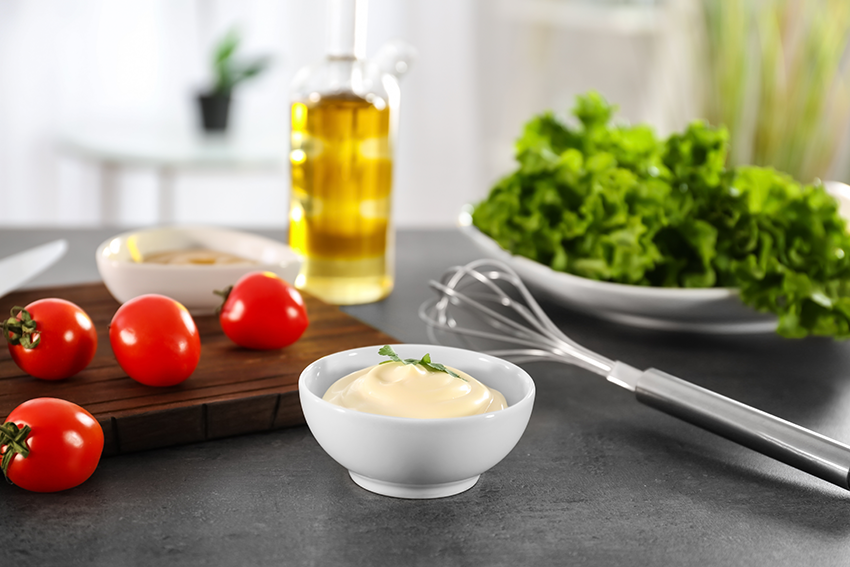
Why Cold-Pressed Oil Changes Everything
When we talk about emulsion, we're really talking about a mixture of two substances that under normal conditions don't want to combine - water and fat. The egg yolk acts as an emulsifier, a substance that binds these two elements into one cohesive, creamy mass. But the quality of that mass - its taste, texture and nutritional value - depends very much on the quality of the oil we add to it. And this is where the story begins that makes homemade emulsion so different from store-bought.
What Happens to Oil with Different Pressing Methods
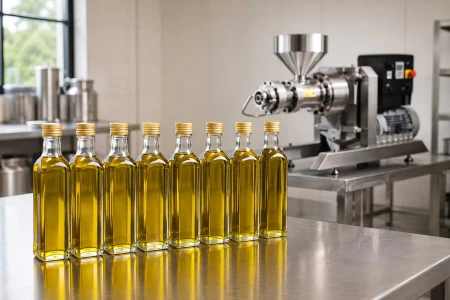
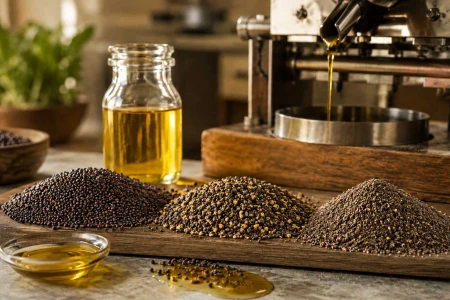
Cold-pressed oil is oil extracted from oilseed plant seeds without the use of high temperature. The pressing process at temperatures not exceeding 40°C ensures that the oil retains unsaturated fatty acids, vitamins, minerals, and most importantly - the natural aromatic compounds that give the oil its characteristic taste and smell. It's these compounds that make mayonnaise on flaxseed oil have a delicately nutty aftertaste, and aioli on pumpkin seed oil tastes like something from a completely different cuisine than what we're used to in everyday diet.
By comparison, refined oil undergoes heat treatment at temperatures reaching up to 200°C. As a result of this process, most valuable components are destroyed, and the oil itself loses almost all its natural taste and smell. That's why for homemade emulsions - especially those where oil is both a flavor carrier - the quality of the raw material is crucial.
Omega-3 and Omega-6: The Hidden Heroes of Your Sauces
Beyond taste, cold-pressed oil is invaluable from a health perspective. Rich in unsaturated omega-3 and omega-6 fatty acids, it supports cardiovascular function, helps lower cholesterol levels and normalize blood pressure. When we add such oil to everyday dishes - to mayonnaise, to salad dressings - we unknowingly enrich our diet with components that are difficult to obtain from other food sources. Homemade emulsions based on cold-pressed oils are therefore not only a matter of taste, but also a conscious nutritional decision.
Homemade Mayonnaise with Cold-Pressed Oil: Complete Guide
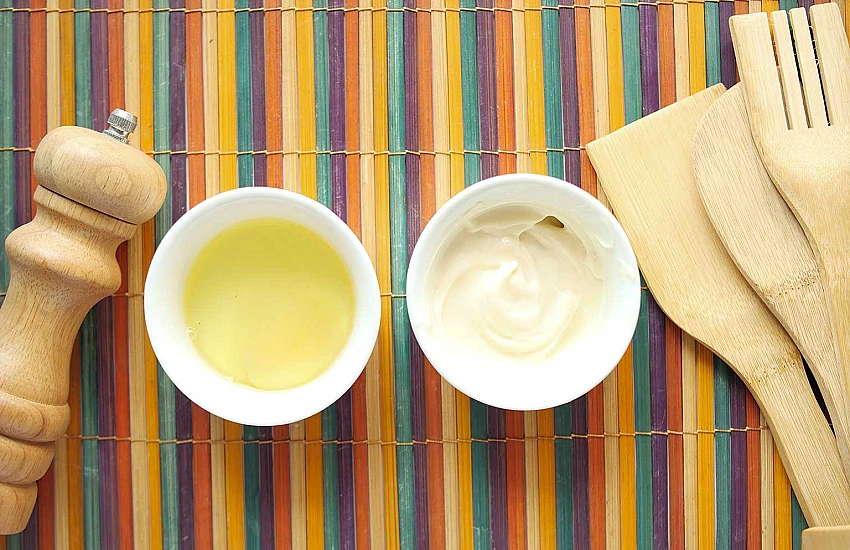
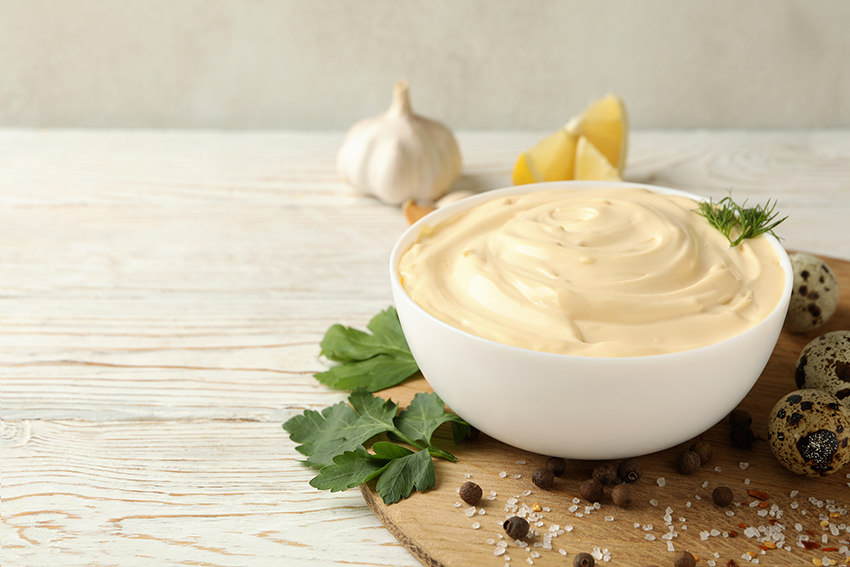
Homemade mayonnaise is one of those products that, when first made at home, changes the way we think about food. Store-bought versions are filled with stabilizers, emulsifiers and shelf-life extenders that determine their long shelf life. The homemade version is just a few ingredients, short preparation time and - most importantly - a taste that has no comparison with anything on the store shelf. Anyone who tries homemade mayonnaise on cold-pressed oil once has a very hard time going back to the store version - the difference is immediate and indisputable.
Ingredients and Proportions: What You Need
For one jar of homemade mayonnaise (about 250 ml) you need one egg yolk at room-temperature, a tablespoon of lemon juice or white vinegar, half a teaspoon of mustard (optional, but helps stabilize the emulsion) and 200 to 250 ml of cold-pressed oil. It's best to choose oil with a mild, delicate taste - cold-pressed rapeseed or sunflower oil works perfectly here. If you like more pronounced flavors, you can mix oils - for example, 80% rapeseed oil and 20% flaxseed oil, which will give the sauce a subtle nutty aftertaste.
The most important thing is that the egg yolk should be at room-temperature. Cold yolks have significantly less ability to form an emulsion, which can lead to it separating into water and fat layers - an effect that culinary experts call a 'broken' emulsion.
Beating Technique: How to Do It Step by Step
Technique is key here, and mastering it will take you maybe two tries, but no more. We start by putting an egg yolk in a bowl or blender cup. We add lemon juice and mustard to it. Then - and this is the most important part of the whole procedure - we start adding oil. For the first several seconds we add it literally drop by drop, constantly beating or mixing at the lowest speed. After some time, when the emulsion starts to form and thicken, we can speed up and add oil in a thin, continuous stream.
If you're using an immersion blender - and that's the simplest method - just throw all the ingredients into the cup and turn the blender on at the lowest speed, holding it at the very bottom of the cup. For the first few seconds the oil won't mix with the yolk, but after a moment you'll see how the creamy emulsion starts to form from bottom to top. The whole process takes literally 30 to 60 seconds.
What to Do When Mayonnaise Breaks
Despite the best intentions, sometimes the emulsion 'breaks' - meaning it separates into water and fat layers. Don't throw it away! There's a simple and proven way to rescue broken mayonnaise. Take a new egg yolk, put it in a clean bowl and slowly - just like at the beginning, drop by drop - pour the broken mass into the new yolk, constantly beating. The new yolk will act as a new emulsifier and 'catch' all that mass again, creating a cohesive and creamy consistency.
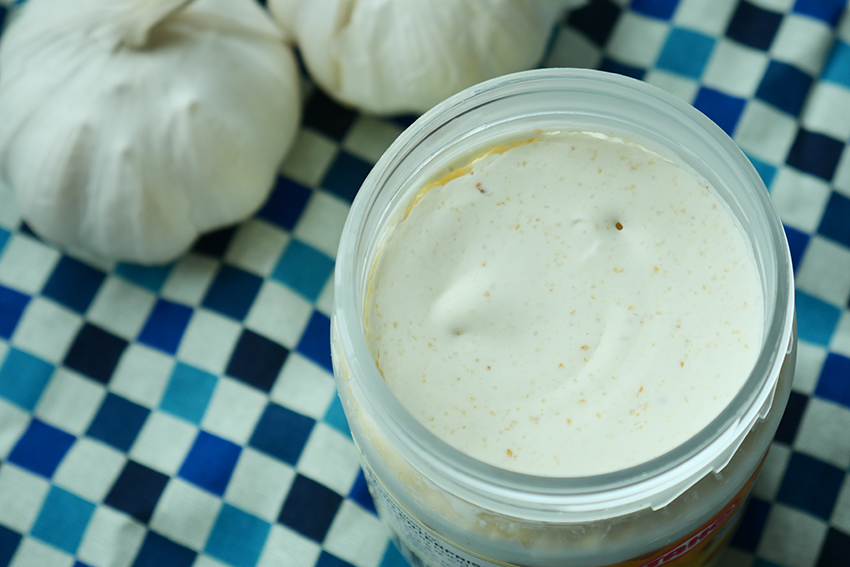
Aioli: Provençal Garlic Sauce on Your Plate
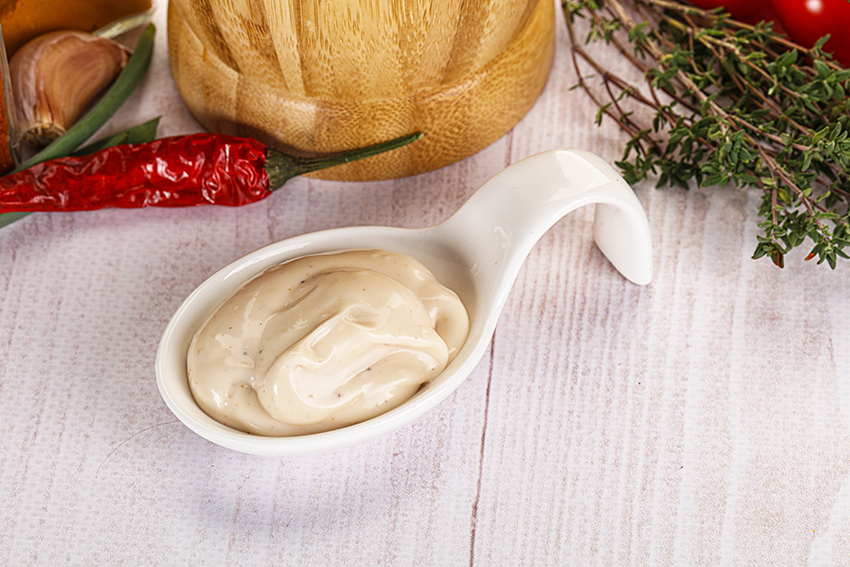
Aioli is one of those sauces that are both simple to prepare and spectacular in taste. It comes from Provence - a region in southern France - and is traditionally served with grilled fish, bread and various vegetables prepared on the grill. At home we can make it for practically everything - for toasts, for boiled eggs, for salads and for chickpea pastes. Aioli is a sauce that can change the character of an entire dish with one gesture.
From Provence to Your Kitchen: History and Context
The name 'aioli' itself comes from the Occitan language and is a combination of two words: 'ail' meaning garlic and 'oli' meaning oil. So it's a sauce being - in the most simplified terms - an emulsion of garlic oil. Traditional Provençal aioli is prepared without eggs, from garlic and oil alone, but this version is much more technically difficult and requires almost meditative patience while beating. The version with egg yolk is a simpler and more reproducible alternative that doesn't lose anything in terms of taste - and in many cases gains in texture creaminess.
Recipe for Homemade Aioli
To prepare homemade aioli we need two to three garlic cloves (the more, the stronger and more pronounced the taste), one egg yolk at room-temperature, a tablespoon of lemon juice, a pinch of salt and 150 to 200 ml of cold-pressed oil. Oil with a pronounced but not dominant taste works best here - sunflower oil or pumpkin seed oil will be an excellent choice.
We crush the garlic in a mortar or using a garlic press to a pulp - the finer, the better, because the goal is to maximize juice and aroma extraction. We add egg yolk and lemon juice. Then - exactly as with mayonnaise - we add oil drop by drop at the beginning, then in a thin stream, constantly beating or mixing. Ready aioli should be thick, creamy and intensely fragrant with garlic.
If you want to soften the aggressiveness of garlic, you can bake it first - wrap it in aluminum foil and put it in the oven for 30-40 minutes at 180°C. Roasted garlic is softer, sweeter and has a milder taste. Aioli on roasted garlic is a version that will work for those who like dishes with garlic, but prefer those where it doesn't dominate too aggressively.
Ready aioli tastes great as a sauce for beautifully toasted bread, for blanched vegetables - such as asparagus, green beans or carrots - and for fish fillets prepared on the grill. It's one of those sauces that give character to any dish - regardless of how simple the dish itself is.
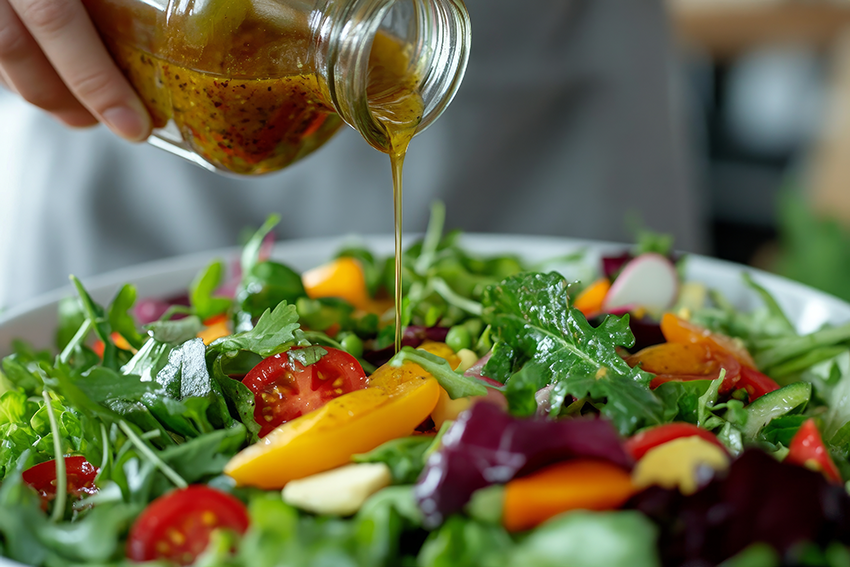
Salad Dressings: From Simple to More Refined
Salad dressings are the third category of emulsions worth saying a few words about - and sharing a few recipes that can redefine how you look at everyday salads. Unlike mayonnaise and aioli, salad dressings aren't always an emulsion in the technical sense of the word. Vinaigrette - a mixture of oil and vinegar - is technically a suspension that will separate after a few minutes of standing. But emulsified salad dressings, those with egg yolk or other stabilizers like Dijon mustard, are much more cohesive and have a creamier texture.
Flaxseed Oil Vinaigrette: Classic with a Twist
Vinaigrette is a salad dressing in its most basic and classic form: oil plus acid, meaning vinegar or citrus juice. It's both the quickest to prepare dressing and the one that's most often underestimated - because people think it's enough to mix anything with vinegar and you're done. But when we make it with cold-pressed flaxseed oil, it transforms into something unique and unrepeatable. Flaxseed oil has a strongly nutty, slightly bitter taste that combines perfectly with mustard and honey in proportions requiring only experimentation and a bit of patience.
For one serving we need three tablespoons of cold-pressed flaxseed oil, one tablespoon of apple cider or balsamic vinegar, half a teaspoon of honey, a pinch of salt and pepper, and optionally finely chopped shallot. We combine everything in a jar, screw it on and shake vigorously. The dressing is ready almost immediately, but it's best when it sits for several minutes so the flavors can penetrate each other.
Creamy Tahini-Lemon Dressing: Middle-Eastern Inspiration
This dressing is absolutely phenomenal on salads with chickpeas, parsley and tomatoes - meaning dishes with a distinctly Middle-Eastern climate. Tahini - sesame paste - is itself a fat emulsion, so when we add lemon juice and some water to it, a creamy, silky dressing with an unusual texture and deep, rich taste is created.
For preparation we need two tablespoons of tahini, juice from half a lemon, one tablespoon of cold-pressed sesame oil, two tablespoons of water to thin it out, a pinch of salt and - if you want - a finely chopped garlic clove. We mix tahini with lemon, add oil and water until the dressing is smooth, creamy and homogeneous. If it's too thick, we add a bit more water - the consistency should be such that the dressing flows off the spoon slowly but smoothly.
Pumpkin Seed Oil Dressing: Autumn Specialty
Pumpkin seed oil has an extremely rich, slightly sweet and distinctly nutty taste that perfectly matches salads with autumn themes - with pumpkins, with pears, with walnuts and with salads in warm colors. This dressing will work on any autumn or winter salad, but it's especially good when it gets colder outside.
For preparation we need two tablespoons of cold-pressed pumpkin seed oil, one tablespoon of champagne or white vinegar, half a teaspoon of Dijon mustard, a pinch of salt and pepper. We mix mustard with vinegar in a small bowl, then slowly pour in the oil, mixing all the way - until the dressing is homogeneous and slightly creamy. Mustard plays a dual role here: it adds flavor and acts as a natural emulsifier, keeping the dressing in homogeneous form for longer.
How to Choose Oil for Each Emulsion: A Short Guide
Choosing oil is one of the most important decisions when preparing homemade emulsions. Each oil has its unique flavor profile, and this directly affects the final effect of the dish. Below you'll go through the oils most commonly used in homemade emulsions and learn what they're best used for.
Rapeseed Oil: Versatile Foundation
Cold-pressed rapeseed oil is one of the best oils for homemade mayonnaise. It has a delicate, almost neutral taste that doesn't dominate other emulsion ingredients. At the same time it's rich in unsaturated fatty acids and has a moderate smoke point, which makes it perfectly suited for cold dishes. If you're just starting your adventure with homemade emulsions, rapeseed oil will be your safest and most versatile choice.
Flaxseed Oil: Omega-3 Hero
Cold-pressed flaxseed oil is one of the richest in omega-3 plant oils - particularly alpha-linolenic acid (ALA), which is one of the essential fats for the human body. The taste of flaxseed oil is distinctly nutty and slightly bitter, so it's best to mix it with other oils or use it in dressings where these flavors will be complemented by other ingredients - like honey, vinegar or lemon. Flaxseed oil won't last long in the fridge - it's best to consume it within 2-3 weeks of opening the bottle.
Pumpkin Seed Oil: Autumn on a Plate
Cold-pressed pumpkin seed oil has one of the richest structures of minerals and vitamins among plant oils. It's rich in zinc, magnesium and vitamin E. Its taste is warm, slightly sweet and distinctly nutty - it works perfectly for salad dressings with an autumn theme, for dressings accompanying pumpkin salads and for supplementing daily diet with healthy plant fats.
Sesame Oil: Asian Climate in Sauce
Cold-pressed sesame oil, especially that produced from roasted sesame seeds, has an intensely nutty and slightly smoky taste. It works perfectly in Asian-inspired dressings - for example for salads with carrots, edamame or Napa cabbage. Due to its strong taste, it's best to mix it with neutral oil in a ratio of about 1:2 or 1:3, so it doesn't dominate the other dish ingredients.
From Seeds to Plate: How to Press Oil Yourself at Home
Pressing oil at home is something that just a few years ago seemed to be the domain of professional growers or enthusiasts with large plots and industrial equipment. Today, thanks to compact and efficient home presses, it's something anyone can do in their kitchen - and it's really worth trying, because the taste of oil you press yourself is incomparably better than what you'll find on the store shelf.
Imagine a morning ritual: you come out of the kitchen with a bottle of oil you made yourself from a few hundred grams of seeds. This oil will have a different color, different smell and different taste than anything you've eaten before. It will be fresh - in a way where the concept of 'fresh' takes on a completely new meaning. And this self-pressing is the only way to achieve that effect.
Why It's Worth Pressing Oil Yourself
When we buy cold-pressed oil in a store, we have no real idea how long that oil has been stored in the warehouse, when it was produced, or whether it comes from one type of seed. Oil pressed at home is a guarantee of freshness - and freshness means more intense taste, better smell and higher content of valuable nutrients. It's exactly this mechanism that makes homemade mayonnaise on self-pressed oil taste like a product from a completely different category than store-bought.
Another great advantage of self-pressing is control over the raw material. We can choose seeds that interest us - from popular ones like rapeseed and sunflower, to more niche ones like flaxseed, pumpkin seeds or macadamia nuts. We can also mix them in proportions that suit us, creating unique blends perfectly matched to specific recipes. Such a degree of control over ingredients is impossible when buying ready-made oil.
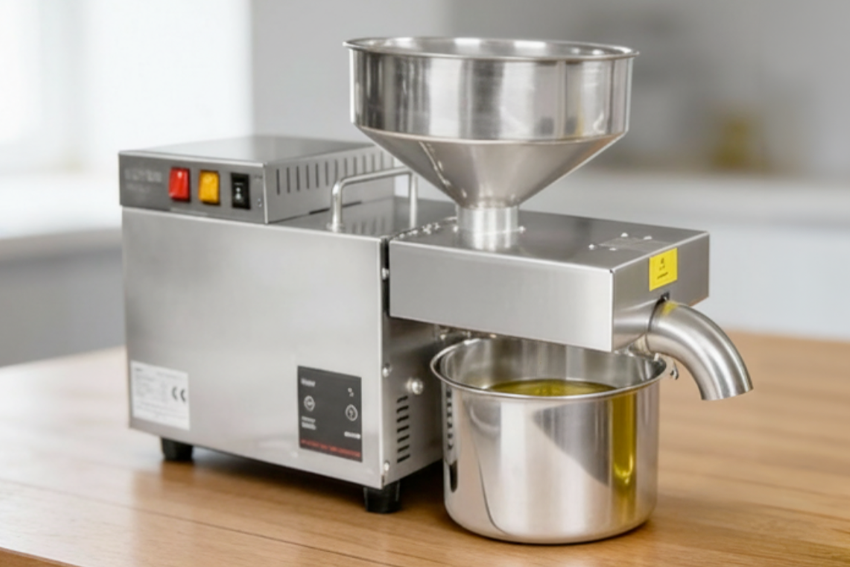
LY-011 Press: Multifunctional Home Press for Hot and Cold Pressing
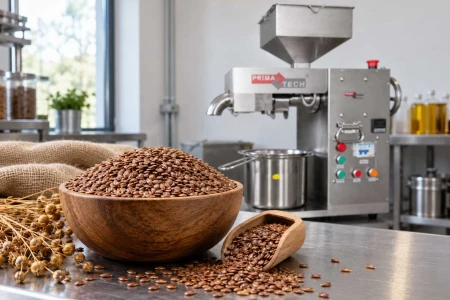
If you're considering purchasing a home oil press, one of the best choices on the market is the LY-011 screw press - a device priced at €1,210 that was designed with home cooks in mind who value simplicity of operation and control over the pressing process. It's a compact, versatile device that will work both at home and in a small production company.
The LY-011 press can press oil both cold and hot, which makes it extremely versatile. Cold pressing - at temperatures not exceeding 40°C - is ideal for producing oil for emulsions and sauces, because it fully preserves valuable nutrients and the natural taste of seeds. Hot pressing, at temperatures in the pressing chamber reaching up to 200°C, is useful for seeds with higher moisture content or for more demanding raw materials like coconut flakes or seeds without shells.
One of the most important features of the LY-011 press is heater temperature regulation - a feature that almost no other press in this price class has. Thanks to it, we can independently adjust the pressing temperature to a specific type of seed, which makes the process both more efficient and more individual. The press's efficiency ranges from 9 to 12.5 kg of seeds per hour, and oil residue in the cake doesn't exceed 3 to 5 percent - which is an excellent result for a home device.
The press is built from materials compliant with food hygiene standards - surfaces in contact with oil and seeds are made of stainless steel, which ensures food safety and facilitates cleaning. The device dimensions are 65 by 38 by 20 centimeters, and the weight is 20 kilograms, which means it easily fits in any kitchen cabinet. A 400W motor and 800W heater ensure stable and efficient device operation with 230V power supply. The press comes with two interchangeable screws - for large and small granulation seeds - as well as an oil container, strainer, glove and cleaning brush. The press presses oil from oilseed plant seeds with oil content above 15% and moisture below 10%, which means it's suitable for a very wide range of raw materials: peanuts, sesame, flaxseed, pumpkin seeds, sunflower, soybeans and many others.
Zero-Waste in the Kitchen: What to Do with Oil Cakes
One of the things I always appreciate about home oil pressing is that almost nothing goes to waste. After extracting the oil, oil cakes remain - meaning seed residues deprived of most fat. In the case of many seeds, like sesame, flax or pumpkin, oil cakes are an excellent source of protein and fiber. We can grind them into flour using a grinder and add them to cakes, bread, fruit cocktails. They can also be used as a snack - baked with a bit of oil and salt they make great, healthy chips. Sesame cakes will be an excellent addition to bread and granola, and pumpkin cakes will work as an ingredient in healthy energy bars. If we add a seed grinder to our culinary arsenal, we can process oil cakes into ready products without any waste - implementing the zero-waste principle in practice.
Questions and Answers
Can I Make Mayonnaise Without Egg?
Yes, there are 'vegan' versions of mayonnaise where egg yolk is replaced with other emulsifiers - such as soy milk or aquafaba, meaning water from cooking chickpeas. These versions are somewhat more technically demanding, but give a surprisingly creamy result that in terms of texture is almost indistinguishable from the traditional version. The key is that the emulsifier should be at room-temperature and that oil should be added very slowly, especially at the beginning of the beating process.
How Long Does Homemade Mayonnaise Last?
Homemade mayonnaise should be consumed within three to five days from the moment of preparation, if we store it in the fridge in a sealed jar. Unlike store-bought mayonnaise, it doesn't contain preservatives or stabilizers, so over time it deteriorates in terms of taste and texture. If you notice a color change, strange smell or consistency change - it's better not to eat it.
Is Cold-Pressed Oil Suitable for Frying?
No, cold-pressed oil isn't the best choice for high-temperature frying. The smoke point - meaning the temperature at which oil starts to burn and release toxic compounds - is quite low for most cold-pressed oils. For flaxseed oil it's about 107°C, which means that when frying on clear heat the oil will quickly change taste to bitter and burning. For frying it's better to use refined oil or oil with a higher smoke point, like coconut oil or peanut oil.
How to Make an Emulsion Without a Blender?
Emulsions - both mayonnaise and sauces - can be prepared manually, using a whisk. This requires more time and arm strength, but the effect is identical to using a blender. The key is to add oil very slowly at the beginning - literally drop by drop - and constantly vigorously beat with the whisk in one direction. Total manual mayonnaise preparation time is about 10 to 15 minutes, but after a few tries the technique will become natural for you.
Which Seeds Are Best for Mayonnaise Oil?
For mayonnaise, seeds with a neutral, delicate taste work best - like rapeseed or sunflower. Oil from these seeds doesn't dominate other emulsion ingredients, while giving a creamy, smooth texture that's ideal for mayonnaise. If you want a more pronounced taste, you can add 10 to 20 percent flaxseed oil or pumpkin seed oil to the mixture, which will give the sauce an additional flavor dimension without losing its classic character.
How to Store Cold-Pressed Oil?
Cold-pressed oil is best stored in a dark, cool place - ideally in the fridge or cellar. A dark bottle protects it from light, which accelerates fat oxidation and taste change. Most cold-pressed oils have a shelf life of 3 to 6 months after opening the bottle, but if you press yourself, it's best to consume them as quickly as possible - within a few weeks of production, to fully benefit from their taste and nutritional value. Good practice is to mark bottles with the production date - so you always have clear information about how old the oil in your cabinet is. The fresher the oil, the better the taste and the more valuable nutrients still remain in it.
How Much Oil Will I Get from One Kilogram of Seeds?
It depends on the type of seeds and the oil content in them. Seeds with the highest oil content are peanuts - up to 50 percent - and sesame and rapeseed, where from one kilogram of rapeseed you can expect to obtain about 350 to 400 milliliters of oil. Home presses like the LY-011 achieve oil residue in the cake at a level of 3 to 5 percent, which means that almost all oil is extracted from the seeds - this is a result comparable to presses with much higher efficiency.
Summary: Homemade Emulsions as Daily Ritual
Homemade emulsions - mayonnaise, aioli and salad dressings - are among those dishes that are both extremely simple to prepare and incredibly satisfying in effect. The key to their success lies in the quality of the oil we add to them. Cold-pressed oil, rich in unsaturated fatty acids and natural aromatic compounds, is the ideal raw material for any emulsion - both in terms of taste and nutritional value for the body.
If you want to go a step further and start pressing oil yourself at home, the LY-011 screw press is one of the best choices on the market. Its versatility - cold and hot pressing, temperature regulation, compact size and solid stainless steel construction - makes it an ideal device for anyone who wants to have full control over what lands on their plate. It's an investment that pays back many times over - both in taste and in health benefits.
Remember that in the kitchen the most important thing is experimentation. Start with simple mayonnaise on rapeseed oil, then gradually expand your emulsion repertoire - try aioli with roasted garlic, flaxseed oil dressing with honey and balsamic vinegar, creamy tahini dressing for chickpea salads. Each new oil, each new seeds and each new combination of ingredients is an opportunity to discover something that will change the character of your everyday dishes forever.
You already have everything you need - knowledge, recipes and equipment advice. The rest is in your hands. Open the fridge, take an egg and a bottle of cold-pressed oil and try. Three minutes - and you'll see that homemade emulsion is one of those culinary discoveries that can change your everyday life and the way you look at food.