
Table of Contents
- Poland – The Nut Country We Didn’t Know About
- Polish Walnut Varieties – Local Treasures
- Hazelnuts – the Queen of Forest Thickets
- Wild Nuts in Polish Forests – Hidden Treasures
- Unusual Nut Cultivations – Experiments That Work
- Autumn – The Perfect Time for Nut Oil Pressing
- Home Oil Pressing – Technology Accessible to Everyone
- Health Benefits of Nut Oils – Nature Heals
- The Culture of Nut Oil – Returning Traditions
- Why It’s Worth Pressing Oil at Home – A Manifesto of Quality
- Practical Tips – How to Start Your Journey with Home Oil Pressing
- Frequently Asked Questions
When the leaves begin to change color and the air fills with the scent of damp earth, a true treasure ripens in Polish gardens and forests — nuts. Autumn, especially October, is the time when the tradition of pressing nut oils takes on special meaning. Let’s discover together why pressing oil from native nuts in the fall is not only a return to our roots but also an investment in health and a depth of flavor that is hard to find in store-bought oils.
Poland – The Nut Country We Didn’t Know About
When we think of nut cultivation, images of Californian plantations or Mediterranean groves often come to mind. Yet Poland has a vast, often underestimated potential for nut production. While we don’t have large-scale commercial orchards, our gardens and parks host numerous nut trees that bear abundant fruit each year.
Walnuts – The Treasure of Polish Gardens
The walnut (Juglans regia) has a long and fascinating history in Poland. The tree arrived in our lands over 700 years ago. Contrary to popular belief, the name “walnut” does not refer to Italy but comes from Wallachia – a historical region in present-day Romania, from where the seedlings were imported.
In the Middle Ages, walnut trees adorned noble estates and monastery gardens. Large, sprawling walnut trees grew near manors, parsonages, and farms, symbolizing the wealth and foresight of their owners – as the tree only begins to bear fruit several years after planting.
Walnut trees are long-lived – under favorable conditions, they can reach 400–500 years. While Poland does not yet have trees of such age, the potential of our trees is enormous, and many are only now entering full fruit-bearing maturity.
In recent years, interest in walnuts has grown among gardening enthusiasts and homeowners. People mainly plant single trees in home gardens. Modern Polish varieties are well adapted to our climate and can withstand temperatures down to –30°C, producing yields comparable to southern European varieties.
Polish Walnut Varieties – Local Treasures
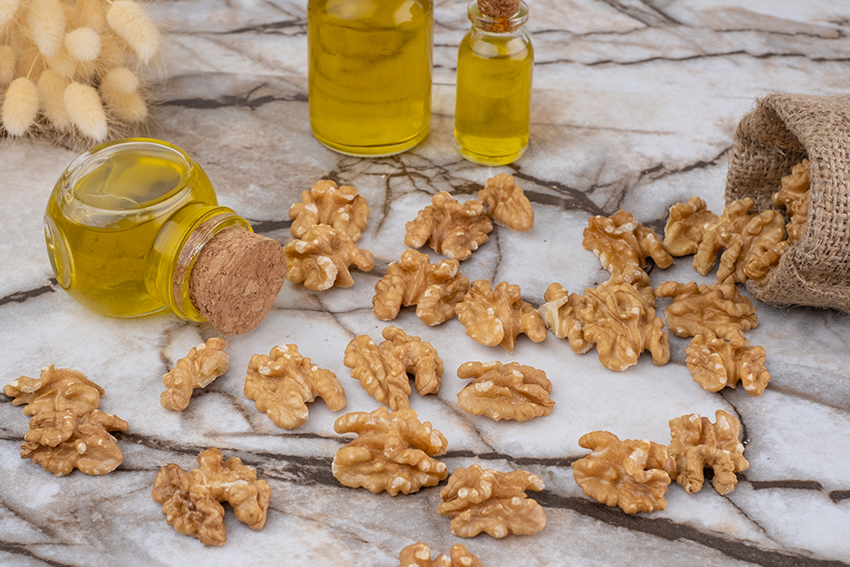
The Polish breeding program has developed several valuable walnut varieties, perfectly adapted to our climate. Each has unique characteristics, making them worth knowing and considering when choosing a tree for your garden.
Jacek is known for its large nuts, making it particularly appealing to those who value impressive yields. Although the tree grows slowly, patience is rewarded with truly large walnuts. The Jacek Sandomierski variety, part of the Jacek group, is prized for its very productive, large, and tasty nuts with thin, easy-to-crack shells and large, sweet kernels free of bitterness.
Leopold is an excellent choice for those who prioritize intense flavor over size. This variety produces small but exceptionally flavorful nuts, ideal for oil pressing – smaller kernels often have a higher concentration of aromatic oils. The tree grows slowly, making it suitable for smaller spaces.
Koszycki (also called Jacek) is designed for compact gardens. It produces small nuts, but its compact growth habit allows cultivation even in limited spaces. For homeowners dreaming of their own walnut tree, this is an ideal option.
Mars stands out for its early fruiting – young trees start producing nuts sooner than other varieties. For impatient gardeners who don’t want to wait decades for their first harvest, Mars is an excellent choice.
Mleczny Wczesny offers large nuts that can be harvested early, while still in the “milky” stage, characterized by an exceptionally delicate flavor. This variety is favored by enthusiasts of fresh walnuts.
Silesia is a true gem of Polish breeding, producing very large nuts with thin shells, which greatly facilitates cracking and increases kernel yield for oil pressing. Thin shells also mean a higher percentage of edible nut content.
These Polish varieties prove that imported seedlings aren’t necessary – our native trees are perfectly suited to local conditions and produce nuts ideal for autumn oil pressing.
Autumn Harvest – usually from mid-September to the end of October – is when walnuts naturally fall from the trees, signaling full ripeness. This is when they contain the most valuable fats, perfect for oil pressing. Although production is not commercial, owners often harvest dozens of kilograms per year – more than enough for home use, providing an excellent opportunity to press your own oil.
The walnut tree is not just a source of nuts. It’s a true garden pharmacy. Its leaves are used in herbal medicine, the wood is prized in carpentry, but it’s the nut kernels – rich in omega-3 fatty acids, vitamin E, and polyphenols – that are the real treasure for homemade oil production.
Hazelnuts – the Queen of Forest Thickets
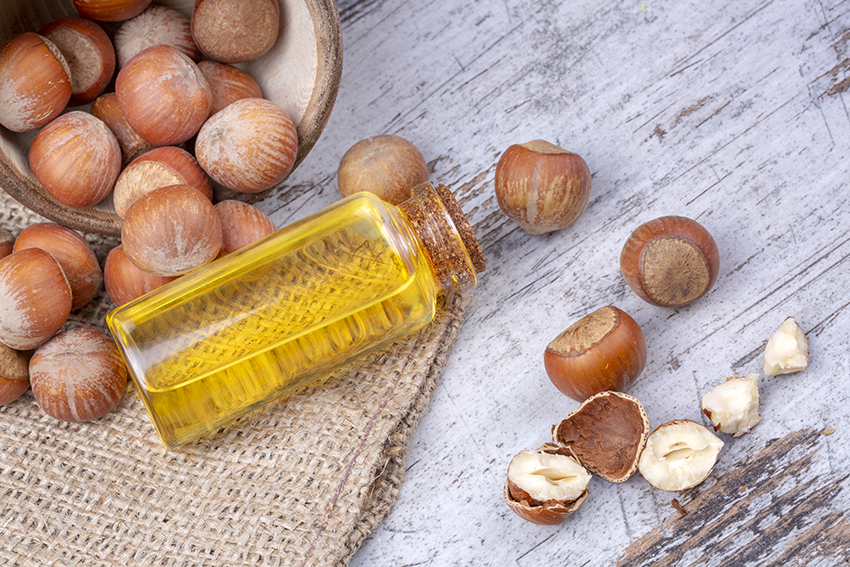
Before the walnut became common in Polish gardens, hazelnuts (Corylus avellana) flourished naturally across the country. This small tree or shrub is a true native among nut-bearing plants in Poland. Hazelnuts grow wild in forests nationwide, forming dense thickets along forest edges and in mixed woodlands.
Polish forests hide countless hazel bushes, which in autumn reward us with small but intensely aromatic nuts. Collecting wild hazelnuts is a tradition slowly regaining popularity. Unlike walnuts, hazelnuts ripen a bit earlier – in August and early September – allowing the oil-pressing season to start sooner.
Hazelnuts are also cultivated on a small scale in home gardens and allotments. Single shrubs or small clusters appear in the gardens of those who value natural products. Polish varieties such as ‘Kataloński’ and ‘Webba Cenny’ perform well in amateur cultivation, though large-scale plantings are rare.
Hazelnuts contain about 60% fat, making them an excellent raw material for pressing oil. Hazelnut oil is a delicate, sweet elixir with a unique, nutty aroma.
Wild Nuts in Polish Forests – Hidden Treasures
In addition to the common hazel, Polish forests and wetlands host other nut-bearing surprises:
Turkish hazel (Corylus colurna) – rarer, mainly in southern Poland, especially the Carpathians. Its nuts are slightly larger than common hazelnuts and equally tasty.
Giant hazel (Corylus maxima) – often introduced as an ornamental plant but acclimated to Polish conditions; produces larger, elongated nuts suitable for pressing.
Collecting wild nuts is not only a way to obtain oil raw materials but also a form of immersion in nature. An autumn walk through the forest with a nut basket is a tradition experiencing a renaissance among slow food enthusiasts and supporters of local products.
Unusual Nut Cultivations – Experiments That Work
Climate change and milder winters are opening the door for growing species previously considered too heat-loving. Innovative gardeners experiment with new species on a small scale – in private gardens or allotments.
Black Walnut – The North American Guest
Black walnut (Juglans nigra), native to North America, increasingly appears in Polish parks and gardens. This towering tree can reach up to 40 meters and is more frost-resistant than the common walnut. Its nuts have a harder shell and a more “wild,” intense flavor.
In Poland, black walnuts are found in botanical gardens, arboreta, manor parks, and alleys. One of the oldest and largest specimens grows in Rogalice (Opole region), protected as a natural monument. Black walnut oil is a rare treat, darker in color with a strong, nutty aroma – pressing it locally creates a product hard to find in stores.
Pecan – A Southern Experiment
In Poland’s warmest regions (Lower Silesia, Opole), a few daring gardeners try pecan trees (Carya illinoinensis). Using cold-hardy northern American varieties like Devore or Gibson and protecting young trees in winter, they manage to cultivate a few trees successfully. Pecans are very fatty (up to 70%), ideal for oil pressing. Pecan oil is golden with a delicate, buttery taste – a hobbyist’s luxury from local raw materials.
Macadamia – Visionary Cultivation
The most ambitious experiment is growing macadamia nuts, native to subtropical Australia. Attempts involve cold-tolerant varieties in heated greenhouses or tunnels. While true production is far off, these pioneering efforts demonstrate the potential of exotic nuts in Poland.
Autumn – The Perfect Time for Nut Oil Pressing
Why is autumn ideal for pressing nut oils?
Late summer and early autumn is when nuts reach full botanical and physiological maturity.
Fat content in the kernels is highest, and the fatty acid profile is richest.
Harvest Timing
Hazelnuts: August to early September. Mature nuts have brown shells that fall easily. After collection, they should be dried for about a week to reduce moisture to 4–6%.
Walnuts: Mid-September to mid-October. Look for darkening and splitting of the green husk; nuts should be pressed within 1–2 days of falling.
Black walnuts: Ripen last, often in October, sometimes after the first frosts, which enhances maturation.
Preparing Nuts for Pressing
Drying:
Walnuts: 2–3 weeks in a ventilated, shaded area. Avoid high temperatures to preserve delicate fatty acids.
Hazelnuts: ~1 week, aiming for 4–6% moisture. Too wet yields less oil; too dry can damage the press.
Shelling:
Walnuts: lightly tap with a hammer.
Hazelnuts: gently crack without crushing the kernel.
Black walnuts: require a specialized nutcracker due to hard shells.
Sorting: Only bright, fresh-smelling nuts without dark spots or mold are suitable. The quality of the oil depends entirely on the quality of the raw nuts.
Home Oil Pressing – Technology Accessible to Everyone
Just 20 years ago, pressing oil at home was practically impossible. Traditional oil mills required enormous hydraulic presses and complex infrastructure. Today, thanks to modern home presses, this process has become accessible to anyone who values quality and freshness in food.
Cold Pressing – Preserving Everything Most Valuable
Cold-pressed oil is a method that does not use additional heating of the raw material above approximately 40 degrees Celsius. This ensures that all temperature-sensitive components—vitamins, polyphenols, omega-3 fatty acids—remain intact. Cold pressing is what provides oil in its purest, most bioactive form.
The cold-pressing process is slower, and the yield is slightly lower than hot pressing, but the difference in quality is significant. Cold-pressed oil has a lighter color, a more delicate taste, and retains the full aroma of nutty notes. Most importantly, its health value is incomparably higher.
Home Press – Small Device, Big Possibilities
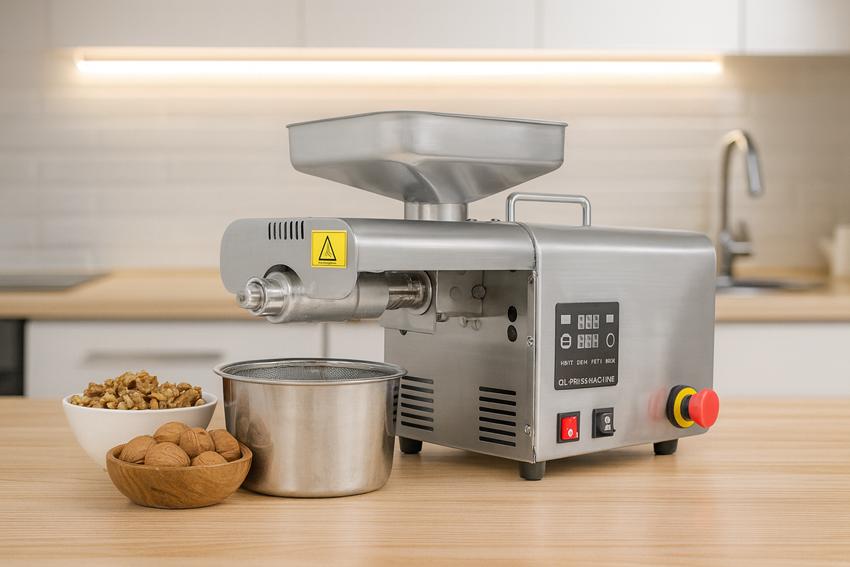
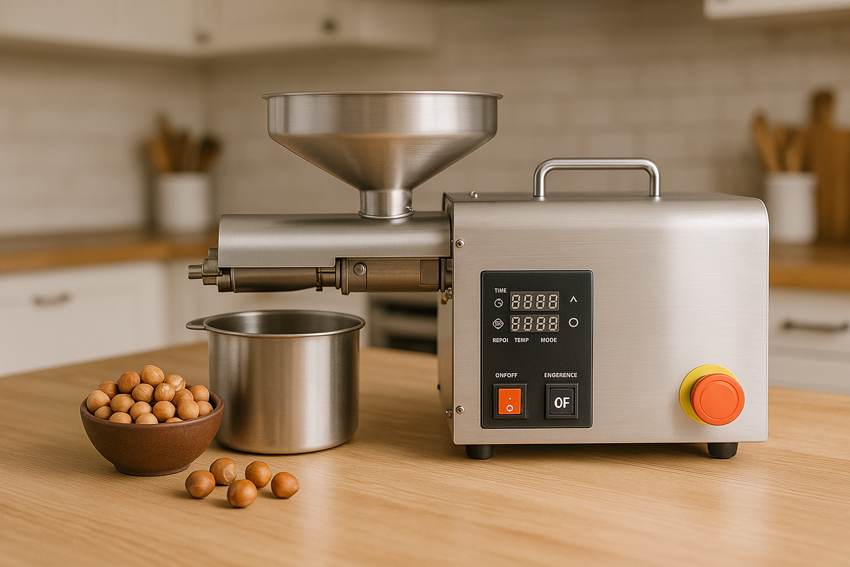
Modern home presses, such as the hot and cold home press offered by Pureoilpress.com, are compact devices that fit on a kitchen countertop while being capable of pressing 5–7.5 kilograms of product per hour. This is the ideal solution for a family that wants to produce oils from the highest-quality raw materials themselves.
Such a press allows pressing not only walnuts or hazelnuts but also flax, sunflower, pumpkin, or rapeseed seeds. The option to choose between cold and hot pressing gives full control over the process. For nuts, both cold and hot pressing are recommended.
Purchasing a home oil press is an investment that pays off in health. An average family consumes several liters of nut oil per year. Buying ready-made oil in a store means paying not only for the product but also for intermediaries, transport, packaging, and marketing. A home press allows you to save money while ensuring that the oil is fresh, pure, and free from any additives.
From Nut to Oil – Step by Step
The process of pressing in a home press is surprisingly simple. Shelled and properly prepared nut kernels are placed in the press chamber. The device slowly but steadily compresses them, extracting golden oil that flows into a prepared container. The process temperature is constantly monitored to ensure it does not exceed the cold-pressing threshold.
After about 30–40 minutes, one kilogram of walnuts can yield approximately 450–500 ml of pure oil. The yield may vary depending on the moisture content and type of nuts. Hazelnuts produce slightly less oil—around 400–450 ml per kilogram—but with an exceptionally delicate flavor.
After pressing, the remaining cake—pressed nut residues—should not be wasted. Nut cake is an excellent addition to bread, cookies, or desserts. It can also be used as nutritious feed for birds in winter.
Health Benefits of Nut Oils – Nature Heals
For thousands of years, nuts have been a staple food for humanity. Ancient Greeks called them "food of the gods," and in traditional Chinese medicine, they were used to treat nervous system disorders. Modern science confirms what our ancestors intuitively knew: nuts, and especially the oils pressed from them, are a true pharmacy of nature.
Walnut Oil – Elixir for the Brain and Heart
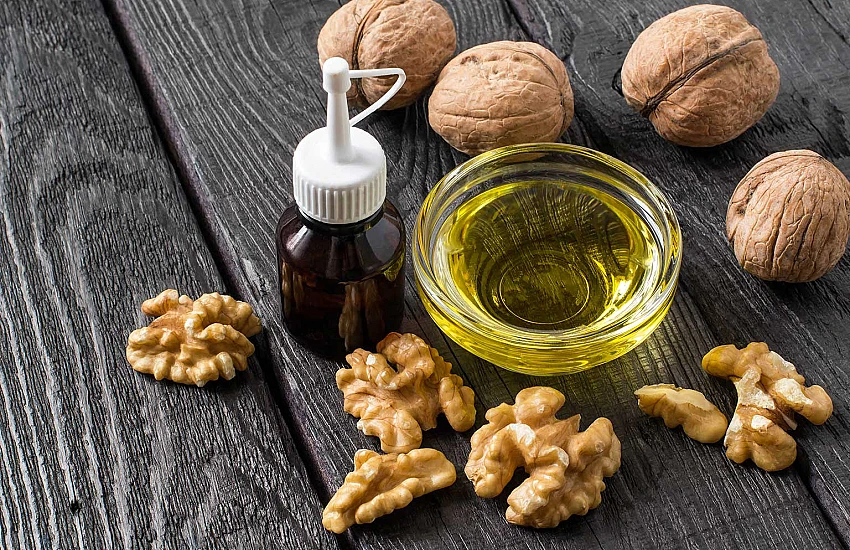
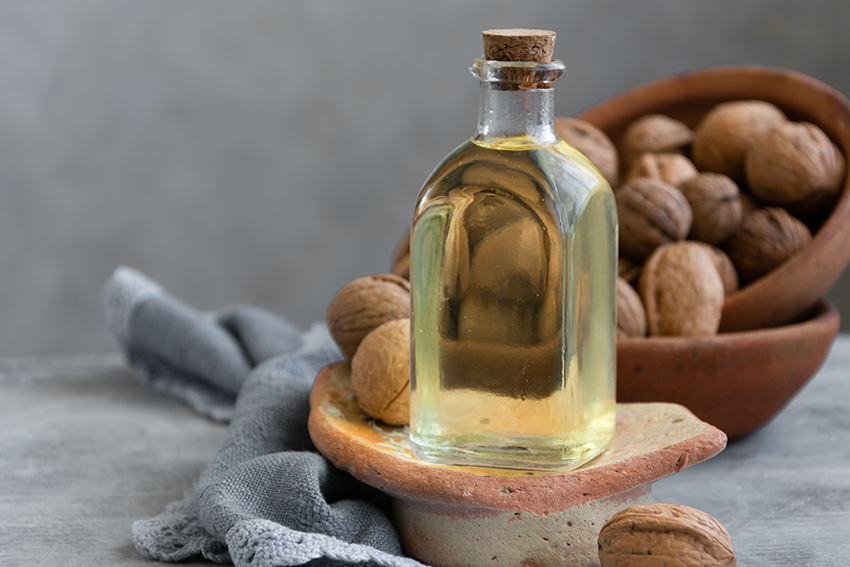
Walnut oil is a highly valued product, cold-pressed and unfiltered, distinguished by its high content of unsaturated fatty acids, especially omega-3 (alpha-linolenic acid – ALA). It is a valuable dietary supplement, helping to balance the omega-6 to omega-3 ratio, which in a typical diet is often skewed in favor of omega-6.
The omega-3 fatty acids in walnut oil play an important role in nervous system function, supporting the construction of cell membranes in the brain. Numerous studies indicate that regular consumption of walnuts or walnut oil can positively influence cognitive functions and may help protect against neurodegenerative diseases such as Alzheimer’s or Parkinson’s.
Walnut oil is also a valuable component in the prevention of cardiovascular diseases. Thanks to the presence of polyunsaturated fatty acids and natural polyphenols, it helps lower LDL cholesterol and triglyceride levels while supporting the increase of HDL cholesterol. Consumption is recommended for people at higher risk of heart disease or hypertension.
This oil also provides significant amounts of antioxidants, including vitamin E in a highly bioavailable form. Vitamin E protects cells from oxidative stress and slows down the body’s aging processes.
Walnut oil should be used cold—as a dressing for salads, vegetables, desserts, or for skin and hair care. Its properties make it ideal for supporting nervous system and cardiovascular health, as well as maintaining healthy skin.
Hazelnut Oil – Gentle Strength
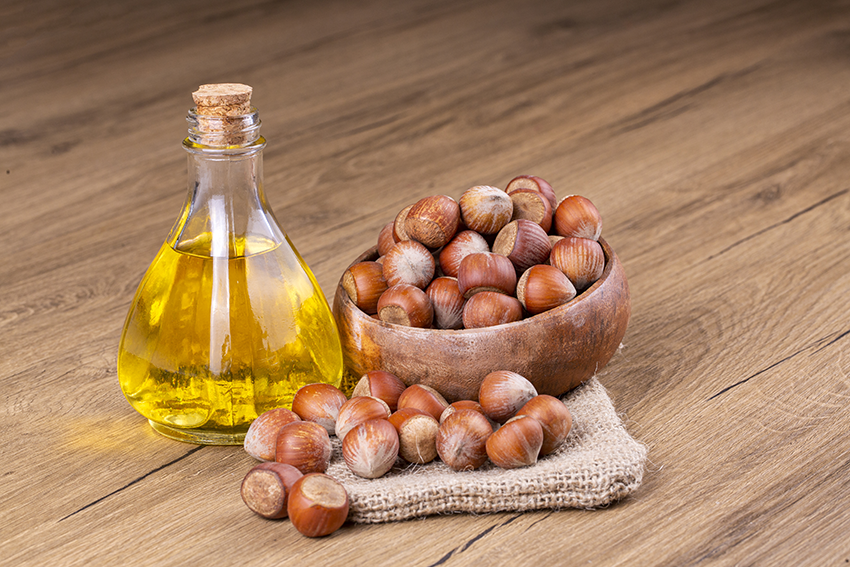
Hazelnut oil has a milder flavor than walnut oil but also possesses high health value. Its composition is dominated by monounsaturated fatty acids—particularly oleic acid, an omega-9 fatty acid known for its beneficial effects on heart health, blood lipid profile, and anti-inflammatory properties. Oleic acid is also the main component of olive oil, prized in the Mediterranean diet.
Hazelnut oil also contains natural phytosterols—plant compounds that help reduce cholesterol levels by limiting its absorption in the intestines, which may contribute to lowering the risk of atherosclerosis and cardiovascular diseases. Regular consumption of this oil supports the maintenance of healthy cholesterol levels and may improve memory and concentration thanks to antioxidants and vitamin E.
This oil is also valued in skin care. It has a light texture, absorbs quickly, and does not leave a greasy residue, making it suitable as a natural cosmetic for dry, oily, problematic, and sensitive skin. It supports hydration, elasticity, and skin regeneration, may soothe irritations, help with scar care, and can be used for massage to relieve muscle tension or fatigue.
Black Walnut Oil – Wild and Powerful
Black walnut oil is a true rarity, with extraordinary health properties. It contains a high concentration of juglone—a unique compound with strong antifungal and antiparasitic properties. In folk medicine, black walnut oil was used to treat fungal skin infections and support the elimination of intestinal parasites.
Modern research also confirms its anti-inflammatory and immune-boosting properties. Black walnut oil is rich in melatonin—a hormone that regulates the sleep-wake cycle and improves sleep quality. It is a natural support for people struggling with insomnia or sleep disturbances.
How to Use Nut Oils for Health
To fully benefit from nut oils, a few rules should be observed. First, these oils are not suitable for frying—high temperatures destroy their delicate components. They are best used cold, as an addition to salads, spreads, dips, or ready-to-eat dishes.
The optimal daily dose is about 1–2 tablespoons. It can be taken on an empty stomach in the morning—though for many, the intense nutty flavor may be challenging. It is easier to incorporate the oil into meals, drizzling it over salads, sandwiches, or adding it to smoothies.
It is important to store nut oils in a dark, cool place, preferably in the refrigerator after opening. Light and heat quickly degrade the valuable fatty acids. Fresh, homemade oil is best consumed within 2–3 months of pressing.
The Culture of Nut Oil – Returning Traditions
Pressing oil from nuts is not only a technological process but also a part of culture and tradition. In different regions of Poland, there were local customs associated with nuts, which are slowly returning to popularity.
Nut Oil in Polish Cuisine – A Forgotten Flavor
Modern Polish cuisine is mainly associated with butter, lard, or rapeseed oil. However, looking into old recipes reveals numerous references to nut oil. In the manor kitchens of the 18th and 19th centuries, walnut oil was valued as a dressing for salads, a sauce for game, or delicate pastries.
In monastic culinary traditions, hazelnut oil was used during Lent as a substitute for butter. It gave dishes a rich, nutty flavor and provided essential calories during periods of fasting. Benedictines and Cistercians, who often had old walnut trees on their estates, developed unique recipes using locally pressed oils.
Today, there is a true renaissance in the use of nut oils in modern Polish cuisine. Chefs are rediscovering these forgotten flavors, creating dishes that blend tradition with modernity. Nut oil pairs perfectly with tart apples, goat cheese, roasted beets, or pears—creating harmonious combinations typical of Polish autumn.
Nuts in Folklore and Beliefs
Nuts have long held an important place in Polish folklore. The walnut tree was considered magical—sitting in its shade was believed to protect against illness, and its leaves were thought to ward off evil spirits. However, it was not planted too close to homes due to the belief that its powerful roots could damage foundations.
Hazel, on the other hand, was revered as a sacred tree. Hazel branches were used to decorate homes for Easter, and hazelnuts were placed in room corners for protection against lightning. On St. John’s Eve, young women sought “miraculous” hazel bushes, believing that finding one would bring luck in love.
Nut oil was used not only in cooking but also in folk medicine. It was rubbed on aching joints, applied to irritated skin, and even added to infant baths, believed to strengthen their skin. While many of these beliefs now belong to legend, some medicinal properties of nut oil have been confirmed by modern science.
Why It’s Worth Pressing Oil at Home – A Manifesto of Quality
In an age of industrial food production, pressing oil at home may seem anachronistic. After all, you can buy bottled oil in any store, often at a promotional price. So why invest time and resources in producing your own oil?
Freshness You Can’t Buy
The first and most important reason is freshness. Cold-pressed oils, particularly rich in unsaturated fatty acids, begin to oxidize almost immediately after extraction. This process is accelerated by exposure to light, air, and heat. Store-bought oil travels a long path before reaching your kitchen—from the mill, through warehouses and transport, to the store shelf—which can take several months.
Home-pressed oil, made today, is fully fresh by the next day. You can prepare it in the quantity you need for a few weeks, using it before it ages. The difference in taste and aroma between fresh and old oil is enormous—it’s like comparing freshly ground coffee to coffee from a month ago.
Full Control Over the Process
Home pressing gives you complete control over every stage of production. You choose the nuts—you can collect them from your own garden, an old tree on your property, buy them from a neighbor with a fruiting nut tree, or forage wild hazelnuts in the forest. You know exactly what goes into the press.
You control the pressing temperature, choosing cold pressing for maximum nutritional value or slightly warm pressing for a more intense flavor. There is no room for additives, preservatives, refining, or any chemical modifications. What comes out of the press is pure, 100% oil.
Ecology and Zero Waste
Producing oil at home eliminates the entire chain of transport, plastic packaging, and middlemen. Nuts collected from a garden tree, a local neighbor, or a nearby forest have a minimal carbon footprint. There is no long-distance shipping from exotic countries, energy-intensive refining processes, or repeated repackaging.
The press cake left after extraction is not waste but a valuable product—you can compost it, use it in the kitchen, or feed it to animals. This is a true implementation of the zero-waste principle.
Economy and Savings
Although the initial investment in a press may seem high, home oil pressing is cost-effective in the long run. One kilogram of good walnuts costs about 30–40 PLN (or can be collected from your own tree for free). From one kilogram of nuts, you get approximately half a liter of oil. Comparable-quality walnut oil in a health food store costs 120–160 PLN per liter.
The production cost of one liter of walnut oil is around 60–80 PLN (based on the nut price). The savings per liter are therefore approximately 60–80 PLN.
For a press costing around 2,500 PLN, the investment pays off after producing about 40 liters of oil, assuming you need to buy nuts. Additionally, consider the value of the press cake—the residue from pressing—which can be used as a valuable ingredient for baking or muesli, adding another benefit to home pressing.
Seasonality and Locality – A New Philosophy of Eating
Home pressing of nut oils aligns with the broader movement toward seasonality and locality in nutrition. It’s a response to the globalization of the food market, where everything is available all year but often at the cost of quality, freshness, and environmental impact.
Eating in Rhythm with the Seasons
Autumn oil pressing is a celebration of living in tune with nature. In the fall, our bodies need fatty, caloric foods to prepare for winter. Nuts and their oils are perfect sources of energy, fat-soluble vitamins, and compounds that strengthen immunity.
Consuming seasonal, local products also provides greater dietary variety throughout the year. In winter, we reach for nut oils; in spring, fresh herbs and young leaves; in summer, berries and fruits. This cyclical approach supplies the body with diverse nutrients when they are most needed.
Connection with Local Producers and Neighbors
Choosing local nuts from a neighbor with a fruiting tree or foraging in a nearby forest creates a connection with the place where we live. We meet people who have old nut trees in their gardens, understand the value of these trees, and appreciate the harvest they provide each year.
This connection leads to a deeper understanding of the value of food. Knowing how many years it takes for a planted walnut tree to start fruiting and how much work goes into the autumn harvest changes the way we perceive the food on our plate. Food stops being an anonymous commodity and becomes the product of the earth and human care.
Practical Tips – How to Start Your Journey with Home Oil Pressing
Choosing a Press – What to Look For
A good home press is an investment for years. When choosing one, consider several key parameters. First and foremost, efficiency – how many kilograms of raw material the press can process per hour. For family use, a device with a capacity of 5–7.5 kg/h is sufficient.
Another important factor is temperature control. The best presses offer both cold and warm pressing modes, providing flexibility depending on the raw material and desired result. The press available at pureoilpress.com meets these requirements, offering 5–7.5 kg/h output and precise temperature control.
Ease of cleaning is also crucial. Pressing different raw materials requires thorough cleaning between sessions to prevent flavors and aromas from mixing. The design should allow easy access to all parts that come into contact with the oil.
First Pressing – Step by Step
For your first pressing, it’s best to start with walnuts—they are easily accessible, relatively simple to prepare, and give a good oil yield. Begin with a small batch, about 1–2 kg of nuts.
Prepare all necessary accessories: a clean dark glass bottle for the oil, a sieve or cheesecloth for additional filtration, and a container for the press cake. Make sure the press is clean and dry.
Chop the nuts into small pieces and place them in the press chamber. Set the pressing mode to cold and start the process. Take your time—slow pressing produces the best oil. Watch as golden oil flows into the container. It’s a mesmerizing sight that never gets old.
After pressing, filter the oil through cheesecloth or a sieve to remove any small particles. Pour into a bottle, seal tightly, and store in a dark, cool place. Your first truly homemade, fresh nut oil is ready!
Experimenting and Developing Skills
Once you’ve mastered the basics, you can start experimenting. Try different nuts, test various pressing temperatures, and blend different varieties. Each batch will be slightly different, which is the beauty of home pressing—every oil has its unique flavor.
Keep notes—record the pressing date, type of nuts, yield, taste, and aroma. Over time, you’ll develop your own tried-and-true methods and preferences.
Frequently Asked Questions
How long can homemade nut oil be stored, and how to tell if it has gone bad?
Fresh, cold-pressed nut oil is best consumed within 2–3 months of pressing. Stored in a dark bottle in a cool place, it can stay fresh for up to 4–5 months. Oil that has aged or spoiled has a characteristic bitter, rancid taste and an unpleasant odor reminiscent of paint or old fats. If the oil smells different from fresh nuts, it’s better not to consume it. Natural oil may form sediment at the bottom of the bottle—this is normal and does not indicate spoilage.
Can I press oil from store-bought nuts, or is it better to gather them myself?
Store-bought nuts can be used if they are fresh, unsalted, and unroasted. It’s best to buy nuts in shells, as shelled nuts lose freshness faster. Collecting your own nuts from a garden, a neighbor’s tree, or the forest has many advantages—you know they are fresh, chemical-free, and local. Wild hazelnuts from Polish forests often have a more intense flavor than store-bought ones. If using store-bought nuts, choose those from certified organic farms.
What are the most common mistakes beginners make with home oil pressing, and how to avoid them?
Common mistakes include using overly moist nuts (yield less oil and spoil faster), pressing too small a batch at once (press works inefficiently), neglecting to clean the press (transferring flavors between batches), storing oil in clear bottles in light (causes oxidation), and pressing too quickly at too high a temperature (degrades valuable nutrients). Also, avoid using nuts of questionable quality—moldy or rancid kernels produce poor and potentially harmful oil. Patience is key: slow, cold pressing always yields better results than rushing.
How much does a home oil press cost, and is it really worth it?
A good home press costs around 2,000–6,000 PLN, depending on the model and functionality. While this may seem like a lot, the investment quickly pays off. One liter of high-quality walnut oil in an organic store costs 120–160 PLN. Producing it yourself from 1 kg of nuts for 30–40 PLN (or free from your own tree) yields half a liter of oil, saving 60–80 PLN per liter. A lower-priced press pays for itself after producing about 40 liters of oil, enough for a family using nut oils regularly throughout the year. Beyond financial savings, you gain freshness, certainty of ingredients, and the joy of making something yourself.
Summary – Autumn Scented with Fresh Oil
Autumn nut pressing is more than just a way to obtain a valuable food product. It is a philosophy of living closer to nature, in rhythm with the seasons. It is a conscious choice of quality over convenience, locality over globalization, and freshness over long shelf life.
The nuts in our gardens and forests—from a majestic walnut tree by an old manor to a modest but charming hazel in a forest grove—are treasures we often overlook. They contain everything our bodies need: healthy fats, vitamins, minerals, and antioxidants. Pressing oil from them at home unlocks this potential, creating a fresh, aromatic elixir of health.
Investing in a home oil press, such as the model available at prasyolejowe.pl, opens the door to culinary independence and conscious eating. It allows you to create top-quality products in your own kitchen, free from preservatives, additives, and long supply chains.
Start your journey with home pressing this autumn. Gather nuts from your garden, a neighbor, or the forest, prepare your press, and experience the difference between truly fresh, homemade oil and store-bought alternatives. This is an experience that will transform your approach to food and show that the best flavors come from respecting nature, tradition, and quality.