
Table of Contents
- What Functional Flours Are and Where They Come From
- Coconut Flour - Properties, Flavour and Uses
- Black Cumin Flour - Intense Flavour and Health-Supporting Properties
- Nut Flour - Richness of Flavour and Protein
- Pumpkin Seed Flour - the Underrated Hero of the Polish Oil Mill
- From Seed to Flour - How Production Works in Your Own Oil Mill
- The Oilseed Grinder - the Heart of Functional Flour Production
- Functional Flours in Culinary Practice - Some Inspiration
- FAQ - Frequently Asked Questions
When a warm, compact disc of press cake comes out of the oil press, it is easy to treat it as a by-product - something to deal with or pass on to animals. Yet this seemingly humble residue holds concentrated richness: proteins, dietary fibre, minerals and distinctive bioactive compounds that have no place in wheat flour. Coconut flour, black cumin flour, nut flour and pumpkin seed flour - each of them can be made from the press cake left behind during cold-pressed oil production. This is not zero-waste philosophy used as a marketing slogan. It is a concrete opportunity to turn a material that already exists into a product with real culinary and nutritional value.
In Polish farmsteads and small oil mills, more and more people are recognising this potential. This article is a practical guide to four of the most interesting functional flours that can be obtained from press cake, and at the same time a pointer towards the equipment needed to organise the whole process.
What Functional Flours Are and Where They Come From
Functional Flour - Definition and Place in the Modern Kitchen
The term "functional flour" is used fairly broadly, but in practice it refers to any non-wheat flour that brings something more than just starch and structure to the final product. Functional flours are generally richer in protein, fat or fibre than their wheat counterpart, often contain no gluten, and are characterised by a pronounced flavour profile. In the kitchen they serve both as a structural ingredient and as a carrier of nutritional value - which is why they appear increasingly often in recipes for gluten-free bread, protein bakes, granolas and smoothies.
Around the world, functional flours are produced from dozens of raw materials - from chickpeas and lentils, through cassava root, to exotic chia seeds. In Poland, the most accessible and easiest to produce at home are flours derived from oilseeds that pass through the oil press during cold-pressed oil production. What they all have in common is a high nutritional density - in a small volume they contain substantial amounts of nutrients that are lacking in a traditional grain-based diet.
Press Cake as a Starting Point - What Remains After Oil Pressing
After passing seeds through a screw press, two products are obtained: oil and press cake, known as oil cake. Oil cake is a compacted mass whose composition includes residual fat (typically from a few to more than ten per cent, depending on the raw material and pressing parameters), proteins, fibre, complex carbohydrates and a range of micronutrients. The amount of fat remaining in the cake is not a drawback - on the contrary, it is precisely this that makes the cake suitable for grinding without any processing aids, and the finished flour has a naturally creamy, slightly fatty consistency.
Press cake from pumpkin seeds looks different from that of black cumin, and both differ from the residue left after hazelnuts or desiccated coconut. Different raw materials produce different cake structures - some hard and flaky, others soft and dusty - which directly affects the way they are milled and the properties of the final flour.
Zero Waste in the Oil Mill - The Philosophy of Full Raw Material Utilisation
The idea of making the most of every raw material is not new - in traditional oil mills, press cake was passed on as animal feed and played an important role in the farm's food balance. Today, however, when consumers seek high-quality ingredients and are willing to pay for products with a story, flours from press cake are taking on a new dimension. An oil mill that offers not only oil but also coconut or pumpkin seed flour adds premium products to its range - ones in which the full value of the raw material has been captured without waste.
Small production facilities and agritourism farms increasingly see functional flours as an opportunity to diversify revenue. Where press cake once went to the compost heap or the feed bin, it can now become the raw material for a flour that commands a several-fold higher margin than the oil itself.
Coconut Flour - Properties, Flavour and Uses
Nutritional Composition and Characteristics of Coconut Flour
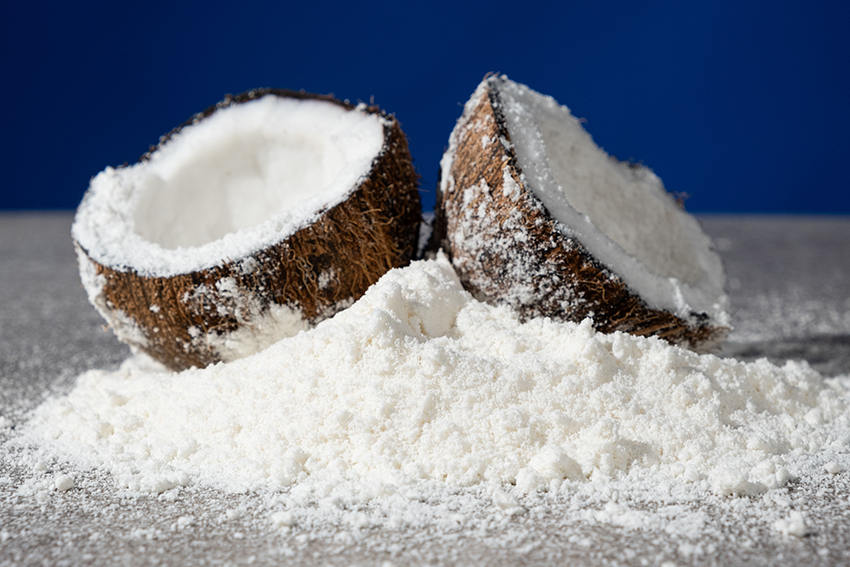
Coconut flour is made from dried and milled press cake left after coconut oil pressing. Compared with wheat flour, it contains considerably more fibre - typically accounting for 40-60% of dry matter - while also providing a moderate amount of protein and the healthy saturated fats characteristic of coconut-derived products. The glycaemic index of coconut flour is relatively low, which is why it is often recommended to people managing stable blood sugar levels.
The abundance of fibre has its consequences, however - coconut flour absorbs an exceptionally large amount of water. One gram of this ingredient can bind many times more moisture than a gram of wheat flour. This property must be factored into every recipe in which coconut flour plays a significant role.
High Fibre Content and Its Consequences in Baking
Baking with coconut flour requires some adjustment of standard recipes. A batter containing it is denser, loses moisture more quickly and does not behave like wheat-based dough. In practice, this means increasing the quantity of liquid and eggs - the latter act as a binder replacing the gluten that coconut flour does not contain. A good rule of thumb is to substitute no more than 20-30% of the flour in a recipe with its coconut counterpart, at least when starting out with culinary experiments.
In sourdough or yeast-leavened breads, coconut flour works well as an enriching addition that boosts flavour and nutritional value without the need to abandon wheat entirely. In cookies and muffins, where texture is more forgiving, a higher proportion can be used.
Coconut Flour in the Kitchen - from Bread to Desserts
Coconut flour brings a subtly sweet, exotic aroma to baked goods that pairs particularly well with chocolate, cinnamon, vanilla and tropical fruits. It makes an excellent base for gluten-free cookies, banana pancakes and pound cakes. It also works very well as a thickener for creams and custards, where a small amount produces a clearly noticeable effect on consistency.
Beyond baking, coconut flour is sometimes used as a coating for fish and chicken - it gives the dish a delicate sweetness and a crispy crust. It can also be stirred into smoothies and porridge as a source of fibre for a strong start to the day.
Black Cumin Flour - Intense Flavour and Health-Supporting Properties
Black Cumin as an Oilseed - Characteristics of the Raw Material
Black cumin (Nigella sativa) is an annual plant of the buttercup family, cultivated for its seeds both as a spice and as an oilseed. Its small, black, three-cornered seeds contain between 30 and 40% oil, which is characterised by an exceptionally rich composition - the presence of thymoquinone, a remarkable biologically active compound, makes it the subject of intensive scientific research. After the oil has been pressed, the cake from black cumin retains a significant proportion of the aromatic volatile compounds and terpenes, and milling it produces a flour with an intense, slightly bitter and spicy aroma.
Black cumin can be grown in Poland - the plant tolerates brief frosts, does well on lighter soils and requires no particular agronomic attention. Artisan oil producers are increasingly turning to black cumin as a complement to their range, recognising growing consumer interest in this raw material.
What Black Cumin Flour Contains and Why It Is Worth Using
Black cumin flour is one of the most biologically active products among all functional flours. It contains thymoquinone and other polyphenols, as well as significant amounts of protein, fibre and unsaturated fatty acids remaining after pressing. It is also rich in zinc, iron, calcium and magnesium. From a culinary point of view, it is a product with a very pronounced character - its flavour is distinctly spicy, with notes of pepper and anise.
It is worth noting that black cumin flour is not suited to use in large quantities - its intense flavour will quickly dominate other aromas. In the kitchen it functions as a spice in the same way as whole black cumin seeds: a few tablespoons is enough to give bread or a dip a distinctive, recognisable flavour profile.
How to Dose Black Cumin Flour in Everyday Cooking
The simplest way to start is by sprinkling black cumin flour over bread before baking - it replaces or complements whole seeds and delivers a more intense aroma, because the increased surface area of the milled material releases volatile components more readily. It also works as an ingredient in meat marinades, bread spreads, hummus, yoghurt-based dressings for vegetables and spiced crackers. In India and across the Middle East, black cumin has for centuries found its way into bread and legume dishes - those flavour combinations are tried and tested and well worth recreating at home.
As an addition to smoothies or drinks, black cumin flour is a less obvious but interesting experiment - it pairs well with honey, ginger and citrus fruits.
Nut Flour - Richness of Flavour and Protein
Types of Nut Flour and Their Properties
The term "nut flour" covers an entire family of products - almond flour, hazelnut flour, peanut flour, cashew flour, walnut flour and pine nut flour, among others. Each has a somewhat different flavour and nutritional profile, but all share a high protein content (typically 20-30%), beneficial fatty acids and a natural sweetness. From the oil mill's perspective, availability of raw material depends on the specifics of production - Polish oil mills most commonly work with almonds, hazelnuts and peanuts.
Hazelnut flour has a warm, buttery aroma and a light brown colour - it pairs beautifully with chocolate, coffee and sweet baked goods. Almond flour is more delicate in flavour, slightly moist in texture and widely used in gluten-free baking, particularly in frangipane-style cakes and macarons. Peanut flour is more intensely nutty and higher in protein - it performs well in protein cookies, energy bars and as a thickener for Asian sauces.
Nut Flour as the Foundation of Gluten-Free Baking
The absence of gluten in nut flours has made them a cornerstone of modern gluten-free cooking. In cake recipes, almond or hazelnut flour can replace wheat in a near 1:1 ratio, though the bake will have a different structure - more moist, dense and crumbly. This is not a flaw but a characteristic - cakes and biscuits made with nut flour are inherently more filling and flavourful than their conventional equivalents.
Another important property of nut flours is that they do not require prolonged kneading - the absence of gluten means there is no protein network to develop. The batter simply needs to be gently combined, which shortens preparation time and reduces the risk of the mass becoming greasy.
Shelf Life and Storage of Nut Flour
Due to their high fat content, nut flours are more susceptible to oxidation than wheat flour. Freshly milled hazelnut or almond flour should be stored in a tightly sealed container, ideally in a refrigerator or a cool, dark place. Under such conditions it will remain fresh for several weeks - up to one or two months at most. This is one of the arguments in favour of milling nut flours in small batches on demand, rather than building up large stocks.
Artisan oil producers who mill their own press cake have the advantage of being able to offer flour of guaranteed freshness - something a shop selling imported flours simply cannot provide.
Pumpkin Seed Flour - the Underrated Hero of the Polish Oil Mill
Nutritional Composition and Value of Pumpkin Seeds and Their Flour
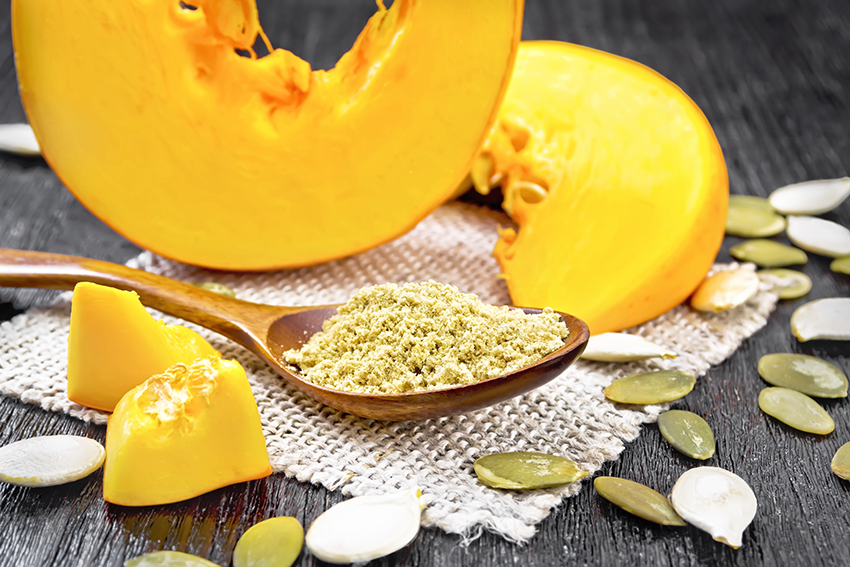
Pumpkin seeds are one of the most valuable oilseeds that a Polish oil mill can process. They contain between 40 and 50% oil, and beyond the fat they offer rich amounts of protein (25-30%), zinc, magnesium, iron and manganese. Pumpkin seed oil is a premium product that enjoys great recognition - and precisely for that reason, the press cake after its extraction is sometimes neglected, even though it still holds substantial reserves of valuable nutrients.
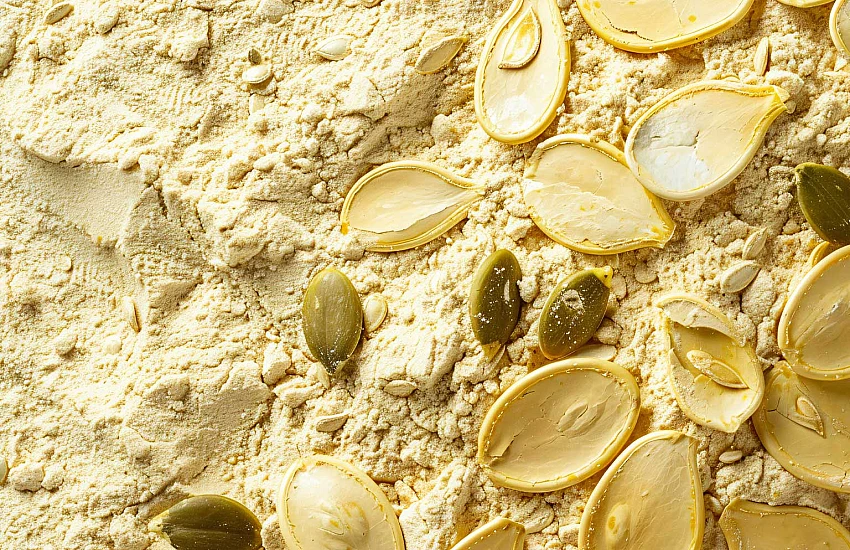
Pumpkin seed flour, obtained by milling the cake left after pumpkin seed pressing, is rich in protein, fibre and minerals. It contains phytoestrogens and phytosterols that attract attention in the context of urinary and hormonal health - though treating a flour as a dietary supplement would be a considerable oversimplification. From the cook's perspective, what matters most is its flavour: nutty, slightly bitter, with a clear note of roasting.
The Distinctive Taste and Colour of Pumpkin Seed Flour
Flour from pumpkin seed press cake has a deep, dark green colour - characteristic of both the seeds themselves and the pumpkin seed oil. This intense hue carries partially into baked goods and drinks, colouring them an original, greenish shade. For some this is an aesthetic asset, for others a surprise - it is worth informing recipients of products made with it beforehand.
The flavour of pumpkin seed flour is assertive enough to dominate in delicate baked goods. It pairs well with cinnamon, ginger, nutmeg and garlic - in both sweet and savoury recipes. Bread made with it gains character and depth that cannot be achieved with wheat flour alone.
Uses of Pumpkin Seed Flour in Recipes and Everyday Cooking
Pumpkin seed flour works well as a partial replacement for wheat flour in breads, rolls and crispbreads. Good results come from blending it with rye or spelt flour, which have a similarly assertive character. In savoury preparations - cream soups, coatings, pancakes - it behaves predictably and contributes deep flavour without the need for extra spices.
In vegan cooking, pumpkin seed flour is a valuable source of protein and zinc - regular use can help supplement nutrients that tend to be deficient in a plant-based diet. It is also worth mentioning its use in purees and smoothies for children - provided, of course, that the child accepts a somewhat unusual colour in their food.
From Seed to Flour - How Production Works in Your Own Oil Mill
Oil Pressing as the First Stage - What Comes Out of the Press
The production of functional flour from press cake begins, naturally, with oil pressing. A screw press, operating at the right speed and temperature, extracts fat from the seeds and leaves behind an elongated disc or granulate of press cake. The quality of the cake as a milling raw material depends directly on the pressing parameters - the more aggressive the press settings, the drier and harder the cake will be, but the more oil will be recovered. For flour production, a cake that retains slightly more fat is preferable, since it preserves the natural moisture and plasticity that make milling easier.
Directly after leaving the press, the cake is warm and soft - this is the best moment for preliminary breaking, before it cools and hardens. If the cake is to be stored before milling, it should be dried at a temperature of no more than around 40-50°C to prevent mould growth.
Press Cake After Extraction - Physical Properties and Fat Content
Press cakes differ from one another considerably. Cake from pumpkin seeds is hard, dark green and flaky - it requires preliminary breaking before entering the grinder. Coconut cake is drier and more crumbly, relatively easy to mill. Black cumin press cake is small and compact, and nut cakes are hard, dense and fatty, requiring a more robust machine.
Fat content in press cake is typically between 5 and 15 per cent, depending on the raw material and the efficiency of the press. Residual fat is advantageous for the flavour and consistency of the flour, but requires attention during storage - fats oxidise and turn rancid, so the finished flour should be transferred to airtight containers and used within a reasonable period.
Milling Press Cake - from Granulate to Flour
Milling oily press cake is a task for specialised equipment - standard domestic grinders for coffee or grain are not suited to working with fatty, compact oil cake. Oily materials tend to clump together and clog grinding surfaces, leading to machine damage or a deterioration in product quality. What is needed is a grinder designed specifically for oilseeds - with cast-iron abrasive discs, an appropriately chosen rotation speed and a granularity adjustment system.
Granularity is a key factor for the flour's intended use: fine flour (granularity 60-80 µm) is suited to bakes requiring a smooth structure, while coarser flour (150-200 µm) is better for toppings, granola and products in which a pronounced texture is desirable. The ability to freely adjust the degree of milling within a single machine is a major practical advantage.
The Oilseed Grinder - the Heart of Functional Flour Production
The Specifics of Milling Oily Raw Materials
Milling oily raw materials follows different rules from milling grain or spices. The fat contained in seeds and press cake acts as a binding agent that, in a poorly matched machine, causes the milled mass to clump and the discs or blades to become clogged. This is why not every grinder - even a powerful and solidly built one - will cope with black cumin, almonds or pumpkin seeds. The machine must have a properly designed material flow channel, the right hardness of grinding elements, and a system that prevents overheating.
Cast-iron abrasive discs are the proven solution for oily raw materials - resistant to wear, they do not react with fats and ensure even milling without the risk of metal contamination. Machine capacity is also important - with low capacity, milling time increases, the mass remains in contact with hot discs for longer, and undesirable changes in quality can occur.
Oilseed Grinder 50-70 kg/h - Technical Specifications and Capabilities
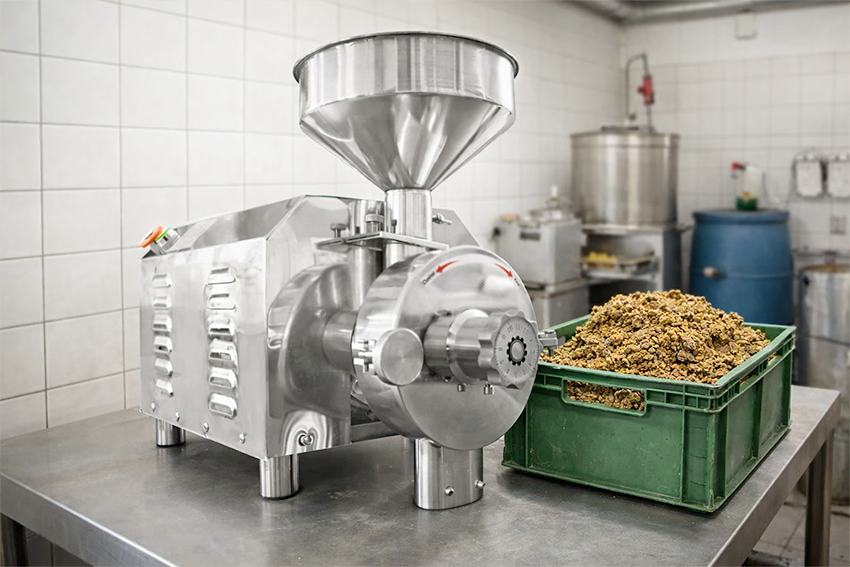
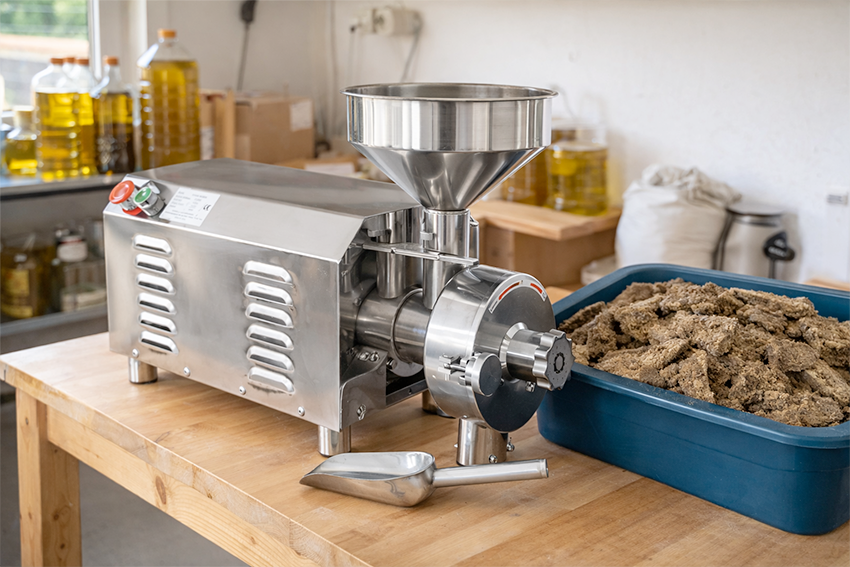
A machine that meets these requirements and will perform reliably in both a small artisan oil mill and a larger-scale production facility is the Oilseed Grinder 50-70 kg/h (model LY-3000A) available from pureoilpress.com. The machine operates at a capacity of 50-70 kg of raw material per hour, making it a genuine production tool - over a single shift, several hundred kilograms of press cake can be processed.
A 3.6 kW motor drives cast-iron abrasive discs, which are the primary milling element. The granularity of the final product falls within the 60-200 µm range and is adjusted via a single dial - without the need to change discs or reconfigure the machine. Standard 230 V / 50 Hz power supply allows the grinder to be connected without installing a dedicated three-phase circuit, which is a significant practical advantage in many small oil mills. Dimensions of 65 x 32 x 45 cm and a weight of 67 kg make the machine compact yet stable during operation. Included in the package are an additional set of abrasive discs, a stainless steel spatula, a cotton collection bag for the milled product, cleaning brushes and an instruction manual.
Granularity Adjustment - from Coarse Topping to Fine Flour
One of the greatest advantages of this model is its granularity adjustment range - from 60 to 200 µm. This means that the same machine can produce both fine flour suitable for direct use in baking and a coarse-ground topping for yoghurt, granola or salad. This versatility is particularly valuable in small facilities where space and budget do not allow for several specialised pieces of equipment.
Stepless adjustment via a single dial means that changing granularity during production takes only a moment. From the same batch of pumpkin seed press cake, both fine baking flour and a coarser fraction for decoration can be obtained - without stopping production and without additional settings.
Practical Operating Tips
Before milling, it is worth confirming that the press cake is not too moist - excessively high moisture causes the mass to clump and can interfere with the operation of the discs. The optimal moisture content of raw material entering the grinder is below 10 per cent. In the case of freshly pressed cake that comes out of the press warm and moist, preliminary drying is advisable. After milling is complete, the machine should be cleaned using the supplied brushes - residues of fatty raw material turn rancid quickly and can affect the taste of the next flour batch.
Regular cleaning and good working organisation are key to maintaining the quality of the final product - and to the longevity of the machine itself.
Functional Flours in Culinary Practice - Some Inspiration
Bread with Pumpkin Seed Flour
A simple wheat-pumpkin loaf, in which pumpkin seed flour accounts for around 20-25% of the total flour, is surprisingly straightforward to make. The deep green crumb, pronounced nutty flavour and crisp crust make such a loaf look like it came from an artisan bakery. It pairs wonderfully with goat's cheese, vegetable pâté and nut butter - but also tastes excellent with plain butter.
Shortbread Cookies with Nut and Coconut Flour
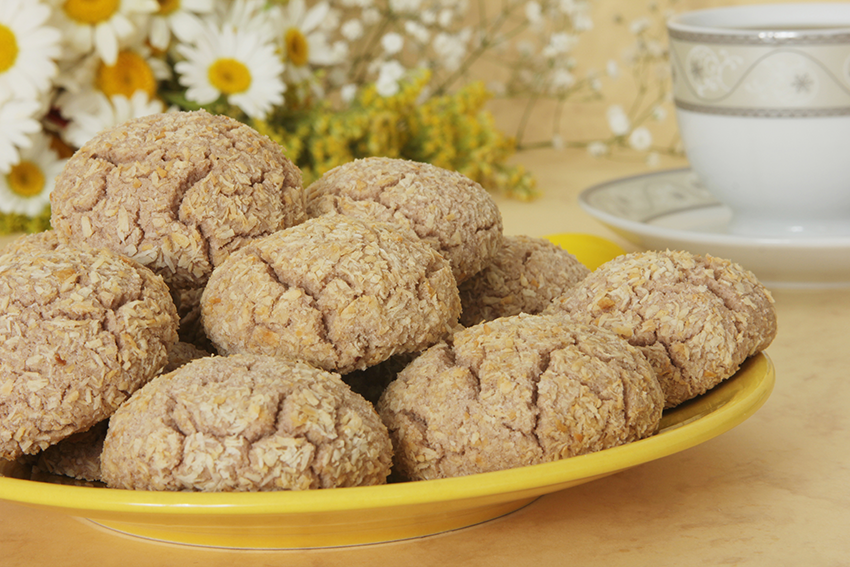
A blend of hazelnut flour and coconut flour (half and half), combined with an egg, clarified butter, honey and a pinch of salt, produces cookies with an intensely nutty flavour and a crumbly, slightly grainy texture. They require no wheat flour or refined sugar - the sweetness comes from the honey and the natural sweetness of the coconut. Baked at 170°C for 12-14 minutes, they come out golden and aromatic. These cookies are an example of how functional flours can replace traditional ingredients without any compromise on taste.
Smoothies, Drinks and Yoghurts with Black Cumin Flour
Black cumin flour is too assertive to be added in large quantities to drinks, but a teaspoon in a smoothie with banana, ginger, honey and plant-based milk is a combination that may well come as a pleasant surprise. The black cumin mellows in the presence of sweetness and creamy texture, and its biologically active properties reach the body in a palatable form. Even simpler - a pinch of black cumin flour stirred into plain yoghurt with a little garlic and dill produces an instant dip with a pronounced Middle Eastern character.
FAQ - Frequently Asked Questions
Is functional flour made from press cake safe to eat?
Yes - press cake from cold-pressed oil extraction is a food product that has not been subjected to any chemical processes or thermal treatment beyond safe thresholds. Provided the source raw material was of adequate quality and the cake was stored under proper conditions before milling, the resulting flour is entirely safe to consume. It is worth paying attention to freshness, however - flours with a high fat content are susceptible to rancidity and should be used within a few weeks.
Are flours made from press cake suitable for people with coeliac disease?
Flours obtained from oilseed press cake - coconut, black cumin, nut or pumpkin seed - are naturally gluten-free. However, people with coeliac disease should ensure that no cross-contamination occurred during pressing and milling. If the same press or grinder was previously used to process cereal raw materials, traces of gluten may be present in the product. For people with coeliac disease, complete separation of processes or gluten-free certification is essential.
How much pumpkin seed flour can be obtained from one kilogram of seeds?
Typical oil yield from pumpkin seeds is 30-40%, which means that from one kilogram of raw material, 600-700 grams of press cake are obtained. After drying and milling, this quantity generally yields around 550-650 grams of pumpkin seed flour. The exact amount depends on the moisture content of the raw material, the press settings and the drying method used. This is a relatively high yield - combined with the oil produced simultaneously, it means that one kilogram of pumpkin seeds gives two valuable products.
How long can functional flours be stored?
Flours from oilseed press cake contain residual fat that is susceptible to oxidation. Stored in a sealed container in a cool, dark place, they remain fresh for 3-6 weeks at room temperature. In a refrigerator, this period extends to 2-3 months. Glass jars or vacuum-sealed bags, kept away from heat and moisture, are the best storage option. It is worth checking the smell before use - rancid flour has a characteristic unpleasant taste and smell and should not be used in food.
Is every grinder suitable for milling oilseed press cake?
No - standard grinders for coffee, grain or spices are not designed for milling fatty oilseed press cake. Raw materials such as pumpkin seed cake, black cumin cake or nut cake tend to clump and clog grinding surfaces, leading to damage or a decline in product quality. Milling press cake requires a machine equipped with cast-iron abrasive discs, appropriate granularity adjustment and designed specifically for oily raw materials - such as the Oilseed Grinder 50-70 kg/h available from pureoilpress.com.
Can functional flours made from press cake be sold commercially?
Yes - functional flours produced from oil press cake can be placed on the market, provided that food law requirements are met. This involves registering the operation as a food processing facility with the relevant sanitary authority, developing documentation based on HACCP principles, and correctly labelling the product with information including ingredients, minimum durability date and allergens. Direct sales and farmers' markets operate under somewhat different, simplified rules - it is worth checking the current regulations on agricultural retail trade applicable in your country.
Does black cumin flour have medicinal properties?
Black cumin and its derivatives are the subject of numerous scientific studies documenting a range of properties of the biologically active substances contained in the seeds - primarily thymoquinone. Studies point to its anti-inflammatory, antioxidant and immunomodulatory properties. This does not mean, however, that black cumin flour is a medicine or a dietary supplement with clinically proven efficacy - consuming it in quantities typical of a culinary ingredient does not replace any therapy. Black cumin flour is above all a valuable dietary component worth including in the menu for its flavour and nutritional merits.