
Table of Contents
- The End of Winter, the Start of the Season – Why Spring Is a Special Moment for Pressing
- Assessing Stocks Before the First Pressing
- Seeds Ideal for a Spring Start
- Preparing Seeds for the First Spring Pressing
- The Machine After Winter – Preparing the Press for the Season
- The Specifics of Early Spring Pressing – Temperature, Yield, Oil Quality
- Storing the First Spring Oil
- FAQ – Frequently Asked Questions
When the days start getting longer and temperatures outside slowly creep above freezing, a particular kind of restlessness stirs in oil mills and home presses alike. The machine has been sitting idle for weeks, stocks of seeds are waiting in bags and containers, and the thought of that first spring batch of oil grows harder to ignore. Before firing up the motor and pouring the first load of raw material into the hopper, though, it is worth pausing to think through a few things that will directly determine whether the first press after winter is a success or a disappointment.
A spring restart is not simply a continuation of the autumn's work. The seeds have changed over winter. The press has been standing still, and the conditions are different from peak season. Those who understand this and prepare accordingly will extract a first-class oil from that initial spring pressing – aromatic, rich in fatty acids, with excellent yield. Those who skip these considerations often find themselves dealing with a series of small problems that are frustrating and drag down the quality of the whole operation.
This article covers every stage: from assessing the condition of winter stocks, through choosing the right raw material for early spring, to preparing the equipment and understanding the specific characteristics of pressing at this particular time of year.
The End of Winter, the Start of the Season – Why Spring Is a Special Moment for Pressing
What Happens to Seeds During Winter Storage
Oilseeds are living biological material. Even at rest, sealed inside bags or containers, they are constantly respiring – taking in oxygen and releasing carbon dioxide and water vapour. The intensity of this process decreases at low temperatures, but it never stops completely. Over months of winter storage, seeds can imperceptibly absorb moisture from their surroundings or, conversely, dry out beyond the optimal level – depending on the conditions in the storage space.
Particularly risky are rooms where temperatures drop sharply in winter and rise again suddenly in spring. These fluctuations cause moisture to condense inside bags and containers, encouraging mould growth, and in extreme cases leading to the raw material going rancid before it is ever pressed. Seeds that look perfectly normal on the outside may be concealing chemical changes that will reduce both the value and the yield of the eventual oil.
Winter storage also affects fat structure. The unsaturated fatty acids – the very compounds that make cold-pressed oils so prized – are prone to oxidation, especially when seeds have been exposed to air and moisture. This is why assessing the quality of raw material before the first spring pressing is no less important than warming up the press itself.
How Temperature Changes Affect the Pressing Process
The temperature of seeds at the moment they enter the press has a major bearing on the efficiency of the whole process. Seeds brought straight from a cold storage room or garage can be just a few degrees Celsius, while the optimal feed temperature for cold pressing is typically between 18 and 22°C. With a too-cold feedstock, the viscosity of the oil inside the seeds increases, making it harder to extract through the screw. Yield drops, the press cake comes out too oily, and the motor runs under heavier load.
For this reason, the first spring pressing requires something that is often unnecessary in summer or early autumn: deliberate acclimatisation of the seeds. A few hours to half a day in a room at ambient temperature is enough for the raw material to reach conditions favourable for efficient pressing. It is a simple step, but it has a real impact on both the quantity and the quality of the oil produced.
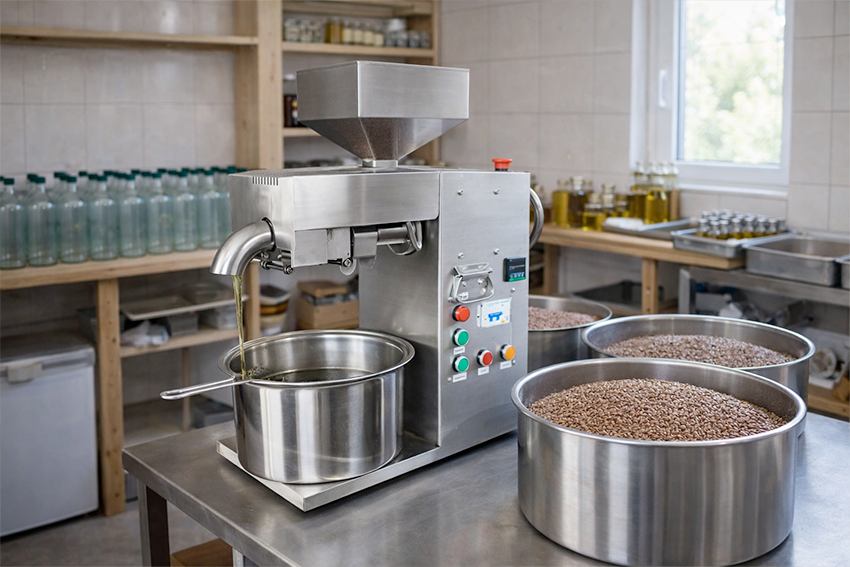
Assessing Stocks Before the First Pressing
Seed Moisture as the Key Parameter
Of all the properties of seeds that should be checked before spring pressing, moisture is the most important and at the same time the easiest to measure. Seed intended for pressing should have a moisture content below 10% – that is the threshold at which screw presses operate correctly and yield a satisfactory quantity of oil. Exceeding that threshold, even by a few percentage points, changes how the raw material behaves in the pressing chamber: instead of moving smoothly through the screw, seeds begin to clump, block the screw, and produce oil mixed with an excessive proportion of solid particles.
What is worse, overly moist seed is an ideal environment for microorganisms. Moulds and fungi that may have developed unnoticed during storage contaminate the oil with mycotoxins – substances harmful to health that cannot be removed by ordinary filtration. Checking moisture content is therefore not simply a matter of production efficiency; it is a matter of product safety.
Seeds that are too dry – with a moisture content below 4–5% depending on the species – also cause problems. They become brittle and generate an excess of fine dust during pressing, which mixes with the oil and complicates subsequent clarification. In spring, after a long winter of storage in rooms heated by central heating, over-drying of stocks occurs far more often than one might expect.
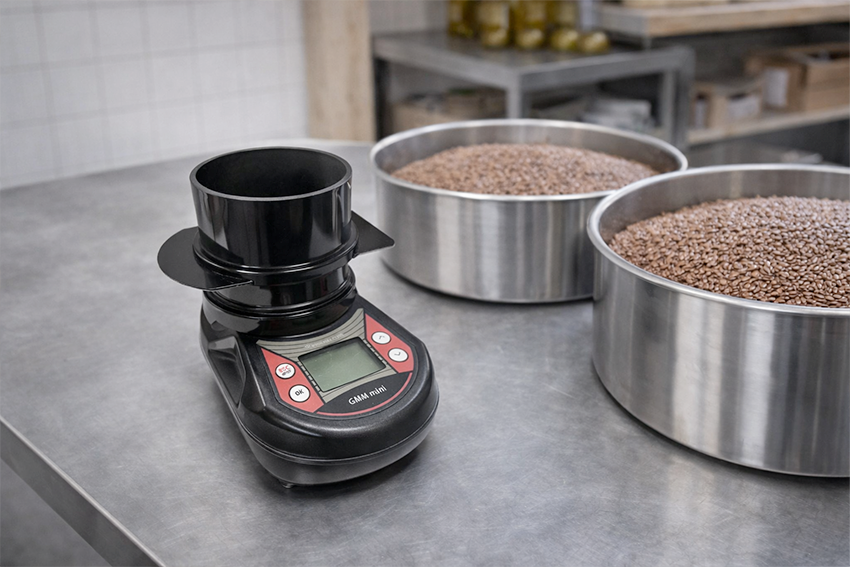
How and With What to Measure Moisture – the Dramiński GMM mini II Moisture Meter
Assessing moisture by eye, or by squeezing seeds in the palm, is unreliable and invites costly mistakes. The only dependable method is measurement with a moisture meter calibrated for oilseeds. Such a device should be standard equipment in every oil press operation – whether a home setup or a larger-scale facility. The Dramiński GMM mini II Moisture Meter for Oilseeds is a Polish-made instrument designed specifically for measuring the moisture of oilseeds. Its GMM mini II version has been calibrated for 14 key species, including rapeseed, flaxseed, hulled and unhulled sunflower, hull-less and in-shell pumpkin seed, black cumin, hemp, sesame, milk thistle, soya, hazelnut, walnut, and almond – in practice, everything a typical oil press operation handles.
Measurement is carried out by a capacitive method on whole seeds, eliminating the need to grind the sample. Simply pour 270 ml of seed into the measuring chamber using the included dosing cup, and the device displays on a clear backlit graphical LCD screen not only the moisture value with a resolution of 0.1%, but also the current sample temperature – important because temperature strongly influences the reliability of the reading. Temperature compensation is applied automatically, ruling out one of the most common errors when assessing raw material brought in from a cold store.
The device runs on two AA batteries, with a battery life ranging from around 70 to over 150 hours depending on backlight intensity. Its dimensions (19×12.5×8 cm) and weight (700 g with batteries) mean it can be taken directly to the storage area for measurement without moving bags around. Software and calibration data updates are carried out via USB, without sending the device away for service.
Other Warning Signs Worth Checking Before Start-Up
Beyond moisture, it is worth assessing seeds with several senses before the first spring pressing. Smell is one of the best indicators of raw material condition: fresh, well-stored seeds have a characteristic, mild aroma typical for their species. If there is a smell of mustiness, mould, or a distinct note of rancidity, those seeds should not be pressed – the oil will absorb those aromas and be unfit for consumption.
Appearance tells a great deal too. A whitish or greyish coating on seeds may indicate mould. Clumping and compacted lumps in a bag are a sign that moisture has been condensing inside the packaging. Changes in colour – darkening of sunflower seeds or flaxseed, for example – signal oxidation. Any of these symptoms should prompt a closer assessment, and in doubtful cases, the batch should not be pressed.
Seeds Ideal for a Spring Start
Rapeseed – A Classic for Early Spring
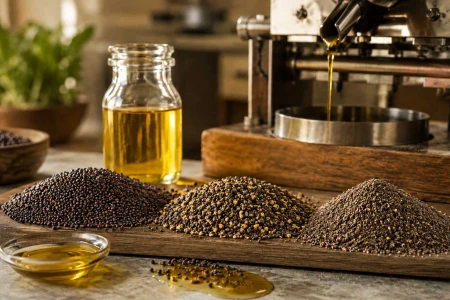
Rapeseed is one of the most commonly pressed raw materials in oil mills and for good reasons it is an excellent choice for the first spring pressing. It is relatively tolerant of moisture fluctuations during storage, has a tough seed coat that protects the fat from oxidation, and presses easily both cold and warm. Cold-pressed rapeseed oil retains a delicate, nutty aroma and a clear, golden colour – particularly appealing after a winter break when pantry stocks have run low.
When pressing rapeseed, it is worth remembering that the optimal raw material moisture sits between 6 and 8%. Seed that is too dry produces dust and sticks to the screw; too moist – as noted – reduces yield and risks microbial growth. After winter storage, many rapeseed batches require light drying or, less often, slight re-moistening, which is why a moisture meter check before start-up is particularly advisable here.
Flaxseed – A Spring Classic
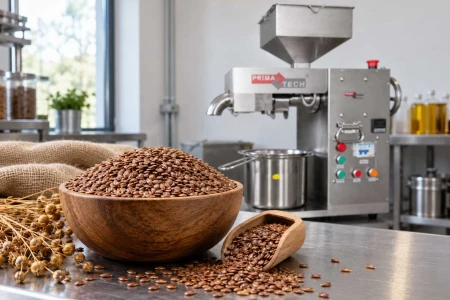
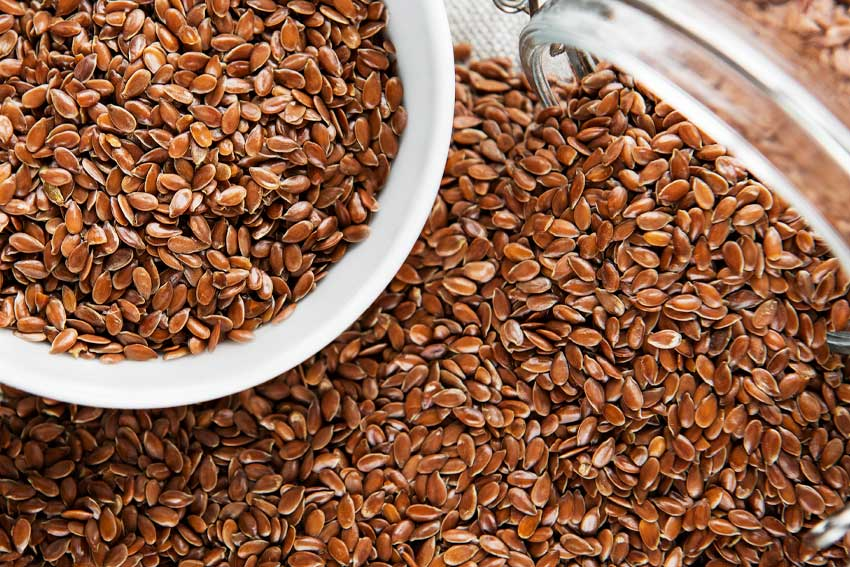
Flax is one of the seeds that survives winter storage remarkably well – provided the conditions were dry. Thanks to the natural mucilage coating the seeds, flax resists external moisture, though that same mucilaginous layer can hinder pressing when seeds are too wet. Flaxseed oil is particularly rich in alpha-linolenic acid from the omega-3 family, which is why it is so popular as a dietary supplement.
Spring pressing of flax has one important advantage: oil produced in cooler weather, without an overheated environment, is easier to store immediately after pressing. Flaxseed oil is exceptionally fragile and oxidises quickly under the influence of heat and light – which is why pressing in spring conditions, before the room heats up as it does in summer, gives the finished product a better starting point for shelf life.
Hulled Sunflower – A Gentle Start to the Season
Hulled sunflower is one of the more demanding raw materials in terms of moisture – the optimal range for pressing falls between 6 and 8%, and exceeding 9–10% has a noticeable effect on yield and the consistency of the press cake. At the same time, it is a material that readily absorbs airborne moisture, particularly if stored in a poorly ventilated or damp space.
Hulled sunflower can be pressed both cold and warm. Cold pressing produces an oil with a pronounced, nutty-grainy aroma and a slightly darker colour. Warm pressing increases yield and results in a lighter, more neutral-flavoured oil. In early spring, when room temperature is still low, warm pressing may be the more practical choice for those who value consistency and predictable results.
Hull-Less Pumpkin Seed – On the Border of Winter and Spring
Seeds from hull-less pumpkin varieties, popular among consumers for the bold, lightly roasted flavour of the oil and an exceptional nutritional profile, are relatively delicate. They have a high fat content but also a relatively soft structure, making them easy to damage through careless storage. Spending winter in a damp space is a significant risk – the tendency to mould is pronounced, and pumpkin seed therefore requires particularly careful inspection before spring pressing.
If seeds have been stored properly – dry, at a stable temperature, protected from insects – they make an excellent raw material for the first spring batches. Pumpkin seed oil is one of the most prized oils produced domestically: dark, dense, intensely flavoured, rich in zinc, vitamin E, and phytosterols.
Black Cumin – Small Seeds, Big Potential
Black cumin (Nigella sativa) is a raw material that tolerates long winter storage exceptionally well. The small, hard seeds, naturally low in moisture, rarely cause problems after winter, though here too it is worth verifying their condition before pressing – especially if storage took place in unheated spaces prone to condensation.
Black cumin oil is relatively high-yielding despite the small seed size, and is attracting growing interest in both food and cosmetics. The characteristic spicy, peppery aroma makes it a distinctive product that stands out from other plant oils. Spring pressing of black cumin allows the first batches of oil to reach market before the peak order season that falls in late spring and summer.
Hemp Seeds – Delicate Seeds Requiring Care
Hemp seeds are an increasingly popular raw material among oil producers, but also one of those requiring the greatest care in storage and preparation for pressing. Hemp seeds have a relatively high content of polyunsaturated fatty acids, which respond to heat, moisture, and oxygen more quickly than fats in more robust materials such as rapeseed or sunflower.
After winter storage, hemp requires thorough inspection – both for moisture (recommended range 4.6–14.6%) and for smell. Hemp oil should be cold-pressed, at a temperature not exceeding 40°C, to preserve its characteristic greenish colour and nutty flavour. Spring is a good time to press hemp, because the ambient temperature helps maintain a low process temperature without special cooling measures.
Preparing Seeds for the First Spring Pressing
Acclimatisation and Temperature Equalisation
Seeds brought in from cold storage should reach room temperature before pressing. In practice, this means leaving bags or containers of raw material in a heated room for several hours to half a day. Acclimatisation time depends on the mass and density of the material – small, light seeds such as black cumin or flax equalise in temperature more quickly than heavy, dense pumpkin seeds.
The process should not be rushed by warming seeds on radiators or with other heat sources. Too rapid heating can cause moisture to condense on the seed surface, which is precisely what should be avoided. Slow, natural acclimatisation is the best method.
Cleaning and Sorting – What to Discard and What to Press
Before pressing, it is worth going through the raw material and removing contamination that may have accumulated during prolonged storage. Particular attention should be paid to seeds that are mechanically damaged, discoloured, mouldy, or visibly shrivelled – these are the ones that introduce compounds which can spoil the taste and quality of the oil.
A good practice is also to sieve the seeds through a mesh of appropriate aperture size, which removes fine dust, dirt, and husk debris that has settled at the bottom of bags during storage. Such contaminants, entering the pressing chamber, lower oil quality and can accelerate wear of the screw.
Drying Seeds Before Pressing
If a moisture meter reading shows that the raw material is too moist, drying before pressing is essential. Drying is most conveniently done in thin layers on cloth or mesh surfaces in a well-ventilated room, avoiding direct sunlight which could overheat and damage the fats. On cool spring days, when ambient humidity is still high, using a grain dryer or a roaster set to low temperature can be helpful.
It is important to remember that drying is not a one-off action – after each batch of raw material it is worth rechecking moisture to ensure the entire load is uniform and ready for pressing. Working with a moisture meter that allows quick, precise measurements directly at the work site is particularly valuable in this situation.
The Machine After Winter – Preparing the Press for the Season
Inspection and Cleaning After the Break
A press that has stood unused for several months requires careful inspection before start-up. Even if it was thoroughly cleaned in autumn, dust, hardened press cake residues, or moisture condensation on metal parts may have accumulated over winter. The first step is checking the pressing chamber and oil outlet channels for any solidified residues from the previous season.
Stainless steel components such as the pressing chamber and screw handle the winter break well, but it is worth wiping them down thoroughly and checking for any signs of corrosion on parts made from other materials. Gaskets and flexible connections should be inspected for hardening or cracking, which often manifests after exposure to low temperatures.
Start-Up and the First Trial Run
Before pressing the first batch of valuable seeds, it is worth carrying out a short trial run on low-value material – for example, unhulled sunflower seeds or leftover material from the previous season. A trial run allows the press mechanism to warm up and run in, confirms that all moving parts are functioning correctly, and ensures that oil and press cake are exiting through the right channels without leaks.
The first few minutes of operation after a long break often produce oil with a slightly higher content of fine solid particles and a more pronounced metallic or lubricant smell. This is normal and fades as the machine warms up and the process stabilises. That is precisely why these first kilograms of oil should come from a trial batch, not from material intended for sale or consumption.
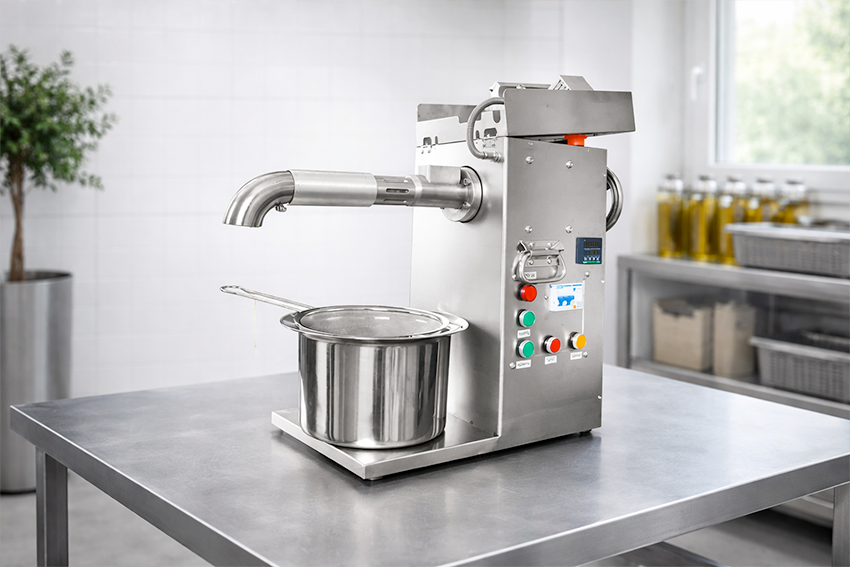
The Semi-Industrial LY-129 Press – Ready Throughout the Season
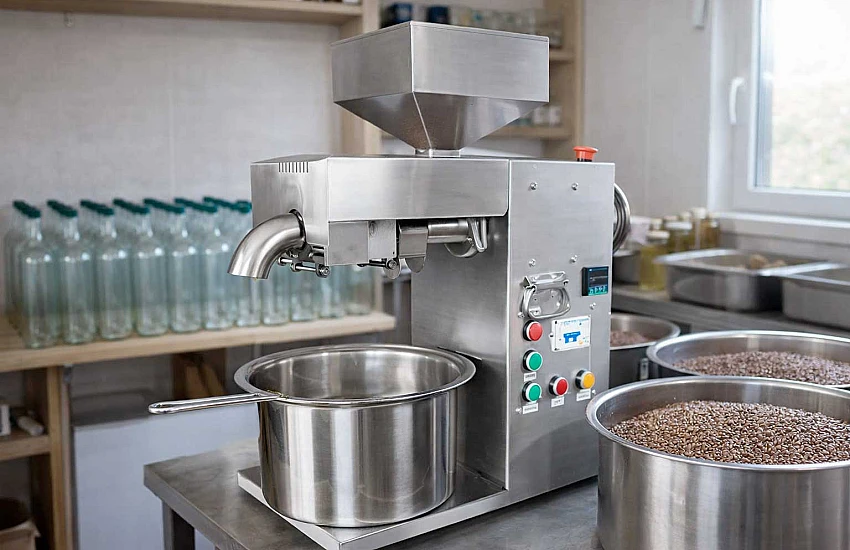
For those who press regularly and in larger quantities, choosing the right press is critical to the efficiency of year-round production. The Semi-Industrial Oil Press LY-129 is a machine that combines compact dimensions (70×30×74 cm, weight 53 kg) with a throughput of 15–20 kg/h – out of reach for typical home presses.
The LY-129 operates both in cold-pressing mode (oil temperature stays below 40°C) and in warm-pressing mode (up to 250°C), giving flexibility to match the method to different raw materials. A 1.5 kW motor and a 500 W heating element ensure stable parameters over long pressing sessions. A 4–5 kg hopper capacity allows continuous operation without constant monitoring of the feed level.
All parts in contact with the processed material are made from food-grade stainless steel 304 and 420. The press comes with a set of two interchangeable screws, making it possible to fine-tune pressing parameters for different seeds and achieve better yield results. Residual oil in the press cake is below 5%, representing very efficient extraction. Orders are fulfilled within 48 hours.
It is worth noting that this type of press is the preferred choice not only of small professional oil mills but also of family farm tourism operations and producers who have outgrown the home scale and need higher throughput while retaining the flexibility of a non-industrial setup.
The Specifics of Early Spring Pressing – Temperature, Yield, Oil Quality
Cold Pressing in Spring
Spring is one of the best times of year for cold pressing. The air temperature in a typical pressing space – a garage, cellar, or unheated outbuilding – is low enough to naturally keep oil temperature below 40°C, even during intensive pressing sessions. In summer, when ambient temperature reaches 25–30°C, maintaining cold-pressing parameters demands greater discipline and often shorter working sessions to prevent the press from overheating the material.
Cold-pressed spring oil, especially from well-stored raw material, typically has an intense colour and a pronounced aroma. It retains the full fatty acid profile: both the monounsaturated omega-9 and the polyunsaturated omega-3 and omega-6 acids. From a nutritional point of view, this is a product of the highest value – unheated, undenatured, retaining the natural activity of enzymes and antioxidants.
When Warm Pressing Makes More Sense
Not all raw materials and not all purposes call for cold pressing. Warm pressing, carried out at 120–200°C in the pressing chamber, delivers higher yield – more oil from the same weight of seeds – and makes it possible to press raw materials that are difficult or impossible to process cold, such as desiccated coconut or seeds with particularly hard coats.
In spring, warm pressing can also be a practical solution for raw materials that have altered their rheological properties slightly during winter storage and do not press efficiently by the cold method. Higher chamber temperature makes oil extraction easier even from material stored under less-than-ideal conditions. Oil produced this way is more neutral in flavour and generally has a longer shelf life than cold-pressed oil.
Press Cake from the First Spring Pressing
Press cake – the solid residue left after pressing – is a valuable by-product that should not be overlooked. The first spring batches of rapeseed, sunflower, or flaxseed pressing yield press cake with typically good parameters: low residual oil content (below 5% with a well-adjusted press) and high protein and fibre content.
Rapeseed and sunflower press cake is excellent feed for livestock. Flaxseed press cake is particularly valued by horse breeders. Pumpkin and black cumin press cake, with its intense flavour, is sometimes used as an addition to bread, granola, or salads. Spring, when animals after winter need energy-rich and protein-rich feed supplements, is a good time to plan press cake use as part of the oil production schedule.
Storing the First Spring Oil
Temperature and Light as the Main Enemies of Oil
Cold-pressed oil is not an indefinitely stable product. Rich in unsaturated fatty acids, carrying the full spectrum of natural antioxidants, but free of preservatives – it responds quickly to unfavourable storage conditions. Temperature and light are the two factors that most powerfully accelerate oxidation.
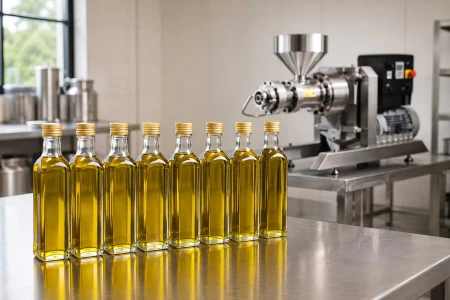
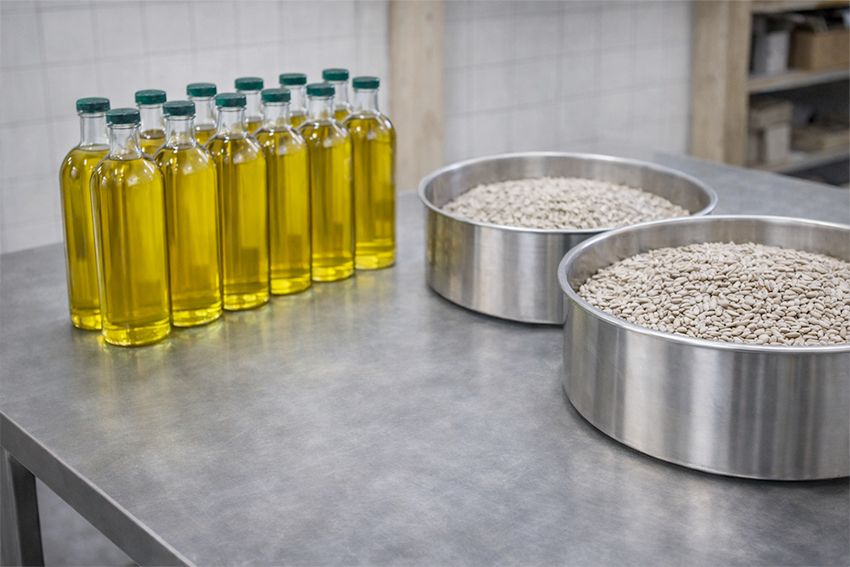
Spring oil should go directly after pressing into dark, airtight bottles – ideally dark brown or green glass with a tight seal. Refrigerator storage significantly extends shelf life, particularly for oils rich in omega-3 fatty acids such as flaxseed or hemp oil, which can go rancid within a few weeks of pressing if not kept cool.
Spring has one practical advantage in this regard: the cool temperature of a cellar or pantry (typically 12–16°C) supports oil storage even without refrigeration, as long as bottles are kept away from windows and light sources. This seasonal advantage fades in summer, when any unrefrigerated oil faces accelerated spoilage.
Choosing Packaging and Shelf Life
The best packaging for freshly pressed oil is a dark brown or green glass bottle with an airtight closure. Capacities of 250 to 500 ml are practical because the oil is used up before opening and does not remain exposed to air for extended periods.
Shelf life depends on the type of oil and storage conditions. Cold-pressed rapeseed oil retains its full quality for 4–6 months in a cool, dark place. Sunflower oil keeps somewhat longer, up to 6–8 months. Flaxseed oil loses its qualities within 4–6 weeks without refrigeration, or up to 3 months in the fridge. Pumpkin seed oil, thanks to its high vitamin E content acting as a natural antioxidant, keeps for 6–8 months under proper conditions. Labelling bottles with the pressing date is a simple and effective way to maintain quality control over home production.
FAQ – Frequently Asked Questions
Which seeds are best suited for the first pressing after winter?
The best raw materials for the first spring pressing are those that combine good storage tolerance with uncomplicated pressing characteristics. Rapeseed is an almost fail-safe choice – robust, predictable in the press, and consistently in demand. Flaxseed is a spring classic, particularly valued by those looking for an oil rich in omega-3. Hulled sunflower and black cumin round out the group as materials that tolerate varied storage conditions and yield excellent, characterful oils. More delicate seeds such as hemp and hull-less pumpkin are best left until after a thorough post-winter inspection.
Why is seed moisture content so important before pressing?
Seed moisture directly affects both the efficiency of the pressing process and the quality of the oil produced. Overly moist raw material (above 10%) disrupts the screw action, reduces yield, and encourages the growth of moulds and fungi that contaminate the oil with mycotoxins. Too-dry seeds (below 4–5%) shatter excessively and generate dust that mixes into the oil. The correct moisture range – which varies by species – is one of the key parameters on which both pressing efficiency and product safety depend.
How long can oilseeds be stored before pressing, and how can you tell whether they are still usable?
Most oilseeds stored under appropriate conditions – dry (below 10% moisture), cool (below 15°C), in darkness, and away from rodents and insects – retain their pressing viability for 12–18 months from harvest. Seeds higher in polyunsaturated fatty acids, such as flax and hemp, keep for a shorter time – around 6–12 months. Before pressing, it is always worth carrying out an organoleptic assessment (smell, appearance, colour) and measuring moisture with a moisture meter. No unpleasant odour, uniform colour, and a correct moisture reading are a signal that the raw material is fit for processing.
Does the oil press need special preparation after winter?
Yes, a press that has been idle for several months requires a thorough inspection before the first start-up of the season. The pressing chamber and oil channels should be checked for solidified press cake residues, the condition of the screw and any gaskets should be assessed, and a short trial run should be carried out on lower-value material. This allows the mechanism to warm up, identifies any potential issues, and eliminates the first – typically inferior – oil fractions before valuable raw material production begins.
What is the optimal seed temperature for cold pressing in spring?
The optimal seed temperature at the press inlet for cold pressing is typically 18–22°C. Seeds taken directly from a cold store or cellar where temperatures were just a few degrees Celsius should go through several hours of acclimatisation in a room-temperature space before pressing. Cold seeds have denser, more viscous oil inside their cells, which reduces pressing yield and can cause motor overload. Gradually warmed raw material presses more easily and gives better results without resorting to warm-pressing mode.
What is the difference between oil pressed in spring and oil pressed in autumn from freshly harvested seeds?
Spring-pressed oil comes from seeds that have been through several months of storage. If that storage was carried out correctly, spring oil is practically indistinguishable from autumn oil in terms of chemical composition and nutritional value. A difference may appear in aroma intensity – freshly harvested seeds produce oil with a slightly more vivid, livelier scent – but this is a subtle distinction appreciated mainly by sensitive tasters. In practice, spring oil pressed from carefully stored raw material is a fully nutritious product, with the added benefit of being produced in cooler conditions that help preserve the fatty acid profile.
What should be done with the oil and press cake from the first trial run after winter?
The first kilograms of oil from a post-winter trial run may contain residues from inside the machine and typically have a more pronounced metallic taste or smell. They are not suitable for consumption or sale, but they can find other uses: technical oil from the first fraction works as a treatment for wooden garden equipment, for lubricating hinges, or for waterproofing tools. Press cake from the trial batch, if it comes from good-quality seeds, is suitable as animal feed. Oil and press cake from the actual pressing session, once the machine has reached stable operating conditions, are already fully usable products.