
Table of Contents
Naturally pressed oils are gems among healthy plant-based fats. They are extracted from various seeds and nuts through carefully controlled mechanical pressing processes, without the need for chemical refining. In this article, we’ll explore natural oil pressing and explain why these oils are so valuable for our health.
Natural Oil Pressing: Healthy, Unrefined Plant Oils
Natural oil pressing is the process of extracting oil from plant-based raw materials, such as seeds, nuts, or fruits, without using chemicals or high temperatures. The main principle of this method is to minimize interference and preserve the natural taste, aroma, and nutritional composition of the oil.
Key Steps in the Natural Oil Pressing Process
1. Selecting Raw Materials
The first step is carefully choosing high-quality, chemical-free raw materials from a trusted source. Organic-certified farms are an excellent option.
2. Preparing the Raw Material
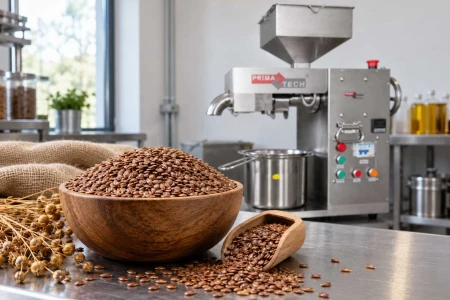
Proper preparation of seeds and nuts is crucial. The raw material must be cleaned of impurities such as hard shells, sand, sticks, or small stones. Drying is often necessary to reduce moisture content, which can affect extraction efficiency. Professional roasting and drying equipment can also enhance flavor, particularly for nuts.
3. Pressing
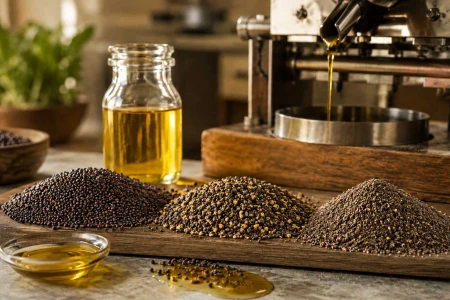
Prepared seeds are fed into an oil press, where a screw mechanism crushes the seeds under controlled pressure and temperature, allowing oil to flow freely. High-quality presses maintain a low temperature to preserve nutrients and natural aromas.
4. Separation and Sedimentation
Naturally pressed oils contain some pulp from the seeds, which is rich in minerals. After pressing, the oil is left to settle for 1–10 days, depending on the type, allowing separation of the pulp. Some suspended solids can enhance the nutritional value.
5. Bottling
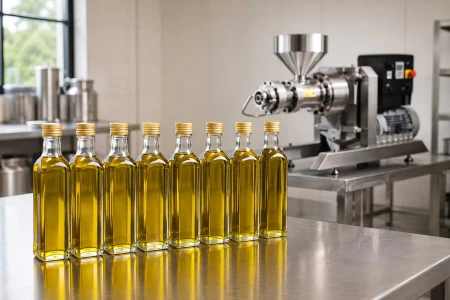
The oil is poured into dark bottles or jars to protect it from light and nutrient loss. Semi-automatic filling machines ensure precise, clean bottling.
6. Labeling
For a professional presentation, bottles can be labeled manually or with a semi-automatic labeling machine, providing consistent and neat results.
Benefits of Naturally Pressed Oils
- High Nutrient Content: Rich in vitamins, minerals, antioxidants, and healthy fatty acids.
- Natural Flavor and Aroma: Minimal processing preserves the true taste and smell of the raw material.
- Health Properties: Many natural oils, like olive, canola, and coconut oil, support heart health, reduce inflammation, and more.
- No Artificial Additives: Free from chemicals and synthetic additives often found in refined oils.
FAQ — Common Questions and answers
1. Can I make plant oil at home?
Yes, using seeds or nuts and an appropriate oil press, such as a Prima-Tech press.
2. Which raw materials can be used?
Sunflower seeds, rapeseed, soybeans, cashews, black cumin, and more.
3. Do seeds need to be peeled before pressing?
Not always. Some seeds, like pumpkin, can be pressed whole, while others, like walnuts, require shell removal.
4. What are the health benefits?
Natural oils provide unsaturated fatty acids, vitamins, and antioxidants that support cholesterol management, anti-inflammatory effects, and overall wellness.
5. Can oil be pressed manually?
Yes, but it is labor-intensive and requires proper tools, such as a manual press.
6. Can I refine oil at home?
Refining is usually industrial and difficult to achieve at home without compromising quality.
7. How should natural oils be stored?
Keep in dark bottles, away from light and heat, ideally in a cool place.
8. Can natural oils be used for skin and hair care?
Yes, oils like coconut or almond are widely used in natural cosmetics.
9. Cold pressing vs. hot pressing — what’s the difference?
Cold pressing retains more nutrients and natural aromas, while hot pressing can degrade some nutritional components.
Naturally pressed oils are a healthy, flavorful addition to your diet and personal care routine, offering both nutritional benefits and exceptional taste.